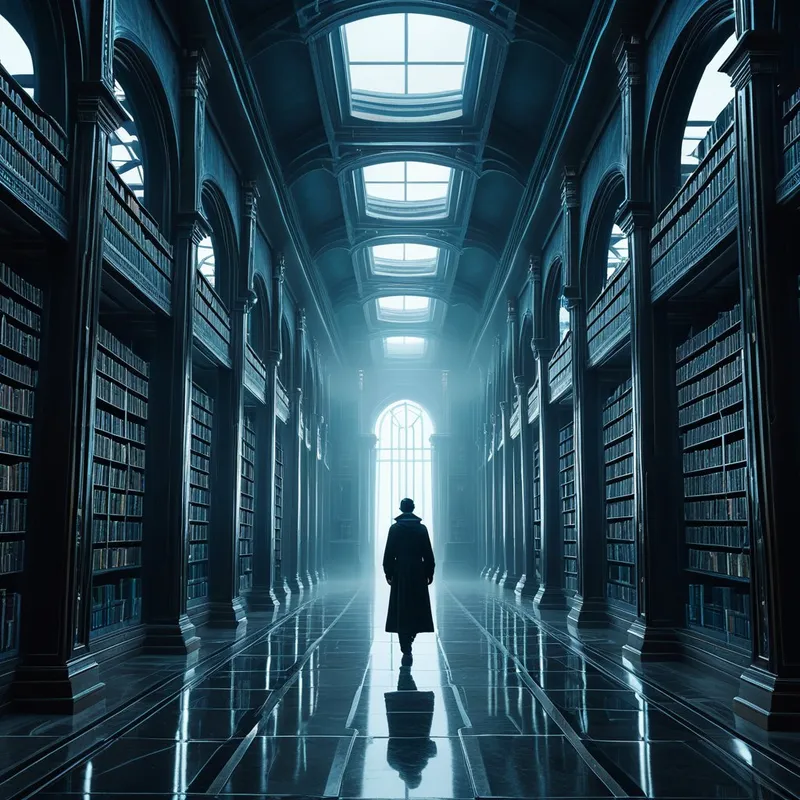
The Dream of Disguise: An Alchemy of the Unseen Self
The Somatic Echo
Before the image forms, the body knows. It is a sensation of subtle misalignment, a quiet friction between the breath and the bones. The shoulders may feel burdened by a weight that is not yours, or the jaw may clench around words you did not speak. There is a low hum of dissonance, a somatic static, as if you are broadcasting on a frequency just adjacent to your own. This is the prelude to the dream of disguise: the visceral experience of housing a truth that has not yet found its native form. It is not panic, but a profound and watchful tension—the feeling of a deep, internal system holding its breath, waiting to see if the costume will hold or if the authentic pulse beneath will finally announce itself.
The Dreamer's Log (Case Vignette)
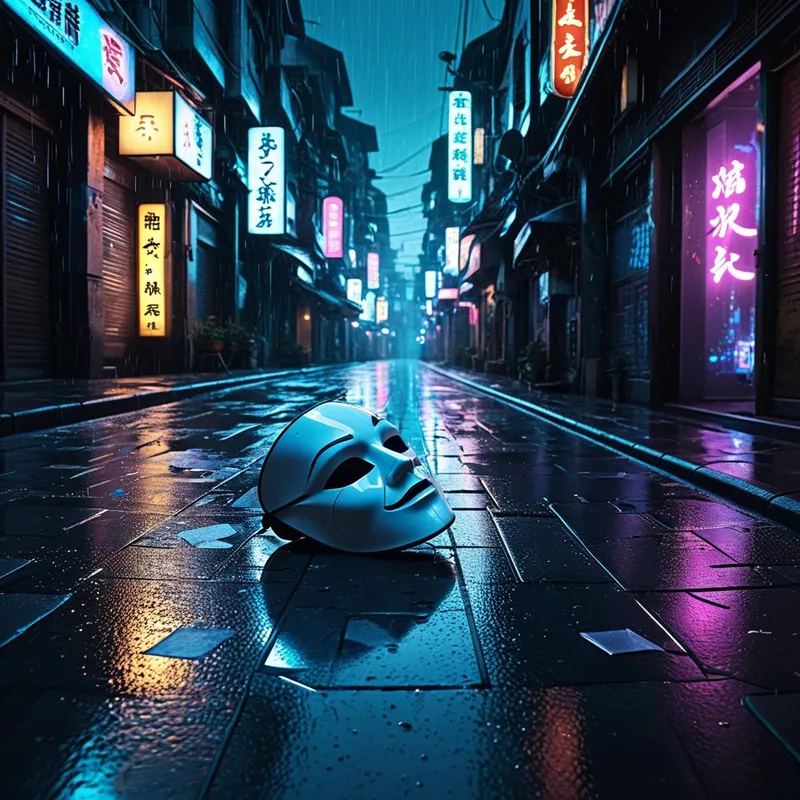
I am walking through a city I know, but the street signs are in a language of light. People I love pass by, but they look through me, their eyes scanning my surface and finding no one they recognize. I am wearing the face of a stranger, molded from cool porcelain, and I realize with a chilling calm that I put it on myself. I cannot remember how to take it off.
This dream is not about being unseen by others, but about the psyche’s deliberate self-obscuration—a strategic retreat of the core self into a protective shell until the inner environment is safe for its emergence.
The False Lead
A dream of disguise is not a simple nightmare of being chased or a literal fear of espionage. To interpret it as mere social anxiety or a sign you are "living a lie" is to take the symbol at its most brittle, literal layer. The disguise in the deep dream is not a coward’s costume but an alchemist’s crucible. It is not about deceit directed outward, but about a profound, internal negotiation between parts of the self that feel too raw, too powerful, or too sacred to be exposed to the waking world’s harsh light. It is the mind’s architecture creating a temporary containment vessel.
Psychological Architecture
Here lies the deep shadow work. The psyche, in its infinite wisdom, often employs disguise not to hide from the world, but to protect a nascent, transforming identity from the inner critic, from old internalized voices that would judge or dismantle it prematurely. This is the core of individuation: the process where you are not finding yourself, but creating a self cohesive enough to integrate the disparate fragments of your experience.
Think of it as an internal family system in crisis. The Exiled part—the vulnerable talent, the forbidden grief, the untamed joy—has been deemed unsafe. The Manager parts, tasked with daily functioning, craft a plausible disguise, a "presentable" identity to get through the day without triggering the Exile’s pain or the Firefighter’s chaotic reactions. The dream of disguise is this system’s board meeting. It is where the Manager proudly displays its crafted mask, the Exile trembles behind the veil, and the true, conscious Self begins the delicate work of witnessing both without judgment. The terror of the dream is the fear that the mask will become the face. The grief is the longing of the Exile to be known. The alchemy is in holding that tension until a third, sovereign thing emerges.
Mythic Resonance
This universal firmware runs deep in our stories. Consider the goddess Inanna’s descent into the underworld. At each of the seven gates, she is stripped of a symbol of her power—her crown, her lapis beads, her royal robe. This is not a mere robbery, but a necessary disguise. To meet her shadow sister, Ereshkigal, in the raw realm of the dead, Inanna must shed all outer identities, all costumes of sovereignty. She arrives naked and bowed, disguised as her own opposite—a queen rendered a corpse. Only through this radical unmasking of all masks can true integration and resurrection occur. The myth tells us that to reach the deepest truth, we must willingly surrender the very disguises that define us in the upper world.
Symbolic Nodes
- Masks (porcelain, leather, featureless): The crafted persona, the interface between the inner self and the outer world.
- Unrecognizable Reflection in a Mirror: A confrontation with the gap between the self you know and the self you present.
- Others Not Knowing You: The externalization of the fear that your true self is unknowable or unacceptable.
- Ill-Fitting Clothing: A somatic symbol of a role or identity that no longer aligns with your internal structure.
- Speaking and Your Voice is Not Your Own: The alienation of expressing something that does not originate from your core.
- Forgotten Passwords/Doors That Won't Open: The psyche’s lockdown of a chamber where an undisguised truth is kept.
Archetypal Resonance
The energy of disguise is most intimately aligned with The Magician Archetype, specifically in its shadow aspect. The Magician’s gift is transformation and the understanding of hidden forces. Its shadow, however, is not simply evil, but the use of that transformative power for concealment and illusion, often out of a perceived necessity for survival. The somatic echo of dissonance is the Shadow Magician’s spell—a glamour cast over the vulnerable self. The alchemical potential lies in the full embrace of the archetype’s true power: to transmute that same energy of illusion into the act of conscious manifestation. The mask, once seen as a tool of hiding, becomes the mold into which the new, integrated identity is poured and solidified.
The Alchemical Process
The transmutation here is from fragmentation to orchestration. The intense psychological heat required is the sustained courage to sit in the unbearable ambiguity of not knowing who you are beneath the costume. The pressure is applied by life itself—relationships that feel hollow, achievements that ring false, a creeping sense of existential fraudulence. This heat and pressure do not burn away the disguise, but rather soften its rigid boundaries. The goal is not to shatter the mask but to dissolve the glue that fused it to your skin. In that slow, painful separation, you discover that the mask was not hiding nothing; it was protecting something. The grief of the disguised self is alchemized into the profound sovereignty of the self that can now choose its expressions, wearing identities as garments rather than prisons.

The Integration Protocol
Question 1: In the dream, who or what were you most afraid would see behind the disguise? Can you identify that critical, judging energy in your waking life—is it an internal voice, a memory, or an expectation?
Question 2: If the disguised part of you in the dream could speak one sentence without consequence, what truth, however small or shocking, would it utter?
Question 3: What forgotten or abandoned aspect of yourself might that disguise be keeping safe? What quality (vulnerability, anger, wild creativity, peace) is sequestered there?
Action 1 (Somatic Re-alignment): For five minutes upon waking, before the mind fully engages, lie still. Scan your body for that feeling of friction or "false" weight. Breathe into that space, not to change it, but to acknowledge its presence. Whisper, "I feel you there."
Action 2 (Creative Unmasking): Take a blank page. With your non-dominant hand, draw the disguise from your dream—a mask, a cloak, a shape. Then, with your dominant hand, draw what you sense is behind it. Do not aim for art; aim for dialogue. Let the lines communicate.
Action 3 (Ritual of Authentic Fragments): Find a small, natural object—a stone, a twig, a leaf. This represents a fragment of your unfiltered self. Carry it in your pocket for a day. Your task is not to show it to anyone, but simply to be aware of its presence against your body, a solid, real thing that requires no disguise.
Final Validation
To dream of disguise is to touch one of the most delicate and sophisticated operations of the human soul. It is a sign not of deceit, but of profound self-protection; not of weakness, but of a deep, systemic intelligence working to preserve a fragile truth. The discomfort it brings is the friction of growth, the sound of an old shell straining to contain a new life. Honor the disguise for the sanctuary it once was. Then, with the gentle authority of the true Magician, begin the slow, sacred work of turning the sanctuary into a throne room. The face beneath the mask is not a stranger waiting to be found. It is a sovereign, patiently waiting to be born.