The Somatic Echo
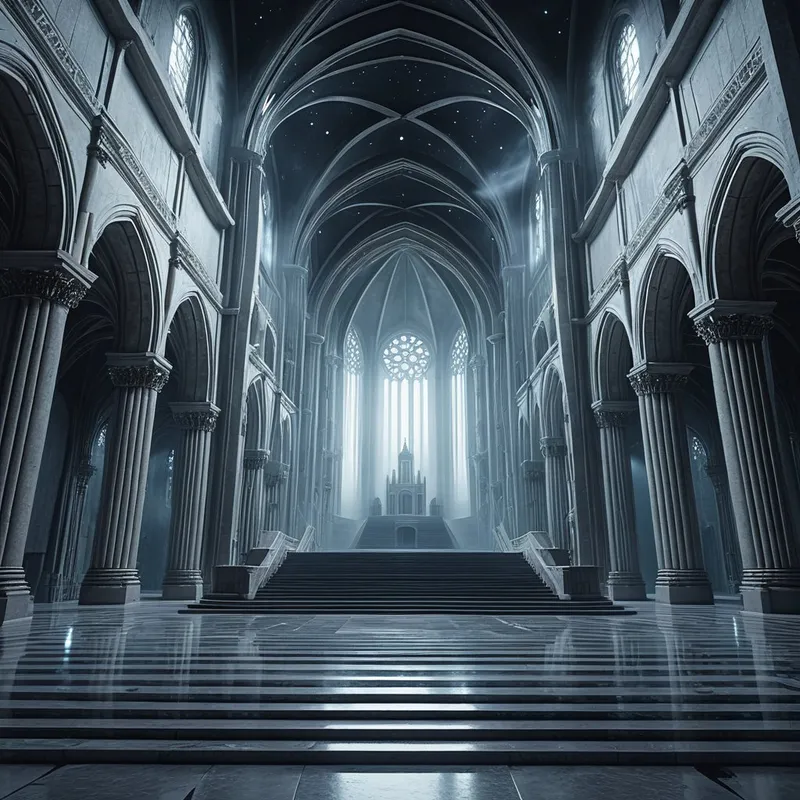
Before the mind can articulate a blueprint, the body knows the construction site. It is a deep, cellular ache—not of injury, but of potential. It feels like a phantom limb for a skill not yet learned, a hollow space in the chest where a new chamber of the heart is being excavated. There is a low-grade hum of anticipation in the bones, a subtle vertigo as the internal ground shifts. You may feel a profound tiredness, not from exertion, but from the silent, ceaseless labor of psychic remodeling. The breath becomes shallow, as if the lungs themselves are waiting for permission to expand into a new, larger shape. This is the somatic signature of a developmental threshold: the visceral knowledge that the person you were is no longer a perfect fit, and the person you are becoming has not yet arrived to take occupancy.
The Dreamer's Log
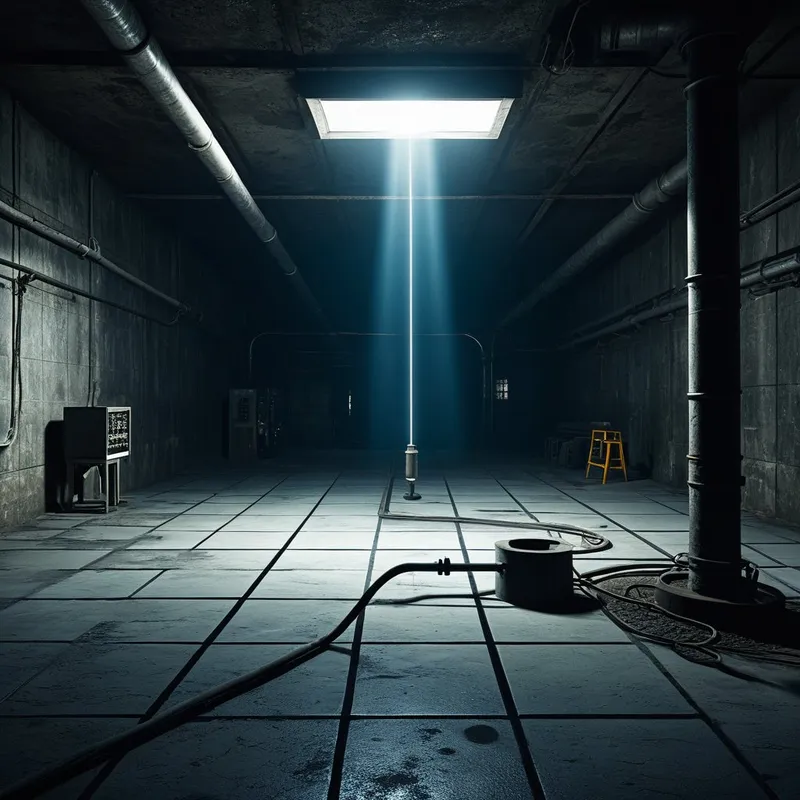
You are in the basement of a house you thought you knew. It is larger, darker, and filled with rooms you’ve never seen. You are searching for a specific key, but your hands keep finding only dust and old, forgotten tools. A door at the far end is slightly ajar, revealing a blinding white light, but the floor between you and it is a gaping, unfinished hole into darkness.
Alchemical Interpretation: The dream reveals the psyche excavating its own foundations, confronting the unfinished and unknown chambers of the self that must be integrated before accessing the next level of consciousness.
The False Lead
This theme is not about simple progression or checking boxes on a linear path. It is not the ego’s checklist for “self-improvement.” A dream of developmental stages is not merely a reflection of a bad day or a temporary setback; it is the soul’s report on structural integrity. The terror here is not of failure, but of dissolution—the necessary crumbling of an old form. Do not mistake the dream’s imagery of collapse for catastrophe. It is the controlled demolition required to build something that can truly bear the weight of your becoming. This is the difference between a storm damaging a house and an architect deliberately removing a load-bearing wall to create an open floor plan. One is chaos; the other is purposeful, terrifying creation.
Psychological Architecture
To engage with this theme is to consent to shadow work of the most foundational kind. It is to meet the internal family of selves—the child who built the first walls for safety, the adolescent who painted them in rebellion, the young adult who furnished them with ambition—and to thank them for their service while gently explaining their quarters are being renovated. Individuation here is a process of psychic archaeology. You are not just adding a new wing; you are descending into the basement to examine the very footings upon which your identity rests. You will find chambers walled off in shame, rooms preserved like museums to old triumphs, and entire wings left as bare concrete shells, waiting for a purpose. The work is to bring light and consciousness to these spaces, not to judge their state, but to understand their place in the whole structure. This is the experience of becoming the architect, foreman, and laborer of your own soul.
Mythic Resonance
We see this universal firmware in the story of Theseus and the Labyrinth. The labyrinth is not just a external trap; it is the intricate, confusing architecture of an earlier developmental stage—the unconscious, monstrous complexity born from a king’s (a ruling consciousness’s) shame and secrecy. Theseus does not simply fight the Minotaur; he must first navigate the confusing, non-linear paths, aided by Ariadne’s thread. The thread is the connecting consciousness, the lifeline back to a simpler self, that allows him to descend into the maze’s heart, do the necessary work, and find his way back out, transformed. He enters a boy under a curse and emerges a king, but only by mastering the internal layout. Similarly, in many indigenous coming-of-age rites, the initiate is symbolically “dissolved” in the wilderness—their old social identity stripped away—so they can be spiritually reassembled with a new, adult consciousness. The myth is always the same: a deliberate deconstruction precedes a more authentic reconstruction.
Symbolic Nodes
- Unfinished or Shifting Rooms/Houses: The psyche-in-process.
- Lost Keys or Missing Tools: The temporary absence of the internal resource needed for the next step.
- Staircases, Ladders, Elevators: Transitional states between levels of consciousness.
- Finding New Doors or Windows: Awareness of new potentials or perspectives.
- Construction Sites, Renovation, Demolition: Active restructuring of the self.
- Being Lost in a Familiar Place: The old internal map no longer matches the new territory of the self.
- Changing Clothing or Uniforms: Shifting identities or roles.
- Unstable Ground (Quicksand, Earthquakes): The tremors of foundational change.
Archetypal Resonance
The Magician Archetype is the prime mover in the drama of developmental stages. While the Hero conquers external territory, the Magician transforms internal substance. This archetype’s core energy is the understanding of fundamental structures and the application of will (the wand) and knowledge (the scroll) to alter reality from the blueprint level. The somatic echo of unfinished potential is the Magician’s latent power, the unspoken incantation. Its alchemical potential lies in its ability to hold the tension between the old form and the new—to see the crumbling wall not as ruin, but as raw material for the cathedral. The Shadow Magician appears as the manipulative illusionist who tries to fake a finished development stage with charisma or deceit, or who becomes paralyzed by the complexity of the blueprints, refusing to begin the work for fear of making a mistake. The true Magician archetype accepts that to transmute the self, one must first become intimately acquainted with its current, imperfect composition.
The Alchemical Process
The alchemical transmutation here is Coagulation—the process of bringing a dissolved substance into a new, solid, and perfected form. The prima materia is the scattered, incomplete, or outmoded aspects of the self sensed in the somatic echo. The intense psychological heat, the nigredo, is the disorienting grief of realizing an old way of being is dying, coupled with the anxiety of the not-yet-formed. This is the pressure of the unfinished room, the lost key. The fire is applied through conscious attention to these psychic construction zones—the patient, often painful, examination of why a room was left unfinished, what the lost key was meant to open. The transmutation occurs when you stop searching for the old key and instead, in the liminal space of the dream or reflection, begin to forge a new one. You move from being a tenant in your own psyche, confused by its layout, to being its magician-architect. You take the dust and forgotten tools and envision their new purpose. Coagulation is achieved when the new understanding solidifies into a lasting change in perception and behavior—when you can finally walk through the newly integrated chamber of your soul without vertigo.
The Integration Protocol
Question 1: In the dream’s landscape, where did you feel the most potent sense of “unfinishedness”? Was it a space of missing elements, or one of chaotic, half-formed potential?
Question 2: Which part of your waking life feels most like that dream space—a relationship, a creative project, an aspect of your identity—and what is the next, single piece of “construction” that space is asking for?
Question 3: If the lost key or tool in the dream could speak, what one sentence would it say about its purpose? Not the door it opens, but the quality of consciousness it represents.
Action 1 (Somatic Blueprint): For five minutes, sit in silence and bring your awareness to the physical sensation that feels most like “unfinished potential” in your body. Don’t try to change it. Imagine your breath as a gentle surveyor’s light, simply illuminating that interior space. Note the quality of the space—is it dense, hollow, buzzing, cold?
Action 2 (Creative Cartography): Draw a map of your dream landscape—the house, the labyrinth, the terrain. Do not aim for art. Use symbols, shapes, and words. Then, in a different color, add one thing: a single, small marking indicating where you would place a foundation stone if you were to continue the construction. What does that stone represent?
Action 3 (Ritual of the Threshold): Find a physical doorway in your home. Stand before it. For one minute, feel the weight of the patterns, habits, and self-concepts you are leaving behind in the room you’re in. Then, cross the threshold. On the other side, stand for another minute and consciously name one quality, one small “key,” you wish to carry forward into this new space of your day. Make the architectural metaphor physically real.
Final Validation
It is profoundly difficult to live on a construction site of the soul, to breathe the dust of your own deconstruction. The disorientation is real; the grief for outgrown selves is valid. This is not a sign you are broken, but a testament that you are alive—and alive things grow. They outgrow their containers. You are not falling apart. You are being reassembled by a deeper intelligence, one that knows the final blueprint is not a fixed destination but the capacity to forever build, integrate, and inhabit the ever-expanding palace of your own consciousness. The sovereignty you seek is not in a finished product, but in the unwavering authority to pick up the tools and continue the work.