The Ornamental Self: When Dreams of Decorative Addition Summon Your Wholeness
The Somatic Echo
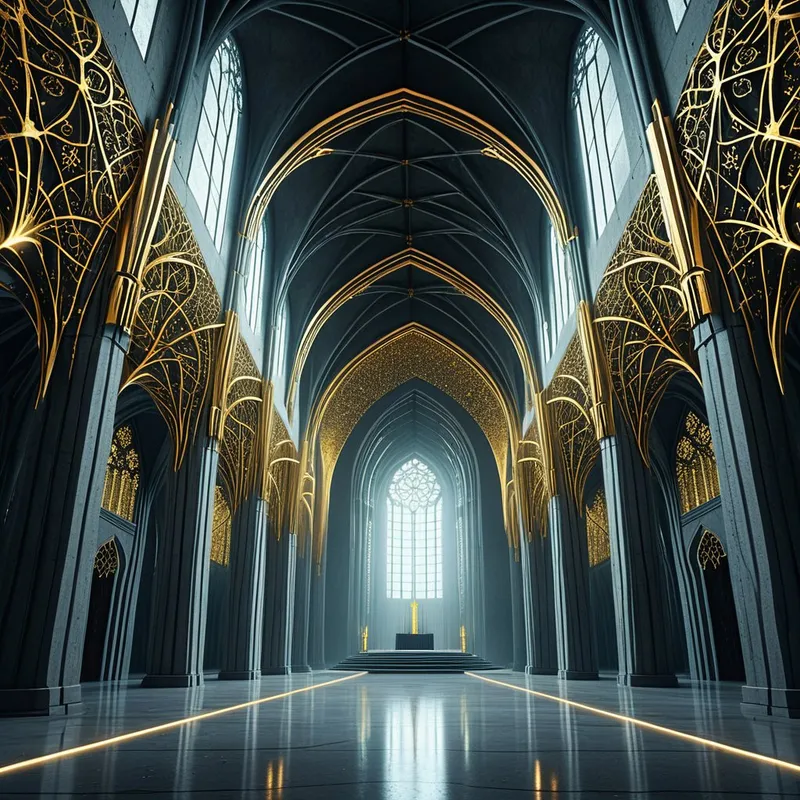
It begins not as a thought, but as a sensation of excess. A subtle, almost embarrassing fullness at the periphery of your being. It’s the feeling of wearing a garment that is too ornate for the occasion, the weight of an extra, beautifully useless button. In the body, it manifests as a slight tension in the hands—a phantom urge to fiddle, to adjust, to place something just so. There’s a heat behind the eyes, the same heat felt when beholding something of breathtaking, unnecessary beauty: a cathedral’s rose window, the filigree on a forgotten locket. This is the somatic whisper of the ornamental self, a part of your psyche that has been deemed frivolous, waiting in the wings. It is not a shout of lack, but a quiet, persistent pressure of surplus—a reminder that you contain textures and colors that serve no purpose other than to be what they are.
The Dreamer's Log
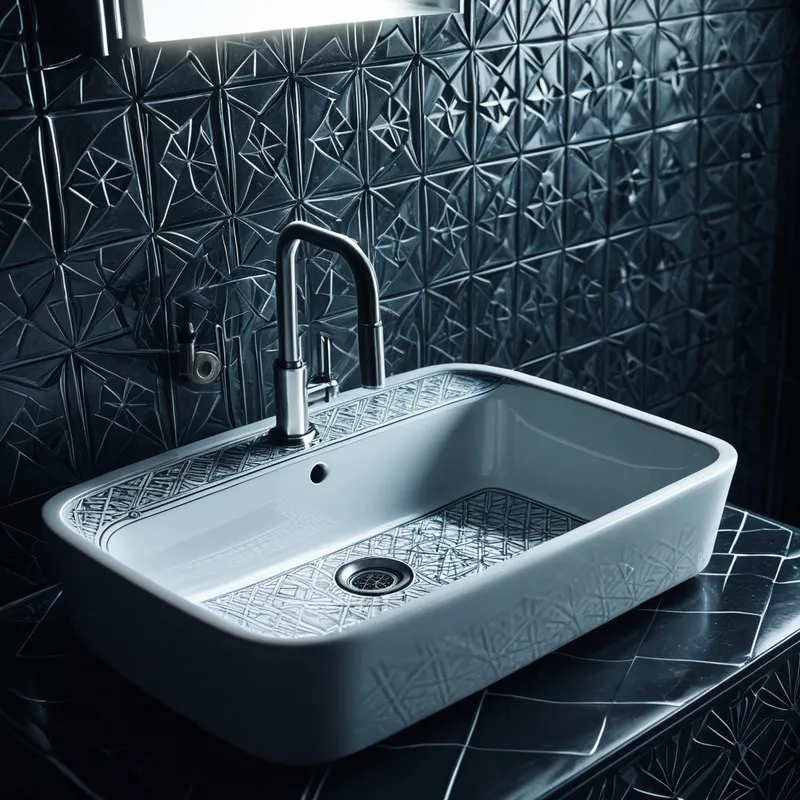
The dreamer stands before a bathroom sink of stark, clinical white. Its function is absolute, its form brutally simple. Yet, in their hand, they hold a new faucet handle—an object of absurd, exquisite complexity. It is wrought silver, etched with patterns that seem to shift like living circuitry, catching a light that has no source. With a sense of both reverence and deep foolishness, they begin the work of replacing the plain, chrome lever with this ornate piece. As it clicks into place, the entire room seems to hold its breath.
The alchemical interpretation: The installation of sacred geometry onto a site of mundane purification signifies the soul’s imperative to beautify the rituals of the self, to encode daily life with intentional, non-utilitarian meaning.
The False Lead
This is not a dream about materialism, vanity, or superficial improvement. To mistake the decorative addition for a call to simply acquire, to gild your external life, is to commit a profound error of translation. The psyche is not a home renovation show. The ornament in the dream is not about adding value to something deemed worthless; it is about revealing a value that was always inherent but forcibly stripped away. It is not about covering a flaw, but about expressing a truth. The terror here is not of ugliness, but of authentic embellishment—of claiming a beauty that exists for its own sake, outside the economies of function and productivity. This theme challenges the core modern fallacy that only the plain, the efficient, and the starkly functional is "real" or "true."
Psychological Architecture
Beneath the dream-image lies a deep strata of Shadow work. We are cultures that praise the bedrock and suspect the ivy. We are taught to build a strong, functional ego-structure: reliable, productive, defensible. The parts of us that are poetic, whimsical, ceremonial, or devoted to beauty for beauty’s sake are often exiled to the Shadow as "decorative"—lovely but irrelevant to the serious business of survival and success. To dream of adding decoration is the beginning of a reclamation project. It is the Individuation process insisting that your wholeness requires not just a sturdy foundation, but also the stained glass, the carved banister, the hidden garden. The pressure comes from the friction between the internal critic (the voice that says "this is unnecessary, pretentious, weak") and the emerging, ornamental self that knows adornment is a language, a cosmology, a way of mapping the interior universe.
Mythic Resonance
Consider the myth of Psyche and her tasks. Aphrodite, envious of Psyche’s mortal beauty, sets her impossible labors. One is to sort a massive, room-filling heap of mixed grains—wheat, barley, millet, poppy—into separate piles before dawn. It is a task of pure, brutal utility. Psyche despairs, until an army of ants takes pity and performs the labor for her. The ants represent the instinctual, efficient mind. But Aphrodite’s final task is to retrieve a dose of beauty from Persephone herself in the Underworld. This is not a task of sorting or building, but of securing the ornamental essence. It is the decorative addition to the soul’s journey. Psyche’s entire ordeal moves from proving her worth through functional labor to ultimately integrating the very principle of beauty (Persephone’s cosmetics) as a non-negotiable component of her apotheosis. The decorative is the final, divine ingredient.
Symbolic Nodes
- Intricate handles, knobs, or switches on otherwise plain objects.
- Wallpaper with hidden, complex patterns that emerge upon closer look.
- Embroidery, filigree, or engraving that appears on functional tools or weapons.
- A single, stunning piece of jewelry worn with utilitarian clothing.
- Elaborate frames around simple pictures or mirrors.
- Ornate keys that fit plain locks.
Archetypal Resonance
The energy of the Decorative Addition dream is most intimately aligned with The Creator Archetype. This is not the Shadow Creator, obsessed with a self-referential masterpiece, but the Creator in its essential form: the Artist and the Architect whose primary drive is to bring something of meaning and beauty into existence, simply because it must be brought forth. The somatic echo of excess and the urge to "fiddle" is the Creator’s restless, generative energy seeking an outlet. The alchemical potential lies in this archetype’s ability to see that the act of adornment is itself a foundational act of identity-creation. To add decoration is to author the self, to inscribe your unique signature onto the raw material of your existence. The Creator understands that the filigree is not apart from the structure; it is the structure speaking its most poetic dialect.
The Alchemical Process
The transmutation here is of Frivolity into Essence. The prima materia, the leaden base matter, is the ingrained belief that the beautiful and the ornamental is secondary, lightweight, dismissible. The alchemical heat is applied through the conscious, deliberate act of valuing the valueless. This is an intense, counter-cultural pressure. It feels like spending precious time on a doodle in the margin of a serious document. It feels like insisting on a ceremony when efficiency would suffice. The grief that must be faced is for all the years your ornamental self was silenced, deemed unnecessary. The terror is of being seen as superficial, unserious, or decadent. The fire of this process is the sustained, loving attention you give to that which produces nothing but meaning. In this crucible, the "decoration" ceases to be an add-on and becomes revelation—the intricate, external map of an intricate, internal world. The gold produced is Sovereign Aesthetics: the unshakable, personal authority to define what is beautiful and essential to your being.

The Integration Protocol
Question 1: Where in your life have you mistaken austerity for strength, and simplicity for truth? What one "frivolous" beauty do you secretly cherish but feel you must hide?
Question 2: If your psyche were a building, what single, decorative element—a carving, a window, a tile—is missing from its most functional room (the kitchen of nourishment, the bathroom of cleansing, the office of work)?
Question 3: What exiled part of yourself feels "too much"—too colorful, too delicate, too ornate—to be allowed into your daily identity? Can you describe its texture and pattern?
Action 1 (The Peripheral Embellishment): Choose one utterly mundane, functional object you use daily—a water bottle, a notebook, a keychain. Devote 15 minutes to adorning it. Not to improve its function, but to converse with it. Add a sticker, a wrap of thread, a tiny drawing. Let the action be slow, intentional, and purposeless.
Action 2 (The Unstructured Codex): Take a blank journal or a large sheet of paper. Without writing a single word of narrative or logic, fill a page with pure, non-representational ornament. Doodles, patterns, textures, colors. Let it be a map of your interior surplus, the "excess" that your mind normally edits out. Do not create art; release decoration.
Action 3 (The Ritual of Useless Beauty): Once a week, institute a five-minute ritual of attending to something purely beautiful and non-utilitarian. This could be polishing a decorative object, arranging stones in a pattern on your desk, or listening to a piece of music with the sole intention of tracing its most ornate melodic line. Frame it not as relaxation, but as sacred, necessary maintenance of your ornamental soul.
Final Validation
It is profoundly difficult to defend the decorative in a world that demands a justification for every expenditure of energy. To honor this dream is to court the judgment of internal and external voices that prize the stark blueprint over the lived-in, adorned home. This friction is real, and the feeling of foolishness is part of the ore. But remember: a tree does not justify its blossoms with a production quota. Your psyche is dreaming of filigree, of inlay, of ornate handles on plain doors because it is reaching for a more complete expression of its own existence. The addition is not extra. It is essential. By integrating it, you are not becoming adorned; you are becoming legible to yourself in a richer, more poetic language. You are allowing your structure to finally speak.