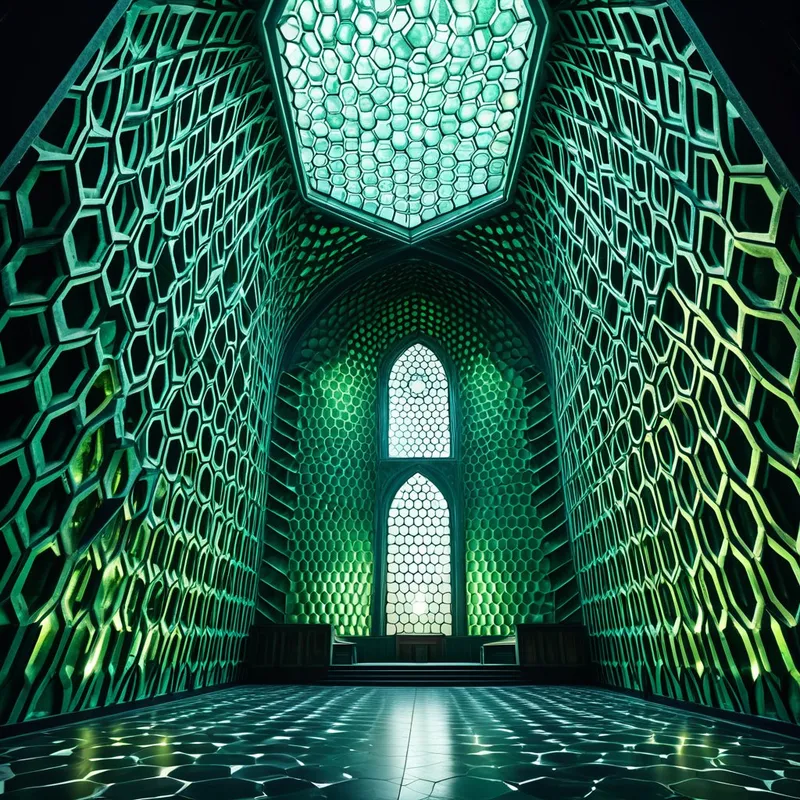
The Hidden Architecture: On the Dream Theme of Decoration
It begins not as a thought, but as a texture. A tightness in the jaw, a subtle ache behind the eyes—the somatic echo of holding a pose for too long. It is the feeling of a room that is too perfect to live in, of clothes that bind just slightly, of a smile that has set like plaster. This is the visceral ground from which dreams of decoration arise: the body’s quiet rebellion against the curated self. It is the friction between the raw, pulsing core of being and the exquisite, often suffocating, shell we build around it. Before the mind can articulate the problem of persona, the nervous system registers the strain of the facade.
The Dreamer's Log
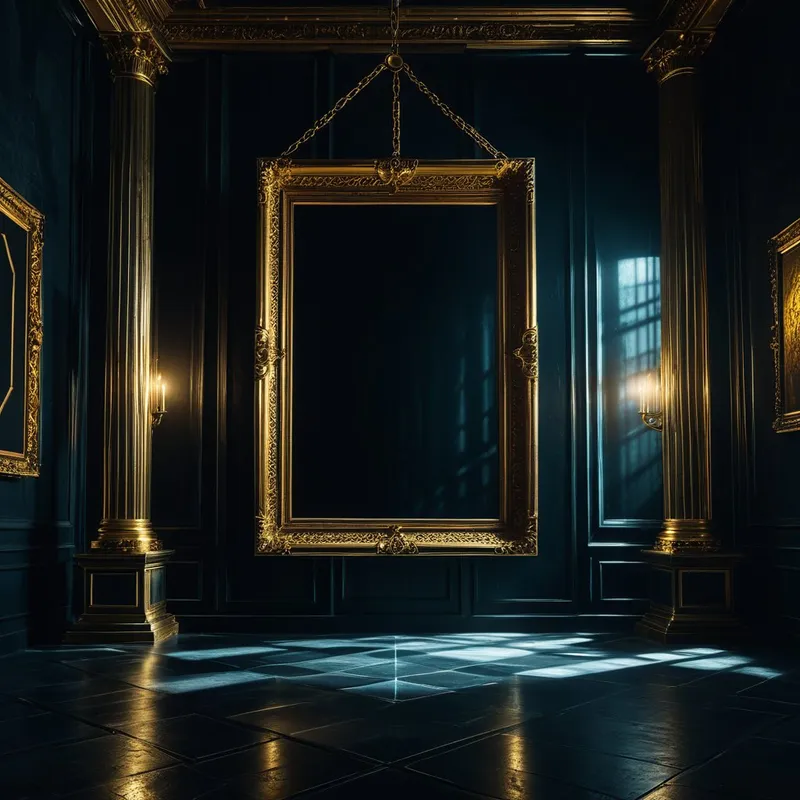
She stands in a cavernous, empty room. The only object is a massive, ornate gold picture frame, suspended in mid-air. Her sole task is to fill it. She searches desperately, but finds only dust, shadows, and the sound of her own breath. The frame remains achingly, accusingly empty.
This dream is not about a lack of content, but the alchemical pressure of the container itself—the frame demands an essence that the curated self cannot provide.
The False Lead
To dream of decoration is not to dream of superficiality. This is the critical misstep. The mind, in its haste to dismiss discomfort, may whisper that these images are about vanity, about "putting on airs," or mere aesthetic preoccupation. That is the false lead. The theme of decoration is a profound structural inquiry. It asks: What have I built around my core self to make it safe, acceptable, or admirable? And at what cost to the truth that breathes within? It is the architecture of identity, not its wallpaper.
Psychological Architecture
The shadow work here is an archaeology of the persona. We are all interior decorators of the soul, arranging furniture to guide the gaze of others (and ourselves) away from the unfinished corners, the cracks in the foundation. To dream of frantically redecorating, of garlands that wither as you hang them, of paint that refuses to dry or match, is to witness the ego’s exhausting project of maintenance. The individuation process whispers a terrifying question: What if you stopped? What if you allowed the gilded molding to tarnish, the perfectly arranged vignette to be disturbed? The fear is that behind the decoration lies nothing—a void. But the psyche knows this is the ultimate illusion. The process is one of deliberate deconstruction to discover the indestructible, authentic structure beneath. It is not about becoming shabby, but about becoming real. The grief we touch is for all the energy spent upholding an image; the terror is of the raw, unadorned self we have been taught to hide.
Mythic Resonance
We see this eternal drama in the myth of Psyche and Eros. Psyche is placed in a palace of breathtaking, automated luxury. Every sensual and aesthetic desire is met by invisible hands. It is the ultimate decorated existence—perfect, yet utterly devoid of authentic relationship and sight. Her task, her curse, is to not look, to not seek the true source of her comfort. The palace itself is the decoration, the beautiful prison that keeps her from the messy, real, and ultimately divine love (Eros) that sustains it. Her journey begins not by adding more beauty, but by spilling a drop of oil, by introducing the flaw, the inquiry, that sets the entire perfect system ablaze and forces her into her true, arduous, and rewarding path.
We find it again in the Emperor’s New Clothes. The tale is a perfect allegory for the decorated persona. The Emperor is draped in the ultimate decoration: an fabric of collective agreement, of projected prestige, so refined that it is invisible to the "unfit." His entire sovereignty is a performance upheld by the fear and complicity of his court. It takes the un-decorated, un-integrated voice of the child—the archetypal innocent who has not yet learned to see the costume instead of the king—to name the terrifying reality: the structure is naked. The decoration was never there; it was a shared dream of power, instantly dissolved by a single sentence of truth.
Symbolic Nodes
- Empty Picture Frames: The demand for an identity you feel you do not possess.
- Peeling Wallpaper / Fading Paint: The unsustainable nature of a persona; the authentic self beginning to show through.
- Impossibly Heavy Drapes or Tassels: The weight of familial, cultural, or social expectations you carry as part of your self-presentation.
- A Room That is Beautiful but Has No Exit: The gilded cage of a life built for appearance, not experience.
- Mismatched Furniture: The internal conflict between different parts of the self (the Internal Family Systems in aesthetic disarray).
- A Single, Glaringly Cheap Item in an Otherwise Perfect Room: The exiled part of the self that refuses to be polished, the stubborn truth that ruins the effect.
Archetypal Resonance
The Creator Archetype is the prime force active in this theme. Its energy is the drive to form, to shape, to bring identity into manifestation. In its mature expression, it builds from an authentic, inner blueprint—the art is an extension of the soul. In the realm of decoration dreams, we often meet its shadow: the Shadow Creator, who builds not from essence but from anxiety. This is the architect of the false self, the mad scientist of persona who frantically cobbles together an identity from external expectations, traumas, and borrowed aesthetics. The somatic echo of tightness and strain is the Shadow Creator’s labor—the exhausting work of maintaining a fiction. The alchemical potential lies in harnessing this immense creative power and turning it inward, away from crafting a facade and toward the more daring creation: an integrated, authentic life. The shift is from decorating the surface to architecting the core.
The Alchemical Process
The alchemical transmutation here is from gilding to forging. The prima materia is the fragile, beautiful lie of the perfect persona. The heat is applied through conscious disillusionment—the courageous act of seeing the cracks, feeling the weight of the costume, and admitting the exhaustion. This is the nigredo, the blackening, where the decorated image tarnishes and seems to decay. The pressure is the sustained commitment to stand in that ruined beauty and not immediately reach for new paint. Within that liminal space of the "undecorated," a profound dissolution occurs. The old identities, like cheap lacquer, peel away. Then, in the albedo, the whitening, a new clarity emerges: you are not the frame, nor the painting once meant to fill it. You are the wall. You are the space. You are the foundational material itself—solid, vast, and capable of holding infinite forms without being defined by any single one. Sovereignty is born when your creative power is no longer spent on upkeep, but on conscious, choiceful expression from this unshakeable ground.
The Integration Protocol
Question 1: Where in your life do you feel most like a curator or a custodian of an image, rather than an inhabitant of your experience?
Question 2: If you were to imagine your current sense of self as a room, what one piece of "decoration" feels the most foreign, heavy, or placed there for someone else’s gaze?
Question 3: What raw, unadorned feeling or truth is currently asking to be acknowledged behind the "finished" surface you present to the world?
Action 1 (Grounding in the Undecorated): For five minutes each day, sit in the plainest, least "styled" space you can find or create. A bare floor corner, a simple chair facing a blank wall. Do nothing but breathe. Feel the difference between being and performing. Note the sensations that arise without the buffer of aesthetic stimulation.
Action 2 (Creative Exorcism): Without planning, using whatever medium is at hand (a pen, a lump of clay, a collage from old magazines), create a representation of your "decorated" self. Then, actively destroy or alter it—smudge the drawing, tear the collage, reshape the clay. Do not make something new. Simply witness the deconstruction. This is not an act of violence, but of liberation from form.
Action 3 (Ritual of the Flaw): Intentionally introduce a small, authentic "flaw" into a highly curated area of your life. Wear the comfortable, worn item to the important meeting. Leave the bed unmade for a day. Say "I don't know" with grace. Observe the non-collapse of your world. This practice builds neural pathways that disentangle worth from perfection.
Final Validation
It is profoundly difficult to question the decorations of a lifetime. They are not just habits; they are often love letters to ghosts, armor forged in old wars, promises made to versions of yourself that no longer exist. To feel their weight is not a failure of design, but a sign of your depth. The ache is the signal. You are not crumbling; you are outgrowing the shell. The integration of this theme does not leave you bare and exposed, but rooted and potent. It grants you the ultimate creative authority: the power to choose your forms from a place of essence, not anxiety, and to change them not as a frantic redecorator, but as a sovereign architect of your own becoming.