
The Dream of the Returning Pattern: An Alchemy of the Loop
The Somatic Echo
It begins not as a thought, but as a gravity. A familiar, dense pull in the solar plexus, a tightening in the jaw you thought you’d unclenched years ago. It’s the taste of copper on the tongue, the scent of a long-forgotten hallway suddenly present in a room with no history. This is the somatic echo of the cycle—the body’s memory, older and wiser than the mind’s narrative. It’s the visceral recognition of a pattern returning, not as a coincidence, but as a structural feature of your inner landscape. The mind rushes to label it—deja vu, bad luck, karma—but the body knows the truth. It knows the architecture of a particular grief, the specific weight of a recurring conflict, the unique hollow of a repeated loss. This echo is the first, most honest signal: you are standing at a familiar junction in your psyche’s labyrinth. The walls look the same, but you are not.
The Dreamer's Log (Case Vignette)
I am in a vast, silent server farm, a cathedral of obsidian and humming light. My task is simple: find the corrupted file and delete it. I walk for miles down identical aisles. Finally, I see it—a terminal pulsing with a sickly green glow. I input the command. A confirmation flashes: ‘File Purged.’ A wave of relief. I turn to leave, and the entire room resets. I am back at the entrance. Before me, on the same terminal, the same corrupted file is loading, its name now my own.
Alchemical Interpretation: The dream exposes the futile attempt to delete a core part of the self-system, revealing that integration, not eradication, is the only command the psyche will ultimately obey.

The False Lead
This theme is not about mere repetition or “bad luck.” It is not the universe punishing you, nor is it a sign of personal failure or stagnation. The superficial read is to see only the content of the loop—the same argument, the same type of relationship dissolving, the same professional setback. The false lead is to fight the content. The cycle’s true nature is structural, not situational. It is the psyche’s profound, albeit brutal, method of highlighting a foundational fracture in your internal family system—a wounded part exiled, a protector part overworking, a manager part running an obsolete script. The cycle will continue not until you change your circumstances, but until you change your relationship to the internal players who keep co-authoring the same story.
Psychological Architecture
To engage with a cyclical dream is to consent to shadow work of the most intimate kind. It is to stop running from the loop and instead, with fierce compassion, step into its center. Individuation here is the process of differentiating yourself from the pattern. You are not the argument; you are the one who carries a belief that conflict is the only form of connection. You are not the abandonment; you are the one who houses an orphaned part convinced of its inherent unlovability. The cycle exists because an exiled fragment of your being—often holding a primal grief or terror—is stuck in a time-locked chamber of the psyche. It replays its trauma, and the rest of your internal system organizes around containing it, managing it, or avoiding it, creating the external manifestation of the loop. The work is to hear that fragment’s story, not as a threat, but as a lost citizen of your inner kingdom seeking asylum. This is the alchemy: the transmutation of a reactive pattern into a related part.
Mythic Resonance
We see this firmware in the story of Sisyphus, not as a tale of meaningless punishment, but as an archetypal map. The gods did not curse him with the boulder; they cursed him with the amnesia that made each ascent feel new, shocking, and uniquely defeating. The modern Sisyphus is the one who forgets, each time the relationship crumbles or the anxiety returns, that this has happened before. He believes the story his panic tells him: This time it’s different. This time it’s real. The myth of the Phoenix offers the complementary truth: the cycle is not only about return to the ash, but about the imperative of the immolation. The old form—the coping strategy, the identity, the story—must be consumed by its own unsustainable heat to release the essence that can be born anew. The cycle is the crucible, and we are both the fuel and the fire.
Symbolic Nodes
- Spirals, Loops, & Ouroboros: The structure of the pattern itself, often felt as descent or enclosure.
- Reset Buttons, Reboots, & Loading Screens: The psyche’s interface signaling a return to a previous state.
- Identical Rooms/Hallways: The internal landscape of a fixed belief system or emotional state.
- Broken Records/Skipping Tracks: A stuck narrative or emotional fragment.
- Seasons Changing in Fast-Forward: The compression of time and the inevitability of phase.
- Being Chased & Returning to the Same Hiding Place: The futility of external avoidance.
Archetypal Resonance
The energy of the cyclical nature is most potently expressed through The Magician Archetype, specifically in its shadow aspect. The Shadow Magician is the master of illusion who believes the problem is “out there,” using manipulation, bypassing, and intellectualization to try and break the cycle from the outside. It is the part of us that seeks the perfect ritual, the right affirmation, the new hack to escape the pattern, all while refusing to do the humble, terrifying work of turning the gaze inward. Its somatic echo is the buzzing, frantic energy of seeking control. Yet, within this shadow lies the alchemical potential of the true Magician: the sovereign who understands that reality is shaped by internal laws and that to change the manifestation, one must first transmute the substance of the self. The cycle is the Shadow Magician’s failed spell, and its integration is the true Magician’s awakening to the source of all power.
The Alchemical Process
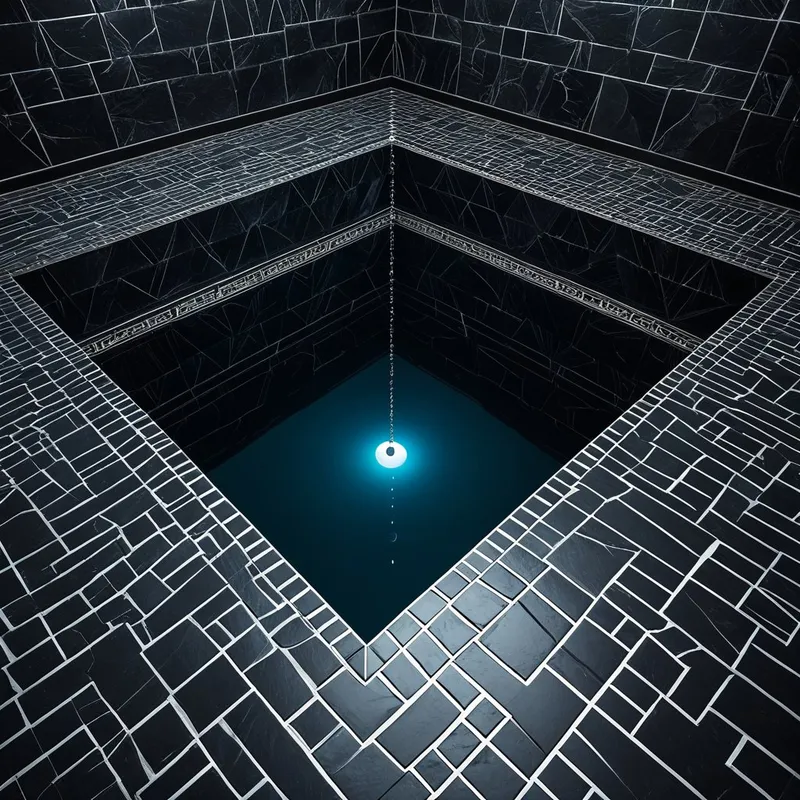
The transmutation here is from Fated Return to Sovereign Rhythm. The required heat is the unbearable tension of conscious pause. When the somatic echo hits and the mind screams to react, to flee, to blame, to fix—you must apply the pressure of non-action. You must stand in the center of the gravitational pull and feel its full weight without moving to escape it. This is the nigredo, the blackening. In this heat, the composite illusion of “your life” cracks, and the individual internal parts—the scared child, the furious protector, the pleading people-pleaser—are revealed in their raw, separate states. The alchemy is in relating to each not as “you,” but as aspects of a system you host. You listen. You validate. You offer the compassion they have been cycling in search of. As you do, the compulsion that fueled the external cycle loses its charge. The pattern dissolves not by being broken, but by being understood. The gold that remains is sovereignty: the ability to witness these internal currents without being swept away by them, to choose a response from a center that is no longer identified with the loop.
The Integration Protocol
Question 1: The next time you feel the somatic echo of the cycle, pause. Ask: "Which part of me is present right now? Is this the voice of a protector, an exile, or a manager? What is its primary job?"
Question 2: Look at the recurring situation not as a monolithic event, but as a script. What is the first line? What is the inevitable climax? Who, in your internal family, always says the lines that lead to the familiar ending?
Question 3: If this cycle were not a curse, but a profoundly dedicated teacher, what is it trying, with relentless patience, to show you about a disowned part of your own heart?
Action 1 (Somatic Anchoring): When the echo arises, place a hand on the part of your body where you feel it most strongly. Breathe into that space for three full cycles of breath. Do not try to change the sensation; simply acknowledge its presence with the pressure of your hand. You are grounding the pattern in the body, where it can be felt and metabolized, not just thought about.
Action 2 (Unstructured Mapping): Without a plan, take a large piece of paper and draw the cycle. Don't draw events; draw its energy. Use colors, shapes, lines, and textures. Where is it spiky? Where is it heavy? Where is there a hidden opening you never noticed? Let the hand of the unconscious reveal the pattern's true architecture.
Action 3 (Ritual of Acknowledgment): Find a small, natural object—a stone, a leaf, a twig. This object represents the core pattern. Hold it, and speak aloud to it, not as an enemy, but as a messenger. Say, "I see you. I feel your weight. You have shown me what you came to show me." Then, place it somewhere in nature—not to discard it, but to return it to a larger cycle, signaling that its message has been received and its form can now change.
Final Validation
It is exhausting. To feel the same walls close in, to taste the same bitter air, to watch the same script play out with a different cast—it can feel like the very definition of despair. Honor that fatigue. It is the honest cost of confronting a deep structure of your being. But know this: the cycle is not your cage; it is your blueprint. It is the psyche’s most persistent, most inconvenient, and most loving way of highlighting the exact fracture where your wholeness awaits. The return is not a failure, but an invitation written in the oldest language you know—the language of sensation, symbol, and dream. This time, you are not the prisoner in the labyrinth. You are the one who remembers the walls, and in that memory, you hold the thread that can lead you, and all the parts of you, back to the center, and then, finally, out.