The Alchemy of the Kitchen: When Dreams Cook the Soul
The Somatic Echo
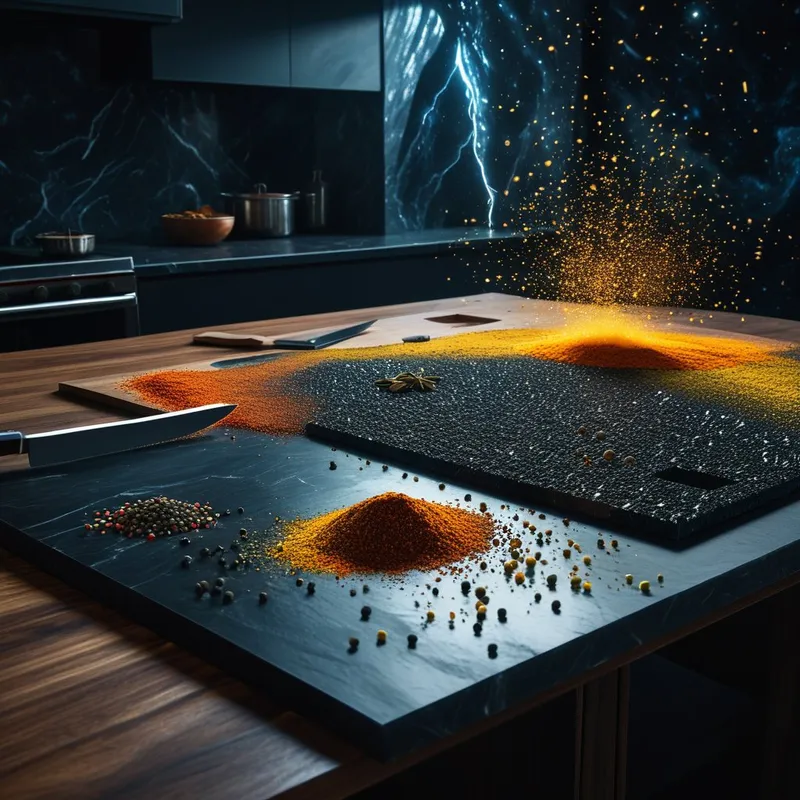
Before the image of a kitchen forms, before the scent of rosemary or burnt sugar reaches the dreaming mind, the body knows. It is a deep, visceral hum in the solar plexus—a crucible of potential heat. It’s the clench in the jaw of concentration, the quickening pulse of a timer counting down, the warm, heavy satisfaction in the belly after a feast shared. This theme announces itself not as a thought, but as a metabolic process. You feel the raw, unprocessed ingredients of your emotional life—the sharp tang of grief, the dense weight of responsibility, the volatile spice of anger—as tangible substances within you, waiting for a transformative fire. The dream of culinary arts begins in this somatic echo: the body’s innate knowledge that it is both the raw material and the vessel for its own alchemical change.
The Dreamer's Log (Case Vignette)
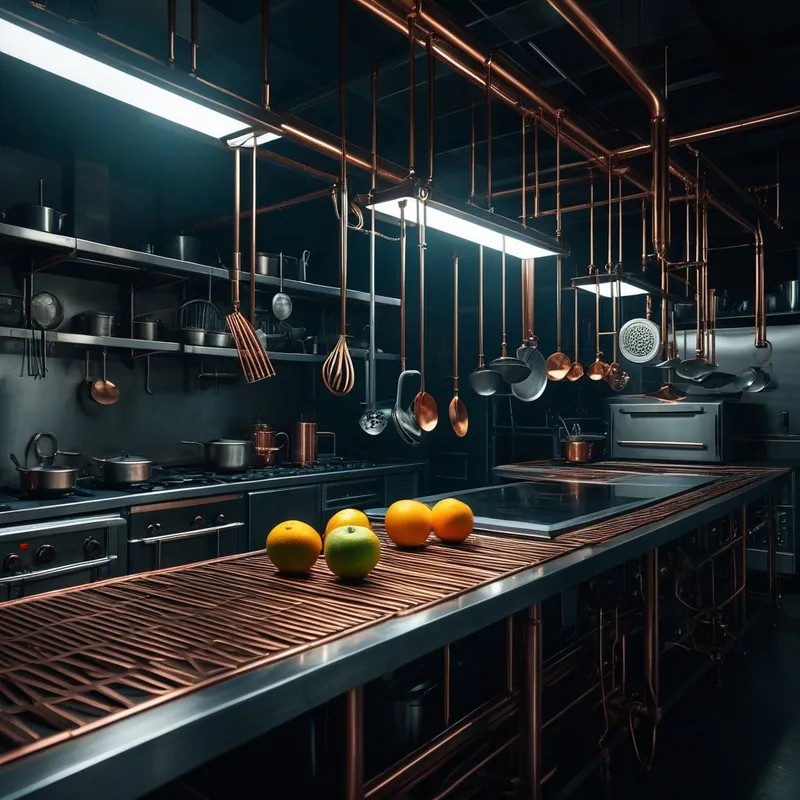
I am in a vast, industrial kitchen, all cold steel and shadow. A single, luminous fruit—its skin like opal, its flesh unknown—rests on the counter. I know I must prepare it, but I have no recipe, no name for it. My hands are steady, but my mind is a silent scream of potential. Do I peel it? Juice it? Reduce it to a glaze? The weight of the decision is absolute.
Here, the dreamer stands at the altar of the unknown self, holding a core essence that demands a creative act of definition, without any external guidance to follow.
The False Lead
This is not a dream about literal hunger, career aspiration, or a simple nostalgia for a grandmother’s soup. To interpret it as such is to taste only the salt on the rim of the glass and miss the complex cocktail within. The culinary arts dream is not an instruction manual for your next dinner party. It is a profound signal of an internal, alchemical process already underway—the psyche working to digest experience, to blend disparate parts of the self, to transform base emotional matter into something nourishing and whole. A burnt meal here does not portend bad luck; it maps the precise temperature at which your current efforts risk destroying their essential nutrients.
Psychological Architecture
To dream of cooking is to engage in the most intimate shadow work: the conscious manipulation of your own inner contents. The kitchen is the sanctum of the psyche where the orphaned parts of self—the bitter resentments, the half-baked ideas, the sweet, untouched memories—are gathered. Here, they are no longer ignored. They are handled, tasted, assessed. The act of chopping is the difficult work of analysis, breaking down a overwhelming whole into manageable pieces. The simmering pot is the vessel of incubation, where conflicting emotions are held in the heat of attention until they blend into a new understanding. Baking is the slow, patient application of consistent warmth to raw potential, allowing a solid structure to rise from formless batter. This is individuation served on a plate: you must become both the chef who decides the recipe and the diner who consumes its consequences. The terror lies in the possibility of spoiling the meal, of failing to transmute your grief into sustenance. The sovereignty is born the moment you realize you are not just following a recipe, but writing it with every choice of ingredient and flame.
Mythic Resonance
We see this eternal process in the myth of Demeter and Persephone. The consuming of a few pomegranate seeds in the underworld is not a casual snack; it is a culinary act of irreversible integration. Persephone ingests the essence of the shadow realm, and in doing so, her nature is forever altered. She becomes a being of two worlds, a living recipe composed of sunlight and subterranean juice. Her story is one of compulsory alchemy—the ingredients of death and life are forcibly combined within her, and from this painful recipe, the cycle of the seasons, of decay and rebirth, is governed. Similarly, the Norse myth of the mead of poetry tells of a divine beverage brewed from the blood of a god and the saliva of races locked in truce. This mead, the source of all inspiration and wisdom, is the ultimate symbol of culinary transmutation: violence, treaty, and bodily fluid are distilled through a complex process into intoxicating insight. The dream kitchen is where we, like the gods, attempt our own such distillations.
Symbolic Nodes
- Unfamiliar Ingredients: Aspects of the self or life experience that feel unknown, alien, or challenging to integrate.
- A Missing Recipe: The feeling of navigating a life phase or emotional crisis without a clear guide or precedent.
- A Burnt or Spoiled Dish: The fear that one’s efforts, or one’s emotional processing, has been ruined by excessive intensity (heat) or neglect (time).
- Feeding Others: The complex dynamics of care, nurture, and the projection of one’s own needs onto those around us.
- An Endlessly Demanding Kitchen: The pressure of internal or external expectations, where the work of self-creation feels relentless and unforgiving.
- A Perfect, Untouched Feast: Spiritual or emotional nourishment that is prepared but not yet claimed or integrated; potential wisdom awaiting consumption.
Archetypal Resonance
The core energy of the culinary arts dream is the sacred act of generation from raw matter, the imposition of vision onto chaos to create something that did not exist before. This is the pure essence of The Creator Archetype.
The Creator does not merely assemble; it transmutes. In the somatic echo, we feel the Creator’s restless urge to make, to take the raw, sensory data of our existence and give it meaningful form. The dream kitchen, with its potential for both masterpiece and mess, is the Creator’s studio. Its shadow—the Mad Scientist or Self-Centered Perfectionist—manifests in dreams of obsessive, futile recipe-following, or creating elaborate dishes meant only for solitary, joyless admiration. The alchemical potential of this theme is activated when we move from the Shadow Creator’s fear of an imperfect product to the true Creator’s commitment to the sacred, messy, and nourishing process of creation itself. The goal is not a flawless meal, but the wisdom earned through the act of cooking your own experience.
The Alchemical Process
The alchemy here is Coagulation: the process of bringing disparate, liquid elements together to form a new, solid whole. The psychological heat is applied through conscious engagement. You must willingly step into the kitchen of your own psyche and pick up the knife. The pressure is the burden of choice—selecting which memories to sweeten, which truths to braise until tender, which painful realizations to reduce to their potent essence. The terror is the possibility of creating poison instead of nourishment; the grief is for the raw, unaltered ingredients of a simpler self that must be sacrificed to the process. The transmutation occurs in the sustained application of attention—the solve et coagula (dissolve and coagulate) of the soul. You dissolve the rigid identities of your ingredients (“I am only this anger,” “I am only that loss”) and through the fire of reflection, you allow them to re-coagulate into a more complex, nourishing, and sovereign substance: integrated wisdom.

The Integration Protocol
To begin digesting this dream, sit with these questions and enact these rituals.
Question 1: If the main ingredient in your dream kitchen was a core emotion you are currently processing, what would it be? Describe its texture, temperature, and taste.
Question 2: Who are you cooking for in this dream? Is it a version of yourself, someone from your past, or an abstract ideal? What does this reveal about where you are directing your life’s energy?
Question 3: What is one “recipe” you have been blindly following in your waking life? What would happen if you deliberately altered one ingredient or step?
Action 1 (Somatic Recipe): The next time you prepare a meal or even a cup of tea, perform it as a silent meditation. Feel the weight of the knife, the heat of the water, the texture of the food. Do not think of the end product. For those three minutes, your only purpose is to be fully present in the alchemical act of transformation.
Action 2 (Pantheon Sketch): Creatively express your inner "pantry." Draw, paint, or collage your current emotional and mental state as a collection of ingredients on a shelf. Use color, shape, and labels to represent them (e.g., a jar of "Crystallized Anxiety," a sprig of "Fresh Hope," a sack of "Heavy Duty Responsibility"). Do not judge the artwork; let it be an inventory.
Action 3 (Ritual Reduction): Identify a recurring worry or a dense memory. Write it down in detail on a piece of paper. Then, beside it, write a single, potent sentence that captures its absolute core truth—this is your "reduction." Safely burn the original, detailed paper, acknowledging the release of the sprawling narrative. Keep the reduced sentence somewhere you will see it, honoring the concentrated essence you have extracted.
Final Validation
It is profoundly difficult to stand in the kitchen of your own becoming, to face the strange fruits of your experience without a known recipe. The heat is real. The fear of spoiling everything is a wise caution. Yet this dream comes not to chastise you for your hunger, but to anoint you as the chef of your own soul’s nourishment. You are being shown that you already hold all the ingredients, that the fire is your own attention, and that the first, most sacred act of integration is to willingly, bravely, taste what you have made of yourself so far. The next meal is always waiting to be created from what remains.