The Creative Forge: Where Potential Meets Pressure
The Somatic Echo
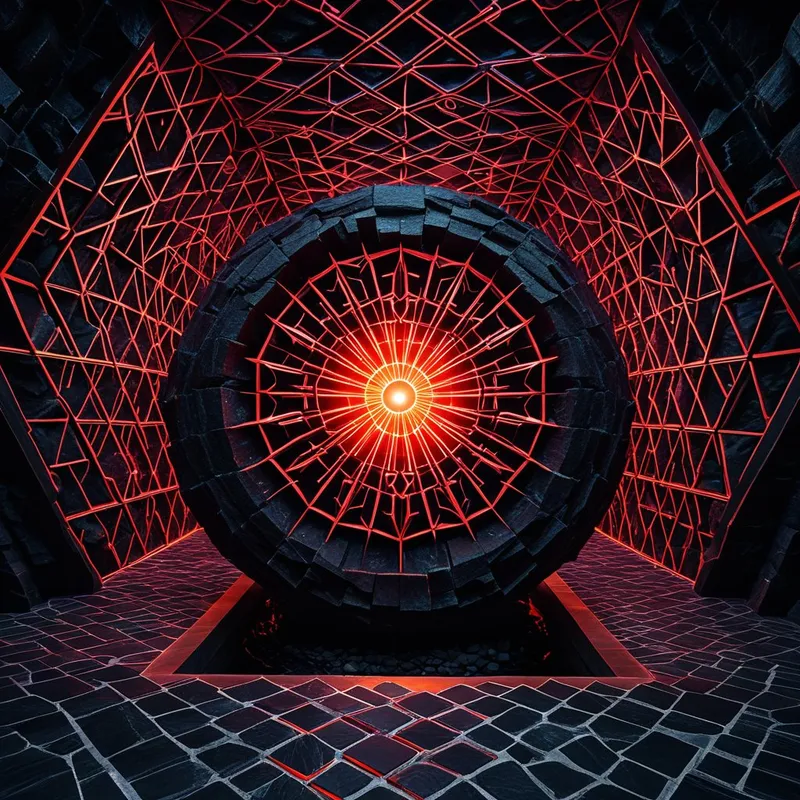
Before the image forms, the body knows. It is a deep, resonant hum in the marrow, a tectonic pressure building behind the sternum. The breath becomes shallow, not from fear, but from a strange, focused density in the chest, as if the lungs are making room for something heavier than air. There is a heat, not a fever, but the dry, contained heat of a kiln—a sense of immense energy being banked and directed inward. The hands may feel restless, not with anxiety, but with the ghost-sensation of gripping a tool, of holding a formless weight that demands to be given shape. This is the somatic signature of the Creative Forge: the visceral knowing that you are both the raw material and the smith, standing at the threshold of your own transformation.
The Dreamer's Log
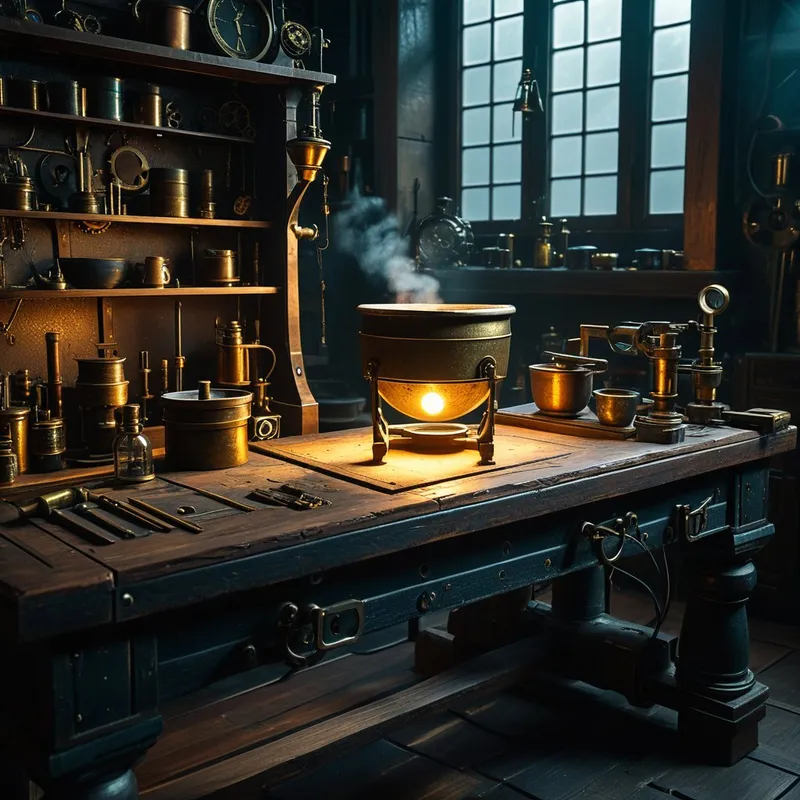
The dreamer finds themselves in a high-ceilinged workshop of tarnished brass and shadow. On a scarred wooden bench sits a simple ceramic crucible, cracked from rim to base. Inside, a substance that is neither liquid nor light pulses with a dull, stubborn amber glow. The dreamer’s task is clear: they must mend the vessel without extinguelling the fire within, using only the strange, non-physical tools of their attention.
This is the alchemical imperative: to hold the fractured container of the self steady, applying the precise pressure of consciousness to repair the form without violating the essential, chaotic flame it holds.
The False Lead
This is not a dream of simple artistic block or a call for a new hobby. To mistake the Creative Forge for a mere suggestion to “be more creative” is to confuse a volcanic core for a candle flame. It is not about producing an external object to win approval or pass the time. The terror or frustration here is not a sign of failure, but the necessary friction of the process itself. The Forge does not appear to decorate your life; it appears to reconstitute your fundamental substance. The pressure you feel is not bad luck or personal inadequacy—it is the gravitational pull of your own unlived potential coming into being.
Psychological Architecture
The Creative Forge emerges in the psyche when the tension between who you have been and who you must become reaches a critical mass. This is deep Shadow work of the most intimate kind. It involves confronting not a monstrous “other” within, but the vast, unclaimed territories of your own possibility—the genius you sidelined, the passion you called impractical, the voice you softened to keep the peace. These are not flaws, but orphaned parts waiting to be integrated.
The individuation process here is one of psychic smithing. The ego, the familiar “I,” must willingly enter the fire. It must allow its old, rigid identifications—the “reliable one,” the “pleaser,” the “realist”—to become malleable. In the heat of this confrontation, a deeper authority, the Self, begins to act as the master smith. It applies the hammer blows of life circumstances, relationships, and internal crises not to destroy, but to shape. The goal is not a flawless, static artifact, but a living tool: a personality structure strong enough to hold your deepest purpose and flexible enough to wield it in the world.
Mythic Resonance
We see this eternal process in the figure of Hephaestus, the Olympian smith. Cast out from Olympus for his imperfection, he did not languish. In the depths of the earth, in his volcanic forge, he transformed his exile into his sovereignty. His lameness, his rejection, became the very source of his unique strength and creativity—he fashioned the gods’ weapons, their dwellings, their automata. His forge was not a place of punishment, but of profound self-authoring. Similarly, the Demiurge in certain gnostic traditions is not merely a bungling creator, but a compelling symbol of the psyche’s own relentless, often messy, drive to shape order from the chaotic prima materia of raw experience. These myths remind us that the act of creation is often born from a fracture, a fall, or a profound sense of otherness, and that the workshop is always, necessarily, in the depths.
Symbolic Nodes
- The Workshop/Forge: The psyche’s inner sanctum, where work is done in isolation but for a universal purpose.
- The Crucible or Vessel: The self, or a specific aspect of the self (heart, mind, voice) that must contain the transformative process.
- Raw, Unshaped Metal or Stone: Unconscious potential, primal emotion, or untapped talent.
- Fire (Contained): The libido or life force in its focused, transformative aspect—not wild passion, but directed will.
- The Hammer & Anvil: The interplay between active consciousness (the hammer) and the resilient, receptive base of the soul (the anvil) that together shape reality.
- Fractures in Tools or Vessels: Not symbols of failure, but often signs that the old container of an identity or belief is no longer adequate for the new energy seeking expression.
Archetypal Resonance
The energy of the Creative Forge is the pure, focused essence of The Creator Archetype. This is not the shadow creator, obsessed with novelty or external validation, but the archetype in its sovereign form. Its resonance is felt in that somatic hum of potential—the deep, bodily knowing that you are meant to give form to something that does not yet exist. The Creator’s alchemical potential lies in its ability to endure the solitude of the forge and the pressure of the process, holding the vision of the whole while attending to the minute detail of the weld. It understands that creation is first an act of destruction—of old forms, old ideas, old selves—and its power is the courage to apply that transformative heat to one’s own substance.
The Alchemical Process
The alchemy of the Creative Forge is Coagulation: the spirit made solid, the vision made manifest. But this follows the necessary, terrifying stage of Dissolution. Before the new form can be shaped, the old must soften, break apart, lose its familiar contours. This is the heat and pressure: the life events, inner conflicts, and profound disorientations that render you malleable. The grief is for the self you were; the terror is of the formless state before the new shape is known.
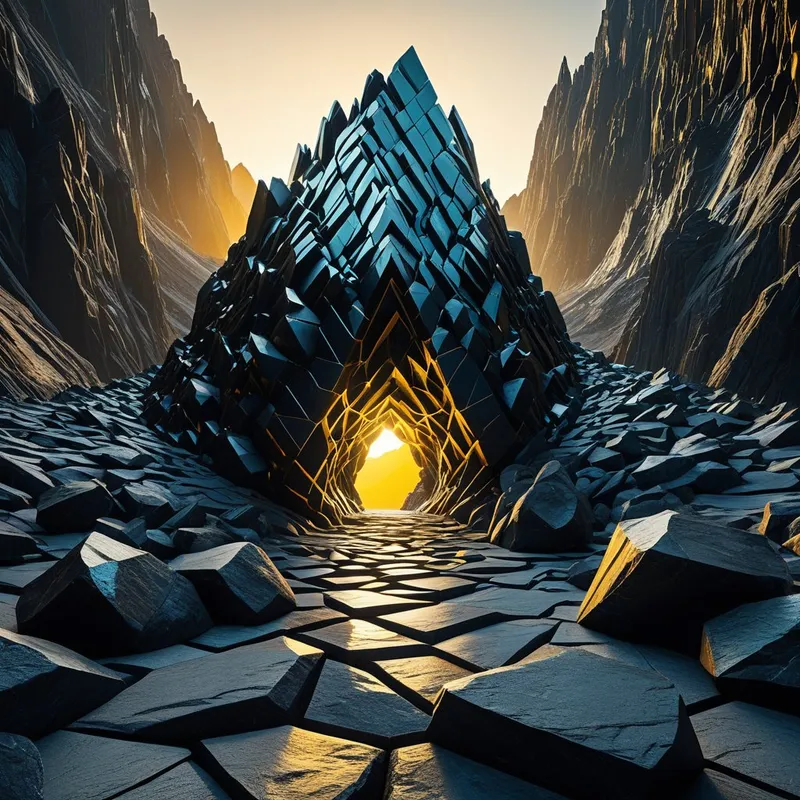
The transmutation occurs in the sustained, conscious endurance of this liminal state. You do not flee the heat. You learn to breathe within it. You become the vessel that can hold the contradiction of being both melted and molder. Sovereignty is forged the moment you stop fighting the pressure and instead align with it, realizing the hammer and the anvil are both within you, and you are the hand that guides the blow. The new shape that emerges is not invented, but discovered within the grain of your own being—a form that was always latent, now brought to light and tempered in the fire of your attention.
The Integration Protocol
Question 1: Where in my life do I feel the most intense, contained pressure or heat—not as chaos, but as a focused density? What is trying to take form in that crucible?
Question 2: What old, familiar part of my identity feels like it is softening, cracking, or becoming malleable? Can I name the grief of releasing its old shape?
Question 3: If my current life were a raw material—ore, clay, rough timber—what single, precise stroke does it most need from the hammer of my conscious will? What is the first, smallest shape I am called to make?
Action 1 (Somatic Anchoring): For five minutes, sit quietly and place your hands on your lower sternum. Breathe into the sensation of density or heat there. Imagine your breath as a bellows, not to stir a wild fire, but to steady and intensify a single, deep-blue flame at your core. Simply witness its constancy.
Action 2 (Unstructured Mark-Making): With a large piece of paper and charcoal or a soft pencil, close your eyes. Let your hand move without intention, applying pressure, making marks, following the somatic echo from your body. Do not draw an object. Draw the sensation of pressure, heat, and shaping. Afterward, look at the marks. What shapes, however abstract, insisted on appearing?
Action 3 (Ritual of the Vessel): Find a small, durable object—a stone, a piece of wood, a simple bowl. This is your symbolic crucible. Hold it and speak aloud (or whisper) one sentence that names the “raw material” you currently hold within you (e.g., “My raw material is my silenced anger,” or “…is my unexpressed joy”). Then, place it in a significant spot, acknowledging it as the container for an ongoing process, not a finished product.
Final Validation
The path of the Creative Forge is not for the faint of heart. It asks you to become intimate with pressure, to make an ally of heat, and to find your strength not in rigidity, but in a resilient malleability. The loneliness of the workshop is real. The strain of holding the hammer is real. But so is the profound truth this dream reveals: you are not being destroyed by the fires of your life. You are being tempered. The sovereignty you seek is not a crown placed upon a static head, but a form you are, with immense courage and patience, hammering into existence from the very core of your being. The forge is not your prison; it is your proving ground. And the masterpiece it shapes is a life that is authentically, unshakably, your own.