The Alchemy of Witness: Dreams of Creative Documentation
The Somatic Echo
It begins not as a thought, but as a pressure in the wrists and a dryness behind the eyes. There is a humming in the jaw, the subtle clench of a recorder poised. The body becomes an antenna, a receiver set to a frequency of significance. A quiet, desperate urgency thrums in the chest cavity—a sense that something is passing, is being lost to the relentless tide of forgetting, and you must capture it. The breath becomes shallow, held in anticipation of the shot, the note, the perfect phrase. It is the visceral sensation of standing before a sublime and fleeting landscape, fumbling with a camera whose lens you cannot quite focus, while the light dies. This is the somatic ground from which dreams of creative documentation grow: a profound, often anxious, embodied imperative to make evidence of an interior event.
The Dreamer's Log
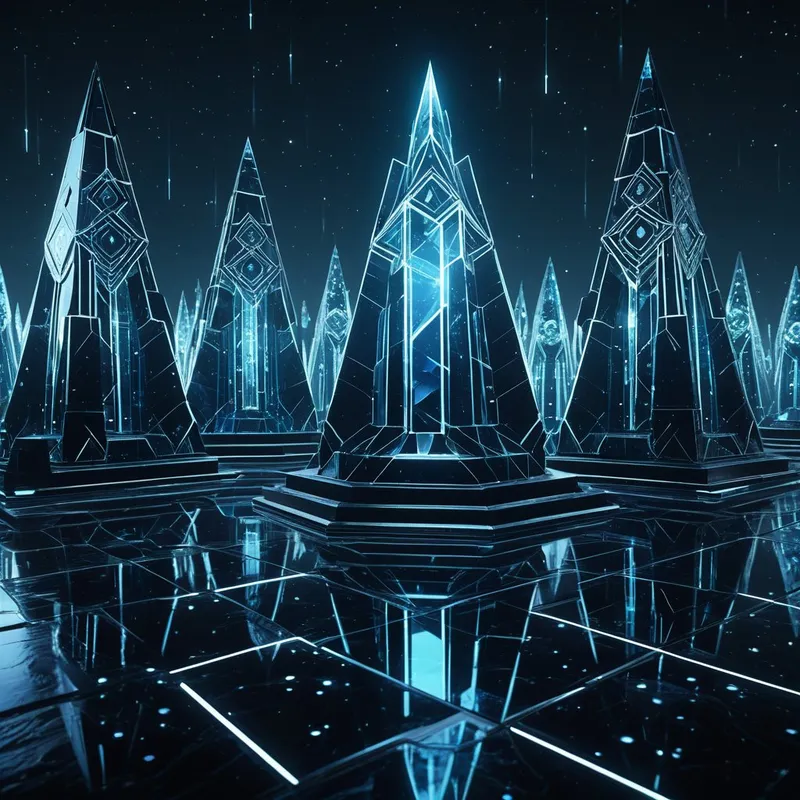
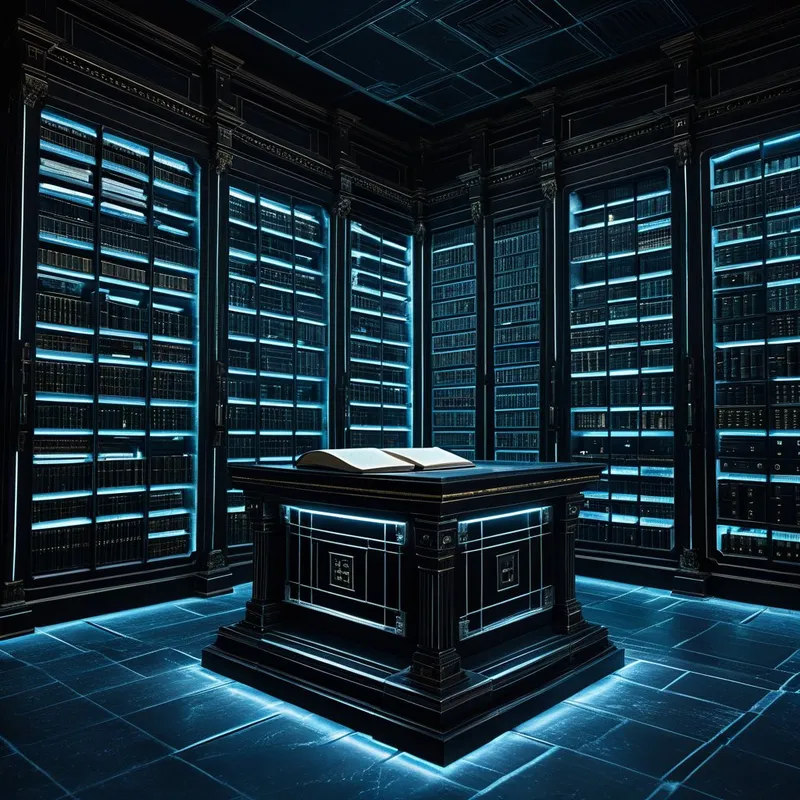
The dreamer finds themselves in a cavernous, silent server farm, but the server racks are organic, grown from blackened root and polished bone. Their task is not to maintain the system, but to transcribe, by hand with a fountain pen, the endless streams of luminous data flowing through transparent veins in the walls into a single, ancient leather-bound journal. The ink is their own breath, fogging the cold air before settling on the page.
This is the alchemical core: the psyche demanding the translation of impersonal, overwhelming data (the systemic, the collective, the trauma-loop) into a personal, hand-wrought narrative—a scripture of the self, written with the substance of one’s own life.
The False Lead
This theme is not mere productivity anxiety or a simple fear of forgetting an appointment. To mistake it for such is to confuse the sacred scribe with the harried clerk. The terror here is not of inefficiency, but of erasure. It is not about failing to document the external world accurately, but about failing to author the internal one at all. The shadow of this dream is not a missed deadline, but a surrendered voice. It is the difference between losing a file and realizing you have never dared to write your own truth into existence, instead living on borrowed scripts.
Psychological Architecture
Beneath the dream of frantic recording lies a profound stage of Shadow work: the confrontation with the Archivist of the Unlived Life. This is an internal figure, often cold and precise, who has spent a lifetime cataloging experiences not as felt realities, but as filed events—traumas as case numbers, joys as fleeting data points. The individuation process here is the dismantling of this impersonal archive. It is the terrifying, liberating act of taking the raw, uncategorized footage of your memory and editing it. Not to falsify, but to find the narrative thread that you choose to pull from the chaos. This is the move from being a passive witness to your own history to becoming its active, creative author. You are not discovering a pre-written truth; you are forging meaning in the crucible of recall. The pressure comes from the internal conflict between the part that wants the safety of the official record (even if it is painful) and the part that knows true sovereignty lies in the vulnerable, creative interpretation.
Mythic Resonance
We see this in the figure of Mnemosyne, the Titaness of Memory. She was not a mere storage bank; she was the mother of the Nine Muses. From her, the act of remembrance, sprang all art, poetry, and science. The myth tells us that raw, documented memory is inert, even burdensome. Its true power—its creative documentation—is only activated when it is wed to inspiration and given form. The archive must birth the song. Similarly, the Egyptian concept of the Weighing of the Heart is not an audit of sins, but a documentation of a life’s essence against the feather of Ma’at (truth/order). The heart itself was the record. The alchemical task is to inscribe your own heart with a truth so authentic it balances the scale.
Symbolic Nodes
- Cameras that won’t focus or have no film: The frustration of perceiving meaning but lacking the internal tool to capture it for yourself.
- Journals with disappearing ink or locked books: The fear that your authentic voice is impermanent or forbidden.
- Transcribing one language into another: The psyche working to translate unconscious material (the symbolic) into conscious understanding (the literal).
- Archives, libraries, or server farms: The vast, often oppressive, structure of inherited memory, cultural expectation, and personal history.
- Microphones recording silence: The attempt to document the void, the unsaid, the repressed.
Archetypal Resonance
The energy here is fundamentally that of The Creator Archetype. Not the shadow Creator, obsessed with a solitary, perfect product, but the sovereign Creator in its essential form: the Artist-Architect of reality itself.
This archetype resonates perfectly with the theme’s core tremor. The somatic echo—the pressure to make, to capture—is the Creator’s urge to give form to the formless. The alchemical potential lies in its movement from consuming reality to generating it. Where the dreamer feels like a failing archivist, the Creator archetype offers the identity of an author. It understands that documentation is not passive recording, but an act of profound selection, framing, and composition. The dream of the organic server farm and the handwritten journal is the Creator at work: taking the given, systemic world (the data) and deliberately, personally, re-composing it into a unique artifact of meaning (the journal). It is the psyche building a world from the inside out.
The Alchemical Process
The transmutation here is of Evidence into Essence. The prima materia is the crushing weight of undigested experience—the “facts” of your life, the traumas, the joys, all filed away as neutral data. The heat is applied through the agonizing question: “What does this mean for me? What story do I choose to tell with this material?” This is the fire of subjective interpretation, which feels dangerous because it challenges the “official record” of your past, often authored by others. The pressure is the tension between the desire for the objective safety of the “document” and the vulnerable responsibility of the “creation.” The alembic is the dreamspace itself, where the mind rehearses this act of creative reinterpretation. The gold that emerges is not a perfect, objective account, but a living narrative—a story you author that makes you feel coherent, sovereign, and alive. You are no longer a curator of relics, but a maker of meaning.

The Integration Protocol
Question 1: What one memory or recurring life "data point" feels most like a cold, hard fact in your internal archive? If you were to creatively reinterpret its meaning—not denying the event, but authoring its significance—what new title or genre would you give it?
Question 2: Where in your waking life do you feel like a passive archivist, merely recording expectations or obligations? Where do you feel the faintest spark of being an active author, choosing the narrative frame?
Question 3: If your life's documentation to date is Volume One, what is the central, sovereign theme you desire to write into Volume Two? What old "file" would you choose to burn as kindling for its first chapter?
Action 1 (Somatic Inscription): For one week, carry a small notebook. When you feel that familiar somatic echo—the pressure, the urgency, the sense of something needing capture—do not reach for your phone. Instead, stop. Breathe into the sensation for 30 seconds. Then, in the notebook, write one sentence that describes the feeling itself, not the external trigger. You are documenting the documentarian.
Action 2 (Creative Re-framing): Choose a single photograph from your past. Create a triptych. On the left, write the "official caption" (e.g., "Family vacation, 1998"). In the center, paste or draw the image. On the right, write a new, creative caption as if for a mythic tale or a surrealist painting. Let it be poetic, strange, or emotionally true in a way the original caption is not.
Action 3 (Ritual of the Empty Page): On a blank sheet of paper, with a pen you enjoy, write this header: "The Unwritten Protocol." Below it, write three to five "rules" or "guidelines" for how you will consciously author your next season. Frame them as creative directives, not productivity hacks (e.g., "Prioritize scenes that feel textured over those that look efficient." or "Allow for narrative detours that delight the main character."). Fold the paper and place it somewhere significant. This is your meta-document.
Final Validation
The anxiety that fuels these dreams is real. It is the terror of the witness who fears their testimony will be lost, that their reality will be declared inadmissible. This fear is not a sign of weakness, but a profound recognition of what is at stake: the very authorship of your soul's journey. The dream is not a critique of your failing memory, but an invitation to a more sacred practice. You are being called not to better record the world as it is given, but to pick up the pen, the brush, the chisel—the tools of the Creator—and begin, with breath and courage, to inscribe the world as you know it to be. The archive is yours. You are no longer its clerk. You are its poet.