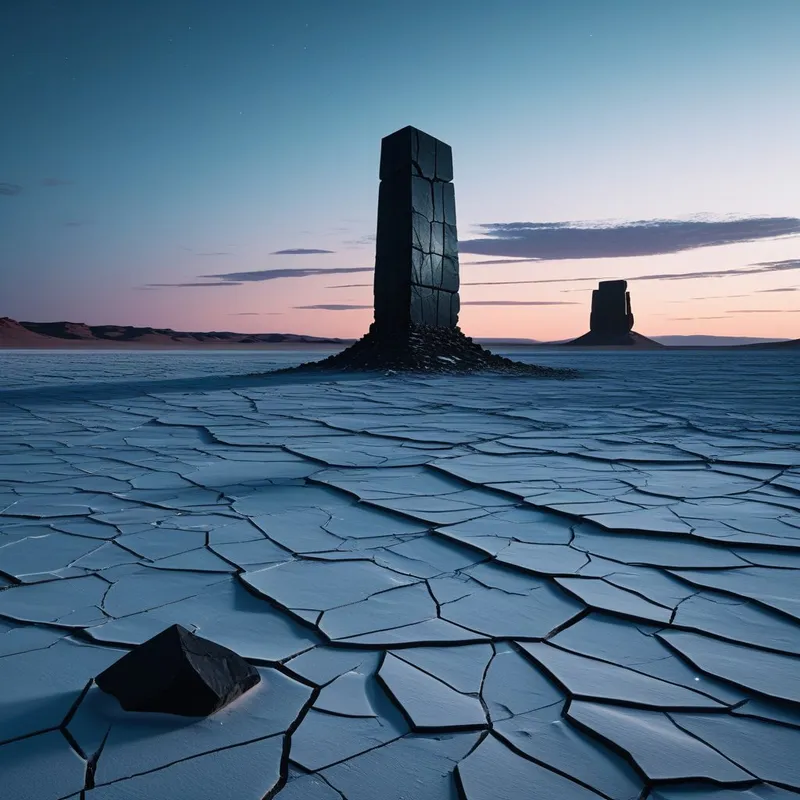
The Dream of Creative Blockage: When the Inner River Freezes
The Somatic Echo
It begins not in the mind, but in the body. A specific, hollow weight settles in the solar plexus, a density that feels less like an absence and more like a presence—a silent, stubborn guest. The breath becomes shallow, held captive just below the sternum. There is a peculiar stillness in the hands, a sense of disconnect between the impulse to reach and the ability to grasp. The throat may tighten, not with emotion, but with the unspoken. This is the somatic signature of creative blockage: the visceral experience of an internal system pausing its output, rerouting its energy into the silent, unseen foundations. It is the feeling of a river freezing from the inside out, not from a lack of water, but from a profound, necessary recalibration of its bed.
The Dreamer's Log (Case Vignette)
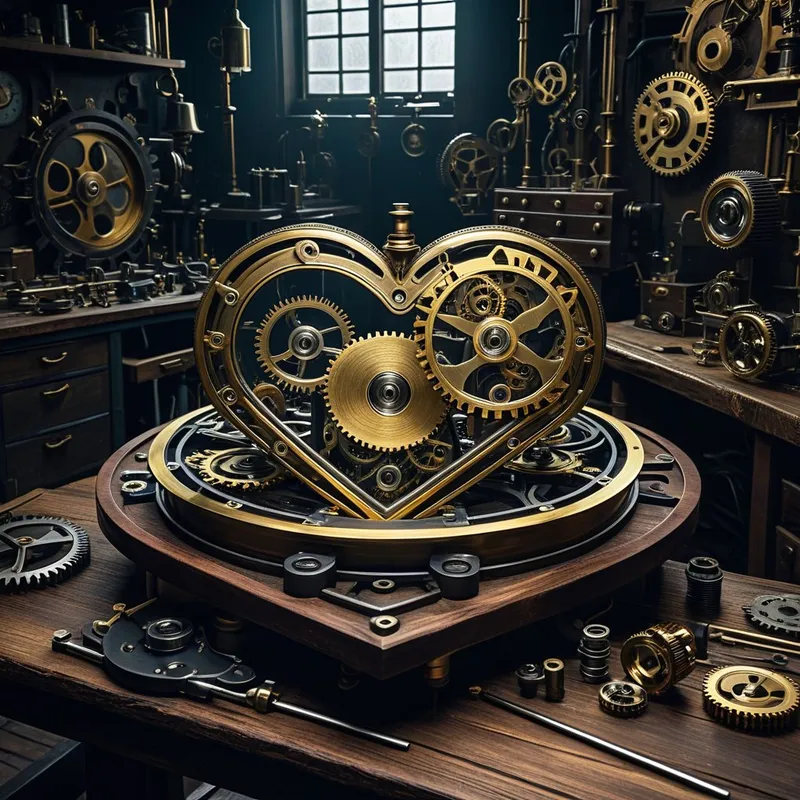
I am in a vast, silent workshop of polished brass and dark wood. My task is to repair a beautiful, intricate clockwork heart. My tools are laid out before me, gleaming and precise. But when I reach for the central, vital gear, my fingers pass through it like smoke. The heart ticks on, hollow and incomplete, and I can only watch, my hands useless, surrounded by everything I need and unable to connect.
Alchemical Interpretation: The dream reveals a psyche whose conscious will (the hands) has become disconnected from the authentic, animating impulse (the central gear), forcing a confrontation with the difference between technical skill and true, embodied creation.
The False Lead
This theme is not about a lack of talent, discipline, or inspiration arriving from the outside. To mistake it for simple laziness or "bad luck" is to pathologize a sacred process. The blockage is not a wall built by failure, but a membrane grown by the psyche itself. It is a protective boundary, often erected to contain a chaotic, fertile, and potentially overwhelming influx of new material from the unconscious. The terror is not of having nothing to say, but of what might emerge if the dam were to break. It is a structural shift, not a personal flaw.
Psychological Architecture
Beneath the conscious frustration lies a deep, shadowy negotiation. The part of us that creates—the inner architect, the muse, the child with paints—has often been in a silent partnership with a vigilant inner manager. This manager values order, safety, and predictable outcomes. For a time, this partnership works: the creator plays within safe boundaries. But true creation demands a rupture of the known. When the soul pushes for a new language, a raw form, or a vulnerable truth, the manager panics. It enforces a lockdown, interpreting the chaos of genesis as a threat to the entire system. The blockage, then, is the visible symptom of this civil war. The shadow work here is to not slay the manager, but to sit in the tense silence with both factions, to hear the protector's fear and the creator's stifled longing, until a new, more spacious internal agreement can be forged. This is the individuation process: moving from a kingdom ruled by a fearful autocrat to a sovereign realm where all inner citizens have a voice, especially the wild, untamed ones.
Mythic Resonance
We see this in the story of Orpheus and Eurydice. Orpheus, the supreme artist, whose music could charm stones, is granted a chance to retrieve his lost love from the underworld on one condition: he must not look back until they reach the surface. He fails. He turns. His creative gift, born from profound loss and longing, is not enough to overcome the human doubt, the need for reassurance, the inability to trust the process in the darkness. The creative blockage is that moment of looking back—the instant where doubt (the shadow of the creator) severs the connection to the emerging, half-formed work still in the underworld of the unconscious. The myth tells us that the deepest art requires a faith that walks forward into the unknown without the constant, validating glance at what is being formed. It must be felt, not seen, until the process is complete.
Symbolic Nodes
- Frozen or Still Water: Pools, ice, stagnant ponds—the arrested flow of emotion and the unconscious.
- Barren or Empty Rooms/Vessels: Blank canvases, hollow pots, vacant studios—the prepared space awaiting an animating force.
- Malfunctioning or Disconnected Tools: Pens without ink, silent instruments, ghostly brushes—the dissociation between will and capacity.
- Mazes with No Center or Exit: The experience of process without progress, effort without arrival.
- Muted or Silenced Voices/Sounds: Trying to scream without sound, a broken telephone, a song stuck in the throat—the inability to express the inner reality.
Archetypal Resonance
The core energy of creative blockage is the cry of The Shadow Creator in its "Mad Scientist" or "Perfectionist" guise. This is not the absence of the Creator, but its distortion under pressure. The Shadow Creator becomes obsessed with the blueprint to the exclusion of the building, with the perfect, sterile idea that can never be soiled by flawed execution. It builds magnificent, intricate cages for itself. The somatic echo—the hollow weight, the still hands—is the body registering this internal civil war between the desire to bring something new into the world and the paralyzing fear that it will not be perfect, or that it will unleash uncontrollable forces. The alchemical potential lies in recognizing this blockage not as the enemy of creativity, but as its fierce, misguided guardian, one that must be befriended and re-integrated to restore the Creator's true power: the courage to make the messy, glorious, and real.
The Alchemical Process
The transmutation of creative blockage requires the heat of conscious containment. This is not the heat of frantic effort, but the sustained, patient warmth of holding the tension without rushing to resolve it. The "lead" of the blockage—the heavy, inert feeling of failure—must be held in the vessel of self-awareness. The pressure comes from refusing the easy outs: blaming circumstance, forcing output, or abandoning the creative impulse entirely. Instead, one must stay present with the emptiness. In this liminal space, the old internal agreement (safety over authenticity) begins to dissolve. Grief may surface—for time lost, for ideas that died unseen. Terror may whisper of perpetual silence. The alchemy occurs when we stop trying to fix the blockage and start listening to it. What is it protecting? What old story of "not enough" does it enforce? As we listen, the frozen structure begins to melt from within, not into water, but into a new medium—a richer, more resilient understanding of what creation truly demands. The sovereignty gained is not just the ability to produce, but the authority to define the terms of one's own expression.
The Integration Protocol
Question 1: If the blockage in my dream had a voice, what single, repetitive phrase is it whispering? Is it "This isn't safe," "This won't be perfect," or "Who are you to speak?"
Question 2: What small, forgotten, or "unacceptable" part of my inner world is the blockage trying to keep me from expressing or acknowledging?
Question 3: Imagine the creative impulse as a distinct entity within me. If it were completely free of the need for an outcome, what would it most love to do, touch, or explore right now?
Action 1 (The Somatic Anchor): For five minutes, place your hands on the part of your body that feels most dense or still. Breathe into that space. Do not try to change the sensation; simply give it your warm, neutral attention. Feel the difference between being the blockage and witnessing the sensation of blockage.
Action 2 (The Unstructured Pact): Set a timer for ten minutes. With the worst materials you can find (a broken crayon, the back of a receipt, mud on your finger), make a mark, a smear, a sound, or a movement with the sole, sacred intention of making it unusable for any "proper" creative project. Destroy its potential purpose. This ritual severs the shadow creator's link to outcome.
Action 3 (The Blueprint Burial): Write down the rigid rule or perfect vision that is currently stifling you (e.g., "The poem must be profound," "The project must be revolutionary"). On a separate paper, draw the chaotic, emotional core the rule is trying to contain (a scribble of anger, a wash of color for grief, a shape for longing). Now, physically place the "rule" paper beneath a potted plant or stone, and place the "core" drawing where you can see it. Symbolically let the rule compost to feed the raw material.
Final Validation
The desert you walk is real. The silence is profound. To feel this ache is not a sign of a broken artist, but of a living one—an ecosystem deep in its winter, gathering nutrients in the dark. This blockage is the psyche’s own profound intelligence, calling for a depth your old methods can no longer reach. The integration is not a triumphant return to easy flow, but the hard-earned right to dig a new well, in a new place, from which a different, more authentic water will eventually rise. Your sovereignty is waiting not beyond the silence, but in the very quality of your listening to it.