The Alchemy of Rot: When Dreams of Corruption Signal Rebirth
The Somatic Echo
It begins not as an image, but as a sensation. A cold, creeping dampness behind the sternum, as if the heart’s chamber has sprung a slow, fungal leak. A metallic taste on the tongue, the ghost of rust. The body feels heavy, porous, as if its structural integrity is compromised from within—not by violence, but by a patient, silent entropy. There is a profound fatigue here, but it is not the fatigue of exertion. It is the weariness of a system sustaining a fiction, of energy diverted to prop up a structure whose foundations have already turned to silt. This is the somatic whisper of corruption: the body knowing the truth of decay long before the mind can bear to read the report.
The Dreamer's Log
She stands in a pristine, white-tiled laboratory, holding a perfectly engineered chrome hand. As she watches, a single, flawless black rose begins to grow from its palm. The petals unfold to reveal not pollen, but a complex, glitching microchip at its center, emitting a faint, sickly green light that makes the air taste of ozone and regret.
This dream is not a warning of external failure, but an alchemical revelation: the most perfect form of your old logic is now the very site of its beautiful, necessary corruption.

The False Lead
This theme is not about literal disease, moral failing, or a prophecy of "bad luck" descending upon your waking life. To mistake it for such is to flee from its initiatory gift. The decay in the dreamscape is not an invasion; it is a revelation. It is the psyche’s ruthless and loving documentation of an internal structure—a belief, an identity, a way of being—that has outlived its integrity. The terror is not of the rot itself, but of the dissolution of the known. The dream is not diagnosing a sickness; it is performing the surgery.
Psychological Architecture
Here, in the shadowlands, the work is one of sacred demolition. The ego, that diligent city-planner of the self, has constructed districts of identity upon compromised ground: the career built on a disowned passion, the relationship sustaining on silent bargains, the self-image polished to a high sheen to hide a hairline fracture of worth. Corruption dreams are the silent, non-consensual audit. They are the mycelial network of the unconscious, secreting their acids into the petrified wood of these constructs, returning rigid form to fertile mush.
This is the essence of Shadow work within this theme. You are not integrating a hidden "bad" part; you are witnessing the collapse of the stage upon which your inner family system performed its roles. The Achiever, the Caretaker, the Perfect One—these parts find their scripts dissolving mid-sentence. The grief that follows is not for a loss, but for the recognition of what was never truly alive to begin with. Individuation here is a harrowing promotion: from citizen of a crumbling city to the sovereign of the wild, fertile ruins.
Mythic Resonance
We see this eternal process in the story of the Phoenix, but we often sanitize its terror. The myth is not simply about rebirth from ashes. It is about the bird, sensing the accretion of centuries, the weight of its own accumulated history, actively building its own funeral pyre. It must combust its very form, endure the agony of un-becoming, because its current incarnation has become a cage of its own making. The corruption is the wisdom that the cage has grown too small, too rigid. The decay is the pyre.
Similarly, in the Norse cycle of Ragnarök, the great world-tree Yggdrasil trembles, the gods themselves are fated to fall, and all creation is consumed. This is not a nihilistic nightmare, but a profound cosmological necessity. The old order, however divine, becomes corrupt, stagnant, unable to contain the burgeoning new life. The destruction is not an end, but the only possible method of renewal for the entire system. The dream of personal decay is your intimate, internal Ragnarök.
Symbolic Nodes
- Rotting Food/Feasts: Promises that nourished you have turned toxic; sustenance based on false premises.
- Crumbling Architecture/Faulty Foundations: The collapse of personal ideologies, belief systems, or life structures.
- Corroded Metal/Rust: The oxidation of will, action, or strength; a once-sharp purpose now blunted and porous.
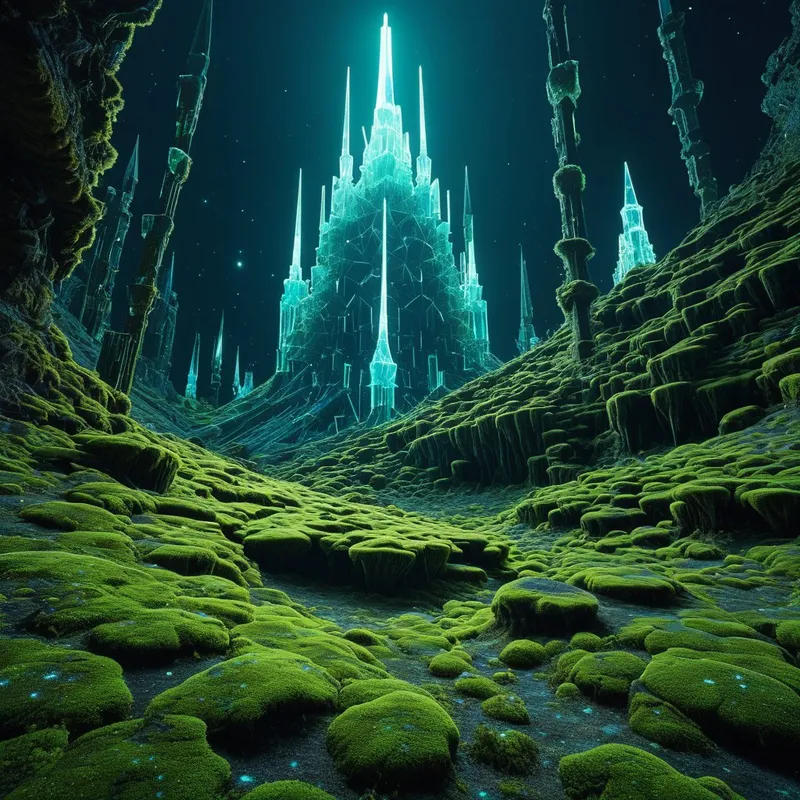
- Fungal Growth/Mold: The silent, pervasive spread of an ignored truth or a suppressed vitality reclaiming its space.
- Glitching Technology/Failing Machines: The breakdown of cognitive frameworks, personal "operating systems," and automated behaviors.
- Polluted Water: The contamination of emotional depth, intuition, or the flow of life itself.
Archetypal Resonance
The energy of Corruption & Decay is most intimately aligned with The Shadow Creator.
The Creator archetype builds worlds, identities, and legacies. Its shadow is not inactivity, but the act of creation turned in upon itself. It is the architect who has fallen in love with the blueprint, not the life it’s meant to house. It is the artist preserving a finished sculpture under glass, long after the spirit has left it. The somatic echo of decay is the Shadow Creator’s masterpiece—a perfect, lifeless form finally succumbing to the entropy it was designed to defy. The alchemical potential lies in the Shadow Creator’s deepest skill: if it can build a prison of identity, it alone holds the tools to dismantle it. The corruption is its own brutal, necessary critique, forcing a return to the raw, chaotic materials of the self to begin the only creation that matters: the authentic one.
The Alchemical Process
The transmutation here is Composting. This is not a gentle metaphor. True composting requires heat, pressure, darkness, and the relentless work of decomposers breaking down complex matter into simple, fertile humus. The psychological "heat" is the unbearable tension of holding two truths: the functional fiction of your old self and the chaotic, formless truth of what is emerging. The "pressure" is the weight of this recognition in your daily life, as old ways of responding now feel false, like speaking a dead language.
You must consent to the breakdown. This is the crux. You must, in some silent interior chamber, agree to let the mycelium of your unconscious dissolve the rigid lignin of your persona. The grief, the disgust, the fear—these are the acids at work. The process feels like a loss of control because it is. You are not the gardener directing the growth; you are the entire ecosystem undergoing a seasonal die-back. Sovereignty is not reclaimed by stopping the rot, but by understanding yourself as both the decaying matter and the fertile ground it will become. The new structure grows not over the ruins, but from their digested essence.

The Integration Protocol
Question 1: Where in my waking life do I feel the most pristine, polished, or "perfect"? Can I sense the faint, sickly-sweet scent of decay beneath that polished surface?
Question 2: What long-held story about myself or my world is beginning to feel like a dead language—functional in theory, but utterly devoid of living meaning?
Question 3: If the corruption in my dream is not a destroyer but a liberator, what cage is it dissolving to set me free from?
Action 1 (Somatic Grounding): When you feel the echo of decay—the dampness, the weight—do not try to fix it. Place a hand on the area. Breathe into it, and on the exhale, silently offer the phrase: "I consent to the breakdown." Do this not to stop the feeling, but to align your consciousness with the process.
Action 2 (Unstructured Writing): Set a timer for 10 minutes. Write from the perspective of the decaying object or place in your dream (the crumbling wall, the rotting fruit, the glitching screen). Let it speak. What is it made of? What held it together? What is breaking it down? Do not analyze, just transcribe. This gives voice to the decomposer within.
Action 3 (Ritual of Release): Find a small, natural object—a leaf, a twig, a stone. Hold it and imbue it with one rigid belief or identity that feels "corrupt." Take it to a body of moving water (a stream, the sea) or bury it in earth. As you release it, state aloud: "I return this form to the elements for transmutation." The ritual externalizes and completes the inner release.
Final Validation
To dream of corruption is to be entrusted with a profound and terrifying grace. It means your psyche is courageous enough to no longer protect you from the truth of your own necessary endings. The path through the rot is lonely, damp, and dark. It is right to grieve the collapsing architecture of a former self. But in the fertile black soil that remains, where the old lies digested and rich, something utterly new awaits its season. You are not decaying. You are composting. And from this dark, fecund ground, only truth can grow.