
The Dream of the Open Door: On Connection and Hospitality
The Somatic Echo
Before the image forms, the body knows. It is a specific, hollow ache in the solar plexus—not the sharp pang of hunger, but the deep, resonant emptiness of a great hall waiting for a feast. It is a paradoxical sensation: a simultaneous chill of isolation and a warmth of potential, like standing alone in a doorway where the light from within spills out onto a dark path. The breath becomes shallow, held in anticipation. The shoulders may round slightly, not in defeat, but in the ancient, somatic posture of one preparing to receive a guest, to make space. This is the pre-verbal ground from which dreams of connection and hospitality grow—a visceral longing not merely for company, but for the sacred act of hosting and being hosted. It is the body’s memory of the womb and its echo of the tomb, the two ultimate thresholds of absolute connection.
The Dreamer's Log
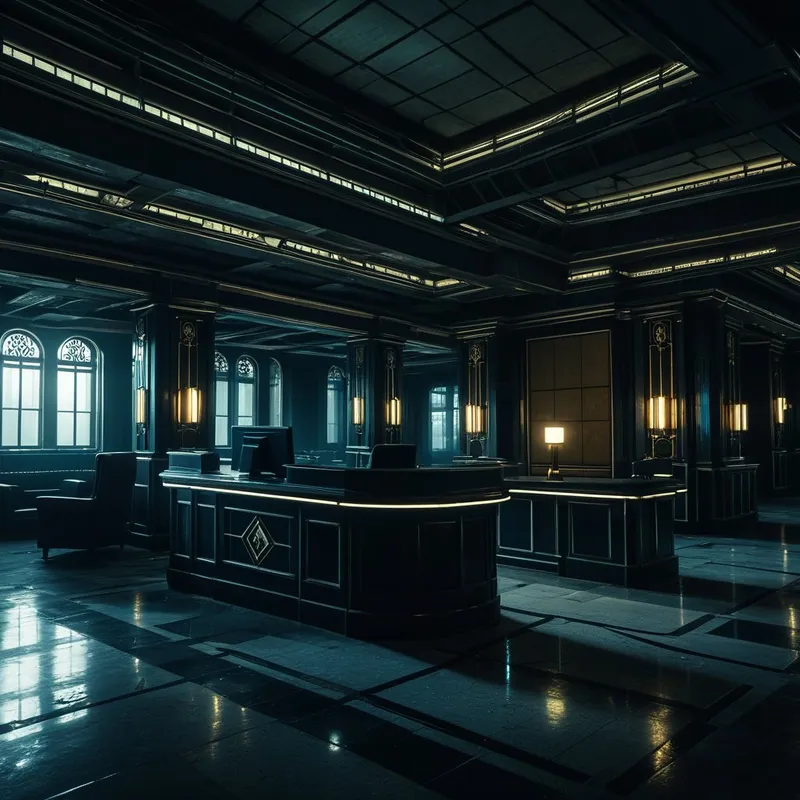
I am standing behind the counter of an impossibly vast, empty hotel. The lobby stretches into darkness. A figure appears at the distant doors, shrouded in mist. I feel a surge of dread, but my hands move of their own accord, polishing a key that has materialized before me. The dread softens into a heavy, solemn warmth. I know I must prepare a room.
Alchemical Interpretation: The dream psyche, as the sole attendant of the abandoned Self, recognizes an exiled part seeking shelter and instinctively begins the ritual of welcome, transmuting dread into duty.
The False Lead
This theme is not about social anxiety or a simple wish for more friends. It is not the ego’s complaint of loneliness. To mistake it as such is to stand at the shore calling for a ship, while ignoring the drowned city within your own chest. The dream of connection and hospitality is a profound structural signal. It indicates that a long-barred door inside is now being tested from the other side. The “guest” knocking is not a stranger, but a disowned fragment of your own consciousness—a grief, a rage, a forgotten innocence—seeking repatriation. The terror is not of the unknown other, but of the known self you have refused to house.
Psychological Architecture
To understand this dream is to engage in the most intimate form of shadow work: the work of the host. Our psyche is not a monolithic kingdom but a sprawling, often dilapidated estate. Over a lifetime, we exile tenants. Too much joy is deemed frivolous and locked in the attic. A necessary anger is deemed dangerous and chained in the cellar. We become the caretaker of a haunted house, jumping at every creak, denying the presence of the very residents who give the structure its life. Dreams of hospitality are the estate manager’s report: a part of the self has journeyed through the underworld of the unconscious and has returned to the gates, demanding entry.
The individuation process here is one of interior hospitality. It is the slow, courageous act of walking through your own corridors, listening at each closed door, and finally turning the handle. You do not necessarily embrace what you find; you first simply acknowledge its right to a room. You give the orphaned grief a bed. You allow the rebel anger a hearth to warm itself by. This is not fusion, but federation. Sovereignty is not achieved by being a single, pure ruler, but by becoming a wise and compassionate host to the entire internal family. The connection dreamed of is the re-establishment of diplomatic relations between the conscious ego and the inner parliament it has ignored.
Mythic Resonance
We see this eternal process in the myth of Baucis and Philemon. The old, impoverished couple offer their meager hospitality to disguised gods, who then reward them by transforming their humble cottage into a glorious temple and weaving their lives into a single, intertwining tree. The myth is not about the gods, but about the alchemy of the hosts. Their offering—the act of making space, of sharing their last sustenance—transmutes their entire reality. Their cottage, their very bodies, are restructured into a sacred, connected form. Similarly, in the Celtic tradition of the geis, a sacred hospitality bond, to refuse a rightful guest was to invite cosmic disorder. The dream pulls on this ancient firmware: the order of your soul depends on your capacity to welcome what fate, or your own depth, sends to your door.
Symbolic Nodes
- Innumerable Empty Chairs or Set Tables: The prepared space awaiting its occupants—the psyche’s readiness for integration.
- A Key, Especially an Ornate or Heavy One: The responsibility and means of granting access to a sealed chamber of the self.
- A Threshold or Doorway That Shimmers or Breathes: The liminal space where inner and outer, known and unknown, meet.
- Preparing Food or Drink for an Unseen Guest: The somatic, nurturing component of the integration process.
- A Vast, Empty Building You Are Responsible For: The totality of the self, felt as a burdensome yet potential-filled structure.
Archetypal Resonance
The energy at the core of this theme is that of The Caregiver Archetype. This is not its shadow manifestation of the Martyr, who hosts out of exhausted obligation, nor the Smotherer, who seeks to consume the guest. This is the Caregiver in its essential, alchemical function: the one who creates a protected container for transformation. The somatic echo—the hollow warmth, the preparing posture—is the Caregiver’s body knowing its purpose. The archetype’s core drive is to nourish and protect, and in this dream landscape, the "other" to be cared for is an alienated part of the self. The alchemical potential lies in this profound reversal: by exercising the Caregiver’s hospitality inwardly, you become both the hosted and the host, healing the fundamental split and achieving a sovereignty built on compassion, not control.
The Alchemical Process
The transmutation here is from Loneliness (the leaden state of inner exile) into Sovereign Communion (the golden state of inner federation). The required heat is the intense discomfort of the encounter itself—the dread as the shrouded figure approaches your dream-lobby. This heat is the friction between the ego’s desire for a tidy, controlled self and the psyche’s demand for wholeness. The pressure is the weight of the key in your hand, the responsibility you cannot refuse.
The process follows three stages: Recognition, Reception, and Resonance. First, you must recognize the guest as your own (the moment of dread softening into solemn warmth). Then, you must perform the act of reception—not with fanfare, but with the simple, profound rituals of hosting: assigning a room, offering sustenance. This is the solve, the dissolving of the boundary between "me" and "not-me." Finally, resonance is established. The guest settles in. Its energy ceases to knock frantically at the door and begins to contribute to the household. The orphan’s grief becomes depth. the rebel’s anger becomes passionate conviction. The structure of the self is quietly, irrevocably reorganized from within.
The Integration Protocol
Question 1: In the dream, what was the precise moment the feeling shifted from dread to purpose? What quality in the "guest" or in yourself allowed that pivot?
Question 2: If the building in your dream (house, hotel, temple) is a map of your inner world, what room did you avoid? What room felt most like home?
Question 3: What one emotion or memory have you been treating as an unwelcome intruder in your waking life, and what would it mean to simply give it a chair by the fire, without needing to agree with it or make it leave?
Action 1 (The Silent Supper): Set a place at your table for one meal, for the unseen guest. Do not force imagery or conversation. Simply eat in the acknowledged, silent company of whatever part of you may be present. Observe what arises in the space you create.
Action 2 (Cartography of the Interior): Without planning, draw the floorplan of the building from your dream. Let your hand wander. Then, in unstructured writing, label the rooms. What is stored in the cellar? What is celebrated in the main hall? This is not analysis; it is creative reconnaissance.
Action 3 (Threshold Ritual): Choose a doorway in your home. For one week, each time you pass through it, pause for one breath and internally state: "I cross this threshold with awareness, hosting all that I am." This grounds the archetype in somatic, daily architecture.
Final Validation
It is hard, sacred work to open a door you have spent a lifetime barricading. The dread is real; the emptiness of the hall is real. But so is the key in your hand. These dreams are not reminders of a lack, but evidence of a preparing—a profound readiness within your own architecture. You are not being asked to throw a party for your demons. You are being asked, with the solemnity of a true host, to simply stop leaving them out in the cold. The connection you crave begins with the hospitality you offer to the stranger in your own mirror. When you finally greet them, you may find they have been carrying the missing piece of your hearth-fire all along.