
The Somatic Echo
It begins not as a thought, but as a texture. A feeling of being carried, of momentum not your own. The body knows it first: a subtle, metallic taste at the back of the tongue, the faint, rhythmic tremor in the solar plexus that syncs with an unseen clock. There is a weight, not of stone, but of polished chrome—smooth, efficient, and utterly impersonal. The breath becomes shallow, automatic, just sufficient to maintain the system. It is the visceral sensation of being a passenger in your own vessel, watching the landscape of your life scroll by through a window you did not choose to open. This is the somatic signature of conditioned behavior: the ghost in the machine, felt in the marrow before the mind can name the haunting.
The Dreamer's Log (Case Vignette)
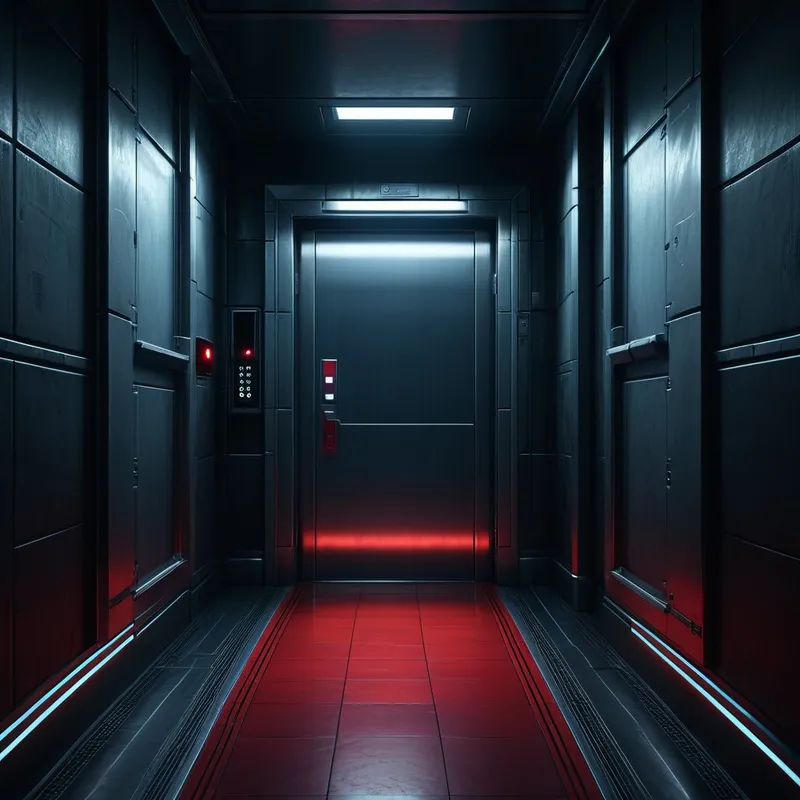
Night after night, I find myself in the same long, sterile corridor. I am late for something critical. My hand moves to a keypad by a heavy door, fingers tapping a code I do not consciously know. The light stays red. I tap the same sequence again, faster, a panic rising in my throat. The red light pulses, indifferent. I am trapped in the ritual of the wrong password.
Here, the dream presents the alchemy of futility: the attempt to solve a spiritual problem—access to a new state of being—with a memorized, mechanical solution. The code is the conditioned behavior; the persistent red light is the soul’s refusal to be opened by rote.
The False Lead
This theme is not about mere habit or routine. Do not mistake it for the comfort of a morning coffee or the muscle memory of a drive home. Those are grooves worn by conscious travel. Conditioned behavior is the subterranean aqueduct, carved by ancestral waters and forgotten storms, now directing the flow of your life unseen. It is not a character flaw to be condemned, but a psychic structure to be met. The dream is not reporting on "bad luck" or personal failure; it is mapping the invisible architecture of your autonomy.
Psychological Architecture
To engage this theme is to enter the shadow work of the internal family system, where parts of the self have been frozen into roles for safety. The "Manager" who tirelessly runs the old programs of productivity, the "Firefighter" who numbly reaches for the same distraction to quell anxiety, the "Exile" who believes it must stay small and quiet to be loved—these are not enemies. They are loyal soldiers following outdated orders, etched into the psyche during moments when authenticity was too costly. The individuation process here is a gentle, profound mutiny. It is the "I" learning to stand at the console of its own being, not to violently eject these parts, but to thank them for their service and, with great tenderness, begin to decommission the machinery of a war that is over.
Mythic Resonance
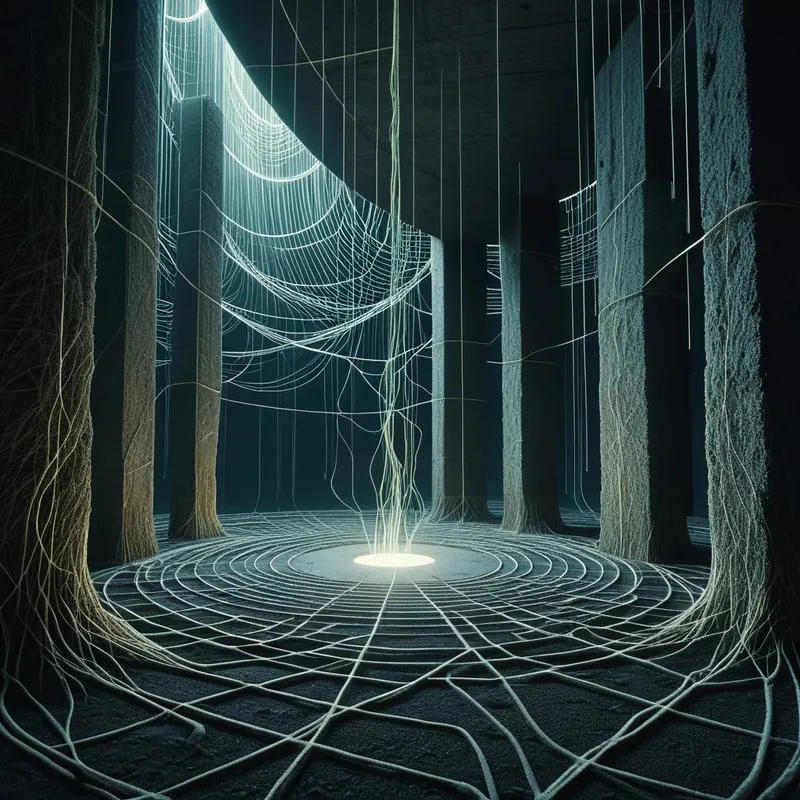
We see this eternal drama in the tale of Arachne, the mortal weaver who challenged Athena. Transformed into a spider, she is condemned to weave the same web, forever. This is not merely a punishment, but a profound image of conditioned fate: exquisite skill trapped in an endless, repetitive pattern, creating a beautiful prison of her own genius. Our modern corridors and keypads are Arachne’s web—self-constructed, technically masterful, and ultimately confining. The myth whispers that the way out is not through better weaving, but through a metamorphosis of the very weaver.
Symbolic Nodes
- Being Late / Missing a Vehicle: The self sensing its life is operating on a schedule authored by others.
- Broken Record / Skipping Track: The psyche's literal representation of a stuck narrative or emotional loop.
- Locked Doors with Known Codes That Fail: The failure of old, proven methods (conditioned responses) to open new realms of experience.
- Walking a Predetermined Path or Track: A visceral sense of preordination, lacking agency or deviation.
- Repeating a Task Endlessly (Sisyphus Motif): The archetypal core of futile labor devoid of meaning or completion.
- Mirrors Showing a Robotic or Masked Face: The confrontation with the automated persona that has replaced authentic expression.
Archetypal Resonance
The energy here resonates most deeply with The Orphan Archetype, specifically in its shadow manifestation. The Shadow Orphan is not the resilient survivor, but the perpetual Victim, convinced of its fundamental powerlessness and abandonment, which then conditions behavior around seeking rescue or numbly enduring. The somatic echo—the feeling of being carried by a momentum not your own—is the Orphan’s deep-seated belief that agency lies elsewhere. Its alchemical potential, however, is immense: this archetype holds the raw, unmet longing for authentic belonging and self-reliance. By bringing consciousness to the conditioned loops of victimhood, the Orphan’s grief becomes the fertile ground where the sovereign self, the true adult, can finally take root and claim its inherent authority.
The Alchemical Process
The transmutation of conditioned behavior requires the heat of conscious friction. This is the intense, often uncomfortable pressure generated when you consciously choose not to follow the script in a moment of activation. It is the pause between the stimulus and the habitual response, where the old neural pathway screams for compliance and you choose, instead, to breathe into the void of the unknown. This is the nigredo, the blackening—the feeling of disintegration as the automated identity falters. The grief that surfaces is not for the loss of the behavior, but for the life you lived while on autopilot. The alchemy occurs when you can hold that grief not as a failure, but as proof of a deeper, feeling self that was always present, waiting beneath the program. The conditioned copper of reactive behavior is slowly annealed into the gold of conscious response.
The Integration Protocol
Question 1: In the dream, where did I have a choice, however small, that I did not take? What did the dreamscape show me would have happened if I had?
Question 2: What is the oldest, most familiar feeling that arises when I am "in the loop" of a conditioned behavior? Can I locate its origin in my body as a shape or temperature?
Question 3: If this behavioral loop were a loyal protector, what outdated threat is it still diligently guarding me from?
Action 1 (The Conscious Interrupt): For one day, choose a minor, automatic ritual (like your first reach for your phone in the morning). Insert a full minute of stillness between the impulse and the action. Do nothing else. Just feel the electrical hum of the habit in your body without feeding it.
Action 2 (Mapping the Codex): Engage in unstructured, non-linear writing. Without crafting a narrative, jot down phrases, rules, and commandments you absorbed about "how to be" from your early environments (e.g., "Don't make a scene," "Always be useful," "Pleasure must be earned"). Don't analyze; simply externalize the code.
Action 3 (Ritual of Erasure & Rewriting): Write one of those core "commandments" from Action 2 on a piece of paper in pencil. Sit with it. Then, slowly and deliberately, smudge the graphite with your finger until the words are illegible, feeling the physical act of blurring the old script. On a new paper, using a pen of a different color, write a single, compassionate statement of permission for yourself that contradicts the old rule.
Final Validation
It is profoundly difficult to feel the walls of a prison you helped build, especially when they were constructed for your protection. The frustration, the grief, the sense of being haunted by your own ghost—these are not signs that you are broken. They are the undeniable evidence that you are alive, and that something within you is too vital, too true, to remain forever automated. Your dreams are not mocking your loops; they are sounding the alarm. They are showing you the door, and placing your hand on the keypad, not to repeat the old code, but so you can finally feel your own finger on the button, and choose, perhaps for the first time, to press stop.