
The Alchemy of Comfort: From Somatic Echo to Sovereign Sanctuary
The Somatic Echo
Before it is an image, comfort is a texture in the body. It is the deep, cellular sigh of release, the unclenching of a jaw you didn’t know was tight, the softening of the shoulders away from the ears. It is the visceral memory of weight being held—not by you, but for you. This echo is not the absence of pressure, but the presence of a different kind of gravity: one that pulls you inward and downward, toward your own center, rather than scattering you outward in defense. It feels like the moment warm water first touches cold skin, a boundary dissolving into a gentle embrace. The mind will later furnish this feeling with symbols—a chair, a blanket, a room—but the origin is pre-verbal. It is the body’s primal prayer for containment, for a pause in the relentless project of being a self.
The Dreamer's Log
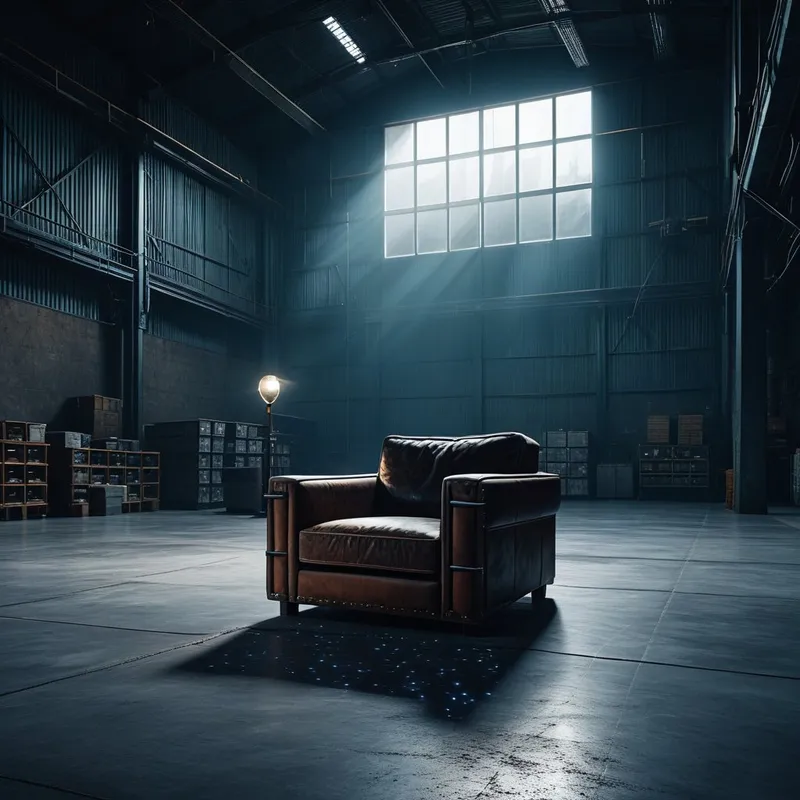
In the dream, I am wandering an endless, cold warehouse of polished concrete and echoing footsteps. I turn a corner, and there, in a perfect pool of warm lamplight, sits a single, worn leather armchair. It is empty. I know, with a certainty that bypasses thought, that it is for me. I do not sit. I simply stand at the edge of the light, feeling its warmth on my shins, and weep.
Alchemical Interpretation: The dream presents not the fulfillment of comfort, but its precise blueprint—the sovereign space, held in readiness, which the psyche has constructed but the self has not yet learned to inhabit.
The False Lead
Comfort, in the dreamworld, is not mere pleasure, nor is it the anesthetic of avoidance. A dream of sinking into a plush couch while the house burns is not a comfort dream; it is a dream of the Shadow Innocent, of denial masquerading as peace. True comfort does not ask you to forget the world’s sharp edges; it provides a ground soft enough that you can finally feel the full weight of your exhaustion without shattering. It is the difference between a numbing haze and a clarifying embrace. The false lead is the lure of the cocoon that never intends to release the butterfly, mistaking stasis for safety. The dream is wise to this deception. It offers the chair, but also the vast, cold warehouse—the context that makes the sanctuary meaningful.
Psychological Architecture
To dream of comfort is to encounter the architecture of your own inner refuge, or its stark absence. This is profound Shadow work, often centered on the exiled parts of our internal family—the weary protector, the frightened child, the overachiever who never rests. The dream reveals the conditions under which these parts feel permission to stand down. The individuation process here is one of repatriation. It is the slow, deliberate work of bringing consciousness to the somatic echo, of building—brick by psychic brick—the interior space that can hold your complexity without judgment. The longing for an external source of comfort (a person, a place, a substance) is alchemized into the capacity to become that source for yourself. The psyche is not seeking a parent; it is instructing you in how to become your own sanctuary, integrating the orphaned longing into a sovereign whole.
Mythic Resonance
We see this universal firmware in the myth of the Homeric Hymn to Demeter. After the abduction of her daughter Persephone, the goddess Demeter, shrouded in grief, wanders the earth refusing comfort. She is offered a throne in the halls of gods, but it is only in the humble home of mortal Metaneira that she agrees to sit—not on a throne, but on a simple, covered chair. This is the archetypal moment: comfort is not found in the opulent or the divine, but in the ordinary, human container that acknowledges grief without trying to fix it. The chair becomes a sacred space where the unbearable is, for a moment, borne. Similarly, the Buddhist concept of Sukha, often translated as “ease” or “genuine happiness,” is not a fleeting pleasure but the profound comfort that arises from an unshakable inner settlement, the peace of the mind that has found its true seat.
Symbolic Nodes
- Enclosed, Soft Spaces: Womb-like rooms, blanket forts, canopy beds, warm baths.
- Held Weight: Being carried, sinking into a perfect chair, a supportive hug.
- Warmth Sources: Hearths, sunlight pools, a single lit lamp in darkness, a hot drink.
- Familiar, Worn Objects: A childhood blanket, a specific book, a piece of well-used furniture.
- Nourishment: Being fed, a sumptuous meal prepared for you, milk and honey.
- Silence & Stillness: A sudden cessation of noise, a library’s hush, a peaceful pause in a storm.
Archetypal Resonance
The energy of the Comfort dream resonates most deeply with The Caregiver Archetype, specifically in its journey from shadow to light. The somatic echo is the Caregiver’s core impulse: to nurture, to hold, to provide sanctuary. In its shadow form, this manifests as the Martyr, who seeks comfort by exhausting themselves for others, or the Smotherer, who confuses control for care, creating prisons of pillows. The dream of the empty chair is the archetype’s pure call. It is not about caring for another, but about integrating the Caregiver’s essence inwardly—learning to offer that unconditional, holding presence to the fragmented systems within. The alchemical potential lies in transmuting the longing to be comforted into the sovereign capacity to comfort, thereby healing the internal orphan and establishing a benevolent inner rulership.
The Alchemical Process
The transmutation of comfort is an alchemy of reciprocal holding. The base material is the raw, often desperate, longing for external solace. The heat and pressure are applied by the conscious act of staying with the longing itself, without rushing to fill it. This is the crucible: to feel the ache for the chair in the warehouse, and instead of fantasizing about the chair, to examine the texture of the concrete floor, the quality of the echoing space. You must become the witness to your own need. In this intense, compassionate observation, a separation occurs. The identified “I” that is needy begins to differentiate from the larger consciousness that can hold need. The grief of perceived absence becomes the raw material. Through the heat of mindful attention, it is cooked into the gold of inner space—the very sanctuary you sought. You don’t find the chair; you realize you are the lamp that creates the circle of light in which any chair could rest.

The Integration Protocol
Question 1: Where in my body do I first feel the signal of "discomfort" or longing for ease? Is it a clenching, a hollowing, a scattering of attention? Describe its exact somatic geography.
Question 2: What are the unspoken conditions for allowing myself to feel truly comfortable? What must I accomplish, who must I please, or what worries must I solve before I "permit" rest?
Question 3: If the comforting presence from my dream were a quality of consciousness rather than a person or object, how would it act? What would its voice sound like? What is its first, simple gesture?
Action 1 (Somatic Anchoring): For one minute, place your hands over your own heart and solar plexus. Do not seek to change your breath. Simply feel the weight and warmth of your own hands as a boundary and a container. Notice the tiny, instinctive sigh that often follows.
Action 2 (Blueprint Sketching): Without planning, quickly draw or scribble the "architecture" of the comforting space from your dream or longing. Use only shapes, lines, and textures—no representational art. Is it circular or square? Soft or structured? What is at its center? Let the hand move faster than the critic.
Action 3 (Ritual of the Empty Chair): Physically set a chair in a quiet space. Sit beside it, not in it. For five minutes, imagine your most weary, anxious, or exiled inner part sitting there. Your only task is to sit beside it in silent, non-fixing companionship. Then, switch chairs and feel the difference in perspective.
Final Validation
It is profoundly difficult to build a sanctuary when you have only ever known how to build fortresses. To dream of comfort is to feel the ache of that architectural gap—the space between the defensive walls you have and the welcoming hearth you intuit. This longing is not a sign of weakness, but the blueprint of your next wholeness. The dream does not mock you with the empty chair; it honors you by showing you the exact dimensions of the inner space you are now ready to occupy. The work is not to find the furniture, but to become the architect who knows, bone-deep, that the ground within you is finally stable enough to hold it. The comfort you seek is the echo of the sanctuary you are becoming.