
The Alchemy of Change: When Your Dreams Dissolve the World
Change does not announce itself with a fanfare in the dreaming world. It arrives first as a tremor in the body, a silent, seismic shift in the bedrock of the self. Before the mind can conjure images of crumbling buildings or unfamiliar roads, the soma registers the truth: the ground is no longer solid. This is The Somatic Echo. It is a low-grade hum of anxiety that feels like a forgotten name on the tip of your tongue, a subtle vertigo when you look at a familiar room and find it subtly wrong. It is the tightening of the diaphragm, a held breath waiting for the other shoe to drop. The body knows change first as loss—the loss of a known configuration, a predictable pattern. It is the visceral recognition that the psychic architecture you have called home is undergoing renovations you did not authorize. This echo is not fear of the new, but grief for the old, felt in the marrow before it ever reaches the heart.
The Dreamer's Log
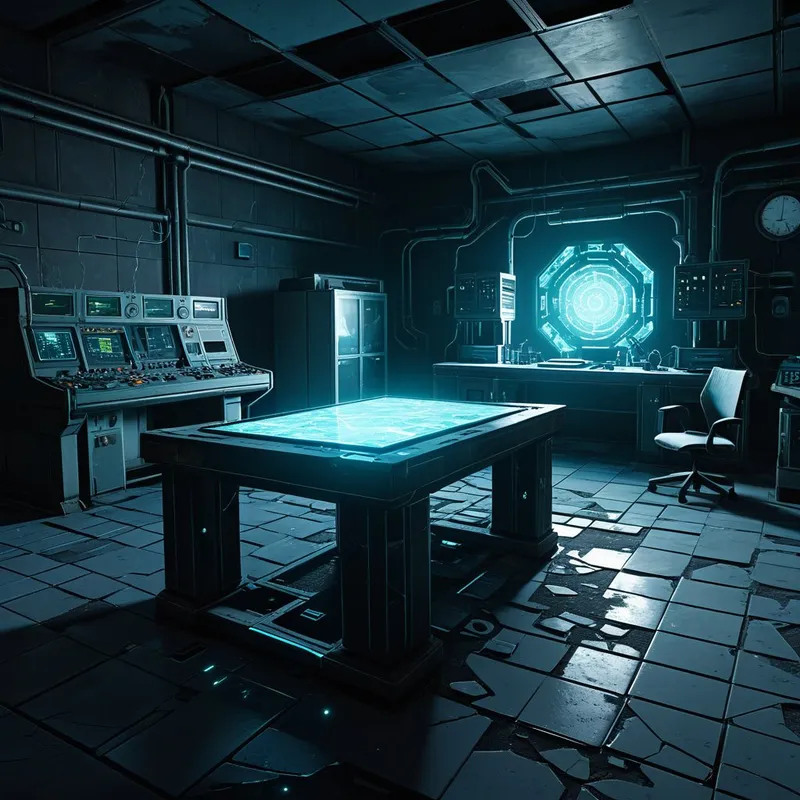
She dreams she is in the control room of a vast, silent space station. All the monitors show static. The only sound is the slow, rhythmic drip of water from a crack in the ceiling, pooling around the base of the central console. She tries to input commands, but the keys are smooth and unresponsive, worn down to blank metal nubs.
Alchemical Interpretation: The dream reveals a conscious mind (the console) that has been rendered obsolete, its functions worn smooth by overuse, while the unconscious (the water) patiently, insistently, begins its work of dissolution and reclamation.
The False Lead
This theme is not about circumstantial shifts—a new job, a move, a relationship beginning or ending. Those are the external weather patterns. The dream of Change is about the climate shifting. It is not a narrative of "bad luck" or even "transition"; it is the signal of a profound structural recalibration within the psyche's operating system. To mistake it for mere anxiety about an upcoming event is to hear the rumble of continental plates and blame it on a passing truck. The dream of Change speaks to the death and rebirth of a way of being, not just a change in circumstance. It is the difference between rearranging the furniture and discovering the house is built on a sinkhole.
Psychological Architecture
When Change dreams visit, the psyche is engaged in the most profound Shadow work: the dismantling of a persona that has outlived its usefulness. This is the Individuation process in its raw, ungentle phase. You are not simply adding a new room to your inner house; you are being asked to stand in the wrecking ball's path. The ego, that diligent foreman of identity, clings to blueprints that are fading. It hears the drip in the control room and tries to caulk the crack, to reboot the system. But the dream says: the system is the problem. The water is not a leak; it is a return. The Shadow here is all the parts of you that your current configuration could not accommodate—the wild creativity, the unexpressed grief, the dormant courage, the forbidden anger. Change occurs when the pressure from these exiled selves becomes greater than the structure's integrity. The foundation must break so the whole may be remade, not on the old, compromised ground, but on a deeper stratum of truth you had forgotten you owned.
Mythic Resonance
We see this in the story of the Norse god Odin, who did not gain the runes—the knowledge of cosmic structure and change—through study or conquest, but by hanging himself on the World Tree, Yggdrasil, for nine nights, pierced by his own spear. He had to undergo a symbolic death, a total suspension of his godly identity, to receive the wisdom that would redefine it. His old self was the price. Similarly, the alchemical Nigredo, the blackening, was not an accident but the essential first stage: putrefaction, dissolution, the reduction of matter to its primal state. The myth tells us that true change, the kind that grants sovereignty, is always preceded by a willing or unwilling sacrifice at the altar of the unknown. The old king must die for the new one to be born.
Symbolic Nodes
- Crumbling or Transforming Architecture: Walls turning to sand, familiar houses with impossible new rooms, bridges that stretch into mist.
- Unresponsive Technology: Phones with melted screens, cars without engines, computers displaying only corrupted data.
- Elemental Dissolution & Flow: Ice melting into rising water, solid earth becoming swamp or quicksand, still air erupting into a sudden, directionless wind.
- Barriers Becoming Permeable: Windows without glass, doors that lead into voids, fences made of light or smoke.
- The Empty Control Center: Derelict cockpits, abandoned switchboards, blank maps, and silent command posts.
Archetypal Resonance
The core energy of the Change dream is most potently expressed by The Magician Archetype, specifically in its Shadow aspect as the Manipulator/Illusionist giving way to its true form. Initially, the ego plays the Shadow Magician, desperately manipulating inner narratives and external circumstances to maintain the illusion of stability, to "fix the leak" rather than heed its message. But the somatic echo is the true Magician's first spell—the discomfort that breaks the illusion. The theme's core energy is transmutation itself: the capacity to hold the tension between dissolution and formation, to find the latent potential in the crumbling console and the pooling water. The alchemical potential lies in surrendering the petty magic of control to access the profound magic of metamorphosis, where the psyche learns to wield the very forces of its own disintegration as the tools for its rebirth.
The Alchemical Process
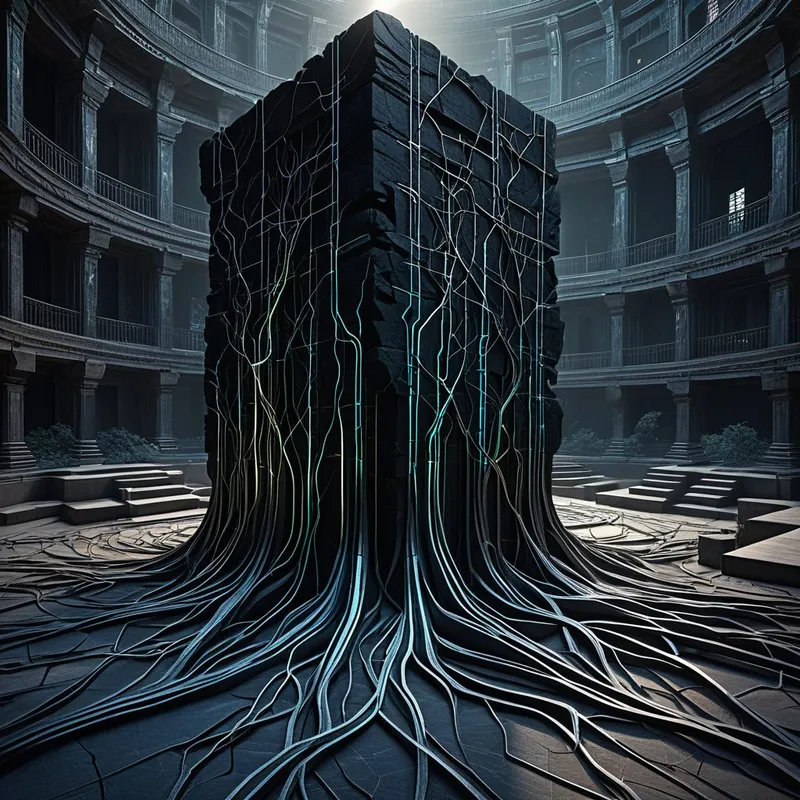
The transmutation here is from Rigidity to Fluidity, from the terror of dissolution into the sovereignty of adaptability. The required heat is the intense, often paralyzing, anxiety of the in-between. It is the solve et coagula—dissolve and coagulate—of the soul. You must first endure the solve: the feeling of coming apart, of your known categories melting. This is the pressure. There is no bypassing this stage with positive thinking; one must consciously consent to the unraveling. The grief must be felt, the vertigo endured. Only within that heat does the coagula begin—not as a return to solidity, but as a reorganization around a new, more dynamic center. The old, brittle identity (the control console) dissolves so that a new, more responsive consciousness (the living crystal) can coalesce from the same essential material, now informed by the waters of the unconscious. Sovereignty is born not from building a stronger fortress, but from realizing you are the landscape, capable of weathering any storm because you are the storm and the stillness both.
The Integration Protocol
Question 1: Where in my waking life do I feel the "drip of water on the console"—a small, persistent sign that my old ways of operating are becoming unresponsive or obsolete?
Question 2: If the crumbling structure in my dream is an outdated part of my identity, what became of the inhabitants? What exiled feelings or capacities were living in the basement, waiting for the walls to fall?
Question 3: What is the one thing I am most afraid will be lost if I truly change? And what, if I am utterly honest, might be waiting to be found in that very emptiness?
Action 1 (Somatic Grounding in the Flux): For five minutes, sit still and focus only on the physical sensations of change in your body—the tightness, the flutter, the buzz. Do not try to calm them. Imagine your breath flowing directly into that sensation, not to fix it, but to acknowledge it as a real, physical process. You are breathing with the transformation, not against it.
Action 2 (Unstructured Writing from the Rubble): Set a timer for ten minutes. With pen and paper, begin writing from the perspective of the crumbling building or the unresponsive machine in your dream. Let it speak. What was its function? What is it feeling now as it fails? What does it see emerging from its own wreckage? Do not edit or judge the flow.
Action 3 (Ritual of Conscious Dissolution): Find a small, natural object—a leaf, a twig, a lump of clay. Hold it and consciously project onto it the old pattern, fear, or identity that is dissolving. Then, actively dissolve it. Burn the leaf (safely), place the twig in a flowing stream, or submerge the clay in water until it softens. Witness the physical process of change without intervention, verbally acknowledging: "This form is released. The essence remains."
Final Validation
It is terrifying to feel the world you know, both inner and outer, lose its solidity. To dream of change is to touch the raw edge of creation, which always looks like destruction from the near side. This difficulty is not a sign you are failing at transformation; it is the proof you are in its authentic, alchemical fire. The grief is real. The disorientation is necessary. You are not falling apart. You are being rearranged by a wisdom deeper than fear, forged in a heat that feels like dying but is the signature of a more vibrant, fluid, and sovereign you being born. The dream is not a warning. It is an invitation to participate in your own becoming.