The Alchemy of Chance: When Your Dreams Roll the Dice
The Somatic Echo
Before the image of a dice or a lottery ticket forms, the dream of Chance announces itself in the body. It is a sudden, electric lurch in the solar plexus—a sensation of the floor dropping away, not into terror, but into a vast and silent potential. The breath catches, not in fear, but in the suspension between inhalation and exhalation. It is the visceral feeling of a door swinging open on a hinge you didn’t know you’d touched, a current of cool air in a room you thought was sealed. This is the somatic signature of the psyche loosening its grip, of the internal ruler momentarily abdicating the throne. It is the body’s ancient knowing that a system—perhaps the system of your life, your identity, your plans—has just been introduced to a variable it cannot compute. The echo is one of weightlessness, of a subtle, thrilling disorientation that whispers: You are no longer solely the author of this sentence.
The Dreamer's Log
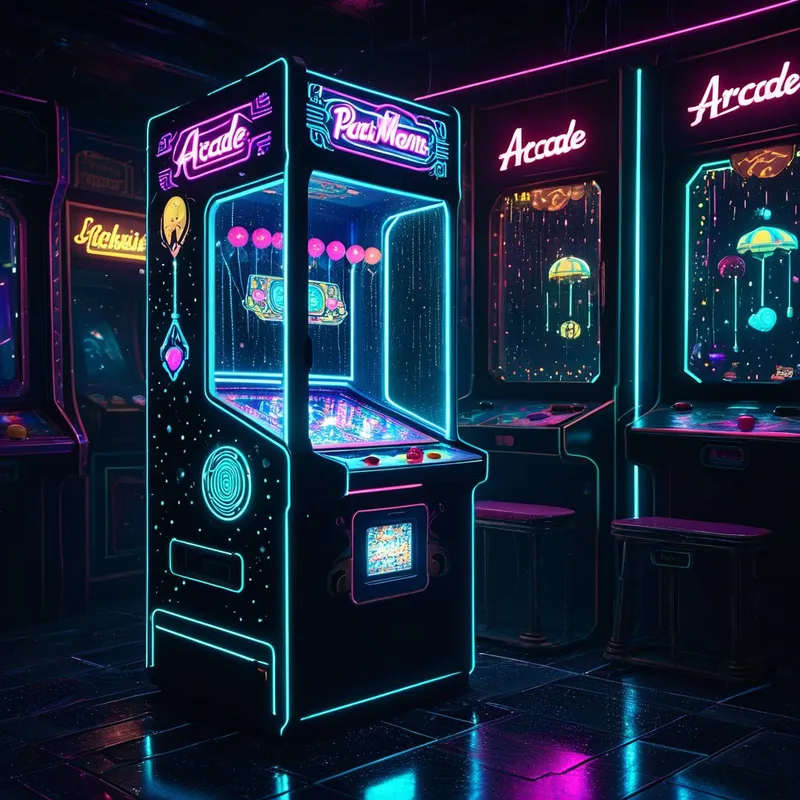
In the dream, I am in a forgotten arcade, the air thick with the scent of ozone and old plastic. Rain streaks the dark windows. I feed a single, tarnished coin into a claw machine. Inside, among cheap plush toys, rests one perfect, iridescent pearl. The claw descends with a shuddering whir. I do not guide it. I simply watch its mechanical, fateful drop.
Alchemical Interpretation: The dreamer’s conscious will (the coin) engages a mechanism of fate (the machine) to retrieve a latent, priceless aspect of the Self (the pearl) from the clutter of the unconscious, enacting a ritual of surrender to a process beyond egoic control.
The False Lead
To dream of Chance is not to dream of luck, good or bad. It is not a cosmic forecast of fortune nor a warning of impending randomness. The slot machine that pays out, the missed train, the found wallet—these are not the theme’s core. The common misinterpretation is to take the symbol literally, to see the dream as a prediction or commentary on external circumstances. This is the mind’s desperate attempt to reassert the very control the dream is dissolving. Chance, in its profound sense, is not about what happens to you, but about what happens within you when the illusion of total authorship cracks. It is the antithesis of accident; it is the appearance of a pattern so deep, so intrinsic to the psyche’s design, that it can only manifest to the conscious mind as randomness.
Psychological Architecture
Beneath the symbol lies a critical operation in the Shadow work of Individuation. We construct psychic fortresses of cause and effect, of plan and execution, to keep the terrifying, fertile chaos of the unconscious at bay. This fortress is manned by internal managers—the part that needs the five-year plan, the persona that must be competent and in control. To dream of Chance is for the unconscious to lob a single, perfect stone over those walls. It lands in the courtyard not as an attack, but as an artifact. It is an invitation to meet the part of the Self that exists outside the chain of command.
This is the architecture: your conscious life is a carefully curated gallery. Chance is the dream’s way of revealing the vast, dark, humming warehouse behind it, where all the other paintings—the ones you didn’t choose, the styles you fear, the colors that don’t match your décor—are stored. Engaging with Chance is the act of walking into that warehouse without a flashlight, allowing your hand to brush against a canvas in the dark, and discovering it is wet. Something is being painted now, in you, but not by you. The process is one of allowing the internal family system to welcome its most silent member: the One Who Does Not Calculate.
Mythic Resonance
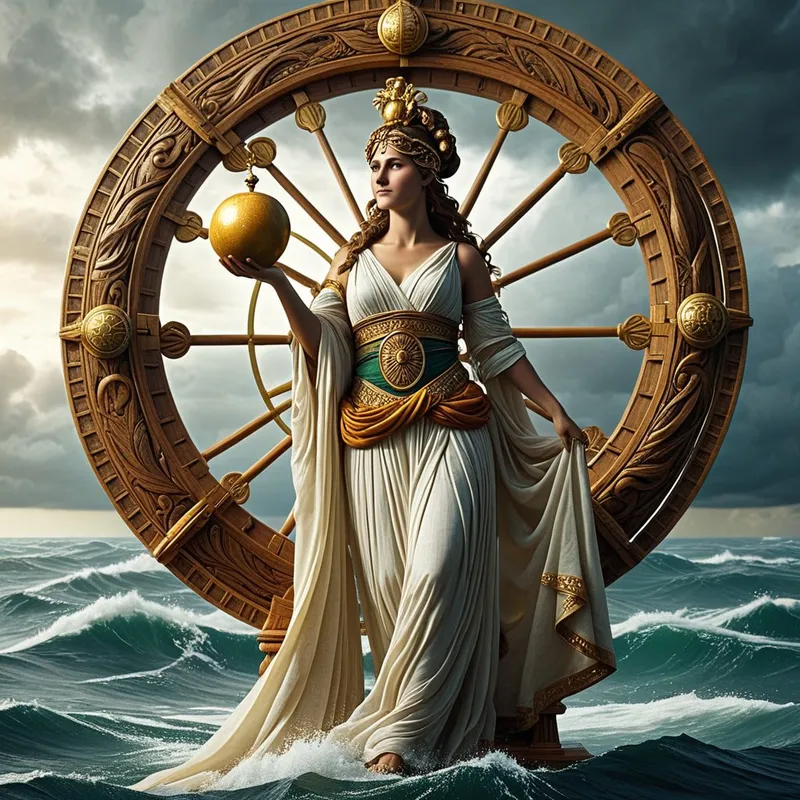
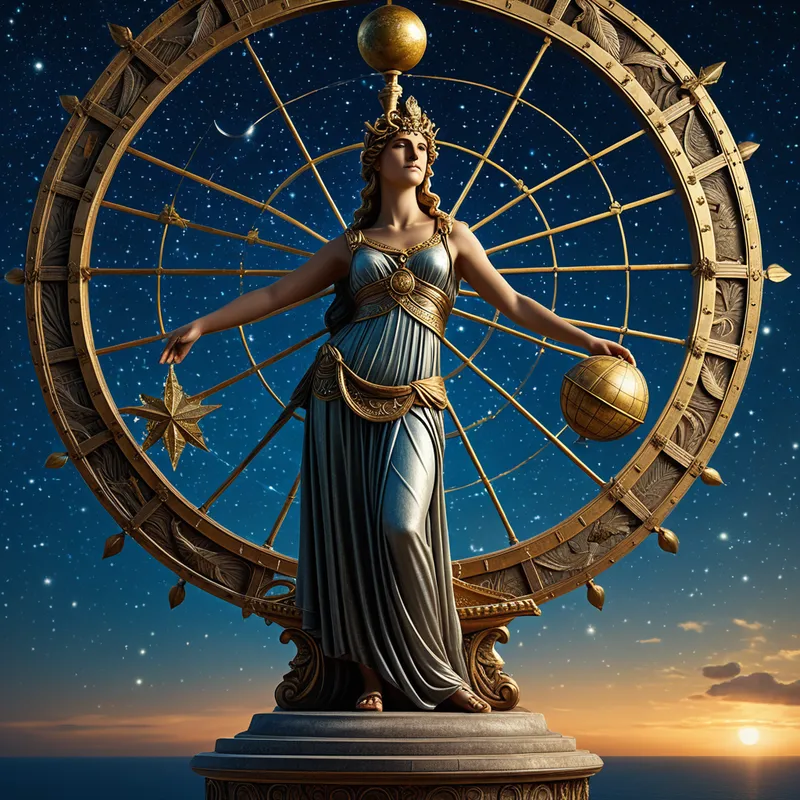
This theme pulses through the marrow of human story. Consider the Norse Norns, who weave the threads of fate at the foot of Yggdrasil. Their work is not random; it is a tapestry of immense, unfathomable complexity. To a single thread (a human life), the crossing of another may feel like chance, a snag or a sudden strengthening. Yet the weave proceeds according to a logic belonging to the whole cloth. Closer to home is the Greek myth of the Moirai, the three Fates: Clotho who spins the thread, Lachesis who measures it, and Atropos who cuts it. The dream of Chance is the moment Lachesis’s measuring tape glimmers into your perception—not to show you your length, but to make you aware you are being measured by a hand not your own. These myths are not about helplessness, but about context. They relocate the individual will from the center of a tiny, self-lit stage to a specific, crucial coordinate within a breathing, star-lit cosmos.
Symbolic Nodes
- Dice, Roulette Wheels, Lottery Tickets: The classic emblems of probability, representing the intersection of a choice (the throw, the bet) with an outcome decoupled from intention.
- Crossroads or Forked Paths: Especially when the choice of path is obscured, forced, or made by an external agent (the flip of a coin, a sign blowing in the wind).
- Finding or Losing an Object in an Unlikely Place: The psyche highlighting a specific content (the object) through the medium of apparent accident.
- Mechanical Games of Skill with Unpredictable Outcomes: Pinball, claw machines, arcade games—where effort interfaces with a system designed to generate surprise.
- Sudden, Unforecasted Weather Changes Inside a Building: The internal climate shifting according to laws that defy the architecture of the conscious mind.
Archetypal Resonance
The energy of Chance resonates most powerfully with The Magician Archetype, specifically in its shadow aspect as the Illusionist. The Magician’s core power is the transformation of reality through the application of will and hidden knowledge. The Shadow Magician, however, is the part of us that believes this power is absolute, that through sheer intellect, manipulation, or force of personality, we can and must control all outcomes. It is the archetype of the control-freak, the master planner who fears the unscripted moment. The dream of Chance is the Shadow Magician’s crucible. Its somatic echo—the lurch, the weightlessness—is the feeling of the Magician’s spell breaking, his elaborate illusion of control flickering. The alchemical potential here is immense: for the Shadow Magician to be humbled by the random variable is for him to finally look up from his own tools and perceive the larger, wilder magic in which he is merely a participant. He transforms from Illusionist to true Alchemist when he learns to work with the unknown element, not just upon it.
The Alchemical Process
The transmutation of Chance requires the heat of conscious surrender and the pressure of sustained attention. The base material is the leaden grief of lost control—the terror that without your hand on the wheel, all is chaos. The heat is applied when you, in waking life, catch yourself in the act of frantic recalculation after a genuine surprise, a true accident, a moment of luck, and you stop. You resist the mind’s immediate pull to narrative, to blame, to credit, to “what this means for my plan.” You simply let the event be strange. You hold it in your awareness like the dream held the claw machine: as a phenomenon.
The pressure is the containment of this energy. It is the refusal to let the random event be either dismissed or mythologized. Instead, you ask, “What in me was ready for this? What rigid structure did this disrupt? What door did I leave ajar, even in my ignorance, that allowed this wind to blow through?” In this vessel of inquiry, the lead of fear begins to stir. It mixes with the unexpected event, and under the pressure of your non-judgmental attention, it separates. The dross is the old story of “I must control everything.” What rises, the gold, is a new quality: creative receptivity. Sovereignty is not the absence of Chance; it is the capacity to stand in its current and not lose your footing, to allow its energy to become a source of motion rather than a cause of collapse.
The Integration Protocol
Question 1: When have I most fiercely clung to a plan or an outcome, and what did that clinging feel like in my body? What was I afraid would happen if I let go?
Question 2: Can I recall a seemingly "random" event from my past that, in hindsight, served as a crucial pivot or opening? What quality in me did it ultimately address or awaken?
Question 3: If my psyche were to introduce a benevolent, necessary variable into my life right now—one designed to shatter a stagnation I cannot see—what might that variable look or feel like?
Action 1 (The Unplanned Walk): Go for a walk with no destination. At every intersection, literally close your eyes for a three-count (if safe) and let your body decide the direction. Do not make it meaningful. Simply practice being led by a whim deeper than reason.
Action 2 (Chance Composition): Take a blank page. With a pen, make a single, quick, random mark. It could be a curve, a dot, a slash. Now, using any medium (more ink, pencil, collage), engage with that mark. Not by dictating a finished image, but by responding to it. Follow its suggestion. Let the composition build through a dialogue between your intention and the "given" element.
Action 3 (The Altar of the Unknown): Create a small, physical space—a shelf, a corner of a desk. Place upon it one object that represents a plan or certainty you currently hold. Then, place next to it a found object: a stone from a walk, a feather, a piece of interesting trash. This is your altar to the dialogue between the Intended and the Given. Tend to it not by interpreting, but by observing the relationship between the two.
Final Validation
It is terrifying to feel the dice roll in the dark of your own soul, to suspect that the most important turns in your path may be called by a voice you do not recognize as your own. This fear is not a weakness; it is the honest tremor of an identity expanding past its old borders. The dream of Chance does not come to steal your agency, but to reveal its true source—not in the tyranny of total control, but in the profound, creative courage to respond. You are being asked not to gamble with your life, but to finally, humbly, take your seat at a much larger table, where you are both player and played, weaver and thread. The sovereignty that emerges is not of the clenched fist, but of the open hand, ready to receive the next mysterious, necessary gift from the depths of your own becoming.