
Beauty & Decay: The Alchemy of the Sacred Cycle
This theme does not arrive as a thought. It lands as a sensation. It is the sharp, sweet ache behind the sternum when you witness a sunset so violently beautiful it feels like a goodbye. It is the cold, hollow weight in the gut when you run a finger over the faded velvet of a forgotten heirloom. It is the paradoxical shiver—part dread, part reverence—that walks with you through an autumn wood, where every radiant, dying leaf is a silent hymn. This is the somatic echo of Beauty & Decay: a visceral recognition that the pinnacle of form and the inevitability of its undoing are not two separate notes, but a single, haunting chord resonating in the bones. The mind will later scramble to name it—nostalgia, grief, the sublime—but the body knows it first as a truth: all that is exquisitely made is already in conversation with its own end.
The Dreamer's Log
In the dream, I am holding a teacup of impossible delicacy, glazed with a nebula of deep blue and gold. It is the most beautiful object I have ever seen. As I admire it, a single, hairline crack appears from the rim. Not from dropping it, but from within. A slow, viscous sap the color of liquid light begins to weep from the fissure. I feel no panic, only a profound and sorrowful awe.
This dream is an alchemical vision of the Self: the exquisite, crafted persona (the cup) is revealed to be inherently fragile, and its breaking releases not disaster, but a sacred, illuminating substance—the soul’s own essence.

The False Lead
This theme is not a simple portent of "bad luck" or a warning of physical decline. To interpret the decaying mansion as a sign your house will need repairs, or the wilting rose as a forecast of a relationship’s end, is to mistake the symphony for a single off-key note. This is not the psyche’s news report; it is its most sacred liturgy. It points not to an external event to be avoided, but to an internal process that must be embraced. The decay present in these dreams is not an enemy of beauty, but its most intimate partner in the dance of becoming.
Psychological Architecture
To work with Beauty & Decay is to engage in the deepest Shadow work, where the cherished ideal of perfection meets the exiled reality of impermanence. We often exile the part of us that knows things fall apart—the part that feels grief, sees flaws, acknowledges entropy. We label it pessimism, cynicism, or messiness, and lock it away to preserve our inner gallery of spotless, static ideals: the perfect self, the flawless relationship, the immortal achievement.
But the dream insists on a reunion. The crumbling castle, the rotting fruit, the aging face—these are not insults. They are emissaries from the exiled one, carrying the truth that wholeness requires both the architect and the compost. The individuation process here is the dissolution of the ego’s museum, where everything is preserved under glass, and the courageous acceptance of the psyche’s garden, where life, death, and rebirth are in constant, fertile negotiation. It is the realization that our true beauty is not in flawless porcelain, but in the unique, luminous pattern of our cracks and the essence that flows from them.
Mythic Resonance
We see this eternal dialogue in the myth of Persephone. Her story is not merely one of abduction, but of the necessary descent. She is the vibrant beauty of spring (Kore), whose value is seen only in her radiant, surface-level innocence. Her forced journey into the underworld—a realm of decay, shadow, and death—is not a destruction of that beauty, but its initiation into depth, power, and sovereignty. She returns not as the maiden, but as the Queen of Both Realms, her beauty now complex, seasoned by decay, and infinitely more potent. The myth tells us that to know only the flowering is to remain a child; to integrate the composting dark is to become sovereign.
Symbolic Nodes
- Ruined Elegance: Crumbling mansions, peeling frescoes, moth-eaten tapestries.
- Organic Transience: Over-ripe fruit, wilting flowers, brilliantly colored autumn leaves.
- Fragile Perfection: Cracked porcelain, tarnished silver, a single strand of gray hair.
- Luminous Decay: Phosphorescent fungi on a log, moss on stone, light through a broken window.
- Preserved & Lost: Taxidermy, pressed flowers in a book, a forgotten, overgrown garden.
Archetypal Resonance
The energy of this theme resonates most powerfully with The Lover Archetype. The Lover’s core drive is for connection, passion, and the appreciation of beauty in all its forms. But here, we meet the Lover at the edge of its own understanding, where adoration must confront impermanence, and passion must learn to hold grief. The somatic echo—that sweet ache—is the Lover’s heart expanding to include the poignancy of loss as part of its devotion. The alchemical potential lies in the Lover’s shadow, which fears the loss of the beloved object and thus can become obsessive, clinging to a fading form. The work is to transmute that clinging into a deeper, more compassionate love—one that loves the rose precisely because it wilts, that cherishes the moment because it passes. This is the Lover evolving from a consumer of beauty into a conscious participant in the sacred cycle of all things.
The Alchemical Process
The transmutation here is from the grief of loss into the grace of presence. The required heat is the unbearable tension of holding two opposing truths simultaneously: the breathtaking value of what is, and the undeniable fact of its passing. This is the pressure of conscious living.
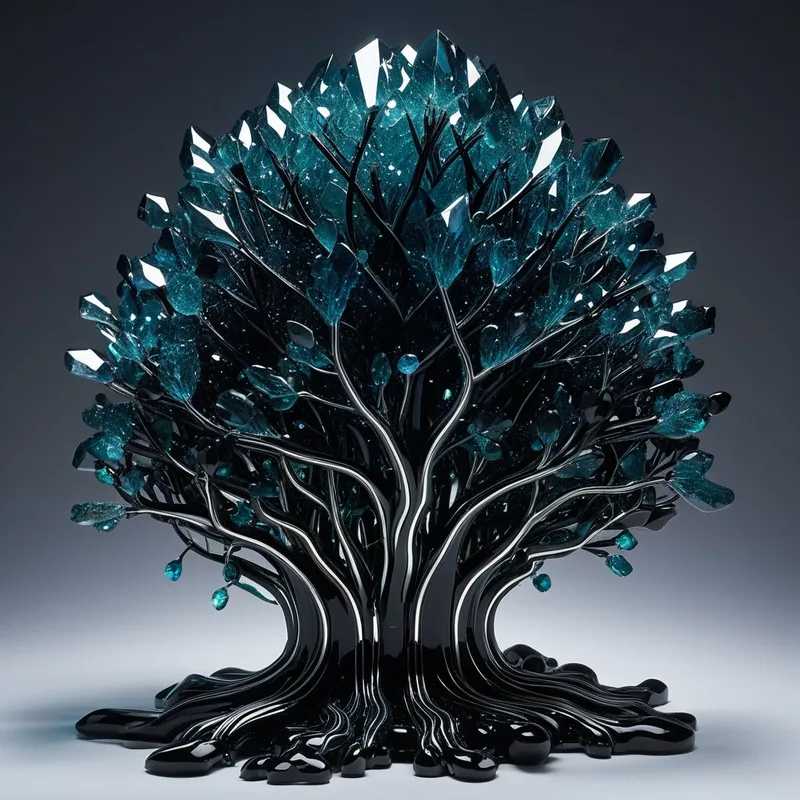
The process begins in recognition—allowing the image of decay to be seen not as a threat, but as a teacher. Then comes the dissolution, where the ego’s investment in permanence (the perfect cup) is willingly softened, allowing the crack to form. This is the most intense phase, often felt as grief, vulnerability, or existential dread. But within that crack, as the dream shows, something new weeps forth: the illumination. This is the soul’s sap—raw feeling, deep empathy, authentic creativity—which was trapped inside the rigid form. Finally, there is coagulation, where this released essence nourishes a new, more resilient, and paradoxically more beautiful foundation. The sovereignty gained is not control over decay, but liberation from the fear of it. You become the gardener who loves the soil as much as the bloom.
The Integration Protocol
Question 1: Where in my life am I clinging to a form—a relationship phase, a self-image, a possession—long after its inner vitality has begun to change or fade? What am I afraid will be lost if I let the form evolve?
Question 2: Can I identify a recent experience where I felt that "sweet ache" of beauty touched by sadness? What was the beauty, and what was the nascent sense of decay or ending within it?
Question 3: If the decaying or broken image from my dream is not a failure, but a sacred release of an inner substance, what might that substance be? What quality (e.g., compassion, creativity, truth) is trying to flow from that perceived break?
Action 1 (Somatic Grounding): Next time you feel that somatic echo (the ache of beauty/decay), pause. Place a hand on your heart or sternum. Breathe into the sensation for one full minute without trying to name or fix it. Simply acknowledge, "This is the feeling of the cycle."
Action 2 (Creative Expression): Find an object in your home that is beautiful and shows signs of wear, age, or imperfection (a worn book, a chipped mug, a faded quilt). Spend 10 minutes writing from the object's perspective. Let it speak of its history, its beauty, its changes, and what its "flaws" contain or remember.
Action 3 (Outward Ritual): Perform a simple "libation to decay." Take a piece of over-ripe fruit or a fallen flower. Go to a patch of earth. Thank it for its beauty and its service. Then, bury it or gently break it open and leave it, acknowledging its return to the cycle that will feed new beauty. Witness the act without sentimentality or disgust, as a neutral, sacred practice.
Final Validation
To dream of Beauty & Decay is to be invited into a confrontation that most of culture teaches us to avoid, medicate, or Photoshop away. It is difficult, profoundly so. It asks you to love more deeply by releasing your grip, to find strength in fragility, and to see the sacred in the stain. This path is not for the faint of heart. But it is the path to a profound and unshakable wholeness. By daring to hold the dying rose as tenderly as the bud, you do not lose beauty; you become the very ground from which all beauty—in its eternal, cycling forms—forever springs.