The Alchemy of Ascent: Decoding Dreams of Aspirational Climbing
The Somatic Echo
Before the image of a ladder, a cliff, or a staircase forms in the mind’s eye, the body knows. It is a specific, vertical tension. A gathering in the calves and thighs, a subtle coiling in the core, as if preparing to spring. The hands feel it first—a phantom ache in the palms, a memory of gripping stone or cold metal. The breath shallows, not from fear, but from a focused intake of possibility. This is the somatic echo of aspiration: a physiological blueprint for elevation. It is the body’s ancient language, speaking of a gradient that must be traversed, a summit that exists not just ahead, but above. This visceral sensation is the raw ore of the dream, the unrefined truth that your psyche is mapping a vector of growth, and the entire organism is being reconfigured to follow its line.
The Dreamer's Log
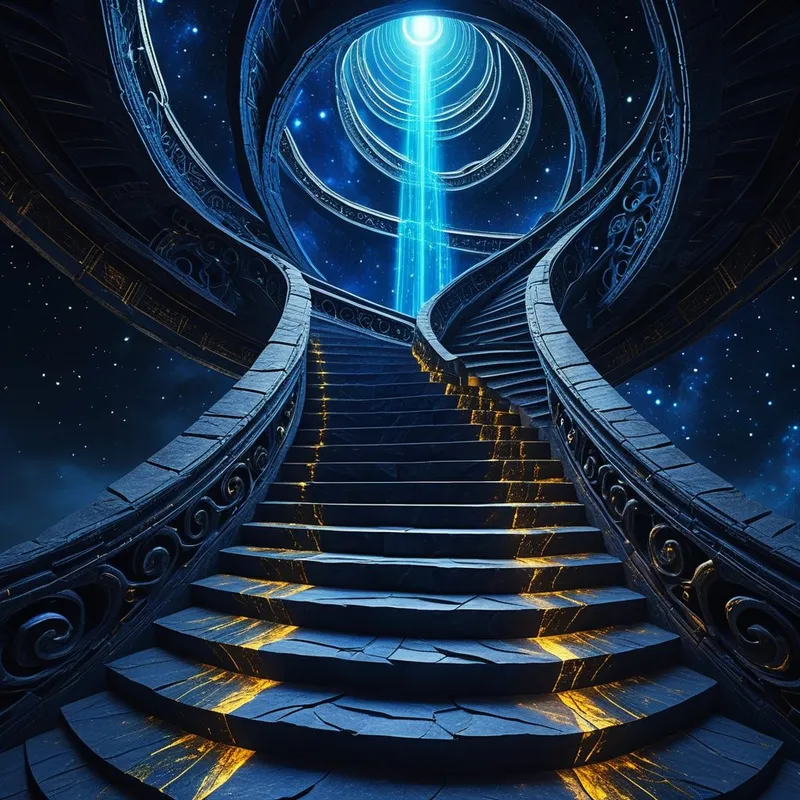
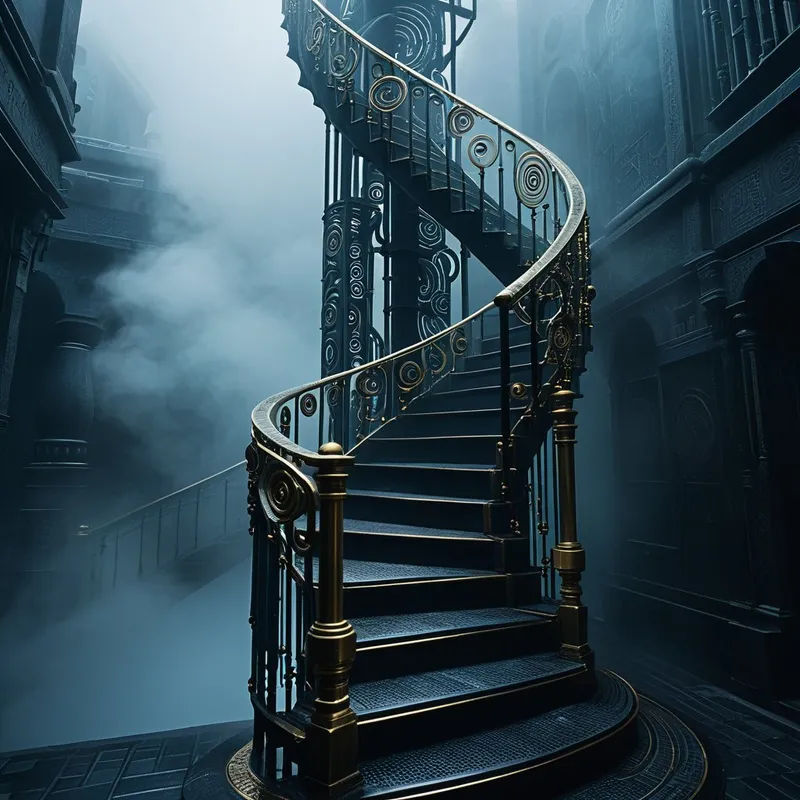
The staircase was endless, a narrow helix of wrought iron and fog, lit only by the sporadic, sickly green pulse of bioluminescent fungus on the walls. With each step, the metal groaned a different note of warning, and the higher she climbed, the thinner the air became, until each breath was a conscious, ragged effort. Yet, a single, unwavering point of white light glimmered far above, a fixed star in the personal firmament of the shaft.
This dream is the alchemical process of ambition distilling into purpose, where the body’s labor becomes the crucible for the spirit’s resolve.
The False Lead
This theme is not about simple ambition or a checklist of goals. It is not the ego’s straightforward desire for promotion or accolade. To mistake it for such is to see only the mountain and miss the climber’s trembling hands. A dream of aspirational climbing is not a forecast of success or a portent of “reaching the top” in a worldly sense. Its core is not the summit, but the ascent itself—the profound structural shift occurring within as you engage with the gradient. It is the psyche rebuilding its own scaffolding in real-time. The terror is not of failure, but of the irreversible transformation that success demands. The grief is for the self you must leave on the lower slopes, the version of you that cannot make the climb.
Psychological Architecture
Here, Shadow work is not a digging down, but a climbing up through the interior strata of the self. Each handhold is a reclaimed projection, each foothold a reconciled fear. You meet the parts of yourself that plead for rest, that whisper of the comfort of the known plateau—the internal family of hesitancy, the orphaned voice that fears abandonment if it changes too much. The Individuation process in this vertical landscape is one of terrifying integration. You are not fleeing a monster below; you are carrying the entirety of your being upward. The shadow is the weight of your own history, the drag of old identities. To climb is to consent to this weight, to feel its full pull, and to transmute it from anchor into ballast—the very thing that steadies you against the dizzying winds of your own potential.
Mythic Resonance
Consider the myth of Jacob’s Ladder. He dreams of a stairway set upon the earth, its top reaching heaven, with angels ascending and descending upon it. He awakens and says, “Surely the Lord is in this place, and I did not know it.” The climb here is not a human endeavor toward a distant god; it is the revelation that the sacred is the connection, the vertical axis itself. The angels move both ways—aspiration descends as grace, effort is met with insight. The ladder is the mythic firmware for the understanding that transcendence is a dialogue, not a conquest. Similarly, the endless staircases of M.C. Escher’s art, where ascent and descent fold into one impossible loop, speak to the modern psyche’s confrontation with ambition: the terrifying, beautiful realization that the path itself reconfigures the destination.
Symbolic Nodes
- Ladders: Direct, often precarious connection between disparate levels of being (conscious/unconscious, mundane/spiritual).
- Staircases: The structured, incremental path of development; the architecture of a gradual awakening.
- Cliffs & Rock Faces: The raw, unforgiving challenge of a core truth that must be scaled through sheer will and presence.
- Vines/Ropes: Ambiguous aids; they represent support from the unconscious or from forgotten inner resources, but can be untrustworthy or demand a perilous surrender of control.
- Slipping, Falling Back: Not failure, but the necessary recalibration of grip—the psyche testing the integrity of its commitment.
- Thinning Air: The increasing solitude and cognitive demand of high-stakes integration; the landscape where old thought-patterns cannot breathe.
Archetypal Resonance
The most active force in this theme is The Hero Archetype, specifically in its nascent, activated state. This is not the crowned victor, but the hero in motion, on the quest-path itself.
The Hero’s core energy is the journey from the common world into the region of supernatural wonder, where fabulous forces are encountered and a decisive victory is won. This maps perfectly onto the somatic echo of coiled readiness and the dream’s vertical journey into the unknown strata of the self. The Hero does not seek comfort; they seek the ordeal that forges a new identity. The alchemical potential lies in the confrontation with the threshold guardian—the fear, the fatigue, the groaning step—and the realization that the power to overcome is not brute force, but the courage to integrate the vulnerability of the climb into one’s strength. The victory is not over the mountain, but over the internal resistance to the ascent.
The Alchemical Process
The transmutation here is of gravity into grace. The base metal is the leaden feeling of burden, of life’s weight and responsibility. The alchemical heat is the intense, sustained pressure of the climb—the burning in the lungs, the tremor in the muscles, the psychological furnace of maintaining focus while exposed and vulnerable. This heat serves a singular purpose: to separate the essential self from the accreted identity. The grief and terror are the impurities that smoke off in this process—the fear of falling (failing), the grief for the simpler self left behind. What remains, and is reconstituted step by step, is a newfound sovereignty. This sovereignty is not lightness, but a profound, earned density. It is the knowledge that you can bear the weight of your own aspirations because you have become intimately familiar with every ounce of it. The summit, when reached, is almost incidental; the true gold is the transformed relationship with the climb itself.
The Integration Protocol
Question 1: Where in my waking life do I feel that same vertical tension—the specific pull to ascend, not just advance? What is the "thinner air" I am afraid of breathing?
Question 2: Who or what have I cast as the "summit"—a fixed, distant point of achievement? If I imagined that goal as simply another step on an endless staircase, how does the nature of my current climb change?
Question 3: When I feel myself "slipping" or needing to "re-grip," what internal voice speaks first? Is it a voice of panic, of scorn, or of calm reassessment? Can I name that part of my internal family?
Action 1 (Somatic Re-anchoring): When you feel the anxiety of an aspiration, stand still. Feel your feet on the ground. Instead of looking "up" at the challenge, consciously feel the strength in your legs and core—the very architecture meant for climbing. Take five breaths, imagining each inhale drawing stability from the earth and each exhale releasing the dizzying need for the summit.
Action 2 (Cartography of the Climb): Take a large piece of paper. Do not draw a peak. Instead, draw your current "climb" as a abstract, vertical landscape. Use colors, textures, and shapes to represent the easy footholds, the slippery sections, the points of rest, the frightening exposures, and the sources of faint light above. Let it be a non-linear map of your internal process, not an external plan.
Action 3 (Ritual of the Step): Choose a physical staircase. Walk it slowly, with full presence. With each step, mentally place a single, small burden you are carrying onto it. Let the step hold it. As you reach the top, do not turn and look down at the burdens. Simply stand, feel the new space in your being, and breathe. Then walk back down a different way, or via an elevator, symbolizing that the ascent integrates the weight; you do not need to carry it back down in the same form.
Final Validation
The path upward is, by its very nature, isolating. It asks you to leave the well-trodden plateaus of consensus reality and trusted identity. The vertigo is real. The fatigue is not a sign of weakness, but a testament to the authentic mass of what you are choosing to carry. This difficulty is the seal of legitimacy on your aspiration. It means you are not fantasizing about a height; you are engaging with the actual, demanding geometry of your own growth. The dream does not come to show you the summit you lack, but to illuminate the formidable, glorious climber you already are—one who, step by tremulous step, is learning that the only solid ground is the next one you choose, from your own will, to reach for.