The Dream of Architectural Byproduct: When the Unconscious Builds Without You
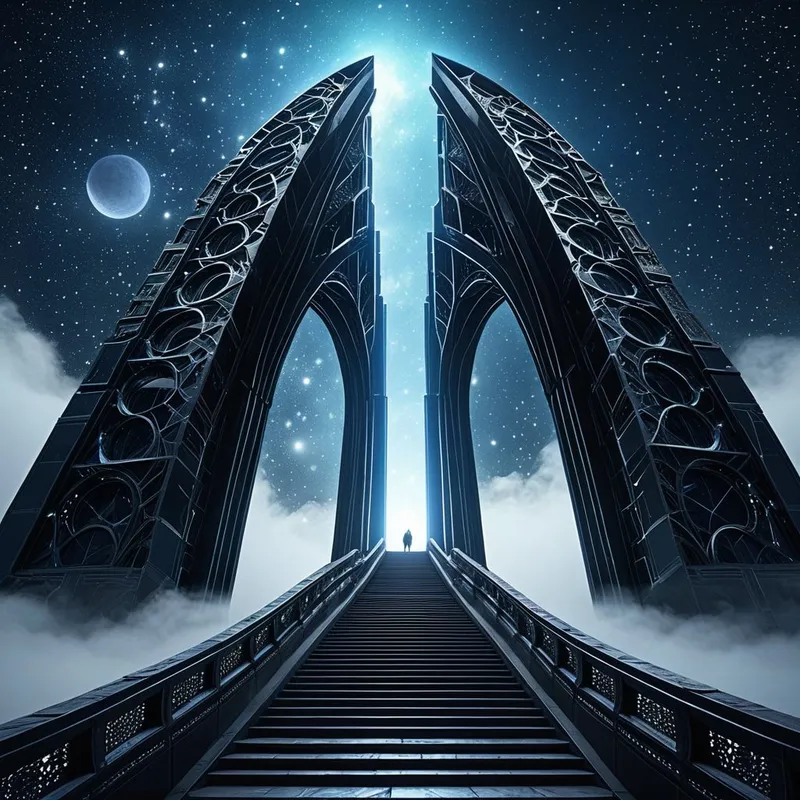
We do not only build with intention. The psyche, in its silent labor, constructs in the dark. It lays foundations we never approved, erects walls we did not design, and leaves behind structures whose purpose is a mystery even to itself. These are the architectural byproducts: the psychic debris, the unintended monuments, the forgotten rooms in the mansion of the self. To dream of them is to stumble upon the unconscious’s workshop, where the blueprints are written in the language of forgotten trauma, unlived lives, and adaptive strategies that have outlived their use. It is to confront the fact that you are living in a house you did not wholly build.
The Somatic Echo
Before the mind can name it, the body knows. It is a specific, hollow pressure in the solar plexus—not the sharp pang of immediate fear, but the dense, gravitational pull of something massive and incidental. It is the feeling of turning a corner in your own home and finding a new, cold corridor you swear wasn't there yesterday. The air in the dream-space feels still and recycled, charged with the static of abandoned intention. There is a weight of materiality without meaning, a somatic recognition of psychic matter that has been given form but not function. Your breath shallows, not from panic, but from the subtle suffocation of occupying a space never meant for breath at all.
The Dreamer's Log
I am in the basement of a vast, modern data center, all cool blue light and hum. But in a forgotten corner, behind a server rack humming a forgotten song, I find a small room. It is lined with warm, dark wood, an antique desk, and a single, perfect obsidian cube glowing softly from within. The room feels deeply peaceful, yet utterly alien to the sterile architecture surrounding it.
This is the unconscious preserving a sanctuary of soul in the fortress of efficiency, a relic of a self buried under the demands of a curated life.

The False Lead
This is not a dream of mere clutter or bad luck. Do not mistake the architectural byproduct for simple chaos or the detritus of a busy life. The random junk in a garage has no coherent structure; it is mere accumulation. The byproduct has architecture. It possesses a terrifying, mute logic. Its walls are straight, its angles precise, its presence systematic. The terror (or grief) it evokes is not about disorder, but about order of a kind you do not govern—a bureaucracy of the soul, a ministry of defense built by a government you never elected. It is the difference between a messy desk and a sealed, soundproof room in your own home whose door you cannot open.
Psychological Architecture
To engage with this dream is to begin the most delicate kind of shadow excavation. You are not hunting a monster in the basement; you are surveying the basement itself, realizing its foundations are laid atop older, stranger catacombs. This is the work of Internal Family Systems meeting depth psychology. That obsidian cube in the server room? It is an Exile—a part of you holding profound peace or creativity, deemed incompatible with the "modern data center" of your waking identity, and thus walled off with perfect, efficient precision. The sterile hallway that leads nowhere? That is a Manager, a psychic structure built to keep you moving on a safe, meaningless path to prevent you from stumbling into a feeling too vast to handle.
The individuation process here is one of reclamation through recognition. It is not about demolition, but about revising the building permits. You must walk these empty halls and ask, "What emotion was this corridor built to avoid? What connection did this wall exist to prevent?" The byproduct is evidence of the psyche's brilliant, brutal engineering to ensure survival. Your sovereignty begins when you thank the engineer, and then gently inform them their services, while appreciated, are no longer required for this project.
Mythic Resonance
We see this in the myth of the Labyrinth. Daedalus did not build it as a home or a temple, but as a byproduct of a political bargain—a prison to contain the monstrous evidence of a king's shame (the Minotaur). It was a perfect, architectural solution to a problem of containment, a structure whose sole purpose was to hide and confuse. We are all Daedalus, building psychic labyrinths to contain our own minotaurs—the raw, bull-headed passions and shames we deem monstrous. And like Theseus, we must eventually enter, not to slay the beast outright, but to meet it, and in doing so, find that the thread leading us out (Ariadne's clue) was woven from the very vulnerability we walled away.
Symbolic Nodes
- Forgotten Rooms/Wings: Repressed memories, unlived potentials, or entire personality aspects sealed away.
- Staircases Leading Nowhere: Spiritual or aspirational drives that were abandoned or blocked.
- Useless but Beautiful Arches/Buttresses: Defensive structures (pride, intellectualization) that are now purely aesthetic, their original load-bearing function obsolete.
- Sealed Doors or Passages: Psychic censorship, forbidden emotions or truths.
- Perfect, Empty Geometric Shapes (Cubes, Spheres): Pure potential or captured essence in a dormant, contained state.
- Machinery that Hums but Performs No Visible Function: Deeply ingrained coping mechanisms or thought patterns running on autopilot.
Archetypal Resonance
The energy of the Architectural Byproduct is most closely aligned with The Shadow Creator.
The Shadow Creator is the architect who builds without a heart, the engineer of flawless, soulless systems. Its genius is undeniable—it can construct immense psychic fortresses, intricate labyrinths of logic, and perfect prisons for pain. This is the archetype active in the somatic echo: that cold, precise, gravitational pull is the fingerprint of a creation divorced from the Creator's true, integrative purpose. It builds to compartmentalize, to separate, to manage, not to synthesize or beautify. The alchemical potential lies in reclaiming this formidable power from the shadow. The same mind that walled off the trauma can, once integrated, design the sanctuary that holds it. The shift is from architecture as separation to architecture as vessel—from the byproduct to the intentional temple.
The Alchemical Process
The transmutation here is from Debris to Foundation. The intense heat required is the heat of non-judgmental curiosity, which is far more searing than rage or blame. You must apply this heat to the frozen structure of the byproduct. The pressure is the sustained, uncomfortable gaze you hold upon something that was meant to be invisible.
First, in the nigredo, you face the blackness of the unintended structure—the grief of "I did not choose this." Then, in the albedo, you wash it with the light of understanding, seeing its functional logic: "This wall was built when I was seven to keep out the chaos." The citrinitas is the dawning realization that this material—this resilience, this ingenuity—is pure gold. The final rubedo is the integration: the obsidian cube is not removed from the server room; instead, its warm light is rewired into the main grid. The useless arch is repurposed as a trellis for new growth. The byproduct is not destroyed; its material is redeemed and incorporated into a new, conscious design where you are both architect and inhabitant.
The Integration Protocol
Question 1: In my waking life, where do I feel the hollow pressure of efficient, soulless functionality? What activity or role feels like a perfectly built room that I never chose to enter?
Question 2: If the forgotten room in my dream could speak, what single word of emotion (e.g., grief, peace, awe, rage) is sealed within its walls?
Question 3: What is one "useless" habit or thought pattern I maintain with architectural precision? What might it be brilliantly protecting me from feeling?
Action 1 (Somatic Survey): For one week, when you enter a familiar room (home, office), pause. Feel your body. Notice any slight tension, hollow feeling, or sense of "off-ness." Don't analyze. Just mentally note: "Structure detected." This grounds the dream in waking geography.
Action 2 (Unstructured Blueprint): Take a large piece of paper. Without thinking, draw lines, shapes, and rooms that represent your current internal "layout." Let it be abstract. Where are the blocked passages? Where is the empty, perfect shape? Title it "As-Built Plans." This externalizes the shadow architecture.
Action 3 (Ritual of Repurposing): Find a small, "useless" but well-made object in your home (a decorative item, a single tool from a set). Clean it thoroughly. Then, place it in a new location where its beauty or form can be appreciated for itself, not its intended function. Verbally acknowledge: "Your old purpose is complete. Your material is honored here." This ritualizes the shift from function to essence.
Final Validation
It is profoundly disorienting to discover that your own psyche is a stranger to itself, that it has been building in secret. The grief of this realization is real and heavy. Yet, within that very disorientation lies your power. The unconscious would not expend such vast energy to build these structures if you were not, at your core, a being worthy of such complex fortification. You are not living in ruins. You are standing in the raw material of your own sovereignty. The byproduct is the unclaimed inheritance. Now, the keys are in your hand. It is time to walk your own halls, not as a lost tenant, but as the returning architect, ready to read the original, luminous plans that have been waiting in the dark all along.