The Call from the Deep Foundation: Ancestral Veneration in Dreams
It begins not as a thought, but as a gravity. A weight in the marrow of your bones that has nothing to do with fatigue. It is a deep, magnetic pull toward the earth, a feeling of being tethered by invisible cords to a past you never lived. Your breath may feel thick, laden with the scent of old soil, ozone before a storm, or the faint, sweet decay of pressed flowers in a forgotten book. This is the Somatic Echo—the body’s ancient, pre-verbal recognition of lineage. It is the psyche’s foundation shifting, reminding you that you are not a solitary island, but a living continent, its topography shaped by epochs of love, trauma, silence, and survival.
The Dreamer's Log
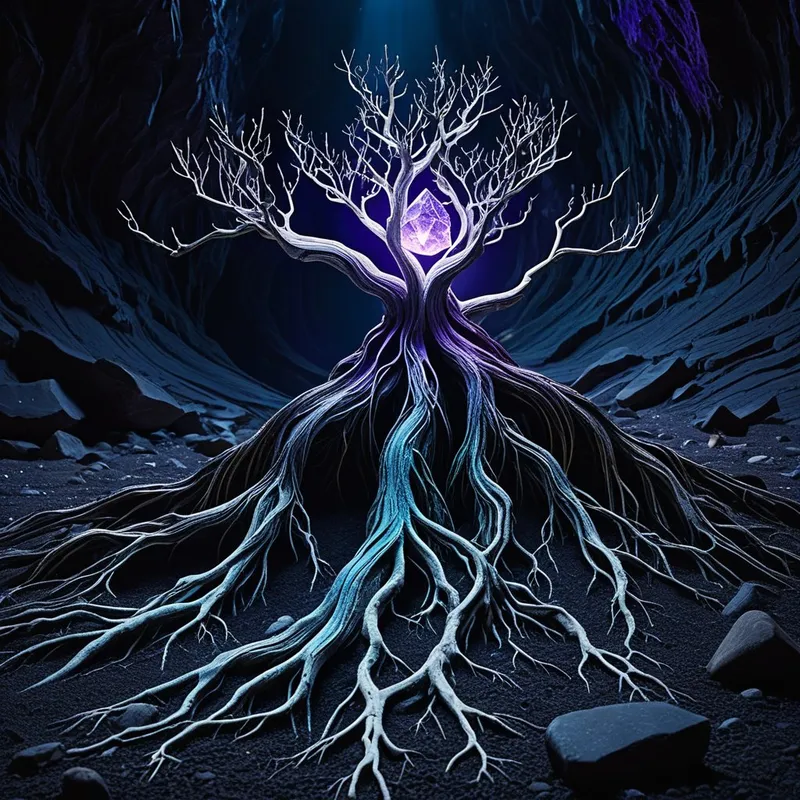
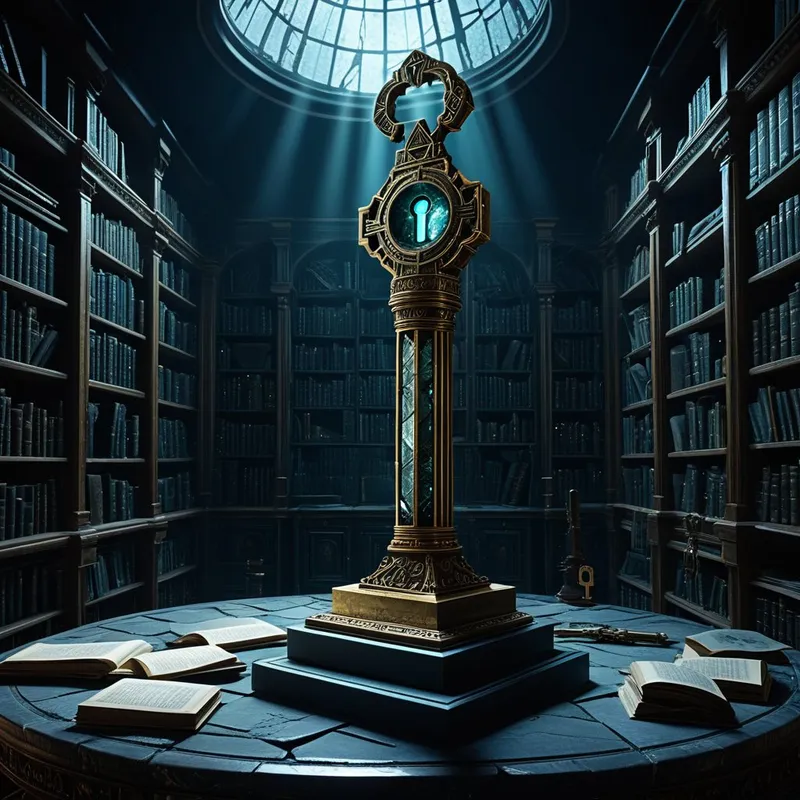
I stood in a vast, silent library that was also a forest. Roots cradled glowing data-crystals instead of books. A voice, not heard but felt in my sternum, said, “The key is in the lock you refuse to turn.” I reached for a specific crystal, and its light pulsed in time with my own heartbeat.
Alchemical Interpretation: The dream presents the psyche’s internal archive—where biological inheritance and personal memory merge—and issues a direct command to engage with the specific, avoided lineage pattern whose energy already animates the dreamer’s core rhythm.
The False Lead
This theme is not a command to blindly worship the past, to genuflect before ghosts, or to be condemned to repeat familial curses. It is not genealogical homework. The common misinterpretation is to see these dreams as merely about “family” or “heritage,” turning them into a sentimental or superstitious exercise. The true call is far more radical: it is an invitation to consciously metabolize your inheritance. To mistake veneration for obligation is to remain a child in the ancestral hall. The true work is to become its steward and alchemist.
Psychological Architecture
To venerate, in the depth-psychological sense, is to behold with awe-full clarity—to see the whole tapestry, gold thread and stain alike. This is the Shadow work of Ancestral Veneration. It requires you to sit in the silent council of your internal family system, not as a judge, but as a witness. You meet the exiled figures: the orphaned grief of a great-grandparent, the unexpressed rage of a parent, the stifled creativity that echoes down the generations like a skipped stone.
This is the Individuation process at its most foundational. You are not rejecting your lineage to become yourself; you are differentiating from the unconscious identification with its patterns. You grieve what was lost for them, so it need not be lost in you. You honor their strength by not needing to armor yourself in identical ways. You transform their silent prayers into your spoken truths. The process feels like revising a sacred text in real-time, scribbling your own gloss in the margins of a fate someone else began writing.
Mythic Resonance
Consider the Greek myth of Psyche’s descent. Her final, most impossible task is not to fight a monster, but to journey to the underworld and retrieve a box of beauty from Persephone. She is given specific instructions: show compassion, pay the toll, and do not open the box. She succeeds in her veneration—she completes the ritual, receives the treasure—but on the return, her human curiosity opens the box, releasing a deathly sleep. Yet, this "failure" is necessary. It is Eros who awakens her, completing the circuit. The myth tells us that ancestral wisdom (the underworld gift) must be retrieved with reverence, but it only becomes truly yours, integrated and alive, when it is mixed with your own mortal flaw and your capacity for awakened love. You must both follow the ritual and break its seal.
Symbolic Nodes
- Ancient Keys, Locked Boxes, Sealed Rooms: Specific, contained aspects of lineage memory awaiting conscious engagement.
- Roots, Family Trees, Mycelial Networks: The living, connective structure of inheritance, often highlighting a particular branch or severed connection.
- Heirlooms of Ambiguity: Tarnished jewelry, cracked pottery, faded photographs. Objects that hold both love and loss, value and burden.
- Ancestral Lands/Architecture: Ruined homesteads, endless hallways, foundational stones. The psychic landscape of origin.
- Elemental Transmission: Receiving food, drink, or breath from an ancestor figure. The direct transfer of substance and soul-stuff.
- The Unmarked Grave or Unnamed Portrait: The presence of specifically unacknowledged, silenced, or shamed lineage.
Archetypal Resonance
The Magician Archetype is the active force in Ancestral Veneration. This is not the shadow manipulator, but the true Alchemist-Visionary. The Magician’s core power is transformation through understanding hidden principles and wielding the tools of consciousness. The somatic echo of ancestral gravity is the Magician sensing the raw, untransmuted prima materia of lineage within their own vessel. The archetype resonates because this work is the ultimate act of sacred technology: you are using the heat of your own awareness to distill generations of lived experience—their triumphs and traumas—from blind fate into chosen wisdom. You are not praying to the past; you are performing the ritual that redeems its energy for your future.
The Alchemical Process
The alchemical vessel here is your own nervous system, your life. The prima materia is the inherited emotional and psychological pattern—the "family karma." The intense heat and pressure required is the conscious suffering of bearing the truth. It is the willingness to feel the ancestral grief without being drowned by it, to acknowledge the inherited rage without acting it out, to perceive the old chains of obligation without mistaking them for love.
This is the solve et coagula: you must first dissolve the rigid, fossilized narrative of "this is just who we are." You let the old story break down in the solvent of your honest inquiry. Then, you coagulate. From that dissolved matter, you extract the essential salts—the core strengths, the latent talents, the resilient love—and you reform them around your own sovereign purpose. You transmute the leaden weight of fate into the gold of authentic destiny. The terror lies in facing the void if you dissolve the old identity; the grief is for the dreams your ancestors never fulfilled. The sovereignty is born when you realize you are the one who can dream them now, in your own way.

The Integration Protocol
Question 1: What unspoken rule, belief, or emotional posture in my life feels so fundamental that I never chose it? Can I sense from whom I might have inherited it?
Question 2: If my lineage were a book, which chapter is dog-eared, stained, and most often reread in my behavior? Which chapter is sealed shut or torn out entirely?
Question 3: What unique gift do I possess that feels like an answer to a prayer or a longing my ancestors could not fully articulate?
Action 1 (Somatic Grounding): Sit with your back against a wall or solid tree. Feel the support. Breathe deeply and imagine roots descending from your spine, not to take, but to anchor. For five minutes, simply hold the thought: "I am the meeting place. I am not the end of the line, but a living bridge." Feel the weight become foundation.
Action 2 (Creative Excavation): Without planning, engage in unstructured writing or drawing. Let the prompt be: "A letter from the future to the past." Do not write to a specific person, but to the lineage stream itself. What does the future-you, shaped by integrated wisdom, need to tell the past about what was saved, what was healed, what was finally set free?
Action 3 (Ritual of Selective Honor): Find a small object—a stone, a candle, a leaf. Hold it and consciously imbue it with a specific, positive ancestral quality you wish to carry forward (e.g., "resilience," "artistry," "quiet fortitude"). Then, perform a simple act that symbolically releases a specific inherited burden you choose not to carry (e.g., whisper it to flowing water, burn a slip of paper safely, bury it in earth). You are not rejecting ancestors; you are consciously curating your inheritance.
Final Validation
This work is not easy. To stand at the crossroads of time, feeling the pull of a thousand lives in your blood, is to know a profound loneliness and a profound responsibility. It is heavy. To feel it is a sign of your depth, not your weakness. You are being asked to complete sentences left dangling for generations, to heal wounds you did not inflict, and to claim treasures you did not bury. This is the price and privilege of consciousness. Remember: you are not called to be a monument to the past, but its living translation. The very ache of that gravity is proof that you are the one strong enough, aware enough, to finally turn the key in the lock. The archive awaits its curator. The roots are ready to feed a new kind of bloom.