The Ancestral Call: Dreaming the Unfinished Past
The Somatic Echo
It begins not as a thought, but as a tremor in the foundation of the self. A weight in the chest that feels both foreign and intimately familiar, like a forgotten language spoken by your own bones. A sudden, inexplicable grief for a loss you never personally knew, or a surge of anger with no present-day target. It is the somatic echo—the body’s memory of stories it never lived but somehow carries. This is the visceral prelude to the ancestor dream: a feeling of being inhabited, of walking in a psychic landscape that is only partly your own. The air in the room thickens. Time feels less linear, more like a pool you are standing in, with currents from the deep past brushing against your ankles. Before any image forms, you feel the architecture of lineage—its strengths as a supporting pillar, its wounds as a hairline fracture in your own psyche.
The Dreamer's Log
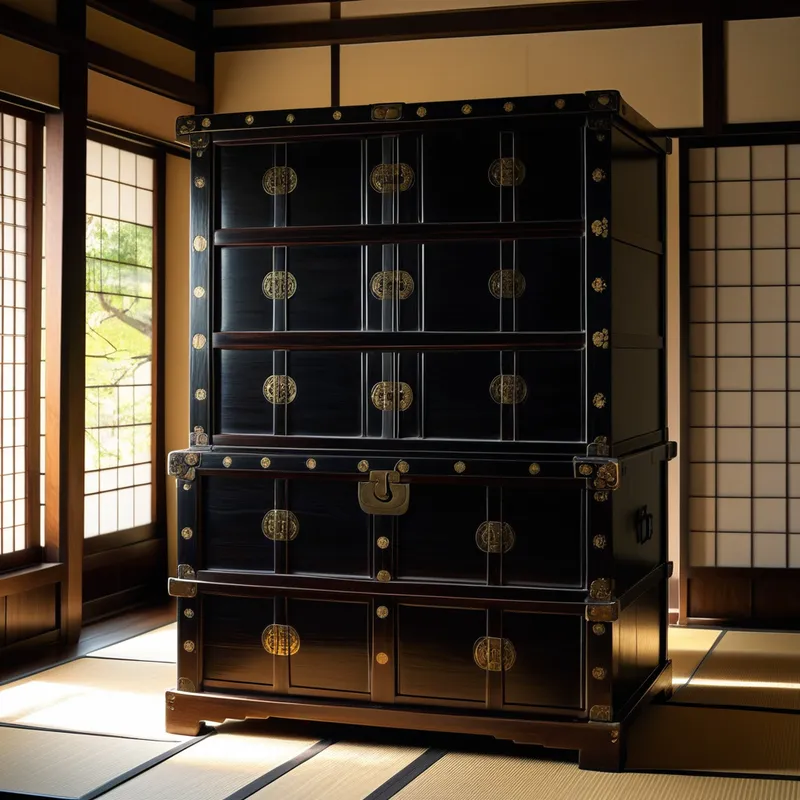
In the dream, I am in a vast, silent data-center, walls lined with humming servers. I know this is the archive of my bloodline. I am drawn to one console, its screen dark. When I place my hand on it, a simple, weathered wooden chest materializes at my feet. I open it. Inside, there is no object, only a profound, resonant silence that feels like both a blessing and a curse.
This dream is an alchemical summons: the technology of the present is the interface required to receive the untranslated, pre-verbal inheritance of the past. The empty chest is not a lack, but a potential—the unformed material of ancestral legacy awaiting your conscious engagement.

The False Lead
This theme is not about genealogical curiosity, nor is it a call to blindly venerate or blame the past. It is not superstition, not a sign of "haunting," and most critically, it is not an excuse to outsource your current life’s pain or responsibility to ghosts. To misinterpret the ancestral call as either mere historical fact-finding or as a fatalistic sentence is to miss its profound psychological function. The dream is not handing you a completed verdict on your life; it is handing you the raw, uncut ore of your lineage’s unresolved experiences. Your task is not to worship the ore, but to refine it.
Psychological Architecture
To dream of ancestors is to be drafted into the deepest strata of Shadow work. Here, the Shadow is not merely personal—it is familial, cultural, genetic. It is the collective unconscious of your lineage, a psychic inheritance of traumas silenced, loves unexpressed, potentials abandoned. Individuation in this realm becomes a sacred archaeology of the soul. You are not just integrating your own repressed parts; you are consciously relating to the repressed parts of your entire line.
This process feels like meeting internal family systems that are not your own, yet speak through you. You may encounter the internalized "orphan" of a grandparent who lost everything, the frozen "innocent" of a child who witnessed unspeakable things, the buried "rebel" who was punished for defiance. These are not ghosts, but psychic complexes—energetic knots of unprocessed experience—that have been passed down like emotional DNA. Your conscious life becomes the vessel where these unfinished stories seek an ending, or at least, a compassionate witness. To ignore them is to let them run your life from the basement of your psyche. To engage is to claim sovereignty over the entire estate of your being.
Mythic Resonance
This is the territory of Aeneas, who fled the burning ruins of Troy carrying his father, Anchises, on his back. His myth is not one of simple escape, but of burdened responsibility. He carries the literal weight of the past into an unknown future, tasked with founding a new nation not from scratch, but from the ashes of the old. The ancestor is both a sacred charge and an immense weight; the journey is impossible without them, and arduous because of them. Similarly, in the Norse cosmology, the roots of the World Tree, Yggdrasil, tap into the Well of Urd—the well of fate and past deeds. The Norns water the tree from this well, meaning the present and future are perpetually nourished (and shaped) by the waters of what has been. To dream of ancestors is to drink from Urd’s well, to taste the waters that have fed the roots of your own existence.
Symbolic Nodes
- Ancient Houses, Attics, Basements, Roots: The architecture of the inherited psyche, with its inhabited rooms and locked chambers.
- Heirlooms, Chests, Locked Boxes, Unopened Letters: The specific, encapsulated legacy—a talent, a trauma, a secret, a debt.
- Faded Photographs, Silent Films, Static on a Screen: Memories or truths that are present but unclear, requiring interpretation.
- Soil, Clay, Stone, Bone: The fundamental, elemental material of lineage—what you are ultimately built from.
- A Language You Almost Understand: The near-accessibility of ancestral wisdom or warning, just on the edge of consciousness.
- Being Given a Task or a Key: The call to active engagement with the legacy.
Archetypal Resonance
The psychological process here resonates most powerfully with The Magician Archetype. The Magician’s realm is the hidden structure of reality, the unseen forces and laws that govern transformation. When ancestors appear, you are called to become the Magician of your own lineage. The somatic echo is the raw, unformed energy of the past. The dream images are the symbols and tools. Your conscious awareness is the crucible. The Magician does not flee from this ancient, often chaotic energy; they learn its language and principles to transmute it. The shadow of this—the Manipulator or Illusionist—would use this legacy to blame, to weave tales of victimhood, or to claim unearned power. The integrated Magician does the true alchemy: turning the leaden weight of inherited fate into the gold of personal sovereignty, transforming ancestral whispers into a language of self-creation.
The Alchemical Process
The transmutation of ancestral material is an alchemy of profound listening and conscious recombination. The prima materia is the somatic echo—that grief, anger, or numbness that has no modern source. The heat is applied through conscious, felt-sense awareness. You must sit in meditation with that chest-tightness and ask, "Whose sorrow is this?" You must feel the surge of old rage and inquire, "Whose injustice fuels this flame?"
The pressure is the unbearable tension of holding multiple truths: honoring the pain of the past while refusing to be doomed by it; feeling gratitude for the sacrifice of ancestors while acknowledging their flaws and failures. This is the solve et coagula—dissolve and reconstitute. You dissolve the blind identification with the lineage’s story ("I am this because they were that"). In the heated vessel of your own differentiated consciousness, you separate the essential nutrients—their resilience, their love, their unexpressed hopes—from the toxins of their unresolved trauma and limiting beliefs. Then, you reconstitute, or coagula, these essentials into the unique compound of your own life. You give their silent stories a voice, not by repeating them, but by living the answers to the questions they died asking.

The Integration Protocol
Question 1: When I feel the "somatic echo" of this theme in my body, what specific emotion arises? If this emotion had a history that wasn't mine, what story might it be trying to tell?
Question 2: What unspoken rule, blessing, or curse from my family line do I feel most compelled to either obey or rebel against? What is the hidden cost of that compulsion?
Question 3: If I could speak to the most distant ancestor in my dream, not to ask for anything, but to offer one thing they lacked, what would I give?
Action 1 (Somatic Mapping): For one week, keep a small notebook. When you feel an intense, seemingly disproportionate emotional reaction, note it and immediately scan your body. Where do you feel it? Describe the sensation (e.g., "a cold stone in my stomach," "a clenched fist behind my ribs"). Don't analyze, just map. You are charting the geography of your inherited emotional body.
Action 2 (Unsent Letter): Write a letter to an ancestor—known or unknown. Do not send it. Write from the voice of the somatic echo. Let the grief, anger, love, or confusion speak directly. Then, write a reply from your own, present-day consciousness. Not as a child of the line, but as its current custodian and alchemist.
Action 3 (Elemental Ritual): Find a small stone or handful of soil. Sit with it as the literal, elemental substance of your lineage. Speak aloud one specific, limiting pattern you feel you inherited (e.g., "the fear of scarcity"). Thank the stone for carrying this so far. Then, consciously state, "I now transform this energy into..." and name its opposite or its lesson (e.g., "...into mindful abundance and trust"). Bury the stone, returning the transformed intention to the earth.
Final Validation
This work is not for the faint of heart. To converse with the past is to agree to feel the weight of time, to grieve losses you did not witness, and to carry a responsibility you did not choose. It is deeply, inherently difficult. Yet, within that difficulty lies your profound liberation. By agreeing to become the conscious endpoint of this long line—the one who listens, the one who feels, the one who transforms—you do not chain yourself to the past. You free it. And in freeing the past, you finally authorize your own future, built not on the buried ruins of what came before, but on ground you have consciously, courageously, and compassionately reconsecrated.