The Alchemy of Aggression: From Shattered Mirrors to Sovereign Power
The Somatic Echo
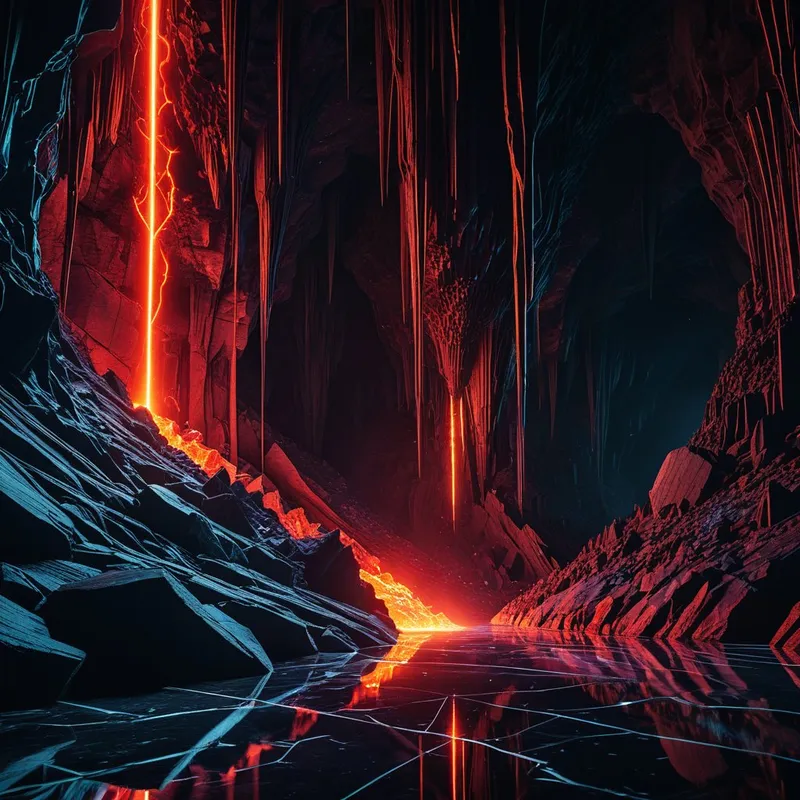
It begins not as a thought, but as a tremor in the deep tissue. A clenching in the jaw you didn’t authorize. A sudden heat behind the eyes, a tightening of the gut into a fist of stone. The shoulders draw up toward the ears, a fortress of flesh against an unseen siege. This is the body’s ancient language, speaking of a pressure that has no name, a force that has found no form. It is the somatic echo of a power that has been disowned, a vitality deemed too dangerous for polite consciousness. Before the dream-images of teeth and fists, before the chases and the shouts, there is this: a raw, humming charge in the nervous system, a pure potential for motion that has been forced into stillness. It is the feeling of a river damned, its waters growing dark and turbulent, seeking any crack through which to burst.
The Dreamer's Log
She is running down a long, institutional corridor, the walls slick and grey. Behind her, a formless presence of pure menace gives chase, its breath hot on her neck. She turns a corner, finds herself trapped. In her hand is not a weapon, but a small, ornate hand mirror. Desperate, she smashes it against the wall and turns, holding up a jagged, silver shard. The pursuing shadow halts, recoils from its own fractured reflection.
Alchemical Interpretation: The dream reveals that the perceived external threat is, in truth, a disowned fragment of the self, and the only viable "weapon" against this shadow is the courageous act of turning to face and reflect its own fractured image.
The False Lead
Do not mistake this theme for a simple prophecy of conflict or a warning of impending rage. This is not the psyche predicting a literal fight. The aggression in the dreamscape is almost never a directive, but a diagnostic. It points not to what you will do, but to what you have refused to be. It is the sign of a profound structural shift attempting to occur within the internal family of the self—a civil war between exiled parts. To interpret it as mere "stress" or "anger at someone" is to mistake the earthquake for the fault line. The aggression is the symptom of pressure, the roar of energy that cannot find its proper channel.
Psychological Architecture
Beneath the dream of the chase, the attack, the defensive stand, lies the architecture of the Shadow, in its most potent and feared form: the Aggressor. This is not the shadow of pettiness or laziness, but the shadow of raw, undirected power, of the will to impact the world. In the process of becoming civilized, of being "good," we often exile this part. We disown our capacity for firm boundaries, for fierce protection, for saying "no" with the finality of a slamming door. This exiled power does not dissipate; it coagulates in the unconscious, becoming autonomous. It then appears in dreams as the monster, the pursuer, the violent stranger. The dream-ego, representing our conscious identity, experiences this energy as a terrifying external force. The alchemical work here is one of reclamation. It is the slow, terrifying, and ultimately liberating process of turning to face the pursuer, not to fight it, but to ask: "What part of me have you come to represent? What power have I asked you to hold for me?" Individuation demands we integrate this Aggressor, not to become aggressive, but to become whole—to have access to our full strength without being possessed by it.
Mythic Resonance
Consider the myth of Achilles. His rage, his menis, is not a simple character flaw; it is a divine force, a god-like power that makes him peerless in battle but also isolates and destroys him. His aggression is both his sovereignty and his fatal wound. He is a man possessed by a power he cannot integrate, and it leads him to desecrate Hector's body—a shadow act that severs him from his own humanity. The myth does not condemn his power but illustrates the tragedy of its dissociation. In a different key, the Hindu goddess Kali embodies this archetypal force in its raw, cosmic form. She is the furious destroyer of illusion, her tongue lolling, her necklace of skulls a testament to the ego-structures she has devoured. She is aggression as divine, necessary dissolution, the terrifying mother who destroys to make space for new creation. She is not "evil"; she is the process itself, the aggression required for rebirth.
Symbolic Nodes
- Teeth, Claws, Horns: Primal instruments of impact and boundary-setting.
- Shattered Glass/Mirrors: The breaking of a false, pacified self-image; the dangerous truth in fragments.
- Being Chased: The pressure of exiled energy returning for integration.
- Wild Animals (especially cornered): Instinctual power in its raw, untamed state.
- Blunt Instruments/Improvised Weapons: The psyche making use of whatever is at hand to defend its nascent sovereignty.
- Barren, Industrial Landscapes: The internal environment where natural aggression has been paved over, becoming toxic.
- Failing or Flickering Lights: The conscious mind's inability to fully illuminate or control the rising shadow content.
Archetypal Resonance
The Shadow Hero is the archetypal engine at the core of these dreams. The Hero's sacred quest is to confront chaos, to establish order, and to win sovereignty. In its shadow form, this pure drive for impact becomes distorted. The strength curdles into bullying force; the courage hardens into mercenary brutality; the quest for victory becomes a compulsion to dominate or destroy. The somatic echo of clenched fists and heated blood is the Shadow Hero's frustrated energy, trapped in the body because it is denied a conscious mission. Its alchemical potential, however, is immense. This same energy, when integrated, fuels the genuine Hero's journey—not to slay others, but to confront internal dragons, to establish order within the self, and to claim true, compassionate sovereignty. The aggression in the dream is the Shadow Hero pounding on the door of consciousness, demanding to be given a real task, a sacred purpose, rather than being left to riot in the dark.
The Alchemical Process
The transmutation of dream aggression is a work of contained combustion. The base material is the raw, chaotic charge—the fear, the rage, the sense of violation. The alchemical vessel is your conscious, witnessing awareness. The heat is applied by the courageous act of staying present with the somatic echo, of feeling the clench in the gut without immediately spinning a story of blame. This is the nigredo, the blackening. You must allow the "heat" of the feeling to burn away the narrative that this energy belongs "out there" with a person or situation. As you contain it, a separation occurs. The pure, undirected force begins to differentiate from the old, painful memories and identities it has been fused with. This is the albedo, the whitening, the seeing of the thing-in-itself. The force is not your childhood anger, not your boss's criticism; it is simply Potential for Impact. The final stage, rubedo, is the reddening, the integration. Here, you consciously direct this refined force. You give the exiled Shadow Hero a sacred task: the energy that was a clenched fist becomes the firm hand that sets a boundary. The heat that was a flash of rage becomes the passionate fuel for a creative project or the fierce protection of a loved one. The chaotic charge is transmuted into disciplined, sovereign power.
The Integration Protocol
Question 1: In the dream, where did I feel the most potent sense of agency or power—even if it was frightening? Was it in the attack, the defense, or the moment of choice?
Question 2: If the aggressive force in the dream were a protector, what is it trying to guard me from? What vulnerability does it believe it must shield with such ferocity?
Question 3: In my waking life, where do I feel a similar somatic pressure—a clenching, a heat, a rigidity—that I consistently ignore, rationalize, or numb?
Action 1 (Somatic Anchoring): Next time you feel the somatic echo of aggression (the jaw clench, the shoulder hike), stop. Place a hand firmly on your sternum. Breathe into that pressure for 90 seconds. Do not try to change it or tell a story about it. Simply contain the sensation with your breath and touch, acknowledging, "This energy is here."
Action 2 (Unstructured Writing): Set a timer for 10 minutes. Write from the perspective of the aggressive figure or force in your most recent dream. Let it speak. Don't censor. Use its voice. Start with: "What you don't understand is..." or "I am here because..."
Action 3 (Ritual of Directed Force): Find a large piece of paper and bold markers or paints. Create a visual representation of the "force" from your dream—not a literal monster, but an abstract shape, color, and texture of its energy. Then, on the same page, consciously transform that shape into a symbol of a boundary, a shield, or a tool. Witness the transmutation on the page.
Final Validation
To dream of aggression is to walk the most challenging and sacred ground of the psyche. It is terrifying because it feels like a loss of control, a betrayal of the "good" self you have worked so hard to maintain. Honor that fear; it is the guardian of your old form. But know this: the very fact that this energy is erupting into your dreamscape is a profound act of psychic health. It is a demand for wholeness. The chaos is not your ruin; it is the raw material of your sovereignty. By turning toward the heat, by containing the pressure, you are not becoming a monster. You are performing the ultimate alchemy: transforming the exiled tyrant within into the integrated sovereign, capable of both profound compassion and unshakeable, necessary strength.