
The Somatic Echo
It begins not as a thought, but as a gravity. A specific, undeniable pull in the solar plexus, a hollow magnetism that draws all attention to a single point of possibility. The body knows the ritual before the mind names it: the dry mouth, the restless fingers, the shallow breath held in anticipation of the fix. This is the somatic echo of a fractured system. It is the ghost-limb sensation of a missing part of the self, broadcasting its absence through a frequency of pure, physiological want. The dream of addiction is the psyche translating this visceral, cellular longing into a narrative language. It is the body’s truth, felt in the gut and the pulse, finally reaching the ears of the sleeping mind.
The Dreamer's Log
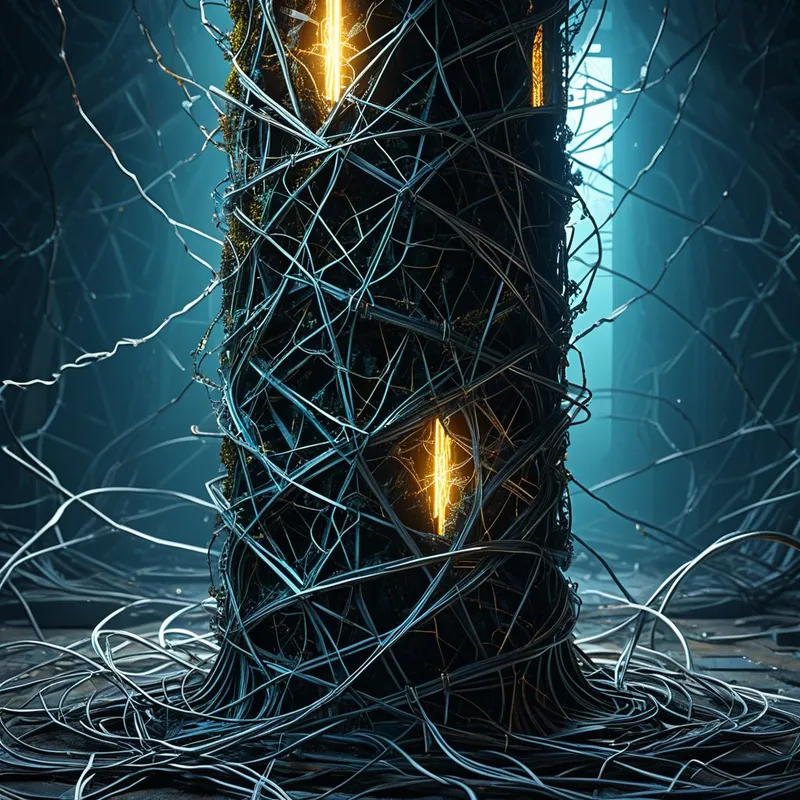
The phone rings in the empty server room. It’s the old, beige rotary phone on the wall, the one no one has used for decades. I know I shouldn’t answer. I know it’s just a recording. But my hand lifts the heavy receiver to my ear, and the same looped, staticky message plays: “Connection failed. Please hang up and try your call again.” I hang up. It rings. I answer. The message plays. All night.
This is the dream of the exiled part, using the only broken line it has to signal its desperate, repetitive need for reconnection.

The False Lead
Do not mistake this dream for a literal prophecy of substance abuse or a moral failing. It is not a warning about a specific behavior, but a diagnosis of a structural condition within the inner world. The compulsion in the dream is a symptom, not the disease. The disease is disconnection. The false lead is to focus on the object of desire—the drug, the phone, the food, the screen—and wage war upon it. This only deepens the civil war within. The dream is pointing to the wound that the ritual attempts, and fails, to medicate. It is highlighting the internal orphanage, not the orphan’s desperate cries.
Psychological Architecture
Beneath the compulsive loop lies a profound architecture of exile. In the language of internal family systems, an entire sub-personality—a part charged with feeling pleasure, with seeking comfort, with managing overwhelm—has been deemed unacceptable. Perhaps it was too needy, too joyful, too fearful. It was sent into the shadowlands of the psyche, denied its voice and its role. Yet, an exiled part does not disappear; it amplifies. It becomes a hungry ghost, and its hunger distorts into a single, shrieking demand. The dream shows us this part’s strategy: it has hijacked the system’s reward pathways, creating a closed circuit where the attempt at connection is the failure of connection. The individuation process here is not about slaying a dragon, but about hearing the dragon’s grievance. It is the slow, courageous work of descending into the inner server room, not to unplug the phone, but to finally listen to what the broken recording is trying, over and over, to say.
Mythic Resonance
We see this in the story of the Midas Touch. King Midas is granted his deepest wish: that all he touches turns to gold. This is not a tale of greed, but of a fatal, addictive logic. The object of his desire—gold—becomes the agent of his starvation and isolation. He cannot eat, he cannot drink, he cannot embrace his daughter. His wish, meant to grant ultimate security and power, instead creates a world where contact is death and nourishment is impossible. The golden touch is the ultimate addiction: a system that promises wholeness but delivers only a sterile, inanimate prison. The healing comes only when the logic is reversed, when the golden touch is washed away in the river of feeling—the somatic, flowing world he had sought to transcend.
Symbolic Nodes
Common images in these dreams include: broken or endlessly ringing phones; vending machines that dispense only empty cans; searching through endless, identical rooms for a single lost item; trying to drink from a cup with a hole in the bottom; a keyboard with missing or stuck keys; a vehicle with no brakes, hurtling down a known street; a needle and thread that cannot pierce the fabric.
Archetypal Resonance
The energy at the core of the addiction dream is that of The Shadow Orphan Archetype. The Orphan’s healthy aspect is the resilient realist, the part that knows life can be hard and seeks genuine comfort and community. Its shadow, however, is the perpetual Victim, convinced of its fundamental abandonment and operating from a core of bottomless lack. This resonates perfectly with the theme’s somatic echo—that hollow, gravitational pull of need. The Shadow Orphan believes it must secure its survival through one external source, one ritual, one fix, because it has lost faith in the internal family’s ability to care for it. Its alchemical potential lies in its profound truth: it was abandoned—not by the world, but by the conscious self. Integrating it requires welcoming this desperate, sticky, grieving part back into the system, transforming its compulsive search into a genuine petition for care.
The Alchemical Process
The transmutation here is the conversion of a closed circuit into an open system. The alchemical heat is the unbearable tension of sitting with the craving without acting on it. This is the nigredo, the blackening: you must feel the full, despairing weight of the orphan’s belief that without the object, it will die. The pressure is the conscious choice to breathe into that hollow space, to meet the gravitational pull not with resistance or surrender, but with witnessing curiosity. As you hold this heat, the circuit begins to melt. The single, shrieking demand for “the fix” begins to differentiate into its component parts: a need for comfort, a cry of grief, a memory of joy, a wave of overwhelm. This is the albedo, the whitening, where the monolithic compulsion breaks into a spectrum of authentic feelings. The new substance formed is not a better object, but a restored relationship—an internal sovereignty where no part of the self is left ringing a dead line in an empty room.
The Integration Protocol
Question 1: In the dream, what is the precise moment of anticipation? Not the consumption, but the nanosecond before—what feeling lives in that held breath?
Question 2: If the compulsive object or action in the dream could speak as a wounded part of you, what one sentence would it repeat, and what forgotten need is hidden beneath that sentence?
Question 3: Where in your waking life do you feel this same somatic gravity—a pull toward something that promises fullness but delivers a quieter, more familiar emptiness?
Action 1 (Somatic Mapping): For one week, when you feel the waking-world echo of the dream’s pull, stop. Place a hand on the part of your body where the sensation is strongest. Breathe into that space for three cycles. Do not try to change it. Simply acknowledge its presence as a signal, not a command.
Action 2 (Exile’s Portrait): Using any medium—crayons, collage, digital paint—create an image of the object from your dream (the phone, the cup, the needle). Then, without planning, let your hand alter it. Give it a face. Give it a voice bubble. Let the broken thing become a character. What does it look like now?
Action 3 (Ritual of Reconnection): Design a simple, 2-minute evening ritual that symbolically answers the broken call. If your dream featured a phone, you might hold a stone to your ear for a moment of silence, then speak one true thing about your day into it. The form is less important than the intentional, compassionate act of completing the broken circuit with presence, not substance.
Final Validation
To dream of addiction is to touch one of the most tender and terrifying places in the human psyche: the conviction that a part of you is so unacceptable, its only hope is a ritual of lack. This is profoundly difficult work. Honor the fatigue. The path out is not through force of will, but through the slow, merciful art of internal diplomacy—of hearing the plea beneath the panic. That ringing in the empty room? It is not a curse. It is the most faithful sound in the world: a part of you, however lost, still calling home. Your sovereignty begins the moment you choose to listen.