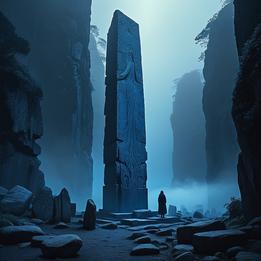
Stone Monolith
Stone monoliths are large, upright stones often found in ancient sites, symbolizing strength, permanence, and a connection to the earth and ancestral traditions.
Stone Monolith Dream Meaning
Stone monoliths are large, upright stones often found in ancient sites, symbolizing strength, permanence, and a connection to the earth and ancestral traditions.
Interpretive Themes
Ancestral Heritage
highTheir presence can invoke thoughts about legacy and identity.
Transience
highMonoliths symbolize enduring truths amidst life’s transience.
Spiritual Significance
mediumSuch structures can become focal points of worship and veneration.
Mystery and the Unknown
mediumThey evoke questions about the civilizations that created them.
Grounding
mediumMonoliths signify humanity’s roots in nature and the earth’s cycles.
Mythological Resonance
Stonehenge
CelticMegalithic circle aligned with celestial movements, serving as calendar and ritual site.
Moai
PolynesianGiant stone statues on Easter Island representing deified ancestors watching over the land.
Cultural Lenses
European Perspective
View Context →Constructed for druidic rituals and seasonal celebrations. Sites of gathering and spiritual practice. [Celtic] Represent vital landscapes within the Celtic worldview.
Middle Eastern Perspective
View Context →Constructed as part of tombs for the afterlife. Associated with funerary rites and divine connections. [Ancient Egypt] Reflects the connection between life, death, and the divine.
Historical Authorities
Want a deeper analysis?
Get a personalized interpretation of your entire dream including this symbol.
Interpret My DreamThe Oracle's Prediction
Combine multiple symbolsA profound connection to ancestral wisdom will manifest.
Timeframe
Seasonal (~3 Months)
Intensity
Deep
Common Appearances & Contexts
| Context | Emotion | Interpretation |
|---|---|---|
| Context Standing in front of a stone monolith | Emotion Awe | Interpretation Reflects feelings of insignificance or humility before vast history. |
| Context Touching a monolith and feeling energy | Emotion Reverence | Interpretation Portrays a deep physical and spiritual connection to one’s ancestry. |
| Context Walking among ancient monoliths | Emotion Curiosity | Interpretation Symbolizes a quest for knowledge and a search for understanding. |
| Context Hearing whispers near a monolith | Emotion Mystery | Interpretation Indicates exploration of the unknown or forgotten aspects of self. |
| Context Climbing a monolith to view the landscape | Emotion Empowerment | Interpretation Represents gaining perspective on one's life journey. |
| Context Witnessing a monolith in a storm | Emotion Fear | Interpretation Captures concerns about stability and resilience in personal turmoil. |
| Context Examining carvings on a stone monolith | Emotion Intrigue | Interpretation Might imply a desire to uncover personal or cultural histories. |
| Context Burying a personal item near a monolith | Emotion Reflection | Interpretation Implies a wish to honor or connect with personal heritage. |
| Context Getting lost in a field of monoliths | Emotion Confusion | Interpretation Expresses feelings of being overwhelmed by life's choices. |
| Context Building a stone monolith | Emotion Creation | Interpretation Signifies personal growth and the desire to leave a mark on the world. |
Interpret Your Full Dream
Beyond this symbol, every dream carries a unique story. Share your dream for a personalized AI-powered interpretation.