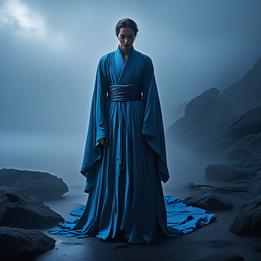
Robe of Enlightenment
A sacred garment embodying wisdom and spiritual awakening, suggesting a deeper understanding of oneself and the world.
Robe of Enlightenment Dream Meaning
A sacred garment embodying wisdom and spiritual awakening, suggesting a deeper understanding of oneself and the world.
Interpretive Themes
Spiritual Awakening
highRepresents transformative journeys towards self-realization.
Wisdom
highSignifies personal mastery and insight.
Identity
mediumEmphasizes the exploration of one’s values and beliefs.
Transformation
mediumSymbolizes the shedding of old beliefs.
Service
lowRepresents the responsibility that comes with gained wisdom.
Mythological Resonance
Buddha's Robe
BuddhistThe simple patched robe worn by the Buddha after his enlightenment, symbolizing the shedding of worldly attachments and embodiment of wisdom.
Athena's Aegis
GreekThe magical goatskin cloak worn by Athena, representing divine wisdom, protection, and strategic insight in battle and governance.
Cultural Lenses
East Asian Perspective
View Context →Monks wear robes to signify simplicity and focus on enlightenment. Worn during meditation and teachings. [Buddhist] Promotes mindfulness and calm.
East Asian Perspective
View Context →Saffron robes symbolize renunciation and the pursuit of truth. Used in spiritual practices and ceremonies. [South Asian] [Hindu] Embodies the principle of dharma.
African Perspective
View Context →Distinct robes signify status and wisdom within tribes. Worn during significant cultural ceremonies. [African Tribal Cultures] Strengthens community ties and heritage.
Historical Authorities
Want a deeper analysis?
Get a personalized interpretation of your entire dream including this symbol.
Interpret My DreamThe Oracle's Prediction
Combine multiple symbolsA sudden clarity about your life's purpose and path.
Timeframe
Immediate (Next 48h)
Intensity
Deep
Resolution of a chronic physical issue through mind-body understanding.
Timeframe
Seasonal (~3 Months)
Intensity
Deep
Common Appearances & Contexts
| Context | Emotion | Interpretation |
|---|---|---|
| Context Wearing the robe and feeling light | Emotion Elation | Interpretation Reflects fulfillment in personal growth. |
| Context The robe glowing with energy | Emotion Amazement | Interpretation Symbolizes realization of inner power. |
| Context Taking off the robe in front of others | Emotion Vulnerability | Interpretation Indicates fear of exposing one’s true self. |
| Context The robe getting heavier | Emotion Burdened | Interpretation Suggests the weight of expectations in personal growth. |
| Context Being praised while wearing the robe | Emotion Pride | Interpretation Represents recognition of personal achievements. |
| Context Losing the robe | Emotion Fear | Interpretation Indicates anxiety about losing spiritual understanding. |
| Context Receiving the robe as a gift | Emotion Joy | Interpretation Symbolizes acceptance of one’s journey. |
| Context Sharing the robe with others | Emotion Empathy | Interpretation Represents willingness to collectively grow. |
| Context Cleaning the robe with care | Emotion Carefulness | Interpretation Indicates attention to one’s spiritual journey. |
| Context Finding the robe in an old chest | Emotion Nostalgia | Interpretation Evokes memories of past wisdom and experiences. |
Interpret Your Full Dream
Beyond this symbol, every dream carries a unique story. Share your dream for a personalized AI-powered interpretation.