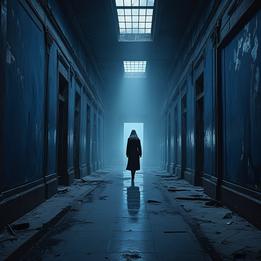
Deserted Hall
A deserted hall often symbolizes abandonment, isolation, and the remnants of the past, serving as a reflection of inner emotional states or unresolved issues.
Deserted Hall Dream Meaning
A deserted hall often symbolizes abandonment, isolation, and the remnants of the past, serving as a reflection of inner emotional states or unresolved issues.
Interpretive Themes
Isolation
highA deserted hall can embody the emotions tied to being physically or emotionally isolated.
Memory
highThe hall may signify memories of past relationships or events that haunt the dreamer.
Abandonment
mediumThis theme often surfaces in dreams reflecting real-life concerns about relationships.
Transience
mediumIt can signify life changes or the fleeting nature of moments.
Adaptability
lowThe deserted hall may reflect feelings of being haunted by past decisions.
Mythological Resonance
The Labyrinth (after Theseus)
GreekAfter the Minotaur is slain, the vast, intricate maze on Crete stands empty—a monument to past terror and triumph, now a deserted architecture of memory.
The Desert
BiblicalA recurring place of trial, purification, and revelation (e.g., Jesus's 40 days, the Israelites' wandering), where the soul confronts its essence in stark isolation.
Cultural Lenses
East Asian Perspective
View Context →Symbolizes the inner self and the void that the soul travels through. Often reflected in meditation spaces and personal retreats. [South Asian] [Hindu] Indicates a journey towards enlightenment.
Historical Authorities
Want a deeper analysis?
Get a personalized interpretation of your entire dream including this symbol.
Interpret My DreamThe Oracle's Prediction
Combine multiple symbolsA current relationship or social circle will undergo a significant transition, creating temporary emotional space.
Timeframe
Seasonal (~3 Months)
Intensity
Deep
Risk of spiritual or emotional stagnation if solitude is not used constructively.
Timeframe
Immediate (Next 48h)
Intensity
Deep
Common Appearances & Contexts
| Context | Emotion | Interpretation |
|---|---|---|
| Context Walking alone in a deserted hall | Emotion Sadness | Interpretation The act of walking through the hall may symbolize a solitary journey through unprocessed emotions. |
| Context Hearing echoes in a deserted hall | Emotion Confusion | Interpretation Echoes represent unresolved thoughts or memories that resurface, causing confusion. |
| Context Searching for someone in a deserted hall | Emotion Longing | Interpretation This scenario indicates a desire for connection or resolution with someone significant. |
| Context Finding old photographs in a deserted hall | Emotion Nostalgia | Interpretation Photographs signify remembering past experiences, invoking a bittersweet feeling. |
| Context Feeling cold in a deserted hall | Emotion Fear | Interpretation Coldness symbolizes emotional detachment or fear of isolation. |
| Context Doors opening in a deserted hall | Emotion Anxiety | Interpretation Opening doors can signify anxiety about facing the unknown or past traumas. |
| Context Seeing shadows move in a deserted hall | Emotion Panic | Interpretation Shadows represent fears or unresolved issues reemerging to cause alarm. |
| Context Sitting in silence in a deserted hall | Emotion Reflection | Interpretation Silence allows for deep reflection, revealing inner thoughts and feelings. |
| Context Hiding in a deserted hall | Emotion Paranoia | Interpretation Hiding indicates a sense of vulnerability and the need to escape from other emotions. |
| Context Exploring different rooms in a deserted hall | Emotion Curiosity | Interpretation Exploration symbolizes curiosity about one's subconscious and the desire to uncover hidden truths. |
Interpret Your Full Dream
Beyond this symbol, every dream carries a unique story. Share your dream for a personalized AI-powered interpretation.