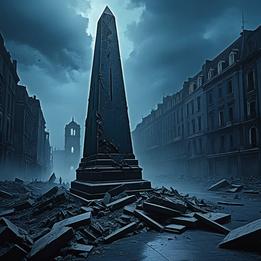
Crumbled Obelisk
The crumbled obelisk symbolizes the decay of greatness and the passage of time, reflecting both past achievements and current fragility.
Crumbled Obelisk Dream Meaning
The crumbled obelisk symbolizes the decay of greatness and the passage of time, reflecting both past achievements and current fragility.
Interpretive Themes
Transience
highEmphasizes acceptance of mortality and change.
Adaptability
highReflects societal fears of obsolescence.
Cultural Heritage
mediumEncourages emotional connection to history.
Identity
mediumRelates to how we remember and learn from our past.
Wisdom
mediumInspires curiosity about the legacies left behind.
Mythological Resonance
Obelisk of Hatshepsut
EgyptianOnce a towering symbol of pharaonic power at Karnak, now fragmented, speaking to the rise and fall of dynasties.
Tower of Babel
BiblicalA structure built to reach heaven, ultimately scattered and abandoned, symbolizing the collapse of human ambition.
Cultural Lenses
Middle Eastern Perspective
View Context →Obelisks were monumental structures, often inscribed with hieroglyphs to honor the gods and commemorative achievements. Used in religious ceremonies and as markers of pharaohs' reign. [Ancient Egypt] Their deterioration evokes emotions of loss and the need for preservation.
European Perspective
View Context →Celtic stone structures often incorporated imagery akin to obelisks, representing connections to ancestors. Used in rituals honoring nature and the cycles of life. [Celtic] Fragmented rocks evoke respect for the past and its lessons.
Historical Authorities
Want a deeper analysis?
Get a personalized interpretation of your entire dream including this symbol.
Interpret My DreamThe Oracle's Prediction
Combine multiple symbolsA long-standing project or position may conclude or transform significantly.
Timeframe
Seasonal (~3 Months)
Intensity
Deep
A deepening awareness of life's impermanent nature, leading to spiritual maturation.
Timeframe
Distant (6+ Months)
Intensity
Deep
Common Appearances & Contexts
| Context | Emotion | Interpretation |
|---|---|---|
| Context Stumbling upon a crumbled obelisk in a vast desert | Emotion Isolation | Interpretation Reflects feelings of being lost in life's journey, searching for meaning. |
| Context Attempting to rebuild the crumbled obelisk | Emotion Hopefulness | Interpretation Indicates a desire to restore lost connections or aspects of oneself. |
| Context Witnessing a thunderstorm destroy the obelisk | Emotion Fear | Interpretation Represents anxiety over uncontrollable events that threaten stability. |
| Context Walking alongside the obelisk, reminiscing about the past | Emotion Nostalgia | Interpretation Signifies longing for cherished memories and the past. |
| Context Finding ancient inscriptions on the crumbled remains | Emotion Curiosity | Interpretation A drive to uncover hidden truths about one's ancestry or self. |
| Context Seeing the obelisk collapse slowly over time | Emotion Melancholy | Interpretation An acknowledgment of personal or collective losses that accumulate. |
| Context Participating in a ritual around the obelisk | Emotion Connectedness | Interpretation Feels a connection through history to a larger community or ideology. |
| Context Being trapped under debris from the obelisk | Emotion Desperation | Interpretation Indicates feeling overwhelmed by the weight of expectations or history. |
| Context Observing the obelisk from a distance, covered in vines | Emotion Awe | Interpretation A sense of wonder at nature reclaiming what was once a human creation. |
| Context Competing with others to claim parts of the obelisk | Emotion Competition | Interpretation Highlights struggles for power, legacy, or resources in life. |
| Context Being guided by an ancient spirit near the obelisk | Emotion Reverence | Interpretation Imparts a feeling of being part of a larger spiritual narrative. |
| Context Finding treasure amidst the ruins of the obelisk | Emotion Excitement | Interpretation Represents discovering hidden talents or resources within oneself. |
| Context Seeing the crumbled obelisk in a cityscape | Emotion Displacement | Interpretation Fears of losing one's roots or identity in a modernizing world. |
| Context Being presented with an artifact from the obelisk | Emotion Pride | Interpretation Cherishes heritage, emphasizing feeling connected to one's roots. |
| Context Fleeing an impending collapse of the obelisk | Emotion Anxiety | Interpretation Fear of inevitable change or disaster that is hard to escape. |
Interpret Your Full Dream
Beyond this symbol, every dream carries a unique story. Share your dream for a personalized AI-powered interpretation.