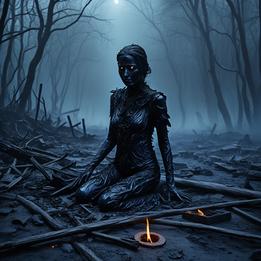
Charred Remains
Charred remains symbolize loss and the remnants of transformation, representing the aftermath of experiences or relationships that have changed significantly.
Charred Remains Dream Meaning
Charred remains symbolize loss and the remnants of transformation, representing the aftermath of experiences or relationships that have changed significantly.
Interpretive Themes
Destruction and Creation
highReflects the dual nature of endings and the potential for growth.
Memory and Reflection
mediumA call to reflect on lessons learned.
Transience
highEncourages acceptance of life's fleeting moments.
Loss of Control
mediumEncourages navigating the path from grief to renewal.
Cultural Heritage
mediumLinks history with personal and communal identity.
Cultural Lenses
Middle Eastern Perspective
View Context →Charred remains were often associated with funerary practices and beliefs about the afterlife. Linked with offerings to the gods to secure a favorable afterlife. [Ancient Egypt] Fostered the belief that death leads to transformation and continuity.
African Perspective
View Context →Used in rituals to symbolize the souls of ancestors and the continuum of life. Signified the passing and remembrance of ancestors. [African Traditions] Highlighting the importance of ancestral honor.
Want a deeper analysis?
Get a personalized interpretation of your entire dream including this symbol.
Interpret My DreamCommon Appearances & Contexts
| Context | Emotion | Interpretation |
|---|---|---|
| Context Finding charred remains of a meal | Emotion Sadness | Interpretation Indicates feelings of loss related to a significant event or relationship in waking life. |
| Context Staring at a fire with charred debris | Emotion Nostalgia | Interpretation Elicits reflections on past experiences, longing for times gone by. |
| Context Cleaning up charred remains after a feast | Emotion Resignation | Interpretation Represents acceptance of outcomes and the effort to move forward. |
| Context Witnessing charred remains of a once vibrant landscape | Emotion Fear | Interpretation Expresses anxiety about irreversible changes and environmental destruction. |
| Context Collecting charred artifacts after a fire | Emotion Hope | Interpretation Suggests finding value and potential in the aftermath of loss. |
| Context Experiencing a fire consuming a cherished possession | Emotion Grief | Interpretation Conveys deep feelings of sorrow for lost connections. |
| Context Burying charred remains in a ritualistic manner | Emotion Peace | Interpretation Represents closure and the respectful acknowledgment of what once was. |
| Context Seeing charred remains alongside new life | Emotion Awe | Interpretation Symbolizes the cyclical nature of life and rebirth after destruction. |
| Context Finding a charred object from childhood | Emotion Confusion | Interpretation Indicates the struggle to reconcile past and present identities. |
| Context Witnessing the aftermath of a house fire | Emotion Anxiety | Interpretation Represents fear of loss of safety and stability in life. |
Interpret Your Full Dream
Beyond this symbol, every dream carries a unique story. Share your dream for a personalized AI-powered interpretation.