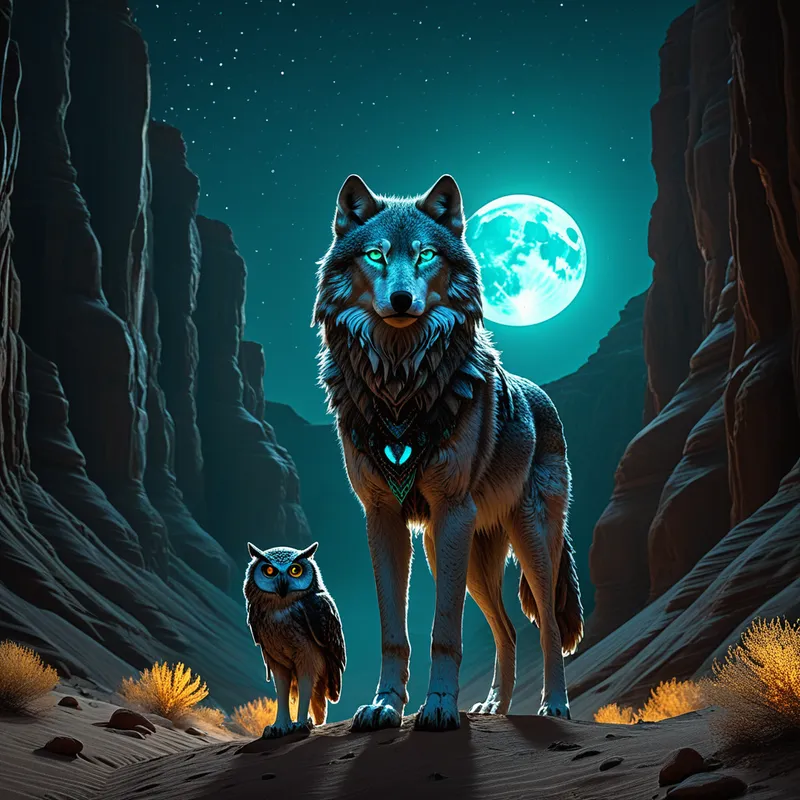
Yee Naaldlooshii Myth Meaning & Symbolism
A cautionary tale of a witch who gains power by violating sacred taboos, becoming a shapeshifter who preys upon their own people.
The Tale of Yee Naaldlooshii
Listen. The wind does not just blow across the Dinétah. It carries whispers from the time before time, stories etched in the red rock and sung by the pines. This is a story not of the Holy People, but of those who turned their backs on them. A story of a price too terrible to name.
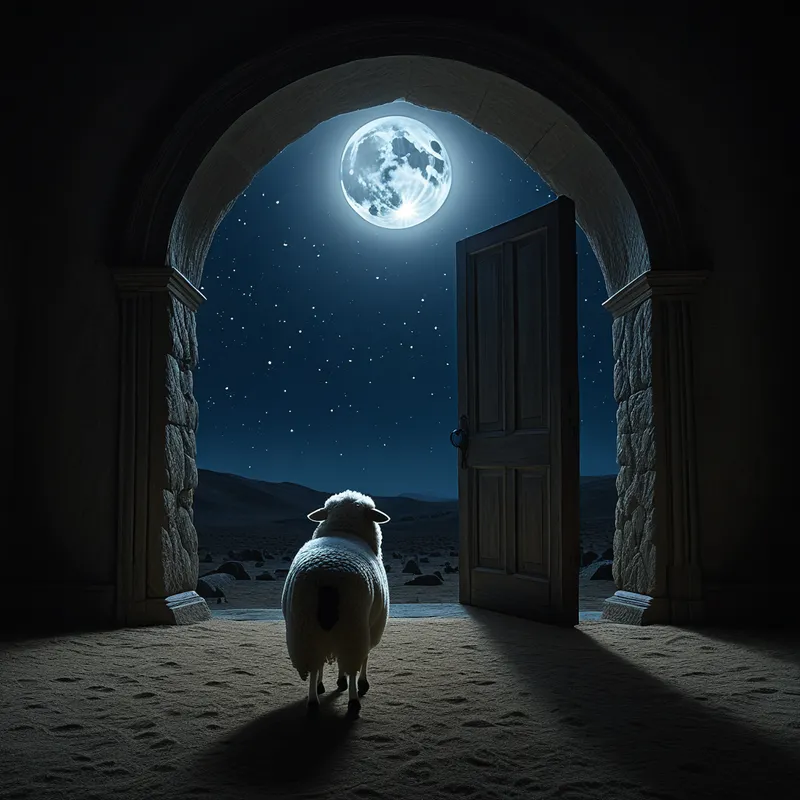
In the deep, velvet black of a winter night, when the world holds its breath, a person walks away from the warmth of the hogan. They do not follow the path to the spring or the sheep pen. They walk into the raw, open darkness, where the only light is the cold, judging eye of the moon. Their heart is a drum of resentment, of hunger for a power that is not theirs to claim. They have made a choice.
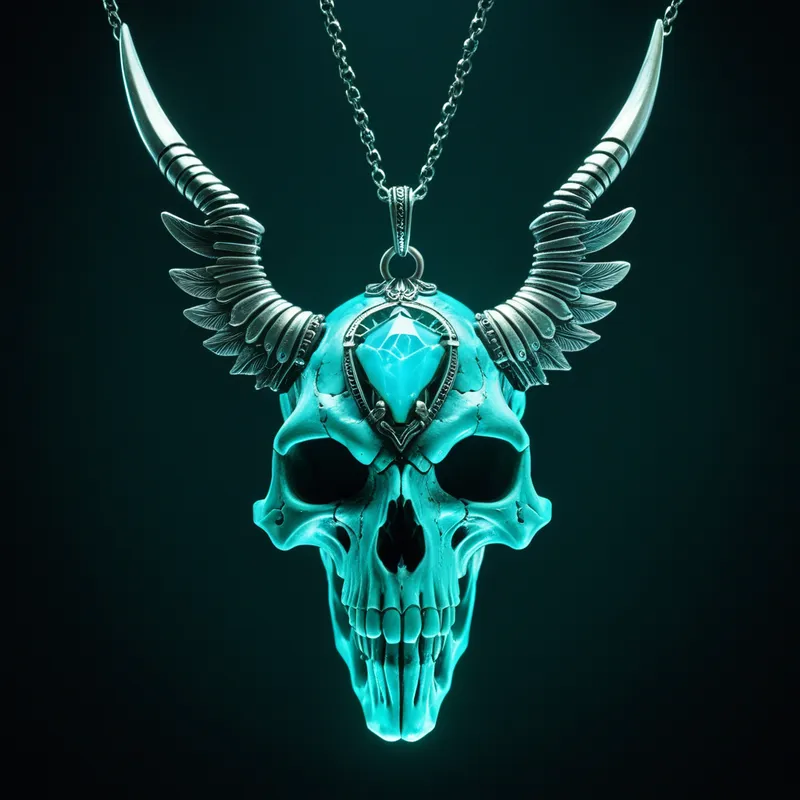
They go to a place of death, a place the people avoid. There, in a hollow where the bones of the land show through, they perform the unthinkable. They speak words that twist the tongue and sour the soul. They take what is most sacred—the hide of a relative, the ash from a funeral pyre, the very essence of life turned to death—and they put it on. The transformation is not a gift; it is a violation. The body cracks and groans, bones reshaping against their nature. The mind floods with alien hungers—the taste of blood, the thrill of the chase, the fear of the prey. The Yee Naaldlooshii is born. It is no longer a person. It is a thing that wears a person’s skin over a monster’s heart.
It moves now with impossible speed, a blur of malice between the junipers. It seeks the edges of the community, the lonely traveler, the child who strays. Its eyes, once human, now glow with a sickly, knowing light. It does not kill for food, but for the power in the terror, for the corruption of the Hózhǫ́ it has willingly shattered. The people lock their doors. They feel its gaze on their backs in the empty expanse. They know its name, but to speak it is to invite its attention.
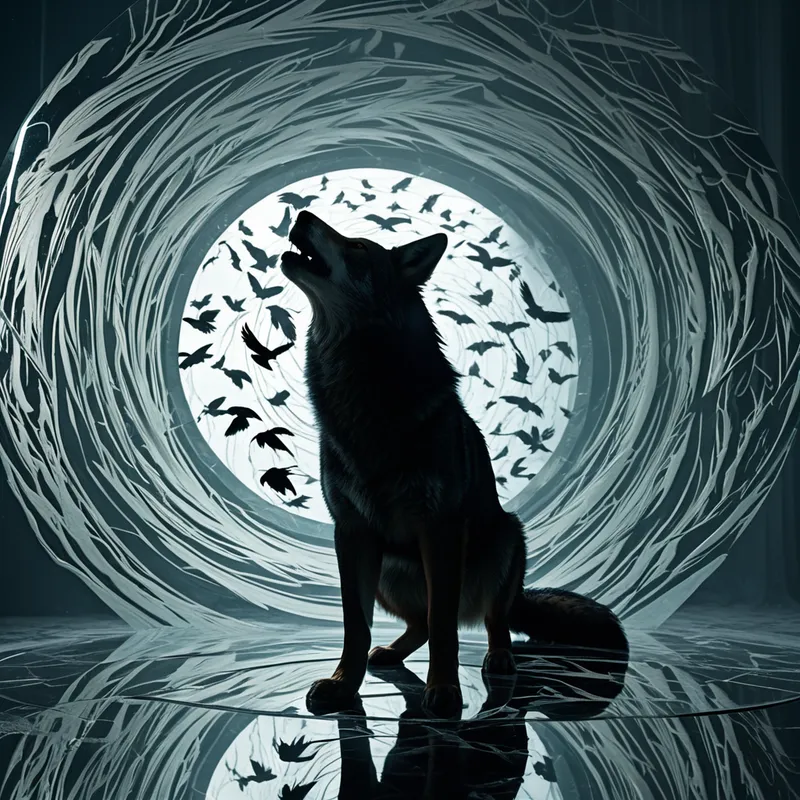
The resolution does not come in a great battle with a hero. It comes with the slow, grinding truth of consequence. The Yee Naaldlooshii is forever outside. It can never return to the warmth of the fire, the sound of the family, the state of balance. It is bound to its hunger and its isolation, a prisoner of the power it stole. The wind carries its lonely, angry howl, a permanent warning etched into the night itself: some paths, once taken, cannot be untraveled.
Cultural Origins & Context
The story of the Yee Naaldlooshii is not a myth of the distant, heroic past like the tales of the Diyin Dine’é. It is a living, breathing part of the Navajo worldview, a contemporary legend deeply embedded in the cultural mechanisms of maintaining Hózhǫ́. These narratives are traditionally shared cautiously, often at night and never in summer, for fear of attracting the very attention they describe. They are told not merely to frighten, but to instruct.
The societal function is profound. It acts as a powerful social sanction, reinforcing the absolute sacredness of familial bonds, the proper treatment of the dead, and the rejection of harmful witchcraft (‘ánt’įįh). The Yee Naaldlooshii is the ultimate embodiment of imbalance—one who uses sacred knowledge for profoundly anti-social, selfish ends. The myth delineates the ultimate taboo: the violation of kinship for personal power. It teaches that certain forms of knowledge are not neutral; they are inextricably linked to the moral framework of the community. To step outside that framework in pursuit of power is to cease to be human.
Symbolic Architecture
Psychologically, the Yee Naaldlooshii is not a simple monster. It is the archetypal Shadow made literal—but a Shadow of a specific, terrifying kind. It is not the repressed personal weakness, but the perverted potential. It represents the psyche’s capacity to take its own innate power—the power of transformation, intuition, and deep connection to the instinctual world (symbolized by the animal forms)—and twist it through a act of profound self-betrayal.
The greatest magic corrupts when it is sourced not from wholeness, but from the deliberate murder of a part of the soul.
The act of using the skin or ash of a relative is the core symbol. It signifies the consumption of one’s own origins, the murder of kinship (both familial and spiritual) to fuel the ego’s inflation. The animal transformation is not a return to a noble, wild state; it is a descent into predatory, fragmented instinct, devoid of the balancing wisdom of the human heart. The Yee Naaldlooshii is thus the “Magician” archetype inverted: the manipulator who breaks the natural law for control, rather than the alchemist who works with it for transformation.
The Dreamer’s Resonance
When this pattern manifests in modern dreams, it rarely appears as a literal Navajo skin-walker. Instead, one might dream of a loved one whose face suddenly shifts into something predatory and unfamiliar. Or of wearing a mask that fuses to the skin and begins to change the wearer from the inside. One might dream of discovering a hidden, shameful act they committed that has given them a cruel, isolating power over others.
The somatic process is one of profound alienation and dread—the feeling of being trapped in a form or a life-path that feels inherently wrong, yet powerfully compelling. It signals a psychological process where a part of the self has been “sold” or sacrificed for what felt like an advantage—perhaps career success at the cost of integrity, or manipulative control in relationships at the cost of genuine connection. The dreamer is experiencing the psychic feedback of that taboo transaction. The “power” gained now haunts them, making them a stranger to themselves and isolating them from true belonging.
Alchemical Translation
The individuation process modeled here is not one to emulate, but one to recognize and avert. The Yee Naaldlooshii myth is a stark map of the wrong turn in the alchemical work. True psychic transmutation—the goal of individuation—requires integration, not excision. The animal instincts (the Nigredo) must be acknowledged and brought into the light of consciousness, not weaponized in the darkness.
Individuation demands we wear our own skin, however difficult, not the stolen hide of another’s life or power.
The modern parallel is the temptation to build a false self, an identity constructed from stolen attributes: the prestige of a title without the substance, the appearance of wisdom without the lived experience, the semblance of love through manipulation. This is the “skin-walking” of the soul. The alchemical translation is the conscious, often painful, choice to dis-identify from that stolen power. It is the process of returning to the empty, cold hearth of one’s own authentic being—no matter how impoverished it seems—and beginning the true work from there. It is understanding that real power, the power of the integrated Magician, flows from Hózhǫ́—from being in right relationship with oneself, one’s community, and the cosmos. Any power that requires the betrayal of those relationships is not power at all, but a curse worn like a second skin.
Associated Symbols
Explore related symbols from the CaleaDream lexicon: