Yamabushi Mountain Ascetics Myth Meaning & Symbolism
Ascetics seeking enlightenment through extreme mountain austerities, embodying the sacred journey of shedding the self to merge with the raw spirit of nature.
The Tale of Yamabushi Mountain Ascetics
Listen. The mountain does not call to everyone. Its voice is the howl of wind through ancient pines, the groan of shifting stone, the silence that follows the last echo of your own voice. It calls only to those whose souls are already half-wild, already weary of the flat, ordered world of rice fields and polite conversation.
In the deep folds of time, when gods still walked the slopes of reizan, they came. Not as conquerors, but as supplicants. They were the ones who turned their backs on the warmth of hearth and the comfort of community. They exchanged soft robes for rough hemp, traded full bowls for foraging, and sought not gold, but something else—a truth so fierce it could only be found where life itself hung by a thread.
They were the Yamabushi. Their tale is not one of a single hero, but of a lineage of seekers, a river of human longing flowing uphill.
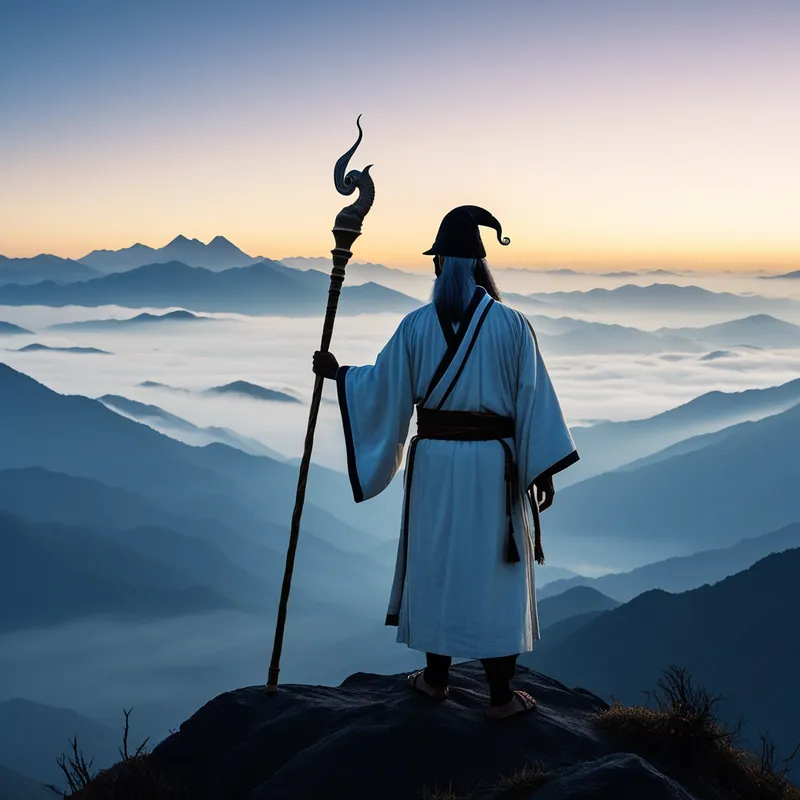
The journey begins at the foot of the sacred peak, at a gate that is both wood and spirit. Here, the aspirant is purified, not just with water, but with intention. The lowland self—the farmer, the samurai, the merchant—is symbolically left behind. He takes up the kongō-zue, the diamond staff, and the horagai, the conch shell trumpet. His new robes are the color of death and purity: white.
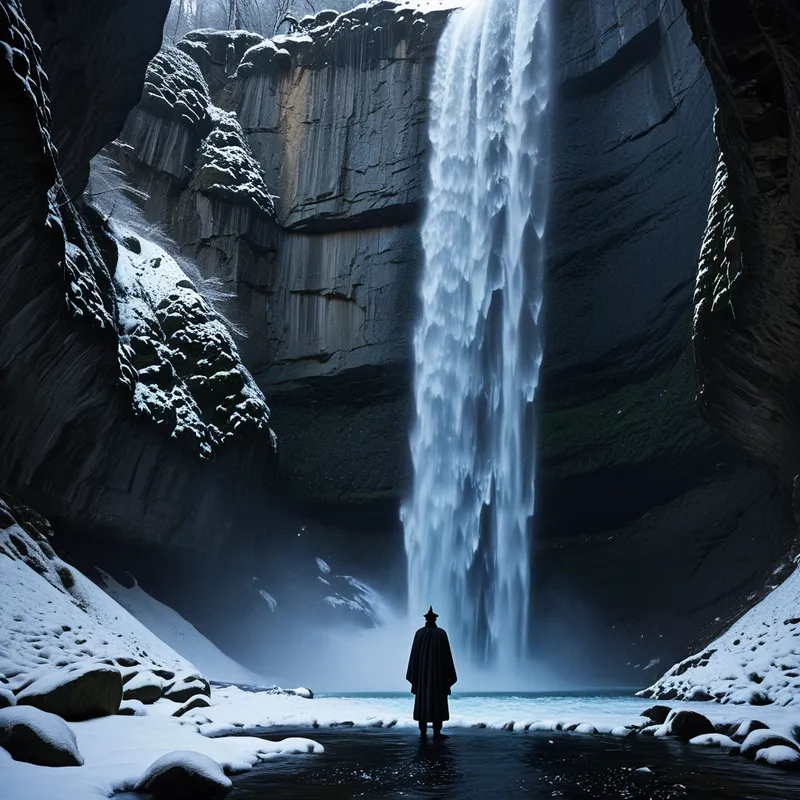
Then, the climb. Not a hike, but a pilgrimage through layers of reality. Each step is a mantra. Each labored breath, a prayer. The path is treacherous, a test of body meant to break the cage of the mind. He traverses ridges where a misstep is oblivion. He sleeps in caves haunted by the whispers of kami and the ghosts of previous ascetics. He fasts until the world shimmers. He stands under waterfalls in the dead of winter, letting the icy torrent scour away his attachments, until his flesh is numb but his spirit screams awake.
The conflict is not with a dragon, but with the dragon within—the heat of his own desires, the cold fear of his mortality, the clinging vine of his ego. The mountain mirrors it all back to him. In the exhaustion, visions come. He might see Fudō Myōō, the Immovable Wisdom King, his sword cutting through illusion, or feel the presence of Samantabhadra, whose mountain is the realm of practice. He learns the mountain is not a place, but a being. He is climbing up the spine of a god.
The resolution is not a trophy, but a transformation. After days, weeks, of such shugyō, a moment arrives—not at the summit, but often in a moment of utter broken surrender. The boundary between the man and the mist, the prayer and the rock, the seeker and the Sought, dissolves. He does not find enlightenment; he becomes part of the mountain’s own enlightened body. He returns to the world not as he left it, but as a bridge—a human who has touched the divine, carrying back not answers, but a terrifying, serene silence that heals and empowers. He has become a sokushin jōbutsu, a Buddha in this very body. The descent is the final test: to walk back into the world of suffering, holding the mountain’s peace within.
Cultural Origins & Context
The Yamabushi are the practitioners of Shugendō, “the path of training and testing.” This tradition crystallized in the Heian period (794-1185 CE), syncretizing ancient Japanese animistic mountain worship (Shintō) with the esoteric cosmology of Mikkyō Buddhism (particularly Shingon and Tendai), and elements of Taoist immortality practices. It is less a centralized doctrine and more a somatic, geographical spirituality centered on specific sacred mountain ranges like the Dewa Sanzan (Haguro, Gassan, and Yudono) and the Kumano and Yoshino regions.
The myth was not passed down in a single canonical text, but was lived and performed. It was embodied in the rigorous seasonal rituals of the mineiri (peak entry). Senior ascetics, the sendatsu, guided initiates, orally transmitting secret teachings and rituals on the path itself. Their societal function was multifaceted: they were healers, exorcists, and guides for the souls of the dead, mediating between the human village and the sacred, often dangerous, realm of the mountains. They were living proof that the numinous was accessible, but only through extreme, transformative ordeal.
Symbolic Architecture
At its core, the Yamabushi myth is a master symbol of the vertical axis of consciousness. The mountain is the axis mundi, the link between the earthly (the village) and the celestial (the summit). The climb is the arduous journey of individuation—moving from the collective identity of the plains toward the unique, elevated perspective of the Self.
The mountain does not reward the tourist; it reveals itself only to the pilgrim who offers his comfort as a sacrifice.
The white robes symbolize the death of the old persona and the purity of intent. The kongō-zue (diamond staff) represents unwavering resolve and the indestructible nature of truth. The horagai trumpet is the voice of the seeker, calling out across the chasms of the psyche, and also the call that summons the deeper self. The waterfall austerity (takigyō) is a profound symbol of baptism not by gentle water, but by the overwhelming, purgative force of the unconscious itself—it is a voluntary shattering.
The deities encountered, like Fudō Myōō, represent the terrifying but necessary aspects of the psyche that must be integrated: fierce compassion, immovable will against illusion. The ultimate goal of sokushin jōbutsu symbolizes the realization that spirit is not separate from matter, that enlightenment is embodied in the very flesh, breath, and bone of a fully lived human experience.

The Dreamer’s Resonance
When this myth stirs in the modern dreamer, it signals a profound call to a psychic ascent. Dreaming of climbing an impossibly steep, treacherous mountain reflects a conscious or unconscious engagement with a daunting life transition, a spiritual crisis, or a deep need for self-overcoming. The somatic feeling is one of weight, labor, and thin air—the anxiety and exhilaration of leaving the familiar.
Dreams of being lost in mist on a mountain path speak to disorientation in one’s life direction, where old maps no longer apply. A dream of standing under a waterfall may indicate a subconscious knowing that a cleansing, cathartic release is needed, even if it feels violent or shocking to the ego. Encountering a mysterious, silent figure (a Yamabushi) in a dream can represent the emergence of the inner guide, the part of the psyche that knows the path through the wilderness. The dream is the psyche’s own mineiri, initiating the dreamer into the next stage of their depth.
Alchemical Translation
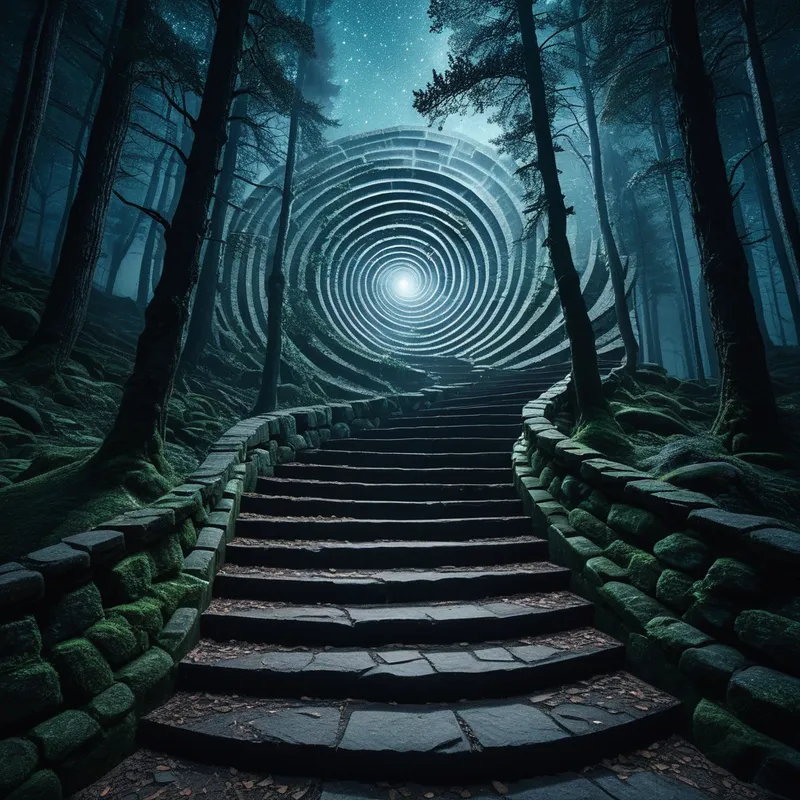
The Yamabushi path is a precise alchemical manual for psychic transmutation. The “base metal” of the unexamined life—driven by base desires and social conditioning—is subjected to the extreme fires and frosts of ascetic practice. This is the nigredo: the dark night of the soul on the mountainside, where the ego is stripped and humbled.
The summit is not the goal. The goal is the annihilation of the climber, so that only the climb remains.
The rituals and ordeals are the albedo, the washing pure in the mountain’s elemental crucible. Integrating the visions and fierce deities is the citrinitas, the dawn of a new, golden understanding. The final realization—the non-dual experience of being the mountain—is the rubedo, the culmination of the Great Work. The “philosopher’s stone” produced is not an object, but a state of being: the embodied, awakened individual who can navigate the world of suffering with the mountain’s enduring stillness at their core.
For the modern individual, this myth translates not to literal mountain climbing, but to the courage to undertake one’s own unique, arduous shugyō. It is the commitment to a therapy that feels like a freezing waterfall, the creative pursuit that demands every ounce of focus, the ethical stand that isolates you on a ridge. It is the practice of ascending, step by grueling step, out of the valleys of complaint and victimhood, toward the peak of personal responsibility and authentic power. The Yamabushi reminds us that the path to the Self is never easy, always perilous, and absolutely sacred. The mountain is always there, waiting for the next pilgrim brave enough to answer its silent, roaring call.
Associated Symbols
Explore related symbols from the CaleaDream lexicon: