Wabi-sabi Myth Meaning & Symbolism
A myth of finding profound beauty and spiritual depth in the transient, imperfect, and incomplete nature of all existence.
The Tale of Wabi-sabi
Listen, and let [the wind](/myths/the-wind “Myth from Various culture.”/) through the pines tell you a story not of gods, but of a feeling that became a world.
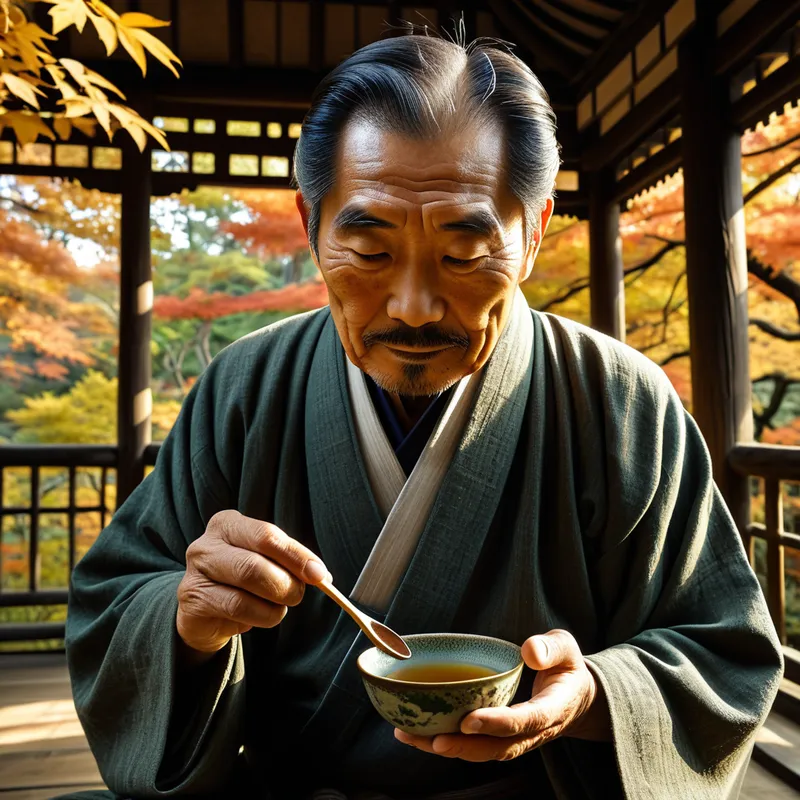
Once, in the deep mountains where [the mist](/myths/the-mist “Myth from Celtic culture.”/) clings to the cedars like a ghostly shroud, there lived a hermit named Wabi. His home was not a temple, but a leaning hut of unbarked wood and woven grass. His possessions were a single iron kettle, a bamboo ladle, and a bowl carved from a gourd. He drank [water](/myths/water “Myth from Chinese culture.”/) from a stream that tasted of stone and moss. His joy was the first frost on a [spider](/myths/spider “Myth from Native American culture.”/)’s web, a perfect, fleeting jewel that vanished with the sun. Wabi knew the deep, quiet loneliness of being utterly simple, utterly attuned to the slow breath of [the earth](/myths/the-earth “Myth from Hindu culture.”/). He found a strange, aching beauty in the hollow echo of the mountains—a beauty born not from plenty, but from lack.
Far away, in the cultured world of lacquered screens and perfect poetry, there lived a master of the arts named Sabi. Sabi was a curator of time’s passage. He did not polish the bronze mirror to a blinding shine; he cherished the soft, green patina that centuries of breath and touch had left upon it. He would place a single, weathered stone in the alcove, not for its grandeur, but for [the way](/myths/the-way “Myth from Taoist culture.”/) it seemed to hold the memory of a thousand rains. He found profound elegance in the chipped corner of a celadon plate, in the silver veins of a mended crack—not as flaws, but as testaments. They were the signatures of use, of life lived, of a story told in silence.
A great storm arose, a typhoon of the soul that swept through the land of perfect forms. It shattered the pristine gardens, toppled the meticulously arranged shelves, and left a world of fragments in its wake. In the aftermath, a profound despair settled. The pursuit of flawless, eternal beauty seemed a cruel joke against the power of wind and decay.
Driven by a nameless hunger, Sabi left his curated stillness and journeyed into the deep mountains, following a path of fallen leaves. He sought the source of the resilience he felt in old, broken things. He found Wabi at his hut, quietly raking the gravel around a solitary, lichen-covered rock. No words were exchanged. Wabi simply placed a cracked, hand-thrown bowl before Sabi, filled it with hot water from his blackened kettle, and whisked in a pinch of bitter green powder.
Sabi looked into the bowl. In its irregular shape, in the deliberate, unglazed path where [the potter](/myths/the-potter “Myth from Abrahamic culture.”/)’s finger had dragged, in the crack that had been mended with lacquer and gold—he did not see an object. He saw a mountain valley. He saw the passage of seasons. He saw the acceptance of fate. The steam carried the scent of wet earth and roasted grain. He drank. The warmth was not just in his throat, but in his bones. It was the warmth of a sun that also sets, of a fire that must turn to ash.
In that moment, in the taste of that imperfect tea in that imperfect bowl, served in an imperfect hut, the two spirits—Wabi and Sabi—did not just meet. They recognized each other as long-lost halves of a single, profound truth. They became one breath, one perception. From their union was born not a child, but a way of seeing: a lens that finds the sublime not in spite of transience and flaw, but precisely within it.

Cultural Origins & Context
The tale of Wabi-sabi is not a myth with a single author or a canonical text. It is a cultural constellation, a philosophy that coalesced from multiple streams of Japanese thought. Its deepest roots tap into the indigenous Shinto reverence for nature in all its untamed, impermanent states. This was profoundly shaped by the arrival of Zen Buddhism from China, with its core teachings of mujō ([impermanence](/myths/impermanence “Myth from Buddhist culture.”/)) and the beauty of direct, unadorned experience.
The mythic narrative we tell finds its most concrete historical vessel in the Japanese chadō, or [tea ceremony](/myths/tea-ceremony “Myth from Japanese culture.”/), particularly as refined by the 16th-century tea master Sen no Rikyū. He rebelled against the opulent, imported Chinese ceramics favored by the aristocracy. Instead, he championed humble, locally-made, irregular vessels, often purposefully cracked and repaired. He designed tearooms that were small, dimly lit, and built of natural, unfinished materials. In doing so, he ritualized the myth. The [tea ceremony](/myths/tea-ceremony “Myth from Japanese culture.”/) became the sacred space where the archetypal meeting of Wabi and Sabi was performed anew each time—where guests would consciously appreciate the weathered kettle, the asymmetry of the flower arrangement, the sound of water boiling, as essential parts of a spiritual encounter.
Symbolic Architecture
Psychologically, Wabi and Sabi represent two essential movements of the [soul](/symbols/soul “Symbol: The soul represents the essence of a person, encompassing their spirit, identity, and connection to the universe.”/) toward wholeness. Wabi is the [archetype](/symbols/archetype “Symbol: A universal, primordial pattern or prototype in the collective unconscious that shapes human experience, behavior, and creative expression.”/) of radical simplification, of voluntary withdrawal from [the ego](/myths/the-ego “Myth from Jungian culture.”/)’s compulsive drive for more—more [status](/symbols/status “Symbol: Represents one’s social position, rank, or standing within a group, often tied to achievement, power, or recognition.”/), more perfection, more control. It is the courage to be alone with the bare facts of existence, to find sufficiency in insufficiency. Sabi is the archetype of conscious aging, of learning to love the scars, the wrinkles, the memories that time etches upon us. It is the wisdom that value accrues through lived experience, not through pristine preservation.
The crack is not a failure of the vessel; it is the opening through which the light of acceptance enters.
The mended [bowl](/symbols/bowl “Symbol: A bowl often represents receptivity, nourishment, and emotional security, symbolizing the dreamer’s needs and desires.”/), repaired with gold ([kintsugi](/myths/kintsugi “Myth from Japanese culture.”/)), is the central [symbol](/symbols/symbol “Symbol: A symbol can represent an idea, concept, or belief, serving as a powerful tool for communication and understanding.”/) of this myth. It represents the alchemical [heart](/symbols/heart “Symbol: The heart symbolizes love, emotion, and the core of one’s existence, representing deep connections with others and self.”/) of the process: the transformation of [trauma](/symbols/trauma “Symbol: A deeply distressing or disturbing experience that overwhelms the psyche, often manifesting in dreams as unresolved emotional wounds or psychological injury.”/), breakage, and [loss](/symbols/loss “Symbol: Loss often symbolizes change, grief, and transformation in dreams, representing the emotional or psychological detachment from something or someone significant.”/) into a [site](/symbols/site “Symbol: The concept of a ‘site’ in dreams often represents a specific location associated with personal memories, emotional experiences, or stages in one’s life.”/) of unique [beauty](/symbols/beauty “Symbol: This symbol embodies aesthetics, harmony, and the appreciation of life’s finer qualities.”/) and heightened value. The break is not hidden; it is illuminated. This symbolizes the psychological [integration](/symbols/integration “Symbol: The process of unifying disparate parts of the self or experience into a cohesive whole, often representing psychological wholeness or resolution of internal conflict.”/) of [shadow](/symbols/shadow “Symbol: The ‘shadow’ embodies the unconscious, repressed aspects of the self and often represents fears or hidden emotions.”/) [material](/symbols/material “Symbol: Material signifies the tangible aspects of life, often representing physical resources, desires, and the physical world’s influence on our existence.”/)—the parts of ourselves we deem flawed, broken, or shameful. In the myth’s [logic](/symbols/logic “Symbol: The principle of reasoning and rational thought, often representing order, structure, and intellectual clarity in dreams.”/), these very fractures become the most precious parts of our personal [history](/symbols/history “Symbol: History in dreams often represents the dreamer’s past experiences, lessons learned, or unresolved issues that continue to influence their present.”/), the golden seams of a resilient self.
The Dreamer’s Resonance
When this myth stirs in the modern unconscious, it often manifests in dreams of weathered objects, decaying but beautiful places, or acts of mending. To dream of an old, moss-covered stone wall, a deserted but peaceful wooden cabin, or a favorite book with dog-eared pages and notes in the margin is to touch the Sabi current. The dream ego is processing the acceptance of life’s inevitable weathering, moving from a fear of decay to a melancholic appreciation of it.
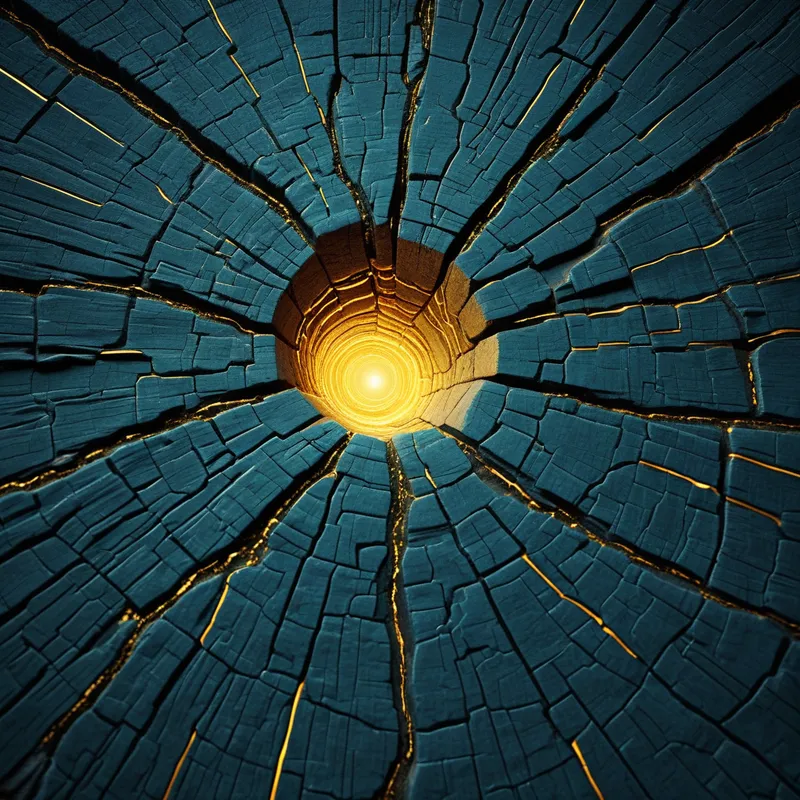
Dreams where one is carefully, lovingly gluing together a shattered heirloom, or where a crack in a wall reveals a glowing, crystalline interior, speak to the active Wabi-Sabi process. The [psyche](/myths/psyche “Myth from Greek culture.”/) is performing its own kintsugi. The somatic sensation accompanying such dreams is often one of deep, quiet release—a sigh that loosens the chest, a warmth spreading from the hands. It is the body recognizing the end of a futile struggle against imperfection and the beginning of a compassionate embrace of what is.
Alchemical Translation
The individuation journey modeled by the Wabi-sabi myth is not one of heroic conquest or dazzling transformation into a perfected being. It is the alchemy of perception itself. The “[prima materia](/myths/prima-materia “Myth from Alchemical culture.”/)” is our raw, flawed, and transient life. The “[nigredo](/myths/nigredo “Myth from Alchemical culture.”/),” or blackening, is the confrontation with loss, failure, aging, and incompleteness—the storm that shatters the perfect garden.
The “albedo,” or whitening, is [the hermit](/myths/the-hermit “Myth from Tarot culture.”/)’s withdrawal (Wabi), the conscious paring away of inessential desires and the ego’s demand for permanent, polished states. It is sitting in the simplicity of what remains after the storm. The “[rubedo](/myths/rubedo “Myth from Alchemical culture.”/),” or reddening, the final stage, is the infusion of value into the flawed (Sabi). It is the application of the “gold”—not to create something new, but to reveal the sacredness already inherent in the old, the worn, the broken.
The goal is not to become gold, but to see with golden sight.
For the modern individual, this translates to a profound shift from a psychology of improvement to a psychology of appreciation. It means ceasing to see our past wounds as defects to be erased, and instead recognizing them as the unique, golden joints of our character. It means valuing a relationship for the patina of shared history, not for its perpetual novelty. It is finding career satisfaction not in an endless ascent, but in the deep, weathered groove of a meaningful craft. The [triumph](/myths/triumph “Myth from Roman culture.”/) is not over life’s impermanence, but within it. One becomes, like the mended bowl, more interesting, more resilient, and more truly beautiful for having been broken, and for having had the courage to mend with gold.
Associated Symbols
Explore related symbols from the CaleaDream lexicon: