Viracocha Myth Meaning & Symbolism
The Andean creator god who sculpts humanity from stone, walks the earth as a wanderer, and dissolves into the western sea, promising a future return.
The Tale of Viracocha
In the time before time, there was only Viracocha, and the endless, silent dark. He stirred within the Viracocha, and from his own essence, he brought forth the Pacha. He summoned the sun, Inti, to blaze in the day, and the moon, Mama Killa, to glow in the night. He raised the mighty bones of the earth, the Andes, and filled the valleys with seas and rivers.
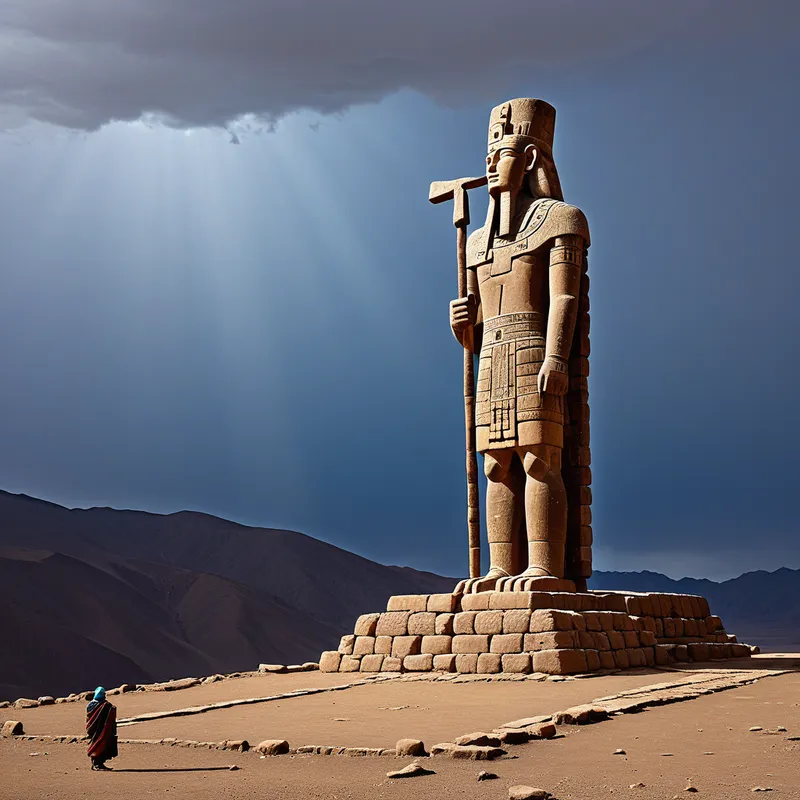
Then, from the living stone of the mountains, he carved the first people. They were giants, beings of immense power, and he set them to dwell upon the earth. But these giants forgot their creator. They grew wild and chaotic, their hearts turning to stone as hard as their origins. A great sorrow filled Viracocha. With a command that shook the foundations of the world, he unleashed a deluge from the heavens and the deep. The waters rose, swallowing the giants and their works, cleansing the earth for a new beginning.
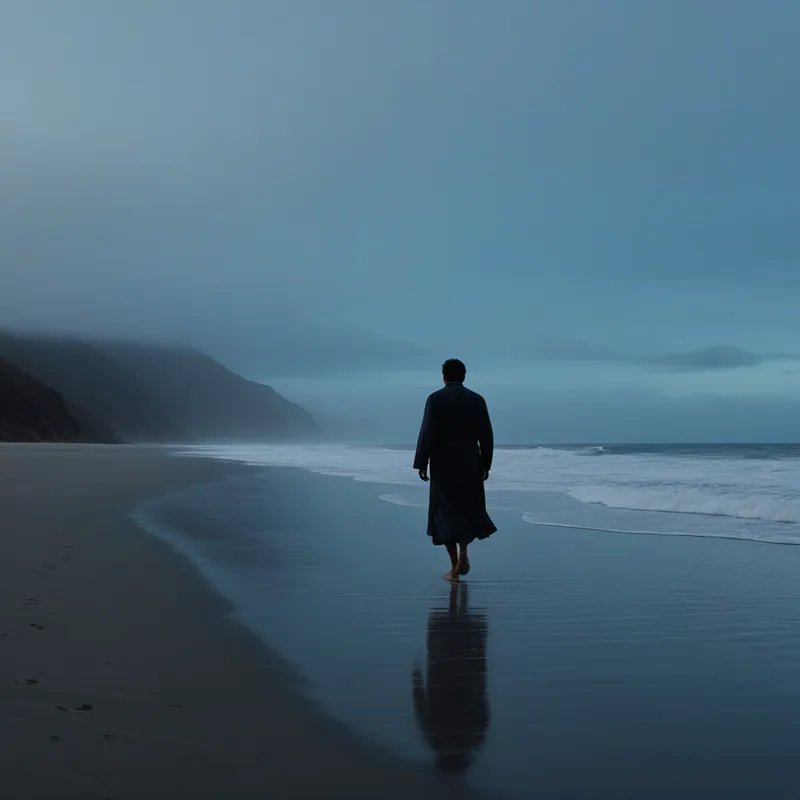
When the waters receded, Viracocha emerged once more, this time in the form of an old, bearded wanderer, clad in a simple white tunic, carrying a staff. He walked the length and breadth of the reborn land. Where he passed, the earth grew fertile. From sacred lakes like Titicaca, he drew forth new beings—not from stone, but from the very essence of the land itself. These were the ancestors of all the peoples. To each group, he gave language, seeds, arts, and sacred laws. He taught them how to live in harmony with the Pacha.
He traveled with two loyal servants, who helped him in his works of instruction and order. Yet, he was often met with fear and hostility. In one village, the people, terrified of this powerful stranger, rose up to stone him. Viracocha simply knelt, and a celestial fire descended from the sky, encircling him, forcing the attackers to fall back in awe and repentance. He forgave them, taught them, and moved on.
His long journey was a weaving of the world with wisdom. Finally, his work complete, he walked to the western edge of the world, to the shores of the great ocean. Without a backward glance, he stepped upon the waves. He did not sink but walked upon the waters, his form growing fainter and fainter until he dissolved into the sea mist and the horizon’s light, promising one day to return. He left behind a world humming with order, and a mystery echoing in the crash of the Pacific waves.
Cultural Origins & Context
The myth of Viracocha was the supreme cosmological narrative of the Tawantinsuyu (Incan Empire). Unlike more localized huaca (sacred spirits), Viracocha was a pan-Andean creator deity, whose worship was particularly emphasized by the Inca elite to unify their diverse empire under a single, transcendent divine principle. The myth was not a single, fixed text but a living oral tradition, recited by Amautas and Haravicus during state rituals and royal coronations.
Its primary societal function was legitimization. By tracing all peoples—Inca and subject nations alike—back to Viracocha’s creative act, the Inca positioned themselves as the ultimate custodians of the divine order he established. The myth explained the origin of social hierarchy, agricultural practice, and Incan law as direct gifts from the creator. Furthermore, Viracocha’s departure and promised return created a potent eschatological framework, a cultural memory of a golden age and a future hope that could be invoked during times of crisis, such as the Spanish conquest.
Symbolic Architecture
At its core, the myth of Viracocha is a profound [allegory](/symbols/allegory “Symbol: A narrative device where characters, events, or settings represent abstract ideas or moral qualities, conveying deeper meanings through symbolic storytelling.”/) for the [emergence](/symbols/emergence “Symbol: A process of coming into being, rising from obscurity, or breaking through a barrier, often representing birth, transformation, or revelation.”/) of [consciousness](/symbols/consciousness “Symbol: Consciousness represents the state of awareness and perception, encompassing thoughts, feelings, and experiences.”/) from the unconscious, and the painful, necessary process of imposing order on [chaos](/symbols/chaos “Symbol: In Arts & Music, chaos represents raw creative potential, uncontrolled expression, and the breakdown of order to forge new artistic forms.”/).
The first creation is always from the depths—stone giants from the mountain’s womb—but consciousness requires a flood to wash away the unrefined, monolithic first draft of the self.
Viracocha himself embodies the paradoxical [archetype](/symbols/archetype “Symbol: A universal, primordial pattern or prototype in the collective unconscious that shapes human experience, behavior, and creative expression.”/) of the Wanderer-Sage. His first act is one of absolute, sovereign creation. His second is one of utter destruction (the flood). His final and longest act is one of humble, patient instruction. This trilogy—sovereignty, [catharsis](/symbols/catharsis “Symbol: A profound emotional release or purification through artistic expression, often involving intense feelings of relief and transformation.”/), [guidance](/symbols/guidance “Symbol: The act of receiving or seeking direction, advice, or leadership in a dream, often representing a need for clarity, support, or a higher purpose on one’s life path.”/)—maps the [journey](/symbols/journey “Symbol: A journey in dreams typically signifies adventure, growth, or a significant life transition.”/) of any transformative principle, whether cosmic or psychological. The staff he carries is not a [weapon](/symbols/weapon “Symbol: A weapon in dreams often symbolizes power, aggression, and the need for protection or defense.”/) but a tool of measurement and [direction](/symbols/direction “Symbol: Direction in dreams often relates to life choices, guidance, and the path one is following, emphasizing the importance of navigation in personal journeys.”/), symbolizing the [application](/symbols/application “Symbol: An application symbolizes engagement, integration of knowledge, or the pursuit of goals, often representing self-improvement and personal development.”/) of law (ama sua, ama llulla, ama quella) and [structure](/symbols/structure “Symbol: Structure in dreams often symbolizes stability, organization, and the framework of one’s life, reflecting how one perceives their environment and personal life.”/) onto the formless potential of [life](/symbols/life “Symbol: The symbol of ‘Life’ represents a journey of growth, interconnectedness, and existential meaning, encompassing both the joys and challenges that define human experience.”/).
His mode of travel—walking—is essential. He does not rule from a [static](/symbols/static “Symbol: Static represents interference, disruption, and the breakdown of clear communication or signal, often evoking feelings of frustration and disconnection.”/) [throne](/symbols/throne “Symbol: A seat of authority, power, and sovereignty, representing leadership, divine right, or social hierarchy.”/) but imprints order through direct, somatic engagement with the [landscape](/symbols/landscape “Symbol: Landscapes in dreams are powerful symbols representing the dreamer’s emotional state, personal journey, and the broader context of life situations.”/). He inscribes culture onto the [earth](/symbols/earth “Symbol: The symbol of Earth often represents grounding, stability, and the physical realm, embodying a connection to nature and the innate support it provides.”/) with his footsteps. His [dissolution](/symbols/dissolution “Symbol: The process of breaking down, dispersing, or losing form, often representing transformation, release, or the end of a state of being.”/) into the Pacific is not an end, but a [sublimation](/symbols/sublimation “Symbol: Transforming base impulses into creative or socially acceptable outlets, often seen in artistic expression.”/). He becomes immanent within the very fabric of the ordered world he designed, his consciousness diffused into the [system](/symbols/system “Symbol: A system represents structure, organization, and interrelated components functioning together, often reflecting personal or social order.”/), awaiting a future re-[coagulation](/symbols/coagulation “Symbol: The spiritual process of transformation from fluid potential into solid reality, representing the moment of creation, manifestation, or spiritual birth.”/).

The Dreamer’s Resonance
When the pattern of Viracocha stirs in the modern psyche, it often manifests in dreams of profound reordering. One may dream of a great flood washing away the landscape of their life—a familiar job, relationship, or identity crumbling not to nothingness, but to a bare, fertile plain. This is the somatic signal of a necessary psychic catharsis, the ego’s rigid, “stony” structures being dissolved by a surge from the unconscious.
The dreamer may then find themselves in the role of the wanderer, walking an endless road along a coastline, tasked with naming or teaching something, yet feeling fundamentally unrecognized. This reflects the often-isolating phase of integrating a new consciousness. The old self has been flooded away; the new self is not yet socially legible. The hostility Viracocha faces in the myth translates somatically as anxiety, resistance, or a feeling of being an impostor when attempting to live from a newly emerging, more authentic center.
To dream of walking on water is not about miraculous power, but about traversing the boundary between the known (land) and the unknown (sea)—the moment the psyche commits to its own dissolution for the sake of a greater synthesis.
Alchemical Translation
For the individual, the Viracocha myth models the alchemical opus of individuation: Solve et Coagula (Dissolve and Coagulate). The first creation—the stone giants—represents the initial, unconscious formation of the personality: heavy, literal, powerful, but lacking refinement and prone to inflation. The flood is the inevitable crisis, often midlife, where this monolithic self-concept fails and is painfully deconstructed.
Viracocha’s wanderings are the long, often tedious work of analysis and re-formation. The dreamer, post-crisis, must now consciously walk the terrain of their own soul, naming its parts (complexes, talents, shadows), planting seeds of new potential, and establishing inner laws. This is the Coagula: not a return to the old stone, but the careful assembly of a living, responsive self from the awakened elements of one’s own being.
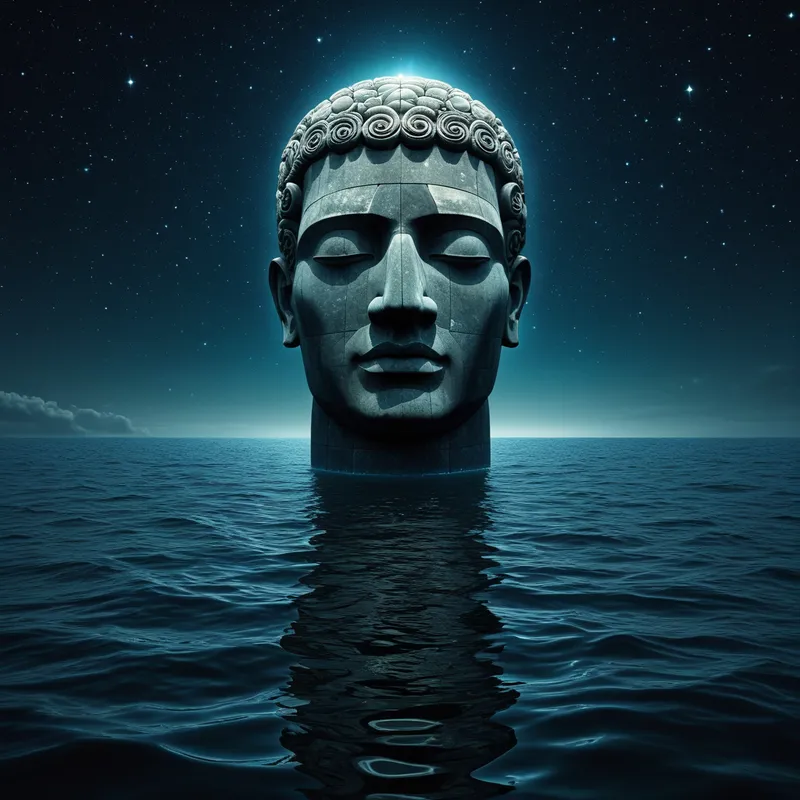
The final transmutation is the walk onto the sea. This is the stage of surrender, where the ego, having done its work of conscious organization, relinquishes its need for central control and dissolves its boundaries. It is not annihilation, but integration. The conscious principle (Viracocha) merges with the vast, unconscious (the sea), promising a future state where the two are no longer separate. The individual no longer has a psyche; they are the psyche, living from a wholeness that includes both order and the boundless deep.
The promise of return is the promise of the Self: that the center we consciously cultivate and then release into the greater whole will forever be the nucleus around which our integrity coheres.
Associated Symbols
Explore related symbols from the CaleaDream lexicon:
- Water — The primordial substance of Viracocha’s creative void and the agent of his destructive flood, representing the formless potential and cleansing power of the unconscious.
- Stone — The raw material of the first, flawed creation of the giants, symbolizing the unconscious, undeveloped aspects of the self that must be shaped or dissolved.
- Journey — Viracocha’s long walk across the land embodies the necessary, patient process of imposing conscious order and imparting wisdom through direct experience.
- Staff — The tool of the wanderer-sage, representing divine authority, measurement, and the application of law and structure to chaotic potential.
- Ocean — The vast, western sea into which Viracocha dissolves, symbolizing the boundless unconscious, the end of a cycle, and the promise of future return from the depths.
- Mountain — The source of the stone giants and the sacred landscape Viracocha shapes, representing the ancient, enduring foundation of the psyche and the world.
- Light — The celestial fire that protects Viracocha and the essence of his creative command, symbolizing illuminating consciousness, truth, and divine power.
- Flood — The cataclysmic deluge that cleanses the world of the flawed first creation, representing a necessary, destructive crisis that makes way for rebirth.
- Order — The ultimate gift of Viracocha to humanity—laws, language, agriculture—symbolizing the conscious structure that makes culture and a coherent psyche possible.
- Rebirth — The core cycle of the myth: creation, destruction, and a new, more conscious creation, modeling the continuous process of psychic death and renewal.