
Urania Myth Meaning & Symbolism
Urania, Muse of the Celestial, whose gaze maps the heavens and whose song reveals the hidden harmony between the cosmos and the human soul.
The Tale of Urania
Listen, and let your mind ascend from the dust of [the earth](/myths/the-earth “Myth from Hindu culture.”/) to the velvet dark of the eternal sky. Before the philosophers argued and the astronomers calculated, there was a silence—a profound, waiting silence in the high places of [the world](/myths/the-world “Myth from Tarot culture.”/). Then came a sound, not from [the wind](/myths/the-wind “Myth from Various culture.”/) or [the sea](/myths/the-sea “Myth from Greek culture.”/), but from the very fabric of [the void](/myths/the-void “Myth from Buddhist culture.”/): a clear, piercing note that was both music and mathematics.
From this resonance, born of the union between [Mnemosyne](/myths/mnemosyne “Myth from Global/Universal culture.”/) and the great Thunderer Zeus, nine sisters emerged. The last to step into the light of the world was Urania. While her sisters claimed the lyre, the comedy mask, or the epic verse, Urania’s eyes turned upward. She did not receive an instrument; she perceived one. The dome of the night itself was her lyre, and the wandering stars were its notes.
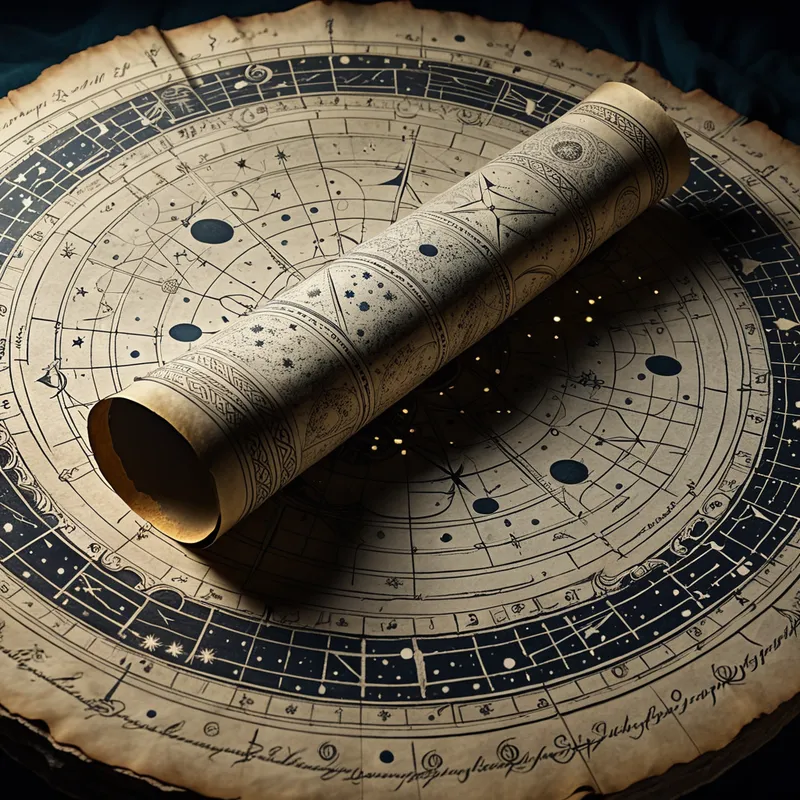
She made her home not in the bustling halls of Olympus, but on the highest, most solitary peaks, where the air is thin and [the horizon](/myths/the-horizon “Myth from Various culture.”/) curves. Her voice was seldom heard in song, but in the whisper of a stylus tracing precise arcs on [papyrus](/myths/papyrus “Myth from Egyptian culture.”/), in the soft click of a calibrated sphere turning on its axis. She taught not tales of heroes, but the heroic journey of lights across the black. She showed the early star-watchers—those lonely shepherds and sleepless sailors—how the chaos of sparks was a grand, moving order. She taught them to connect dot to dot, not to make pictures of beasts, but to map the paths of the gods themselves: the steady march of [Kronos](/myths/kronos “Myth from Greek culture.”/), the swift dance of Aphrodite, the fiery wrath of Ares.
Her myth is not one of battle or romance, but of relentless, patient observation. The conflict was the primordial human terror of the vast, indifferent unknown. The rising action was the slow, dawning realization—guided by her invisible hand—that the unknown was not indifferent, but lawful. The resolution was the awe that replaced the terror: a sublime understanding that to study the heavens was to participate in a divine symphony. Her children were not warriors or kings, but the first astronomers, their faces lit by lamplight and celestial fire, their hearts steadied by the immutable rhythm she revealed in [the sky](/myths/the-sky “Myth from Persian culture.”/)’s great wheel.
Cultural Origins & Context
Urania, whose name derives from [Ouranos](/myths/ouranos “Myth from Global/Universal culture.”/) ([Ouranos](/myths/ouranos “Myth from Global/Universal culture.”/)), the sky itself, is a relatively late and specialized crystallization within the Greek [pantheon](/myths/pantheon “Myth from Roman culture.”/). While [the Muses](/myths/the-muses “Myth from Greek culture.”/) as a collective have ancient roots in cultic practice, likely originating in Pieria near [Mount Olympus](/myths/mount-olympus “Myth from Global/Universal culture.”/), Urania’s distinct identity solidified in the post-Homeric era, around the 6th and 5th centuries BCE. This was the dawn of Ionian natural philosophy, a time when thinkers like Thales and Anaximander began to seek natural, rather than purely divine, explanations for cosmic phenomena.
She was not a goddess of popular, everyday worship. Her altars were the observatories and the libraries. Her hymns were composed by scholars like the astronomer- poet Aratus, whose work Phaenomena opens with an invocation to Zeus and the Muses, “with Urania foremost.” Her societal function was profound: she provided the divine sanction and inspirational framework for the scientific impulse. In a culture where all arts and sciences were under divine patronage, Urania legitimized the act of measuring the heavens. She bridged the gap between mythos and the nascent [logos](/myths/logos “Myth from Christian culture.”/), ensuring that the quest for cosmic order remained a sacred, rather than a profane, endeavor.
Symbolic Architecture
Urania symbolizes the [human](/symbols/human “Symbol: The symbol of a human represents individuality, complexity of emotions, and social relationships.”/) intellect’s highest aspiration: to comprehend the overarching order of the [cosmos](/symbols/cosmos “Symbol: The entire universe as an ordered, harmonious system, often representing the totality of existence, spiritual connection, and the unknown.”/). She is not [knowledge](/symbols/knowledge “Symbol: Knowledge symbolizes learning, understanding, and wisdom, embodying the acquisition of information and enlightenment.”/) of the earthly or the personal, but of the universal and the abstract. Her primary attributes—the celestial [globe](/symbols/globe “Symbol: A spherical representation of Earth, symbolizing the totality of existence, global consciousness, and interconnectedness.”/) and the stylus—are deeply symbolic.
The globe represents the cosmos as a comprehensible, integrated whole. The stylus represents the human agency that dares to inscribe meaning upon it.
Psychologically, Urania represents the [archetype](/symbols/archetype “Symbol: A universal, primordial pattern or prototype in the collective unconscious that shapes human experience, behavior, and creative expression.”/) of the Objective Mind. She is the function of [consciousness](/symbols/consciousness “Symbol: Consciousness represents the state of awareness and perception, encompassing thoughts, feelings, and experiences.”/) that seeks patterns, laws, and structures beyond the subjective turmoil of the individual [psyche](/myths/psyche “Myth from Greek culture.”/). Where other muses govern the passions of the [heart](/symbols/heart “Symbol: The heart symbolizes love, emotion, and the core of one’s existence, representing deep connections with others and self.”/) or the dramas of [life](/symbols/life “Symbol: The symbol of ‘Life’ represents a journey of growth, interconnectedness, and existential meaning, encompassing both the joys and challenges that define human experience.”/), Urania governs the cool, detached observation that lifts one out of the personal and into the transpersonal. She is the [capacity](/symbols/capacity “Symbol: A measure of one’s potential, limits, or ability to contain, process, or achieve something, often reflecting self-assessment or external demands.”/) for [perspective](/symbols/perspective “Symbol: Perspective in dreams reflects one’s viewpoints, attitudes, and how one interprets experiences.”/) in its most literal sense: seeing from a great [height](/symbols/height “Symbol: Height often symbolizes ambition, perspective, and the elevation of one’s self-awareness.”/). Her domain is [the principle](/symbols/the-principle “Symbol: A fundamental truth, law, or doctrine that serves as a foundation for a system of belief, behavior, or reasoning, often representing moral or ethical standards.”/) of cosmos (order, [harmony](/symbols/harmony “Symbol: A state of balance, agreement, and pleasing combination of elements, often associated with musical consonance and visual or social unity.”/)) as opposed to [chaos](/symbols/chaos “Symbol: In Arts & Music, chaos represents raw creative potential, uncontrolled expression, and the breakdown of order to forge new artistic forms.”/).
In the [soul](/symbols/soul “Symbol: The soul represents the essence of a person, encompassing their spirit, identity, and connection to the universe.”/)’s [landscape](/symbols/landscape “Symbol: Landscapes in dreams are powerful symbols representing the dreamer’s emotional state, personal journey, and the broader context of life situations.”/), Urania is the inner navigator who orients us by fixed stars, not passing storms. She calls for a transcendence of ego-centric concerns through alignment with a larger, more enduring [reality](/symbols/reality “Symbol: Reality signifies the state of existence and perception, often reflecting one’s understanding of truth and life experiences.”/). Her [danger](/symbols/danger “Symbol: The symbol of ‘Danger’ often indicates a sense of threat or instability, calling for caution and awareness.”/), like that of any archetype in excess, is a potential coldness, a [dissociation](/symbols/dissociation “Symbol: A psychological separation from one’s thoughts, feelings, or identity, often experienced as a journey away from the self during trauma or stress.”/) from the embodied, emotional, and chaotic aspects of life in [favor](/symbols/favor “Symbol: ‘Favor’ represents the themes of acceptance, goodwill, and the desire for approval from others.”/) of a sterile, abstract perfection.

The Dreamer’s Resonance
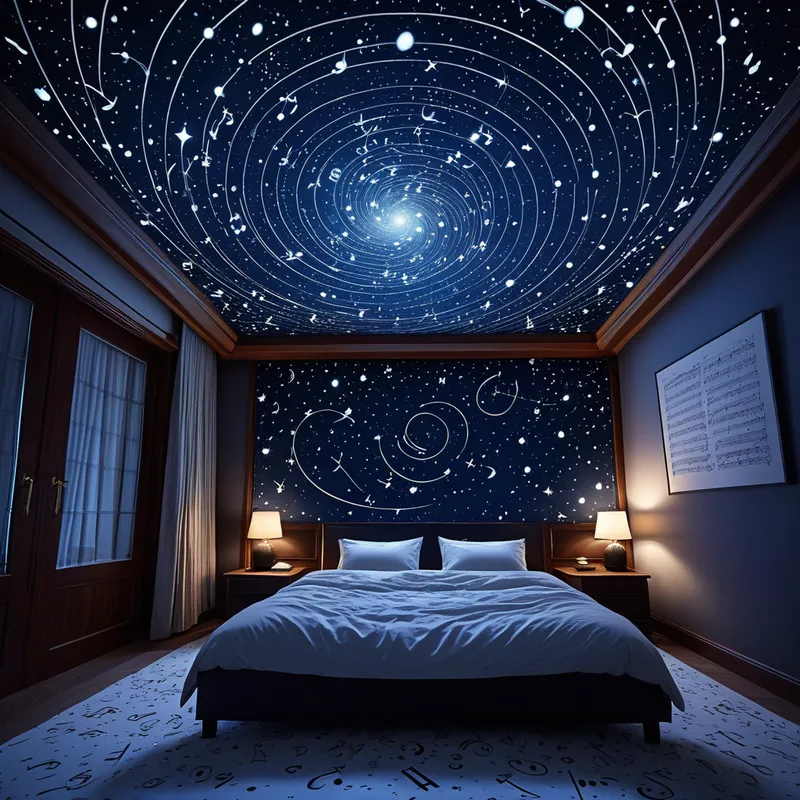
When Urania’s pattern stirs in the modern unconscious, it often manifests in dreams of astonishing clarity and scale. The dreamer may find themselves in an immense planetarium, a vast library of star charts, or simply standing under a night sky of unprecedented brilliance and detail. There is a profound sense of quiet, of focused attention. The chaotic “noise” of daily life falls away.
Somatically, this can correlate with a feeling of mental expansion, a “click” of understanding, or a deep, calming breath as if reaching high-altitude air. Psychologically, the dreamer is likely undergoing a process of contextualization. Their personal struggles—a relationship conflict, a career dilemma, a period of grief—are being subsumed into a larger framework of meaning. The Urania dream says, “Your story is part of a much older, much larger story.”
Conversely, a shadow manifestation of Urania might involve dreams of complex, incomprehensible machinery, frozen starscapes, or feeling lost in an infinite, cold void. This signals a psyche struggling to find order, feeling overwhelmed by complexity, or suffering from a pathological detachment—using intellectualization as a defense against feeling. The call is not to abandon the search for order, but to reconnect it with the warmth of the human heart.
Alchemical Translation
The alchemical process mirrored in Urania’s myth is that of Sublimation: the transformation of base, earthly preoccupations into a higher, more refined state of consciousness. In the individuation journey, she models the stage where the soul seeks the philosophical gold of objective truth and cosmic perspective.
The initial [nigredo](/myths/nigredo “Myth from Alchemical culture.”/) (blackening) is the confusion and fear of the un-mapped psyche and the un-charted life, akin to staring at a bewildering night sky. Urania’s guidance begins the albedo (whitening), the clarifying process of observation, measurement, and pattern-recognition. The patient tracing of orbits on the celestial globe is analogous to tracking the recurring patterns of one’s own complexes and behaviors.
The ultimate transmutation is the realization that the laws governing the stars are not foreign, but are the same laws of rhythm, cycle, and relationship that govern the soul.
Her [triumph](/myths/triumph “Myth from Roman culture.”/) is the coincidentia oppositorum—the coincidence of opposites—where the microcosm of [the self](/myths/the-self “Myth from Jungian culture.”/) and the macrocosm of the universe are seen as reflections of one harmonious system. For the modern individual, this translates to the practice of finding personal meaning within impersonal frameworks—be it through studying ecology, systems theory, history, or astronomy. It is the healing realization that one’s life, however small, participates in a grand, beautiful, and ordered design. The final stage is not becoming a dispassionate star-gazer, but a whole human being whose grounded life is steadied and inspired by the silent, majestic [music of the spheres](/myths/music-of-the-spheres “Myth from Various culture.”/) that Urania forever conducts.
Associated Symbols
Explore related symbols from the CaleaDream lexicon: