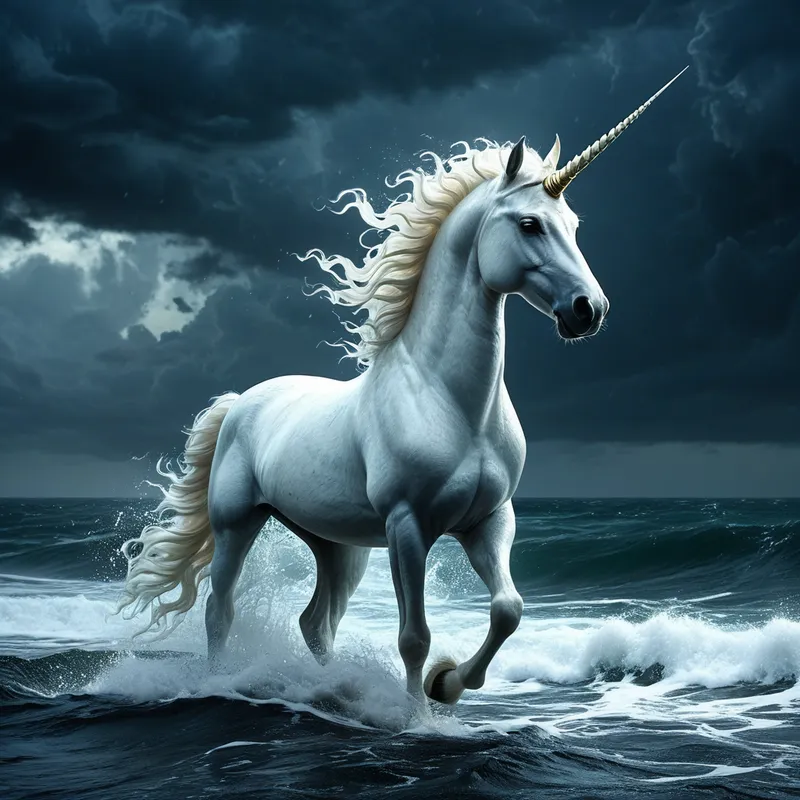
Unicorn of the Sea Myth Meaning & Symbolism
A myth of a celestial beast, a treacherous hunt, and a miraculous purification, where the soul's purity is tested in the world's deepest waters.
The Tale of Unicorn of the Sea
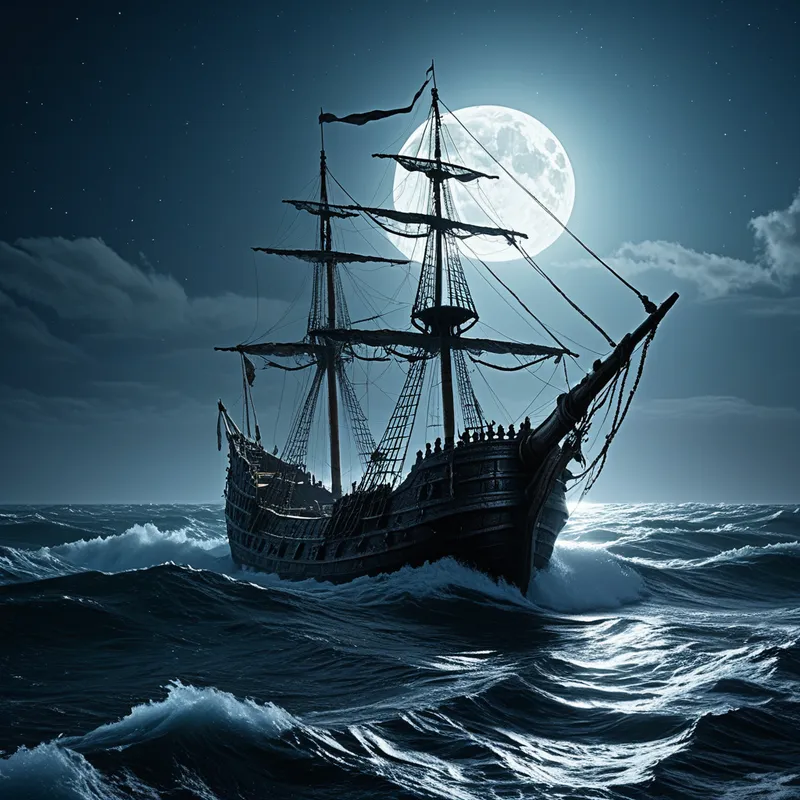
Listen, and hear a tale not of land, but of the deep. In the time when maps ended in serpents and [the sea](/myths/the-sea “Myth from Greek culture.”/) was a vast, salt-stained mystery, there sailed a captain whose heart was a clenched fist of ambition. His name is lost to the waves, but his ship was the Gilded Wrath, and it cut through grey waters towards the rumored ice-locked north.
For years, in every foaming port, they whispered of it. Not a beast of field and forest, but a creature of [the abyss](/myths/the-abyss “Myth from Kabbalistic culture.”/) and the air—the [Unicorn](/myths/unicorn “Myth from Medieval European culture.”/) of the Sea. They said its coat was the foam of a breaking wave, its eyes held the calm of the ocean floor, and from its brow sprang a horn of spiraled [pearl](/myths/pearl “Myth from Chinese culture.”/), longer than a man is tall. This horn, the alchemists and poison-fearing kings claimed, could sweat in the presence of venom, could purify the foulest well with but a touch. It was a sliver of grace in a fallen world.
The Gilded Wrath sailed for months. The air grew sharp enough to cut the lungs. Icebergs, cathedrals of blue glass, groaned in [the mist](/myths/the-mist “Myth from Celtic culture.”/). The crew, their beards stiff with frost, saw wonders and horrors: leviathans that blotted out the sun beneath the keel, and lights that danced in [the sky](/myths/the-sky “Myth from Persian culture.”/) like mocking spirits. The captain’s promise of gold grew thin, colder than [the wind](/myths/the-wind “Myth from Various culture.”/). Mutiny, that old serpent, began to coil in the men’s hearts.
Then, on a night when the aurora bled green across the heavens, the sea itself changed. The choppy waves smoothed into a vast, black mirror. A silence fell, so profound they could hear the blood singing in their own ears. And from the center of that dark glass, it rose.
It was whiter than the ice, moving with a grace that shamed their clumsy vessel. The horn caught the spectral light and fractured it into a thousand rainbows. It did not flee. It regarded them, an intelligence ancient and sorrowful in its gaze, as if it had been waiting. The captain, madness and [triumph](/myths/triumph “Myth from Roman culture.”/) in his cry, gave the order. Not with net or gentle lure, but with the harpoon, the tool of the whale hunt.
The iron bit deep. The sea, so calm, erupted. [The Unicorn](/myths/the-unicorn “Myth from Medieval Bestiaries culture.”/) did not thrash like a common beast. It sang—a sound that was not a sound, a vibration that shook the timbers of the ship and the bones of the men, a lament that spoke of the violation of a sacred trust. The black [water](/myths/water “Myth from Chinese culture.”/) bloomed crimson around it. As it began its slow, tragic descent, the captain roared to haul it in, his eyes only on the prize.
But as the wounded creature was drawn alongside the ship, its horn brushed the scummed water of the bilge pump outlet trickling down the hull. Where the horn touched, the water cleared. The foul stain vanished. The men stopped hauling. They saw the blood in the sea, their own hands on the ropes, and the dying light in the creature’s eye. In that moment, the horn’s legendary power was proven not in a king’s cup, but in the shame on their own faces. They had captured purity only to defile it; they sought a cure but had become the poison.
The captain, alone in his fury, lunged for the horn. As his hand closed upon it, a great wave, born from no wind, rose from the spot where the Unicorn had fallen. It took the captain, the harpoon line, and the body of the sacred beast, pulling them down into the forgiving darkness. The Gilded Wrath, spared, drifted silent. The men had no trophy, only a story—a story of a beauty they were not pure enough to possess, and a grace that purified even in its death.
Cultural Origins & Context
This myth, in its various forms, is a fascinating hybrid of medieval bestiary lore, traveler’s tales, and the stark reality of northern trade. It belongs not to the high courts of Arthurian romance, but to [the world](/myths/the-world “Myth from Tarot culture.”/) of sailors, merchants, and monastic scholars who compiled encyclopedias of God’s creation. The primary source is the bestiary, where the terrestrial unicorn was a symbol of Christ, capturable only by a virgin maiden.
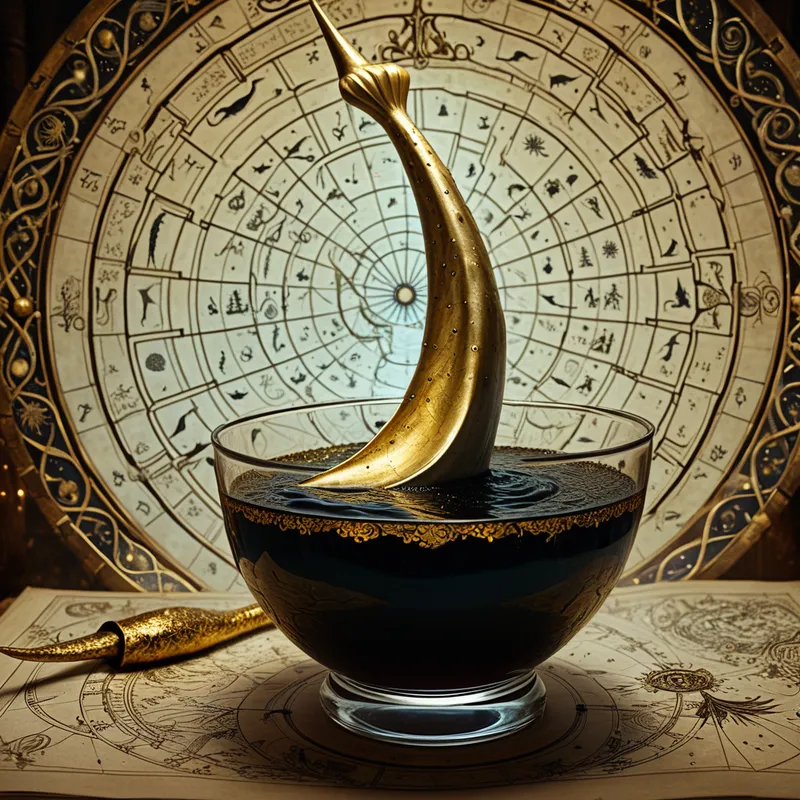
The “Unicorn of the Sea” is widely understood as the medieval interpretation of the narwhal tusk. These tusks, brought back by Norse and later Basque whalers from the Arctic, were sold for fortunes as “unicorn horns” (unicornu marinum). They were believed to possess powerful apotropaic and antidotal properties. Kings had them fashioned into scepters and drinking cups to ward off assassination.
The myth served multiple functions. For the pragmatic, it explained the origin of a rare and valuable commodity. For the religious, it extended God’s symbolic menagerie into the dangerous, unknown seas, a reminder that divine symbolism permeated all creation. For society, it was a moral parable about the sin of greed and the tragic gap between fallen humanity and divine purity. It was told in taverns as a warning, in monasteries as an allegory, and in market squares as a testament to the wonders at the edge of the world.
Symbolic Architecture
At its [heart](/symbols/heart “Symbol: The heart symbolizes love, emotion, and the core of one’s existence, representing deep connections with others and self.”/), the myth presents a profound [paradox](/symbols/paradox “Symbol: A contradictory yet true concept that challenges logic and perception, often representing unresolved tensions or profound truths.”/): the [pursuit](/symbols/pursuit “Symbol: A chase or being chased in dreams often reflects unresolved anxieties, unfulfilled desires, or internal conflicts demanding attention.”/) of wholeness or purity through violent means ensures its destruction. The [Unicorn](/symbols/unicorn “Symbol: A mythical creature symbolizing purity, magic, and the unattainable. It represents spiritual awakening and rare, untamed beauty.”/) is not just an animal; it is the embodiment of the primal Self in its pristine, natural state—untamed, connected to both the celestial (its [horn](/symbols/horn “Symbol: A horn symbolizes primal power, warning signals, and spiritual connection, often representing strength, alertness, or divine communication in dreams.”/)) and the chthonic (the sea).
The true Self cannot be captured by the ego’s ambition; it can only be witnessed, and its grace received as a gift.
The sea represents the unconscious—vast, unknown, and potentially treacherous. The ship, the Gilded [Wrath](/symbols/wrath “Symbol: Intense, often destructive anger representing repressed emotions, moral outrage, or survival instincts.”/), is the conscious ego, a constructed [vessel](/symbols/vessel “Symbol: A container or structure that holds, transports, or protects something essential, representing the self, emotions, or life journey.”/) of [identity](/symbols/identity “Symbol: Identity represents the sense of self, encompassing personal beliefs, cultural background, and social roles.”/) and desire navigating these [depths](/symbols/depths “Symbol: Represents the subconscious, hidden emotions, or foundational aspects of the self, often linked to primal fears or profound truths.”/). The harpoon is the penetrating, analytical, and ultimately violent force of the will, attempting to seize and possess a numinous content of the [psyche](/myths/psyche “Myth from Greek culture.”/) for personal gain ([status](/symbols/status “Symbol: Represents one’s social position, rank, or standing within a group, often tied to achievement, power, or recognition.”/), [wealth](/symbols/wealth “Symbol: Wealth in dreams often represents abundance, security, or inner resources, but can also symbolize burdens, anxieties, or moral/spiritual values.”/), “healing”).
The miraculous purification of the foul [water](/symbols/water “Symbol: Water symbolizes the subconscious mind, emotions, and the flow of life, representing both cleansing and creation.”/) at the [moment](/symbols/moment “Symbol: The symbol of a ‘moment’ embodies the significance of transient experiences that encapsulate emotional depth or pivotal transformations in life.”/) of [death](/symbols/death “Symbol: Symbolizes transformation, endings, and new beginnings; often associated with fear of the unknown.”/) is the core symbolic key. It signifies that the essence of [the Self](/myths/the-self “Myth from Jungian culture.”/) retains its transformative power even in the face of its own violation by [the ego](/myths/the-ego “Myth from Jungian culture.”/). The healing [property](/symbols/property “Symbol: Property often represents one’s personal value, possessions, or self-worth.”/) is real, but it is activated not by possession, but by the poignant [moment](/symbols/moment “Symbol: The symbol of a ‘moment’ embodies the significance of transient experiences that encapsulate emotional depth or pivotal transformations in life.”/) of recognition—the [crew](/symbols/crew “Symbol: A crew often symbolizes collaboration, teamwork, and collective purpose, suggesting a need for shared goals and support from others in one’s journey.”/)‘s [shame](/symbols/shame “Symbol: A painful emotion arising from perceived failure or violation of social norms, often involving exposure of vulnerability or wrongdoing.”/). The [integration](/symbols/integration “Symbol: The process of unifying disparate parts of the self or experience into a cohesive whole, often representing psychological wholeness or resolution of internal conflict.”/) of [the Self](/myths/the-self “Myth from Jungian culture.”/) often feels like a [death](/symbols/death “Symbol: Symbolizes transformation, endings, and new beginnings; often associated with fear of the unknown.”/) to the old, grasping ways of being.
The Dreamer’s Resonance
When this myth stirs in the modern dreamer, it often surfaces during a crisis of integrity or a feeling of profound inner pollution. To dream of chasing or hunting a radiant, elusive sea creature suggests the psyche is in active pursuit of a lost sense of purity, authenticity, or soul-purpose. The dream-ego is in the role of the captain, desperately seeking an external solution (the horn) to an internal condition of toxicity—perhaps burnout, a moral compromise, or a life lived out of alignment.
The somatic experience can be one of gripping tension (clutching the harpoon) coupled with awe and sorrow upon seeing the creature. The dream may culminate in the shocking, clarifying moment of contact, where the destructive nature of the pursuit becomes viscerally clear. This is the psyche’s corrective: a dramatic illustration that [the way](/myths/the-way “Myth from Taoist culture.”/) one is seeking wholeness is itself the wounding act. The healing (the purified water) follows not from success in the hunt, but from the conscious, painful acknowledgment of one’s own complicity in the violence. The dream invites a surrender of the harpoon—the coercive will—and a preparation to receive guidance from the depths in a new, receptive way.
Alchemical Translation
The myth maps perfectly onto the alchemical opus of individuation. The initial state is [nigredo](/myths/nigredo “Myth from Alchemical culture.”/), the black sea—a depression, confusion, or sense of corruption (the foul water, the crew’s despair). The coveted horn represents the [lapis philosophorum](/myths/lapis-philosophorum “Myth from Alchemical culture.”/), [the philosopher’s stone](/myths/the-philosophers-stone “Myth from Alchemical culture.”/), the ultimate goal of wholeness and healing.
The fatal error is attempting to skip the necessary stages. The captain seeks the albedo (whitening, purity) through the methods of the [rubedo](/myths/rubedo “Myth from Alchemical culture.”/) (reddening, passion, and violent conquest), symbolized by the harpoon and the bleeding. This creates the mortificatio, the death, but not the sacred death of transformation. It is a literal, tragic death because the ego will not yield its method.
Individuation requires the death of the ego’s claim to ownership over the soul. The treasure is not seized; it is earned through the crucible of surrendered intention.
The true alchemical process begins in the aftermath, with the surviving crew. They are left with the [putrefactio](/myths/putrefactio “Myth from Alchemical culture.”/)—the rotting of their old ambitions and identities. Their shame is the first solvent. The wave that reclaims both captain and beast performs the [separatio](/myths/separatio “Myth from Alchemical culture.”/), removing the tyrannical ego-consciousness so that a new relationship with the Self can potentially form. The purified water on the hull is the first, small evidence of the unio mentalis, the mental union, where a new understanding dawns: healing is a property of the sacred itself, and our task is not to possess it, but to create a vessel clean enough to let it work through us. The myth, therefore, is not a failure, but a brutal and necessary lesson in the first rule of the soul’s alchemy: the seeker must be transformed by the search, or the search destroys the very [thing](/myths/thing “Myth from Norse culture.”/) it seeks.
Associated Symbols
Explore related symbols from the CaleaDream lexicon: