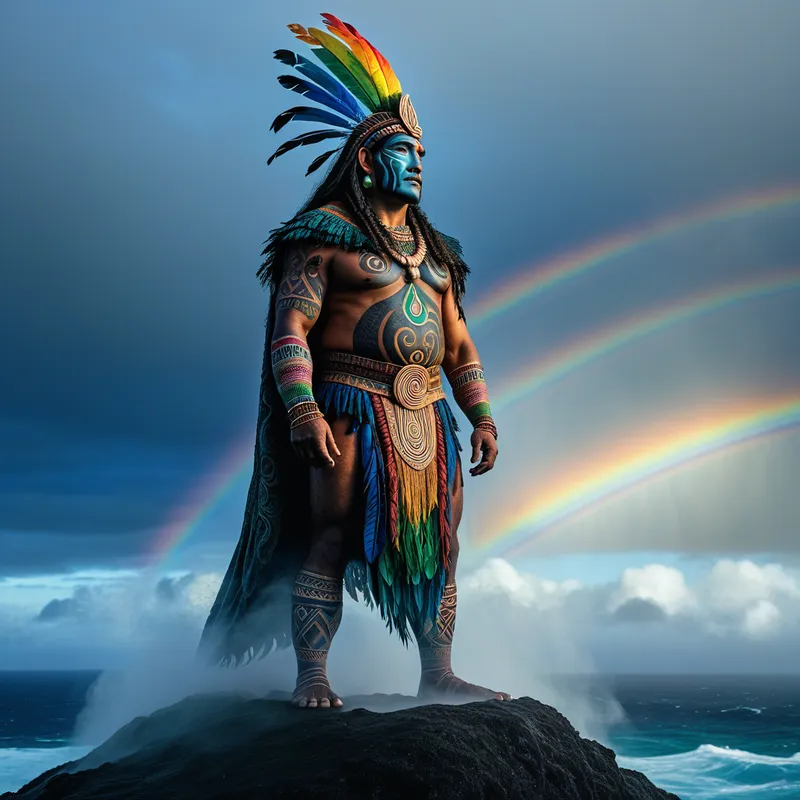
Uenuku God of Rainbows Myth Meaning & Symbolism
A myth of a chief whose beloved is stolen, his grief transformed into the eternal, arching promise of the rainbow—a bridge between the human and the divine.
The Tale of Uenuku God of Rainbows
Listen. The wind carries a memory of salt and sorrow from the time when the world was closer to the gods. In those days, there lived a great chief, Uenuku. His mana was like the sun, his presence like a steady mountain. Yet within his great heart, a softer light glowed—the light of his love for Hine-pūkohu-rangi. She was not of this earth, but a being of the high, clinging mists, a daughter of the sky. She came to him veiled in the soft grey of dawn, and in her presence, the world held its breath.
Their love was a secret, a sacred space between the solid earth and the drifting air. He built for her a special house, a whare kōhanga, where she could dwell, for she could not abide the common smoke and food of mortals. There, they were happy. But the heart of a man is a complex forest. Uenuku had other wives, women of the earth, and from them, he had sons. These sons, curious and perhaps envious of their father’s hidden joy, wondered at the mysterious occupant of the sacred house. Their mother, Uenuku’s earthly wife, stoked their curiosity with whispers.
One day, driven by a mix of instruction and innate mischief, the boys peered inside. They saw the celestial beauty of Hine-pūkohu-rangi and, in their shock, did the unthinkable—they offered her cooked food, the very essence of the mortal, earthly realm. The moment the food touched her, the spell was broken. A great shudder passed through the air. The Mist Maiden let out a cry of profound anguish, a sound like a rent in the fabric of the world. Her form began to fade, to lift. She looked once, with infinite sadness, at Uenuku, and then she was gone, ascending, drawn back to her home in the heavens.
Uenuku returned to find only emptiness where his love had been. His grief was a tempest that shook the foundations of the land. It was not a quiet sorrow, but a raging, active force. He could not let her go. So began his impossible quest. He built the greatest of canoes, Mahunui, and gathered a crew of heroes. Their mission was not across seas, but into the sky itself—to pursue his lost love, to ascend to the tenth heaven, to Ranginui.
The voyage was a trial of spirit. They passed through lower heavens, strange and perilous realms, but Uenuku’s longing was their compass. Finally, they reached the very threshold of the highest realm. But the gates of that ultimate heaven would not open to him. His mortal nature, his earthly attachments, were a barrier he could not cross. Hine-pūkohu-rangi was there, just beyond, but forever separated.
In that moment of ultimate, heartbreaking realization, something alchemical occurred. His immense, unfulfilled love and his boundless, aching grief did not destroy him. They transfigured him. His earthly form dissolved, not into death, but into a new kind of being. He became the rainbow—Uenuku. No longer a man bound to the earth, he became the eternal arch, the luminous bridge between the world of humans (Te Ao Mārama) and the realm of the gods and the departed (Rarohenga or the heavens). His beautiful, sorrowful form now appears after the storm, a promise written in light and vapor, a sign of both the pain of separation and the enduring connection between all realms of existence.

Cultural Origins & Context
The myth of Uenuku is not merely a story; it is a taonga of the deepest order, carried in the oral traditions of the Māori people. It belongs to the corpus of pūrākau and whakapapa. Uenuku is recorded as a paramount ancestor in the genealogies of many iwi (tribes), particularly those of the Tainui and Te Arawa canoes, grounding the celestial myth in the very real lineage of people.
This story was traditionally told by tohunga and respected elders. Its function was multifaceted. It explained a natural phenomenon—the rainbow—imbuing it with profound ancestral and spiritual significance. It served as a moral and social narrative about the consequences of breaking tapu, as the sons did by intruding upon the sacred space. Most importantly, it provided a cosmological model. The rainbow became a visible, comforting symbol of the connection between the living and their ancestors, between the tangible world and the intangible world of spirit. It was a reminder that grief and love, properly understood, are not endpoints, but transformative pathways.
Symbolic Architecture
At its core, the myth of Uenuku is an archetypal drama of the Lover faced with the ultimate separation. His journey is not one of conquest, but of sublimation.
The rainbow is not the reward for the journey’s end, but the beautiful, aching shape of the journey itself—eternalized.
Uenuku represents the human soul that loves something beyond its own realm—an ideal, a divine aspect, a transcendent state of being. Hine-pūkohu-rangi is the anima, the soul-image, the connection to the numinous. Her theft is not by a monster, but by the mundane—the “cooked food” of literal-mindedness, curiosity without reverence, and earthly jealousy. This is the tragedy of incarnation: the spiritual is always vulnerable to being dragged down and made common.
His subsequent sky-voyage is the soul’s desperate, heroic attempt at reintegration through sheer will. Its failure is its ultimate success. He cannot reclaim the lost object in its original form. Instead, his entire being is transmuted into the function of connection. The rainbow is the symbol of this psychic reality: it is a bridge that one cannot walk upon, a promise that does not grant possession, a beauty born directly from the storm of emotion. It signifies that the true result of profound longing is not acquisition, but a permanent reconfiguration of the psyche into a vessel of relationship between opposites: earth and sky, mortal and immortal, grief and beauty, loss and presence.
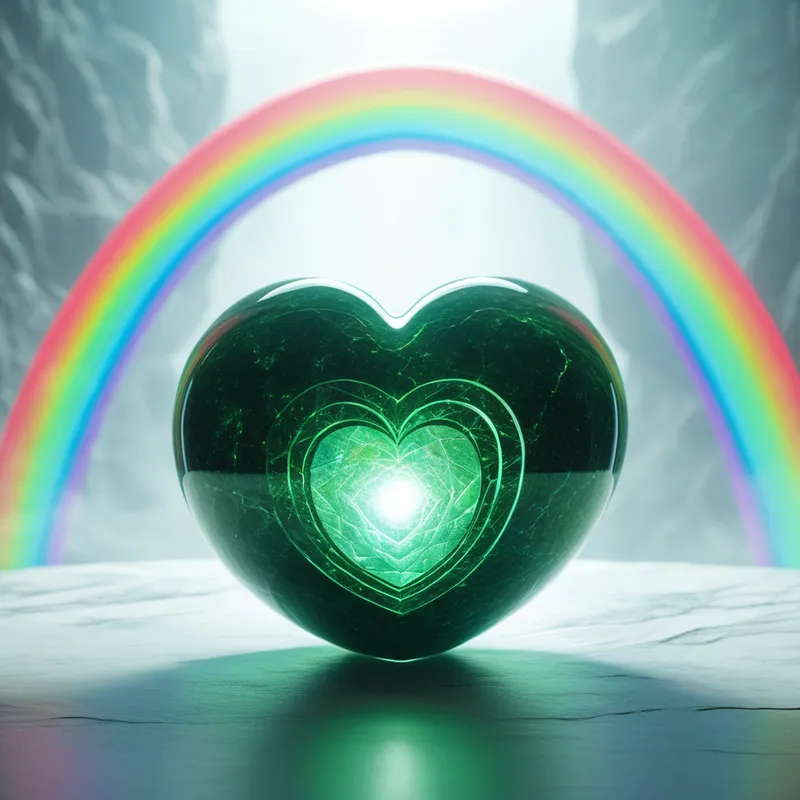
The Dreamer’s Resonance
When this myth stirs in the modern unconscious, it often manifests in dreams of profound, beautiful loss and impossible bridges. You may dream of a loved one fading away into light or mist, leaving you with a yearning so intense it feels physical. You may dream of constructing elaborate, fragile bridges across vast canyons, or of trying to fly upwards only to be held by an invisible ceiling.
These dreams signal a somatic and psychological process of sacralizing grief. The psyche is grappling with a separation from a vital inner value—a creative inspiration, a sense of meaning, a connection to the transcendent, or the literal loss of a relationship. The dream is not merely replaying the pain; it is, like Uenuku, attempting to transform it. The aching in the chest, the feeling of weightlessness or being untethered in the dream, are the somatic echoes of the soul loosening its identification with the earthly ego and beginning its ascent toward a new form. The dream is the inner marae where the mortal self meets its own longing and begins the alchemical work of turning leaden despair into the colored light of a new perspective.

Alchemical Translation
For the individual, Uenuku’s path models the stage of individuation where a central, life-giving complex is lost or violated, forcing a crisis that demands psychic transmutation. The process follows a clear alchemical sequence: Nigredo, Albedo, and Rubedo.
The Nigredo, the blackening, is the moment of violation and loss—the offering of the cooked food, the fading of the beloved. It is the descent into the black grief of irreparable change. The building of the canoe and the sky-voyage represent the Albedo, the whitening—the conscious, disciplined effort to recover, to analyze, to strive spiritually. This is the work of therapy, spiritual practice, or deep introspection, attempting to “reach heaven” through understanding.
The final stage is not achieving the goal, but becoming the means. The psyche stops trying to possess the transcendent and instead becomes the vessel through which it is revealed.
The failure of this effort at the gates of heaven is the critical juncture. Here, the ego’s project dissolves. This is the Rubedo, the reddening, not as a triumphant victory, but as a radiant surrender. The libido (psychic energy) that was locked in futile pursuit is freed and transforms the very structure of the personality. The individual does not “get over” their loss; they are reconstituted by it. They become a bridge. Their wound becomes the place where the numinous shines through. In modern terms, one does not cure the grief of a profound loss; one learns to carry it in a way that connects them more deeply to the mystery of life and death, becoming a person of greater depth, compassion, and spiritual presence—a living rainbow after their personal storm.
Associated Symbols
Explore related symbols from the CaleaDream lexicon:
- Rainbow — The central symbol of the myth, representing the eternal bridge formed from transmuted grief, connecting the earthly and spiritual realms.
- Journey — Uenuku’s impossible voyage to the heavens embodies the soul’s arduous quest for reintegration and meaning after a catastrophic loss.
- Grief — The raw, tempestuous emotion that acts not as an end, but as the essential fuel for alchemical transformation into a higher state of being.
- Bridge — The functional form of the rainbow, symbolizing connection where direct union is impossible, and the psyche’s role as a mediator between opposites.
- Sky — The realm of the transcendent, the divine, and the departed, representing the ultimate goal of spiritual aspiration and the home of the lost beloved.
- Love — The driving, devouring force that compels the heroic quest and ultimately undergoes sublimation, changing from personal possession to impersonal, connecting principle.
- Light — The substance of Uenuku’s transformed state, representing consciousness, revelation, and the beautiful visibility of spiritual truth after emotional darkness.
- Spirit — The essential nature of Hine-pūkohu-rangi and the destination of Uenuku’s quest, representing the intangible, numinous aspect of existence that the soul yearns for.
- Separation — The core wound of the narrative, the necessary crisis that initiates the entire transformative process of individuation.
- Transformation — The ultimate outcome, the process by which mortal failure and human emotion are alchemized into an eternal, archetypal form.