Thoth - Egyptian god of writin Myth Meaning & Symbolism
The story of the ibis-headed god who gave humanity the sacred tools of language, measure, and magic, becoming the scribe of the soul.
The Tale of Thoth - Egyptian god of writin
Before [the world](/myths/the-world “Myth from Tarot culture.”/) knew its own name, in the silent, green-black waters of Nun, a thought stirred. It was not a sound, but a shape yearning to be. From this yearning, the sun, Ra, burst forth, bringing light and the first cry of existence. Yet, in his blazing wake, a profound silence remained. The cosmos had light and substance, but no tongue to speak of itself, no measure to know its bounds, no memory to hold its story.
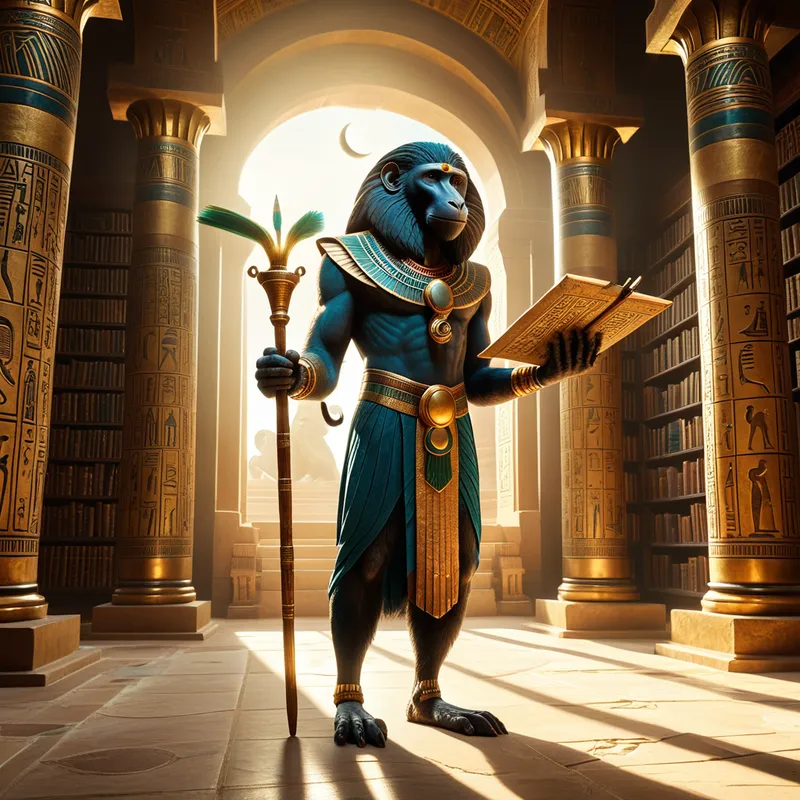
Then, from the interplay of light and the retreating dark, he emerged. His head was that of the sacred ibis, a creature that probes the mud for hidden life, his beak a precise instrument between the waters and [the sky](/myths/the-sky “Myth from Persian culture.”/). He was [Thoth](/myths/thoth “Myth from Global/Universal culture.”/), [the self](/myths/the-self “Myth from Jungian culture.”/)-created, the heart and tongue of Ra. He did not walk; he calibrated the space between steps. His first act was not a shout, but a calculation. With a measured gaze, he separated [the sky](/myths/the-sky “Myth from Persian culture.”/), Nut, from [the earth](/myths/the-earth “Myth from Hindu culture.”/), Geb, establishing the fundamental law of above and below.
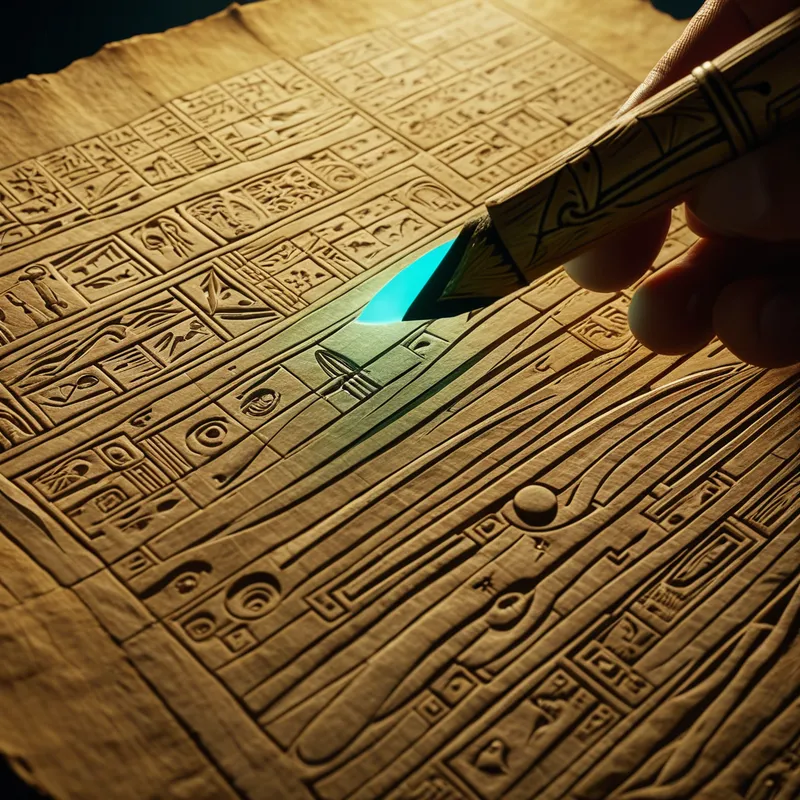
But order was a silent kingdom. The gods themselves knew only desire and power, their conflicts echoing in wordless fury. The great enchanter Set battled [Horus](/myths/horus “Myth from Egyptian culture.”/) the Elder, and the cosmos trembled. Ra looked upon the strife and his radiant heart grew heavy with a silence deeper than Nun. Thoth saw this. He plucked a reed from the bank where the waters of chaos lapped at the shores of creation. He sharpened it not with a knife, but with intent.
He approached [the Eye of Ra](/myths/the-eye-of-ra “Myth from Egyptian culture.”/)—the furious, roaming goddess Tefnut—who raged in the distant deserts. Other gods fled her scorching breath. Thoth did not fight. He spoke. He wove a tapestry of stories so captivating, of praises so intricate, that her wrath cooled, curdled, and transformed. He spoke her back to divinity. This was the first spell, the first true act of magic: language not as description, but as transformation.
His greatest work, however, was for humanity. In the hallowed silence of a temple that was not yet stone but pure concept, Thoth dipped his reed stylus. The ink was not mere soot and gum, but the distilled essence of moonlight and the black between stars. He touched it to the pristine surface of [papyrus](/myths/papyrus “Myth from Egyptian culture.”/), and the first hieroglyph was born. It was not a picture of a [thing](/myths/thing “Myth from Norse culture.”/), but [the thing](/myths/the-thing “Myth from Norse culture.”/)‘s very soul captured in a graceful line. He gave not one, but many scripts: the sacred for the gods, the priestly for the temples, the demotic for the marketplace. With these gifts, he gave humanity the tools to build more than cities—to build memory, law, story, and soul. He became the scribe who stood beside [Osiris](/myths/osiris “Myth from Global/Universal culture.”/) in the silent Hall of Duat, recording the weight of every heart against the feather of Maat, ensuring every life, once spoken into being, would be remembered in the eternal ledger of existence.
Cultural Origins & Context
The figure of Thoth, known as Djehuty to the ancient Egyptians, emerged from the fertile theological landscape of the Early Dynastic and Old Kingdom periods (c. 3100 – 2181 BCE). His worship was centered at Khemenu, known to the Greeks as Hermopolis Magna. Unlike gods tied to specific natural forces like the sun or the Nile, Thoth was a god of the mind’s products: the abstract, the measured, the recorded.
His myths were not grand epic cycles of battle like those of Horus, but were woven into the fabric of Egyptian cosmic and funerary doctrine. His stories were passed down through the very medium he championed: the scribal tradition. Priests and temple scholars were his primary devotees, and they preserved his tales in temple inscriptions, wisdom texts (like the “Instructions of Amenemope”), and, most importantly, the Coffin Texts and the Book of the Dead.
Societally, Thoth was the divine patron of all scribes, administrators, scientists, and magicians. He was the guarantor of oaths, contracts, and laws—the foundation of civil order. In a civilization where the written word was considered a direct extension of divine creative power (heka), to be a scribe was to channel Thoth. His myth functioned as the sacred charter for Egypt’s entire bureaucratic and intellectual class, elevating the act of writing from a profession to a holy vocation, a participation in the ongoing maintenance of cosmic order (Maat).
Symbolic Architecture
Thoth is the archetypal principle of the mediating intellect. He is not the raw, creative fire of Ra, nor the fertile [passion](/symbols/passion “Symbol: Intense emotional or physical desire, often linked to love, creativity, or purpose. Represents life force and deep engagement.”/) of Isis. He is the faculty that comes after creation to name it, [structure](/symbols/structure “Symbol: Structure in dreams often symbolizes stability, organization, and the framework of one’s life, reflecting how one perceives their environment and personal life.”/) it, and make it communicable. His ibis head symbolizes the probing mind that sifts the chaotic “mud” of experience to find the nourishing “truths.” The baboon, his other sacred animal, represents the [dawn](/symbols/dawn “Symbol: The first light of day, symbolizing new beginnings, hope, and the transition from darkness to illumination.”/)—the [moment](/symbols/moment “Symbol: The symbol of a ‘moment’ embodies the significance of transient experiences that encapsulate emotional depth or pivotal transformations in life.”/) of [illumination](/symbols/illumination “Symbol: A sudden clarity or revelation, often representing spiritual awakening, intellectual breakthrough, or the dispelling of ignorance.”/) when [night](/symbols/night “Symbol: Night often symbolizes the unconscious, mystery, and the unknown, representing the realm of dreams and intuition.”/)‘s [confusion](/symbols/confusion “Symbol: A state of mental uncertainty or disorientation, often reflecting internal conflict, lack of clarity, or overwhelming choices in waking life.”/) gives way to the clear light of understanding.
He is the bridge between the unformed cry of inspiration and the legible word of art, between the feeling of injustice and the codified law, between the terror of death and the recorded name that ensures immortality.
His most profound [symbol](/symbols/symbol “Symbol: A symbol can represent an idea, concept, or belief, serving as a powerful tool for communication and understanding.”/) is the act of writing itself. The stylus and palette are alchemical tools that transmute fleeting thought into permanent [artifact](/symbols/artifact “Symbol: An object from the past carrying historical, cultural, or personal significance, often representing legacy, memory, or hidden knowledge.”/), subjective experience into shared [reality](/symbols/reality “Symbol: Reality signifies the state of existence and perception, often reflecting one’s understanding of truth and life experiences.”/). In the judgment scene, he is not the judge but the [recorder](/symbols/recorder “Symbol: The Recorder symbolizes simplicity in musical communication and nostalgia for childhood creativity, representing a gateway to artistic exploration.”/); his power lies in accurate witness, not in [verdict](/symbols/verdict “Symbol: A formal judgment or decision, often legal or moral, representing closure, accountability, and societal evaluation.”/). This positions him as the god of [consciousness](/symbols/consciousness “Symbol: Consciousness represents the state of awareness and perception, encompassing thoughts, feelings, and experiences.”/) itself—the part of the [psyche](/myths/psyche “Myth from Greek culture.”/) that observes, notes, and articulates the [drama](/symbols/drama “Symbol: Drama signifies narratives, emotional expression, and the exploration of human experiences.”/) between our inner Maat and our inner Set.
The Dreamer’s Resonance
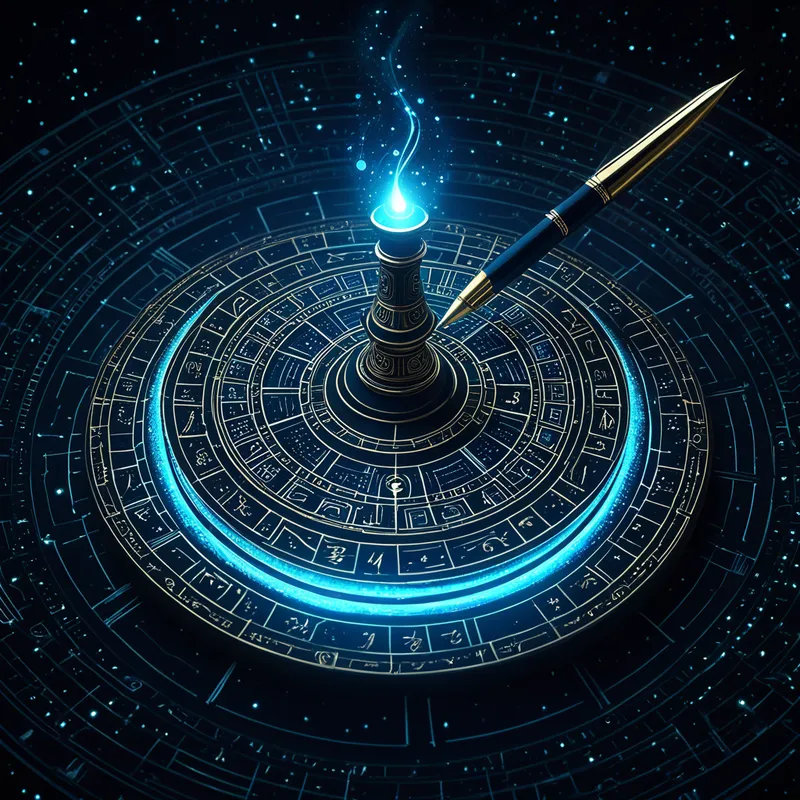
When Thoth emerges in the modern dreamscape, he rarely appears as a literal ibis-headed god. His presence is more subtle, felt in the texture of the dream. It manifests as dreams of finding a lost, profoundly important book or scroll; of struggling to inscribe a vital message with a pen that leaks light instead of ink; of being in a vast, silent library where the books rearrange themselves.
Psychologically, this signals a process of conscious articulation. The dreamer is moving from a state of emotional or intuitive turmoil (the raging Eye of Ra, the silent conflict of the gods) toward a need for inner structure and understanding. The somatic feeling is often one of pressure in the head or throat—the “word” trying to be born. It is the psyche’s attempt to “write its own myth,” to take chaotic inner experiences—grief, passion, confusion, insight—and give them a form that can be held, examined, and integrated. Dreaming of Thoth is dreaming of the self becoming its own scribe, preparing to record the testimony of the soul.

Alchemical Translation
The individuation process, the journey toward psychic wholeness, is mirrored perfectly in Thoth’s myth. We all begin in a personal Nun—a soup of potentials, complexes, and unspoken truths. The first emergence of [the ego](/myths/the-ego “Myth from Jungian culture.”/) (Ra) brings light but not coherence. The Thoth function is the next, essential stage: the [logos](/myths/logos “Myth from Christian culture.”/) principle.
The alchemical work is not to be the sun, but to become the scribe of the sun—to translate its blinding light into a scripture the soul can read.
This involves several transmutations. First, Measurement: We must establish inner boundaries, differentiating emotion from fact, [projection](/myths/projection “Myth from Alchemical culture.”/) from perception, the self from the other. This is Thoth separating Nut from Geb. Second, Articulation: We must find the “reed stylus” of our unique voice—through journaling, therapy, art, or dialogue—to name our inner demons and deities. This is Thoth pacifying the Eye of Ra with stories. Finally, Record-Keeping: We must become the impartial witness in our own Hall of Judgment. We must learn to observe our thoughts and actions without immediate identification or condemnation, weighing them not against perfection, but against our own inner feather of truth.
The ultimate goal is not to eliminate chaos (Set) but to inscribe it into the larger narrative of the self. By consistently applying the Thoth principle—naming, structuring, recording—we perform the ultimate magic. We transmute the lead of unconscious suffering into the gold of conscious meaning. We write our own Book of Coming Forth by Day, ensuring that no part of our experience is lost to the silent waters of forgetfulness. We become, in our own small way, self-created.
Associated Symbols
Explore related symbols from the CaleaDream lexicon: