Third Eye of Shiva Myth Meaning & Symbolism
When desire threatens cosmic order, Shiva opens his Third Eye, incinerating illusion and revealing the ultimate truth of consciousness.
The Tale of Third Eye of Shiva
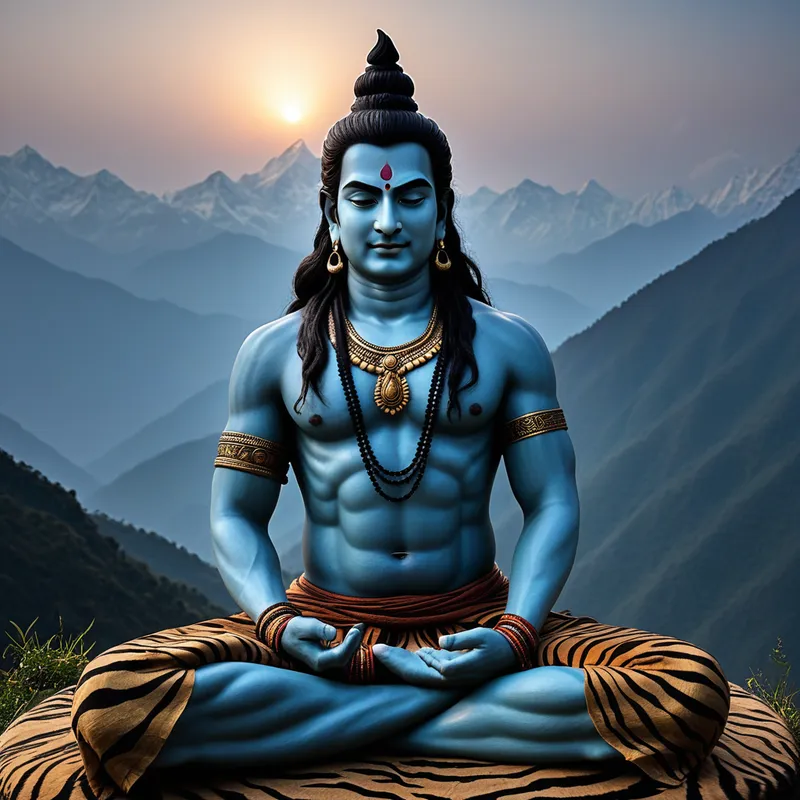
In the beginning, before time was measured, there was only the great hum of the universe. And in the highest, most desolate peaks of the world, where snow meets sky and silence is a living thing, sat Shiva. He was not asleep, nor was he awake. He was in samadhi, a state of absorption so profound that the cosmos itself seemed to breathe with his stillness. His body was smeared with the ash of burned-out universes, his matted locks coiled like serpents of eternity. Before him, the divine consort Parvati sat in devoted vigil, guarding his infinite solitude.
But in the celestial realms, a crisis was brewing. A terrible demon, Taraka, had gained a boon of invincibility—he could only be slain by a son of Shiva. And Shiva, lost in his timeless meditation, had no son. The gods trembled. The balance of the worlds tilted toward chaos. Desperation filled the heavens.
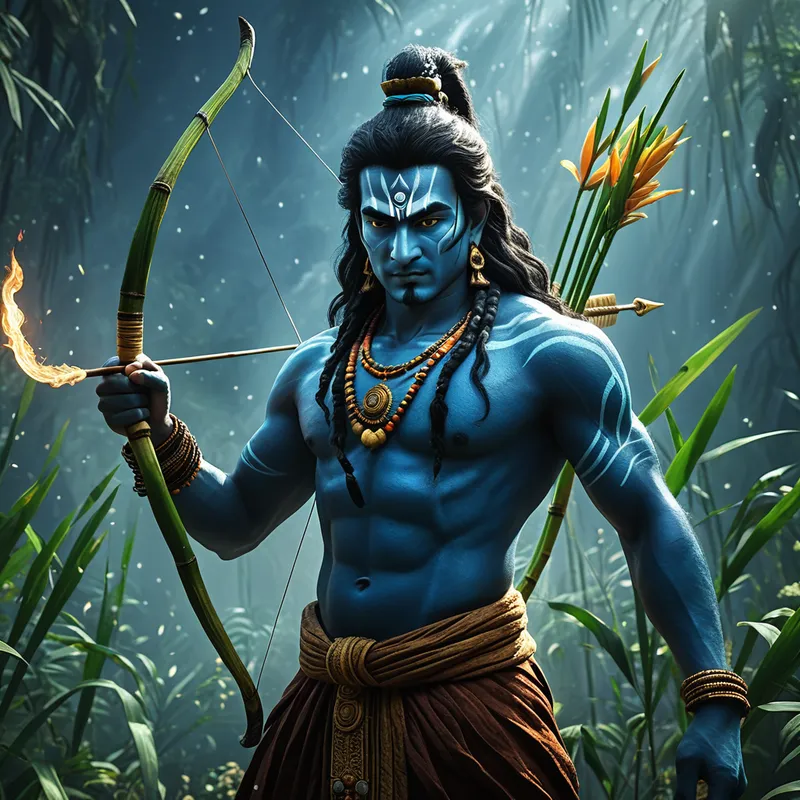
The council of gods turned to Kama, the one who could stir feeling in the heart of a stone. “You must awaken Shiva,” they pleaded. “You must make him feel desire for Parvati, so that a child may be born.” Kama, the beautiful, the irresistible, armed himself with his bow of sugarcane and arrows tipped with fragrant flowers. He journeyed to the icy fastness, accompanied by his consort Rati and the gentle breeze of the south.
The air, once crisp and empty, grew heavy with the scent of jasmine and mango blossom. The very atmosphere softened, becoming a palpable caress. Parvati, in her devotion, felt a flush of anticipation. Kama, hidden among the blossoming trees that sprung from his influence, drew his bow. He took aim at the heart of the unmoving god.
He loosed the arrow.
In that instant, the universe held its breath. The arrow of desire, destined to pierce any heart, flew true.
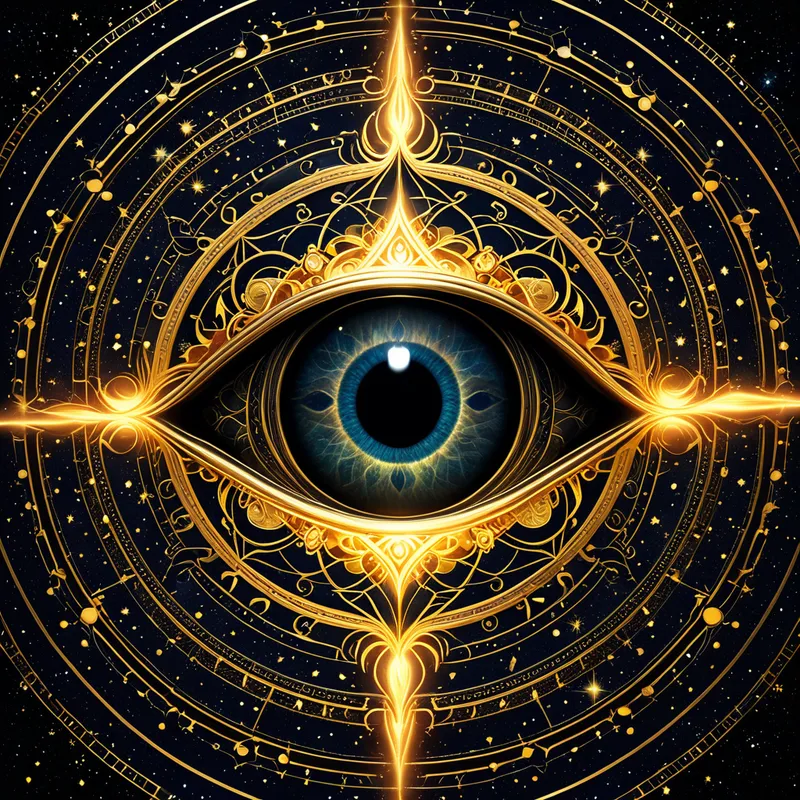
Shiva’s meditation shattered. Not with a gasp, but with a tectonic shift of consciousness. The stillness did not break; it concentrated. The god’s two physical eyes remained closed. But upon his forehead, in the space of pure knowing, a fissure appeared. It was not a wound, but an opening—a vertical eye of terrifying perception. This was the Third Eye.
It did not look. It saw.
It saw the delicate, beautiful form of Kama. It saw the clever strategy of the gods. It saw the arrow of fleeting sensation flying toward the eternal. And in that single, all-comprehending gaze, it saw the fundamental nature of desire itself: a brilliant, captivating, but ultimately binding illusion.
From the center of that eye, a beam of pure, white-hot light erupted. It was not fire as we know it, but the fire of consciousness itself—the jnana agni, the flame of wisdom. It struck Kama, the god of form and attraction. There was no scream, only a silent, instantaneous dissolution. Kama’s beautiful form was reduced to ashes, his essence unmade. The intoxicating spring air vanished, replaced by the scent of ozone and sacred ash.
The Third Eye closed. The light receded. Shiva returned to his stillness, but the cosmos was forever changed. Desire had been annihilated by a gaze that saw through it. And from those very ashes, from the paradox of destruction that served creation, the potential for the savior son was born. Order would be restored, but only after the ultimate price for disturbing the absolute was paid in full.
Cultural Origins & Context
The myth of Shiva’s Third Eye is woven into the vast tapestry of Puranic literature, particularly in texts like the Shiva Purana and the Kumarasambhava. It was not merely a story for entertainment, but a foundational narrative performed by bards and elaborated upon by sages to illustrate a core theological and philosophical principle: the supremacy of transcendent consciousness (cit) over worldly attachment (maya).
In the societal context of ancient India, where the pursuit of spiritual liberation (moksha) was considered the highest goal, this myth served a critical function. It established Shiva as the archetypal yogi, the supreme ascetic whose power comes from unwavering inner focus. The story was told to renunciants and householders alike, a dramatic reminder that the path to truth might require the incineration of our most cherished, beautiful distractions. It validated the fierce discipline of the ascetic while also explaining, through the subsequent resurrection of Kama as “Ananga” (the bodiless one), that desire, though transcended, remains an eternal force in the manifested world.
Symbolic Architecture
The Third Eye is the central symbol of direct, unmediated perception. It is not an organ of sight, but of insight.
The two physical eyes see duality—subject and object, beauty and ugliness, pleasure and pain. The Third Eye sees the unity from which all pairs arise.
Shiva represents pure, undifferentiated consciousness. His deep meditation is the state of being established in this non-dual reality. Kama, with his flower-arrows, represents the entire spectrum of worldly attachment—not just sexual desire, but all longing, all craving for sensory experience and emotional gratification that binds the individual soul (jiva) to the cycle of birth and death.
The opening of the Third Eye is the moment of ultimate discrimination (viveka). It is the psyche’s capacity to recognize an alluring impulse for what it truly is: a temporary, compelling, but ultimately illusory construct that veils the true Self. The incineration by wisdom-fire is not a punishment, but a liberation. It is the dissolution of a complex, the burning away of a psychic identification so complete that the identity attached to it is annihilated.
To be burned by Shiva’s gaze is not to be destroyed, but to be returned to your essential, formless state.
The Dreamer’s Resonance
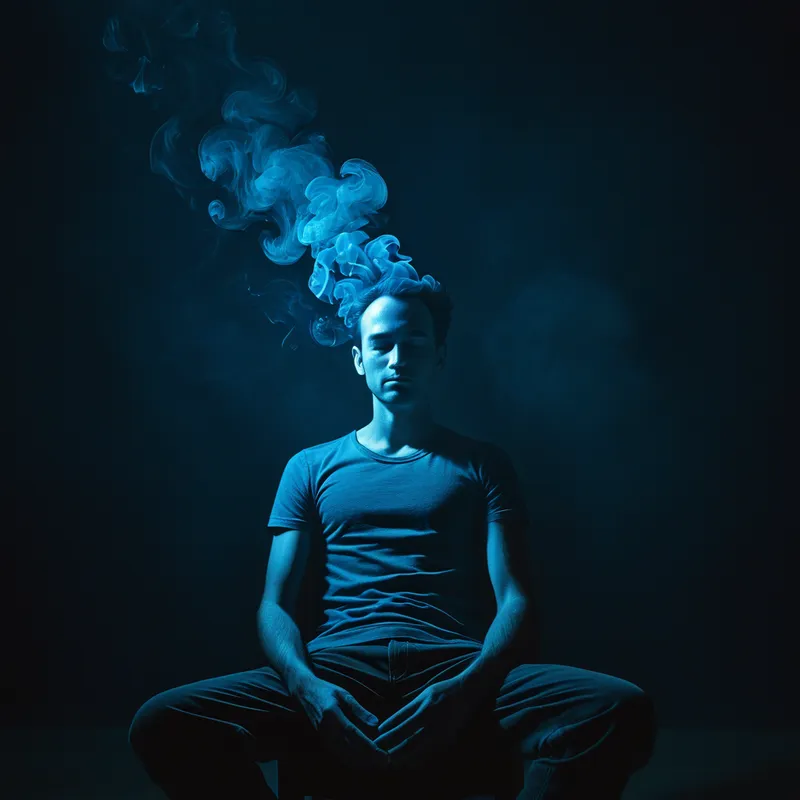
When this myth stirs in the modern unconscious, it often manifests in dreams of burning or opening. A dreamer might dream of a intense, painless light beam emanating from their own forehead, targeting a person, a habit, or a beloved object that then turns to ash. There is rarely terror, but a profound, awe-filled solemnity.
Somatically, this can correlate with sensations of pressure or heat in the brow center (the ajna chakra), or a feeling of sudden, cool clarity after a period of emotional turmoil. Psychologically, this dream pattern signals a critical inner process: the conscious ego is being confronted by a deeper, transpersonal authority within the psyche (the Self, in Jungian terms). This authority is dismantling a long-held attachment or fantasy that the dreamer has outgrown but cannot voluntarily release. The dream is the psyche’s alchemical furnace, using the image of Shiva’s fire to perform the necessary, ruthless work of simplification and truth.
Alchemical Translation
The myth models the most radical stage of psychic individuation: the nigredo or mortificatio—the blackening, the death of the old king. Here, the “old king” is not a tyrant, but a beautiful, captivating ruler named Desire.
For the modern individual, Kama is not an external god, but an internal force: the complex of personal desires, romantic ideals, addictive patterns, and the longing for validation that shapes our identity. We believe we are these desires. The meditative stillness of Shiva represents the difficult, disciplined work of turning inward, of observing these impulses without identifying with them.
The crisis—the demon Taraka—is the life situation that forces the issue: a failure, a betrayal, an addiction, a midlife crisis that reveals the inadequacy of a desire-driven life. The “gods” (our inner drives for order and meaning) plead for a solution that still works within the realm of form and relationship (a son of Shiva). But the true solution requires a leap beyond that realm.
The alchemical fire is not applied from without; it is the searing light of self-knowledge that erupts when one looks directly at one’s own motivating illusions.
Opening the Third Eye is the act of brutal, compassionate self-honesty. It is the moment you see your craving for approval not as love, but as a childhood wound. It is seeing your ambition not as purpose, but as a fear of insignificance. This seeing is the fire. It burns the form of the complex (the specific pattern of behavior) to ashes. What remains is the essence—the pure energy of connection, or the pure drive for growth, now freed from its compulsive, identity-bound form. This is the resurrection of Kama as Ananga: desire purified, experienced not as a binding force, but as a conscious movement of life itself, no longer mistaking itself for who you are. The individual, like Shiva, returns to stillness, but it is a stillness that now contains the whole world, having passed through the eye of its own transformative fire.
Associated Symbols
Explore related symbols from the CaleaDream lexicon: