The Vedas Myth Meaning & Symbolism
The Vedas are not written but heard, a primordial vibration from the heart of creation, revealed to sages in deep meditation.
The Tale of The Vedas
In the beginning, there was not a word, but a vibration. A hum in [the womb](/myths/the-womb “Myth from Various culture.”/) of the unmanifest, a resonance before time had a name. This was the dawn before dawns, a silence so profound it began to sing to itself. And from that song, the universe unfolded—stars, winds, oceans, and the first breath of life. But the song did not cease; it became the hidden rhythm of all things, the deep structure of reality.
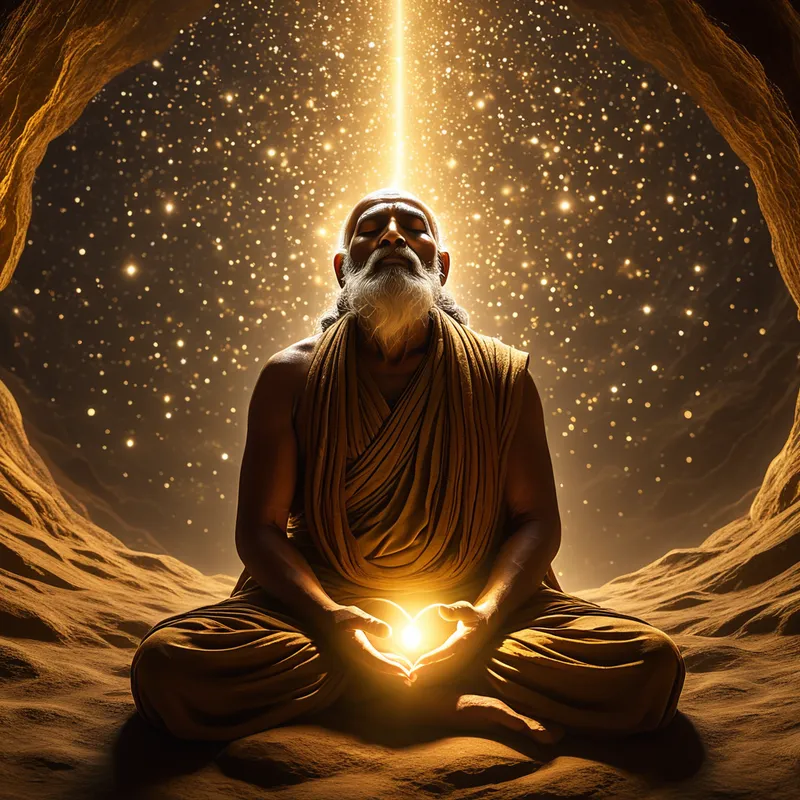
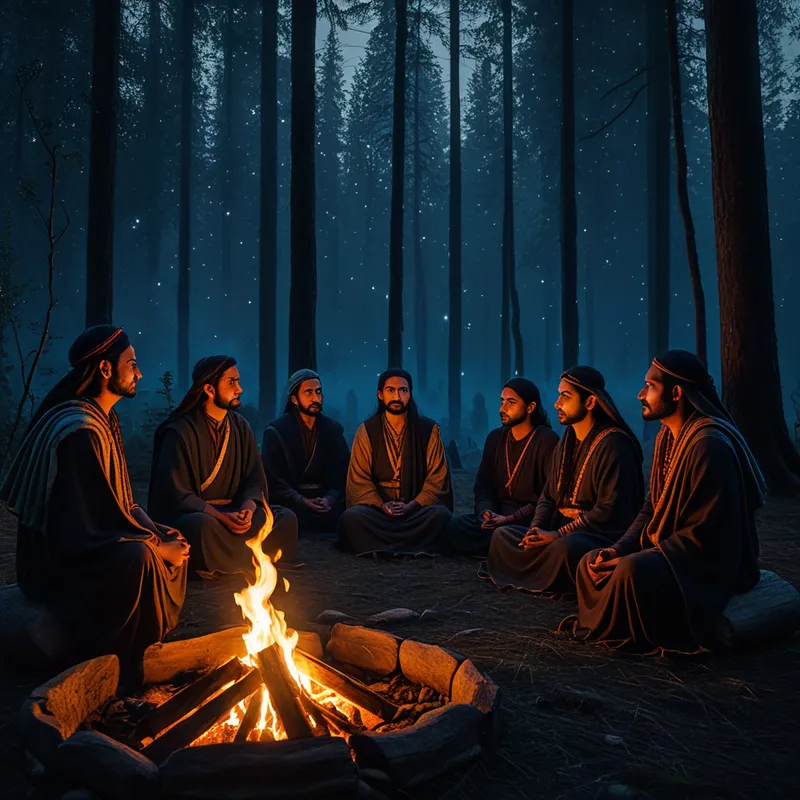
For ages, this eternal hymn echoed in the hollows of space and the depths of the soul, unheard by mortal ears. [The world](/myths/the-world “Myth from Tarot culture.”/) turned, civilizations rose and fell, all dancing to a tune they could not quite remember. Then, in the high, thin air where earth meets sky, in the [sacred groves](/myths/sacred-groves “Myth from Celtic culture.”/) and on the banks of rushing rivers, certain beings grew still. They were the Rishis. They did not seek; they ceased seeking. They sat, their breath slowing to match the pulse of the mountains, their inner chatter dissolving like mist in sunrise.
And in that utter stillness, they began to hear.
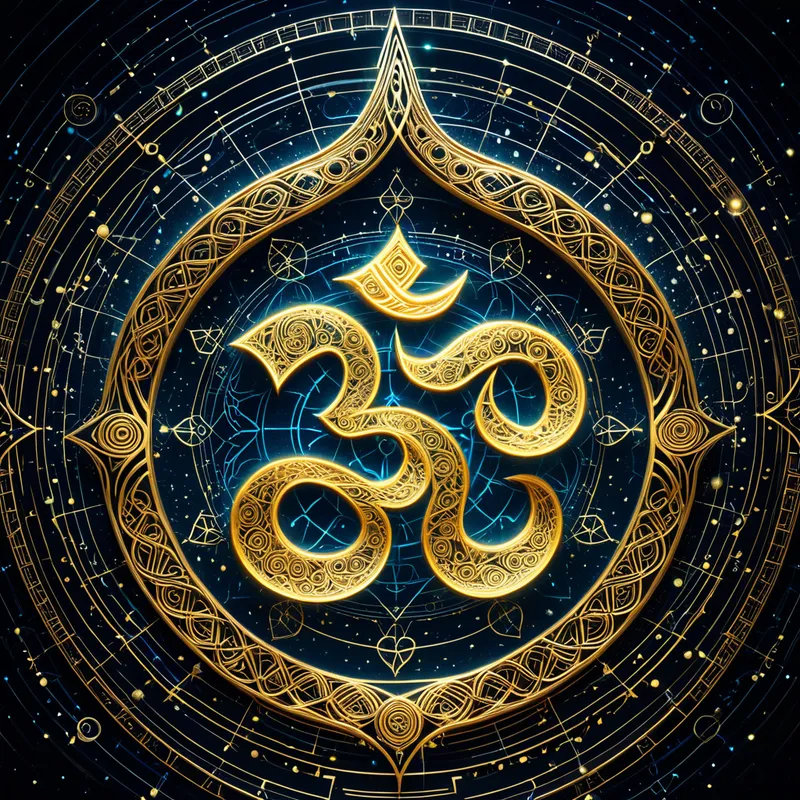
It was not a voice from outside, but a revelation from within the very fabric of their being. The primordial vibration, Aum, unfolded into rhythms and meters, into precise, potent syllables. The Vedas flowed into their consciousness—not as written text, but as Shruti, “that which is heard.” The Rig Veda sang of cosmic order and fiery devotion. The Sama Veda set the hymns to soaring melodies. The Yajur Veda provided the sacred formulae for ceremony, and the Atharva Veda whispered of the earthly and the mystical.
[The Rishis](/myths/the-rishis “Myth from Hindu culture.”/) became vessels, not authors. Their lips moved, and the hymns poured forth, a torrent of divine knowledge given form through human breath. They taught these hymns to their disciples in an unbroken chain of sound—a living, oral scripture passed from ear to heart, from heart to voice, for generations untold. The conflict was not of gods and demons, but of human fragility against the weight of eternity. The resolution was memory, discipline, and a sacred trust. The great sage [Vyasa](/myths/vyasa “Myth from Hindu culture.”/), seeing the coming age of confusion, was said to have organized this ocean of sound into the four bodies we know, entrusting them to his disciples to preserve. Thus, the song of creation found a home in the breath of humanity, a whispered secret from the heart of the cosmos to the heart of the seeker.
Cultural Origins & Context
The Vedas are the bedrock of the complex tapestry of traditions we now call Hinduism. Their origins are prehistoric, composed in an archaic form of Sanskrit between 1500 and 500 BCE, though their oral tradition is far older. They are considered apaurusheya, “not of human origin,” placing them outside of historical time. They were not “written” for over a millennium; their preservation was an act of supreme cultural and spiritual discipline.
This was the work of the Brahmins. They were not just priests but living libraries, human repositories of sound. Through elaborate mnemonic techniques—reciting texts forwards, backwards, in every grammatical permutation—they ensured not a syllable was lost. The Vedas were the source of Dharma, the blueprint for ritual (yajna), and the ultimate authority on the nature of reality (Brahman). Their societal function was total: they governed cosmology, law, medicine, poetry, and philosophy. To know the Veda was to know the structure of existence itself.
Symbolic Architecture
The myth of the [Vedas](/symbols/vedas “Symbol: Ancient Hindu scriptures representing divine knowledge, cosmic order, and ultimate spiritual truth.”/) is not about books, but about the genesis of conscious order from chaotic potential. It is a map of the [psyche](/myths/psyche “Myth from Greek culture.”/)‘s own [origin](/symbols/origin “Symbol: The starting point of a journey, often representing one’s roots, source, or initial state before transformation.”/).
The Veda is the archetypal blueprint, the Aum is the activating vibration, and the human sage is the receiving consciousness that completes the circuit of creation.
The Primordial [Vibration](/symbols/vibration “Symbol: A rhythmic oscillation or resonance, often representing energy, connection, or unseen forces. In dreams, it can signal awakening, disturbance, or spiritual communication.”/) (Aum) symbolizes the undifferentiated ground of being, the unified field from which all opposites emerge. It is the hum of pure potentiality. The Rishis represent the [pinnacle](/symbols/pinnacle “Symbol: The highest point or peak, representing achievement, culmination, or spiritual transcendence.”/) of [human](/symbols/human “Symbol: The symbol of a human represents individuality, complexity of emotions, and social relationships.”/) [consciousness](/symbols/consciousness “Symbol: Consciousness represents the state of awareness and perception, encompassing thoughts, feelings, and experiences.”/)—[the ego](/myths/the-ego “Myth from Jungian culture.”/) so quieted that it becomes a transparent [vessel](/symbols/vessel “Symbol: A container or structure that holds, transports, or protects something essential, representing the self, emotions, or life journey.”/) for [the Self](/myths/the-self “Myth from Jungian culture.”/). They do not “think up” the Vedas; they attune to them. The act of hearing (Shruti) symbolizes [revelation](/symbols/revelation “Symbol: A sudden, profound disclosure of truth or insight, often through artistic or musical means, that transforms understanding.”/), a [knowledge](/symbols/knowledge “Symbol: Knowledge symbolizes learning, understanding, and wisdom, embodying the acquisition of information and enlightenment.”/) that comes from the [depths](/symbols/depths “Symbol: Represents the subconscious, hidden emotions, or foundational aspects of the self, often linked to primal fears or profound truths.”/) of the unconscious, not the surface of the intellect.
The Four Vedas themselves are a symbolic [architecture](/symbols/architecture “Symbol: Architecture in dreams often signifies structure, stability, and the framing of personal identity or life’s journey.”/) of the [cosmos](/symbols/cosmos “Symbol: The entire universe as an ordered, harmonious system, often representing the totality of existence, spiritual connection, and the unknown.”/) and the psyche: The Rig is the light of consciousness and [awareness](/symbols/awareness “Symbol: Conscious perception of self, surroundings, or internal states. Often signifies awakening, insight, or heightened sensitivity.”/). The Sama is the emotional and aesthetic [dimension](/symbols/dimension “Symbol: Represents the fundamental structure of reality, consciousness, or existence beyond ordinary perception.”/)—the [melody](/symbols/melody “Symbol: A melody symbolizes emotion, memory, and communication, often representing the subconscious expressing itself through sound.”/) of the [soul](/symbols/soul “Symbol: The soul represents the essence of a person, encompassing their spirit, identity, and connection to the universe.”/). The Yajur is [the principle](/symbols/the-principle “Symbol: A fundamental truth, law, or doctrine that serves as a foundation for a system of belief, behavior, or reasoning, often representing moral or ethical standards.”/) of will and right [action](/symbols/action “Symbol: Action in dreams represents the drive for agency, motivation, and the ability to take control of situations in waking life.”/), the [ritual](/symbols/ritual “Symbol: Rituals signify structured, meaningful actions carried out regularly, reflecting cultural beliefs and emotional needs.”/) that structures [reality](/symbols/reality “Symbol: Reality signifies the state of existence and perception, often reflecting one’s understanding of truth and life experiences.”/). The Atharva represents the [shadow](/symbols/shadow “Symbol: The ‘shadow’ embodies the unconscious, repressed aspects of the self and often represents fears or hidden emotions.”/) and the practical—the raw, earthy, and magical powers of the unconscious. Together, they form a complete [system](/symbols/system “Symbol: A system represents structure, organization, and interrelated components functioning together, often reflecting personal or social order.”/) for navigating [reality](/symbols/reality “Symbol: Reality signifies the state of existence and perception, often reflecting one’s understanding of truth and life experiences.”/).
The Dreamer’s Resonance
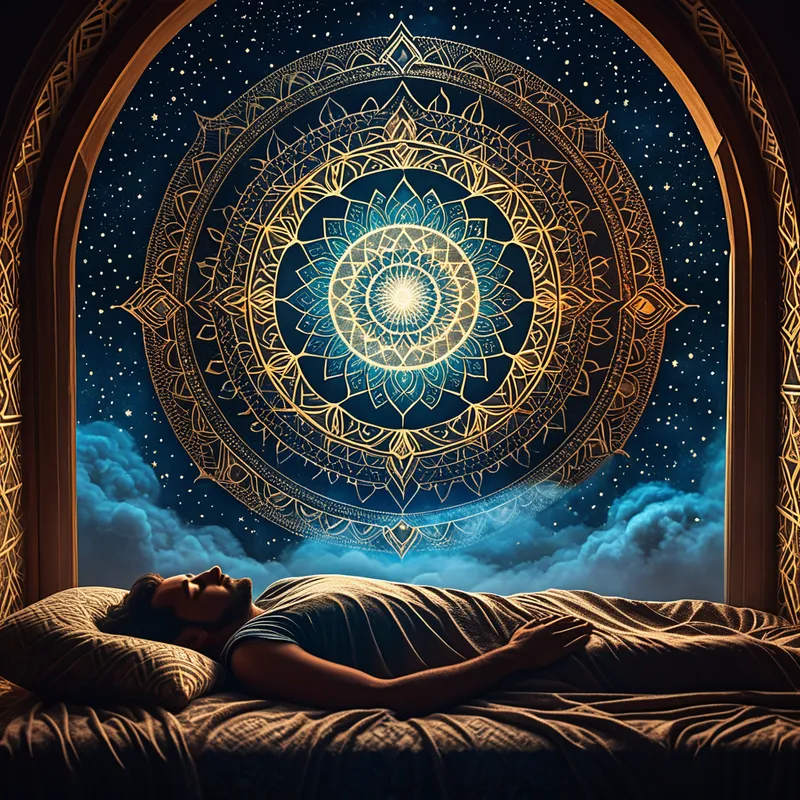
When this myth stirs in the modern dreamer, it often manifests as dreams of hearing a profound, unknown language or a beautiful, overwhelming music whose source is invisible. One might dream of finding an ancient, incomprehensible book that feels intensely personal, or of a teacher whispering secrets that are felt in the bones, not understood by the mind.
Somatically, this can coincide with a feeling of a “hum” in the chest or a pressure in the ears—the body sensing a vibration it cannot yet decode. Psychologically, this marks the beginning of a process of deep listening. The ego-centric chatter is subsiding, and content from the deeper, archetypal layers of the unconscious is seeking to make itself known. The dreamer is in the position of the Rishi: called to be still, to stop seeking externally, and to prepare to receive a revelation that will re-order their understanding of themselves. It is the psyche’s own Shruti moment.
Alchemical Translation
The individuation process modeled by the Vedic myth is one of attunement and articulation. Our modern condition is often one of psychic noise—a cacophony of personal complexes, cultural narratives, and digital static. The first alchemical step is the cultivation of the Rishi’s silence: meditation, introspection, the conscious withdrawal of projections. This is the creation of the inner Himalayan cave.
Individuation is not the writing of one’s own story from scratch, but the sacred task of correctly hearing and articulating the timeless myth that is already singing itself through you.
From this silence, the primordial pattern—one’s own unique Aum or essential nature—begins to resonate. This is the “revelation,” the intuitive knowing of one’s Svadharma. The alchemical work is then to “chant the Veda” of one’s own life: to give structured, beautiful, and effective form to that inner knowing. The Rig becomes our core philosophy and vision. The Sama becomes the emotional truth and artistry with which we live. The Yajur becomes the daily rituals, habits, and ethical actions that build our world. The Atharva involves integrating our shadow, our practical skills, and our connection to the raw, instinctual ground of being.
We become, like Vyasa, the compiler of our own existence. We take the raw, revealed truth of our deepest self and organize it into a coherent, livable scripture. We move from being a chaotic recipient of external stimuli to a conscious vessel and articulate expression of an inner, cosmic order. The myth teaches that wisdom is not constructed, but received; and life’s purpose is not invented, but faithfully and creatively pronounced.
Associated Symbols
Explore related symbols from the CaleaDream lexicon: