
The Universal Solvent Myth Meaning & Symbolism
The alchemist's quest for the agent that dissolves all matter, revealing the peril and promise of returning to the primal, formless state before rebirth.
The Tale of The Universal Solvent
In the deep, silent hours when [the world](/myths/the-world “Myth from Tarot culture.”/) is held between breaths, in a tower of stone older than kingdoms, the Alchemist worked. His was not a quest for common gold, but for the First Truth, the [Philosopher’s Stone](/myths/philosophers-stone “Myth from Alchemical culture.”/). Yet, a greater secret whispered in the flames of his athanor, a secret more terrible and beautiful than transmutation itself. It was the secret of the Universal Solvent, the Alkahest.
For years, he distilled the essences of the world. He captured the tears of [the moon](/myths/the-moon “Myth from Tarot culture.”/) in dew, the anger of the sun in salt, the sigh of [the earth](/myths/the-earth “Myth from Hindu culture.”/) in [vitriol](/myths/vitriol “Myth from Alchemical culture.”/). He combined them in vessels of glass and crystal, following the cryptic paths laid down in the Emerald Tablet. One night, under a black sky pierced by a single cold star, the final union occurred. In his crucible, a liquid not of this world coalesced. It was not a color, but the absence of color made luminous; not a substance, but the potential for all substance. It hummed with a silent music that vibrated in his bones.
Trembling, he took a single drop on the tip of a golden rod—the metal of kings, of permanence. He let it fall upon a slab of granite, the bones of the earth. There was no explosion, only a profound, silent yielding. The stone did not crack or shatter. It… unbecame. It softened, flowed like honey, then like mist, dissolving into a shimmering, ethereal vapor that held the ghost of its stony form before fading into nothing. [The Alchemist](/myths/the-alchemist “Myth from Various culture.”/) gasped, his heart a drum of terror and [triumph](/myths/triumph “Myth from Roman culture.”/). He held the power to reduce all creation to its primordial essence.
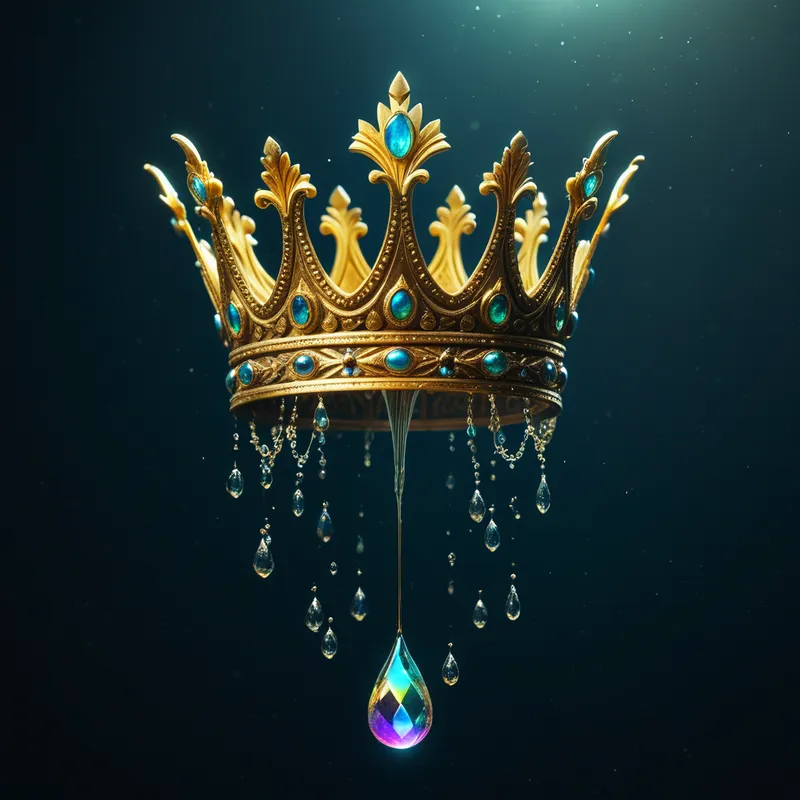
But the secret, he soon learned, was a two-edged sword. The Solvent demanded a vessel that could contain it, yet by its nature, it dissolved all vessels. Glass, clay, metal—all were as morning dew before the sun. In a moment of despair, he tried to contain it in a crucible carved from a single, flawless diamond. The diamond, the emblem of invincibility, held for a moment, glowing with an inner fire, before it too began to soften, its perfect facets flowing into a liquid prism of light before vanishing. The Solvent would be held by nothing of the manifest world.
The Alchemist was faced with the ultimate paradox. He possessed the key to all dissolution, the power to return matter to its first dream, but in doing so, he would lose the key itself. The myth ends not with a bang, but with a haunting, open-eyed revelation. The ancient texts whisper that the true vessel for the Alkahest is not of stone or metal, but of spirit. The final instruction is not a formula, but a koan: To hold the power that dissolves all things, you must become [the vessel](/myths/the-vessel “Myth from Alchemical culture.”/) that cannot be dissolved.
Cultural Origins & Context
The myth of the Universal Solvent, or Alkahest, is not a folktale with a single origin, but a core theoretical and spiritual conceit that permeated Western alchemical tradition from the late Middle Ages through the Renaissance. It is primarily found in the dense, allegorical writings of figures like Paracelsus and the later followers of his school. Unlike popular myths, it was not told around fires but pondered in cloistered laboratories and encoded in cryptic manuscripts.
Its societal function was multifaceted. On a practical level, it represented the alchemist’s ultimate challenge: discovering or creating the perfect agent of purification and decomposition, a necessary step in the [Nigredo](/myths/nigredo “Myth from Alchemical culture.”/) stage of [the Great Work](/myths/the-great-work “Myth from Alchemical culture.”/). On a spiritual level, it served as a profound warning and teaching story for initiates. It was passed down as a riddle, a test of [the adept](/myths/the-adept “Myth from Alchemical culture.”/)‘s understanding. To seek the Solvent blindly was folly, even suicide. To understand its true nature was to advance from a mere technician of matter to a philosopher of the soul. The myth enforced the principle that the ultimate secrets of transformation could not be grasped by the literal mind or contained by physical means alone.
Symbolic Architecture
Psychologically, the Universal Solvent represents the raw, unmediated power of the unconscious to dissolve the rigid structures of the conscious ego.
The Solvent is the psyche’s own acid truth, capable of reducing the most cherished identities and certainties to their elemental state.
The Alchemist symbolizes the conscious ego on its [quest](/symbols/quest “Symbol: A quest symbolizes a journey or search for purpose, fulfillment, or knowledge, often representing life’s challenges and adventures.”/) for wholeness (the [Stone](/symbols/stone “Symbol: In dreams, a stone often symbolizes strength, stability, and permanence, but it may also represent emotional burdens or obstacles that need to be acknowledged and processed.”/)). His [laboratory](/symbols/laboratory “Symbol: A controlled environment for experimentation, discovery, and analysis, representing the pursuit of knowledge through methodical processes.”/) is the disciplined [arena](/symbols/arena “Symbol: An arena symbolizes a space for competition, public scrutiny, or performing under pressure.”/) of the conscious mind, where he attempts to control and direct the transformative process. The Solvent, once created, is the autonomous, eruptive power of the [Shadow](/symbols/shadow “Symbol: The ‘shadow’ embodies the unconscious, repressed aspects of the self and often represents fears or hidden emotions.”/) and the deeper Self. It does not discriminate; it dissolves [granite](/symbols/granite “Symbol: Granite represents permanence, strength, and unyielding foundations. It symbolizes enduring structures and emotional solidity.”/) (hardened [trauma](/symbols/trauma “Symbol: A deeply distressing or disturbing experience that overwhelms the psyche, often manifesting in dreams as unresolved emotional wounds or psychological injury.”/), unyielding dogma) and gold (cherished achievements, polished [persona](/symbols/persona “Symbol: The social mask or outward identity one presents to the world, often concealing the true self.”/)) with equal ease.
The futile search for a physical [vessel](/symbols/vessel “Symbol: A container or structure that holds, transports, or protects something essential, representing the self, emotions, or life journey.”/) is [the ego](/myths/the-ego “Myth from Jungian culture.”/)‘s desperate attempt to integrate this overwhelming power into its existing [framework](/symbols/framework “Symbol: Represents the underlying structure of one’s identity, emotions, or life. It signifies the mental or emotional scaffolding that supports or confines the self.”/) without itself being changed. The [diamond](/symbols/diamond “Symbol: Diamonds symbolize purity, strength, and unyielding love, often representing wealth and high status.”/) [crucible](/symbols/crucible “Symbol: A vessel for intense transformation through heat and pressure, symbolizing spiritual purification, testing, and alchemical change.”/) represents [the ego](/myths/the-ego “Myth from Jungian culture.”/)‘s final, most refined [defense](/symbols/defense “Symbol: A protective mechanism or barrier against perceived threats, representing boundaries, security, and resistance to external or internal challenges.”/): perfect rationality or spiritual pride. Its [dissolution](/symbols/dissolution “Symbol: The process of breaking down, dispersing, or losing form, often representing transformation, release, or the end of a state of being.”/) is the inevitable failure of any conscious [structure](/symbols/structure “Symbol: Structure in dreams often symbolizes stability, organization, and the framework of one’s life, reflecting how one perceives their environment and personal life.”/) to contain the numinous. The myth’s [resolution](/symbols/resolution “Symbol: In arts and music, resolution refers to the movement from dissonance to consonance, creating a sense of completion, release, or finality in a composition.”/) points away from containment and toward identification. The true [vessel](/symbols/vessel “Symbol: A container or structure that holds, transports, or protects something essential, representing the self, emotions, or life journey.”/) is not something one has, but something one becomes.
The Dreamer’s Resonance
When this myth activates in the modern dreamscape, it often manifests as dreams of profound dissolution. A dreamer may find their house (a symbol of [the self](/myths/the-self “Myth from Jungian culture.”/)) melting, or their familiar city streets turning to liquid. Technology may fail, gears and screens dissolving into smoke. These are not necessarily nightmares, though they can be terrifying. They signal a deep psychological process where outmoded complexes, rigid self-concepts, and crystallized patterns are being broken down by the unconscious.
The somatic experience upon waking may be one of disorientation, groundlessness, or a strange, weightless fatigue—the feeling of the psychic “container” having been stretched or compromised. This is the Nigredo in vivo. The dreamer is not being attacked; they are being prepared. The Solvent-dream works to liquefy the psychic matter that has become stagnant, making it available for the next stage of reconstitution. It asks the dreamer to surrender the illusion of solidity and confront the formless, fertile chaos from which new life is forged.

Alchemical Translation
For the modern individual, the journey of the Alchemist models the critical, often feared, phase of psychic deconstruction necessary for true individuation. Our “laboratory” is our daily life; our “experiments” are our relationships, careers, and self-work. We inevitably concoct our own Solvent—a midlife crisis, a devastating loss, a breakthrough in therapy, a spiritual awakening—that threatens to dissolve the very identity we’ve spent a lifetime building.
Individuation requires not just building a stronger self, but having the courage to let the provisional self be dissolved.
The temptation is to panic and seek a new, better “vessel”—a new ideology, a new identity, a new rigid set of rules—to contain the upheaval. This is the new diamond crucible. The alchemical translation of the myth instructs us otherwise. The work is to stop seeking containment and instead cultivate the qualities of the true vessel: non-attachment, psychological flexibility, and ego permeability. One must learn to be the process, not just its director.
This means allowing old grievances to lose their solid form, letting cherished self-narratives soften into mere stories, and experiencing emotions not as permanent states but as passing weather in the soul’s atmosphere. The triumph is not in finding a Solvent-proof identity, but in developing a consciousness that can flow with the Solvent’s action, that can endure the return to the primal, creative chaos (Materia Prima) without fragmenting. In the end, the myth teaches that the Universal Solvent and [the Philosopher’s Stone](/myths/the-philosophers-stone “Myth from Alchemical culture.”/) are two aspects of the same mystery: the power that dissolves all separation is the very ground from which the gold of an integrated Self can coalesce.
Associated Symbols
Explore related symbols from the CaleaDream lexicon: