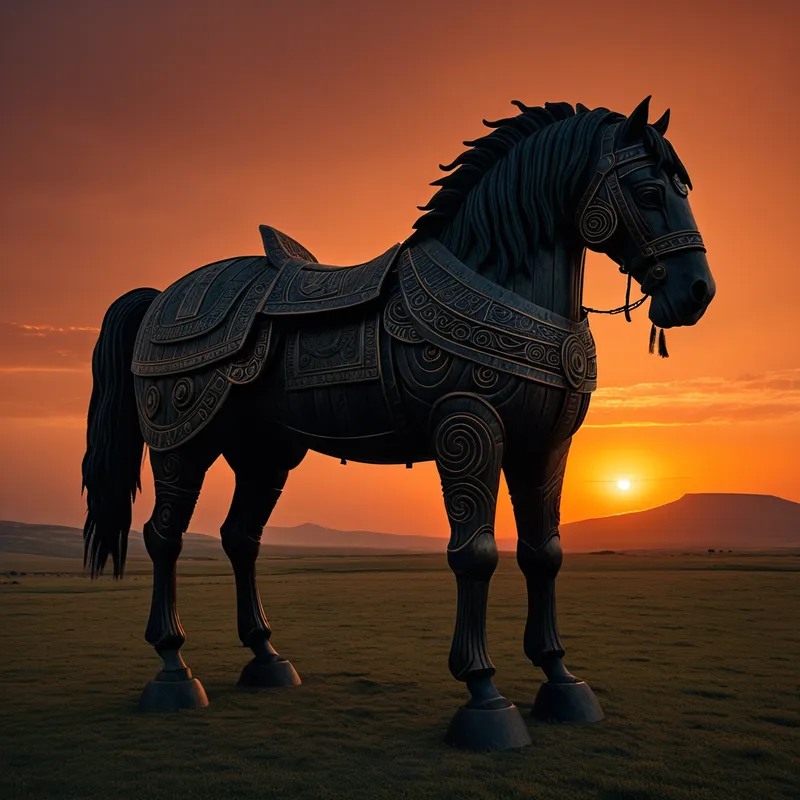
The Trojan Horse Myth Meaning & Symbolism
The Greeks' wooden ruse that breached Troy's walls, ending a decade of war through cunning, not force, revealing the enemy within.
The Tale of The Trojan Horse
The air over the Scamander plain was thick with the ghosts of ten years. Ten years of bronze clashing on shield, of heroes’ cries swallowed by dust, of a city’s gates standing firm against the sea-born rage of Achaeans. The great walls of Troy, built by the hands of gods, were unbreached. But the spirit of war was weary. It hung like a pall over the Greek camp, where men dreamed not of glory, but of home.
Then, into that despair, the goddess Athena breathed a thought into the cunning mind of Odysseus. It was a thought of wood, not iron; of silence, not clamor; of a gift, not an assault. The word spread through the camp like a secret fire. The greatest warriors—Achilles was ash, but his son Neoptolemus stood in his place, along with Menelaus and the wily Agamemnon—were summoned not to the field, but to the shipwright.
For days, the sound was not of battle but of adze and saw. From the pines of Mount Ida, a hollow beast took shape. It rose, vast and silent, a creature of crafted pine, its flanks smooth, its mane a cascade of carved flax, its eyes painted to see nothing. Into its dark, resin-scented belly, they crept—the chosen, the desperate, the final hope. Their breath was the only sound in the cavernous womb of the horse. The ladder was drawn up. The hatch sealed. They were entombed in their own ruse.
On the shore, the Greeks made a great show of despair. They burned their camps, launched their ships, and let the wind carry them behind the veil of the nearby island of Tenedos. To the watchers on Troy’s towers, it seemed the sea had taken its due. A strange, hollow victory echoed through the streets. Then, they saw it. Left alone on the scarred plain: the horse. A titanic offering to Athena, or so said the lone Greek left behind, Sinon, his tale a masterpiece of forged tears. He spoke of an oracle, of atonement, of a gift too large to bring inside their walls, for if they did, Cassandra raved, Troy would never fall.
But who listens to a prophetess cursed to be always right, yet never believed? The people’s voice was a rising tide. The horse was a prize, a testament to their endurance. With ropes and rollers and triumphant shouts, they breached their own inviolable wall. They dragged the divine trickery into the heart of their city. That night, Troy feasted. Wine flowed like the Scamander, music drowned out the faint, metallic shift from inside the horse’s belly, and the gods turned their faces away.
In the deepest hour, when the stars were cold witnesses, the hatch opened. Shadows, armed and lethal, spilled down ropes into the silent, drunken streets. They killed the guards. They threw open the great Scaean Gates. And from the dark sea, the Greek fleet returned, a black wave upon the shore. Fire, the old ally of sacked cities, was lit. What ten years of frontal assault could not achieve, one night of invited deception accomplished. The proud towers of Ilium burned, and with them fell a world.
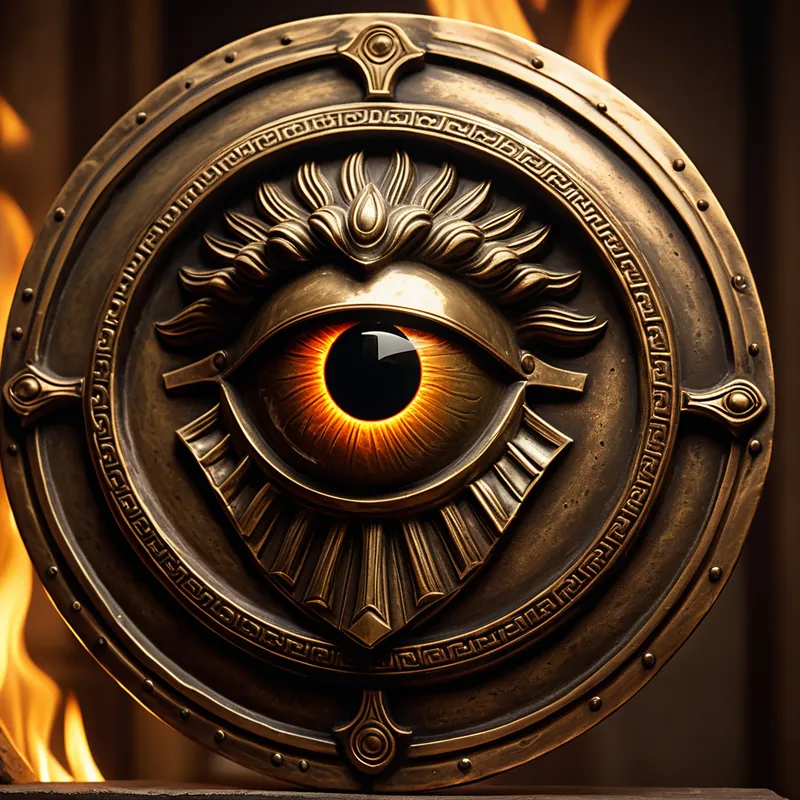
Cultural Origins & Context
This tale is the devastating climax of the Epic Cycle, most famously preserved in The Iliad’s sequel, The Odyssey, and in Virgil’s Aeneid. It was not mere entertainment. For the ancient Greeks, it was a foundational narrative of identity, a story told by bards and rhapsodes that explored the terrifying duality of human excellence: metis (cunning intelligence) and bie (physical force). While Achilles embodied the latter, Odysseus was the master of the former.
The myth functioned as a cultural cautionary tale about hubris and the fragility of civilization. Troy’s fall was not just a military defeat; it was a cosmological event, the destruction of a great city that served as a mirror to the Greeks’ own poleis. It asked profound questions: Can a civilization be destroyed from within? Is the most dangerous enemy the one you cannot see, or the one you willingly welcome? Passed down through generations, it cemented the idea that victory often belongs not to the strongest, but to the most strategically ingenious—a core tenet of Greek political and military thought.
Symbolic Architecture
The Horse is the ultimate symbol of the Shadow made manifest. It represents the content the conscious mind refuses to acknowledge, yet which possesses immense, transformative power.
The gift that destroys is the truth we refuse to see, dressed in the finery we desperately desire.
Externally, it is magnificent, an object of awe and desire—a “gift.” Internally, it is hollow, a vessel containing the repressed, the hostile, the annihilating force. The Trojans’ fatal act was not facing an army, but internalizing it. They brought the symbol of their enemy within their sacred boundaries, violating their own psychic integrity. The walls of Troy symbolize the conscious ego’s defenses, its identity, its sense of being impregnable. The Horse is the Trojan flaw—their pride, their desire for a triumphant symbol, their dismissal of the prophetic Cassandra—made concrete and wheeled through the front gate.
The myth maps the archetypal pattern of the enantiodromia—the emergence of the unconscious opposite. After a decade of stalemate (a state of psychic stagnation), the conscious, forceful approach (the Greek army) must recede into the unconscious (Tenedos), allowing the latent, cunning solution (Odysseus’s metis) to emerge in symbolic form. The victory is achieved not by overcoming the outer obstacle, but by allowing the inner, transformative—and destructive—symbol to be integrated in the most literal, catastrophic way.
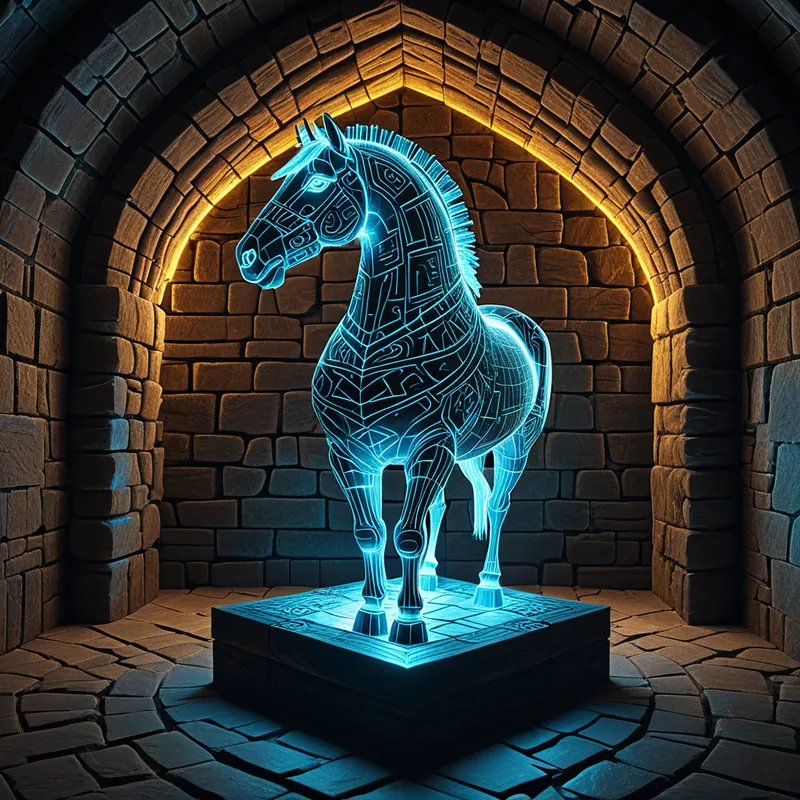
The Dreamer’s Resonance
To dream of a Trojan Horse is to dream of a profound psychic intrusion. The dreamer may encounter a seemingly benign or even wonderful object—a new house, a gift, a relationship, a job offer—that, upon closer inspection or as the dream unfolds, reveals a hidden, threatening interior. There is a somatic sense of dread, of something being “off,” coupled with a conscious urge in the dream to ignore the warning.
This dream pattern signals that the dreamer’s psyche is processing a major act of self-deception or a looming integration of shadow material. The “city walls” are the dreamer’s current identity structure, which feels secure. The “horse” is a complex from the unconscious, often related to an ambition, a desire, or a fear, that has been made acceptable (gift-wrapped) to the ego. The dream is a catastrophic enactment of what happens when we uncritically accept a packaged solution to a deep conflict, when we ignore our inner Cassandra. The ensuing “sack of the city” in the dream mirrors the psychological upheaval that occurs when repressed forces are suddenly, violently unleashed, rather than consciously and gradually integrated.
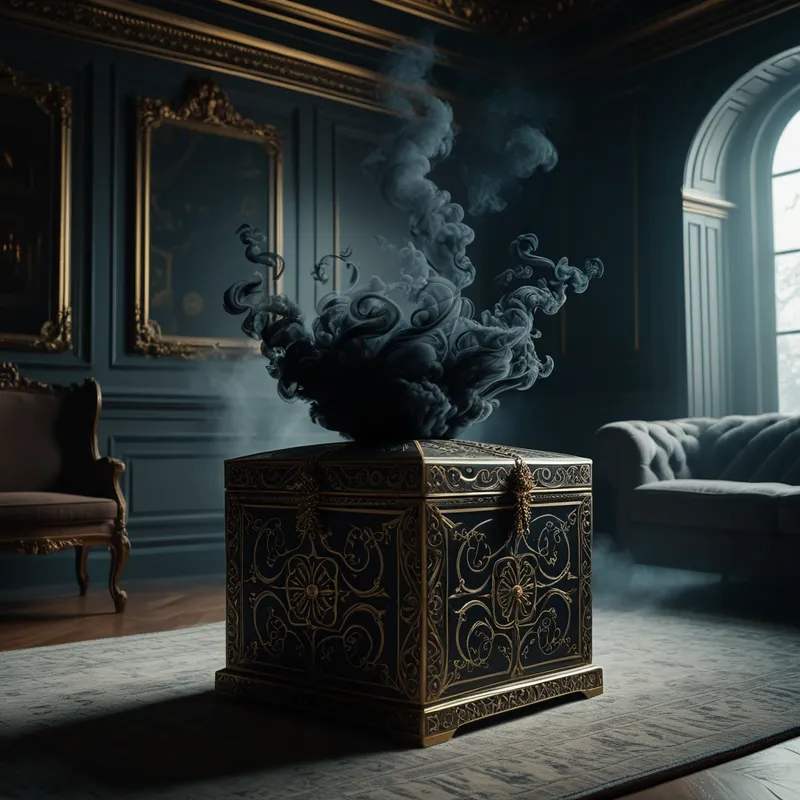
Alchemical Translation
For the modern individual, the myth does not advocate for literal deception, but illustrates the perilous and necessary process of confronting the contents of one’s own unconscious. The alchemical operation at work is solve et coagula—dissolve and coagulate. The old, rigid structure of Troy (the outworn attitude, the inflated ego) must be dissolved by the fiery embrace of the shadow (the Greek warriors) before a new consciousness can be formed.
Individuation requires the sacking of the personal Troy. We must become both the cunning Greek who devises the symbol and the Trojan who must face the consequences of letting it in.
The first step is the “construction of the Horse”: the conscious ego (Odysseus), in collaboration with the transcendent function (Athena), must give form to the formless conflict. This is the act of making the unconscious content visible, often through creative expression, active imagination, or deep reflection—crafting the “symbol” of one’s stalemate.
The critical, transformative phase is the “dragging inside.” This is the act of conscious integration. It is not passive acceptance, but a courageous, deliberate act of bringing the symbol across the threshold of awareness to be examined at the heart of one’s being. In the myth, this is done naively and leads to destruction. In the individuation process, it is done with conscious vigilance, leading to rebirth. The ensuing inner conflict (the night of slaughter) is the painful but necessary disintegration of old complexes and defenses. From those ashes, like Aeneas carrying his household gods, the core of a more authentic, resilient self can emerge, having faced the enemy that was, all along, a hidden part of itself.
Associated Symbols
Explore related symbols from the CaleaDream lexicon: