The Tower of Babel Myth Meaning & Symbolism
A unified humanity builds a tower to reach heaven, provoking divine wrath that scatters them and confounds their single language into a multitude.
The Tale of The Tower of Babel
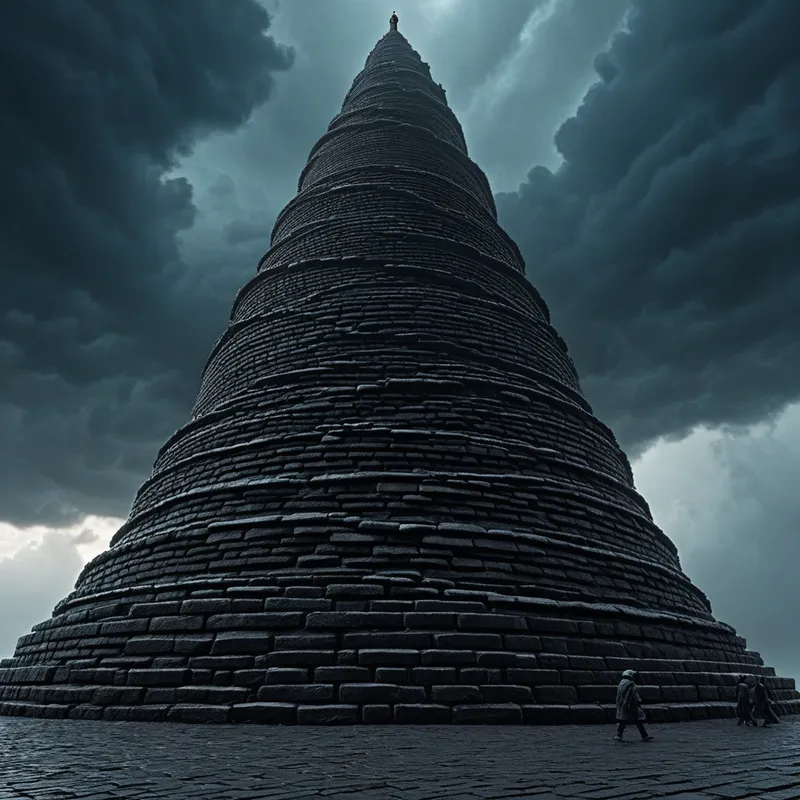
In the beginning, after the great waters had receded, the whole earth was of one language and one speech. And the children of men, migrating from the east, found a plain in the land of Shinar, and they settled there. The soil was rich, the sky was vast, and a singular thought grew in their collective heart—a thought as hard and ambitious as fired clay.
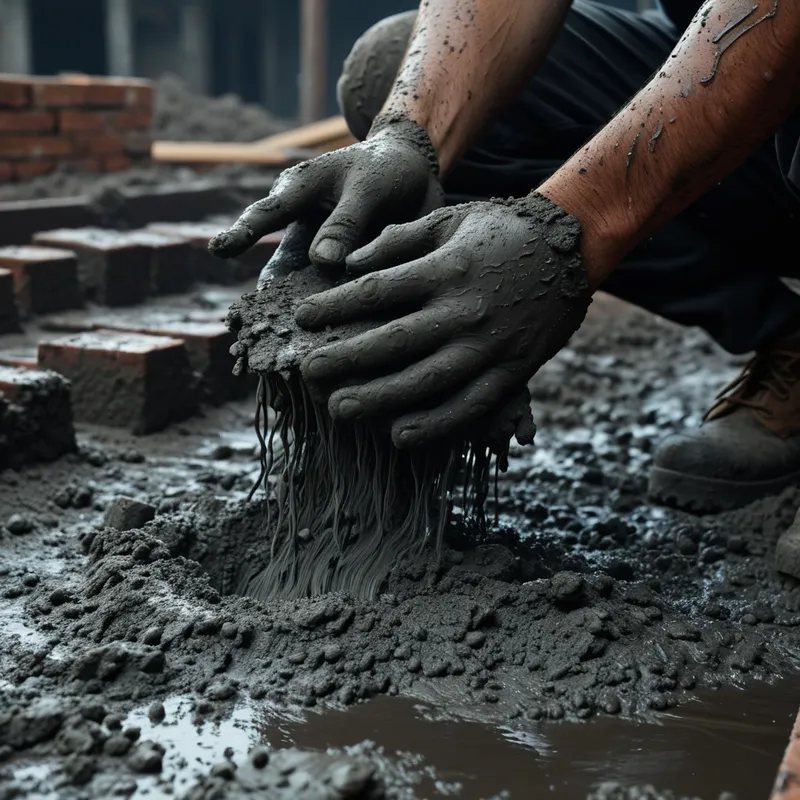
“Come,” they said to one another, their voices a single, harmonious stream. “Let us make bricks, and burn them thoroughly.” And they did. Brick became stone for them, and bitumen became mortar. The ambition solidified. “Let us build ourselves a city,” they declared, their eyes turned not to the horizon, but upward, “and a tower whose top may reach unto heaven. Let us make a name for ourselves, lest we be scattered abroad upon the face of the whole earth.”
The work began. A great hum rose from the plain of Shinar—not the hum of bees, but of humanity unified in purpose. Kilns glowed day and night, baking the mud of the earth into perfect, rectangular blocks. The scent of hot clay and pungent tar filled the air. A foundation was laid, vast and deep. Then the first course of bricks, then the second, then the tenth. The tower began to rise, a monstrous, spiraling ziggurat clawing at the firmament. It was a mountain of their own making, a ladder of ambition. Workers passed bricks hand over hand in endless chains. Architects pointed and planned, their shared language making the complex design as clear as a single mind’s thought. The city grew around its base, but the tower was its soul, its defiant heart.
Higher it climbed. The people on the ground grew small. The winds grew stronger, whistling through the scaffold. They could see the curve of the world. They felt the dizzying thrill of their own power. “We will reach it,” they whispered, then shouted. “We will touch the vault of heaven itself.”
But the Lord came down to see the city and the tower which the children of men had built. And the Lord did not see ingenuity, but insolence. He did not see unity, but a challenge born of fear—the fear of being nothing, of being scattered. The singular voice of humanity, once a song, now sounded to Him like the grinding of a machine against the order of creation.
And the Lord said, “Behold, the people are one, and they have all one language; and this they begin to do: and now nothing will be restrained from them, which they have imagined to do.” It was not a statement of pride, but of divine calculus. The unity itself had become the danger.
Therefore, He confounded their language, that they might not understand one another’s speech. It was not a clap of thunder, but a subtle, terrifying corruption of meaning. A foreman shouted an order, and to the mason, it sounded like the chirping of birds. A wife called to her husband, and he heard only the babble of a stream. The perfect, invisible network of shared understanding shattered into a thousand jagged pieces. Confusion, thick and palpable, descended upon the plain. The harmonious hum fractured into a cacophony of panic, anger, and desperate, misunderstood pleas. The brick dropped from the hand. The blueprint became meaningless scribbles. The great work ceased.
And the Lord scattered them abroad from thence upon the face of all the earth. They left the city unfinished, the tower a gutted spine against the sky. And they called the name of it Babel, because there the Lord did confound the language of all the earth.
Cultural Origins & Context
The myth is preserved in the Book of Genesis (11:1-9), a foundational text of the Abrahamic traditions. Its setting in Shinar firmly plants it in ancient Mesopotamia, the cradle of urbanization and monumental architecture, where ziggurats like the famed Etemenanki of Babylon were literal bridges between earth and heaven, homes for the gods. The story functions as an etiological myth, explaining the profound human reality of linguistic and cultural diversity. For a nomadic or early agrarian people encountering other tribes with foreign tongues, the question “Why do we not understand them?” demanded a sacred story. The Tower of Babel provides that answer, framing diversity not as a natural evolution, but as a divine consequence. It served as a cautionary tale within the Israelite worldview, warning against the pride of imperial city-states (like Babylon, its clear historical referent) and reaffirming that human boundaries are ultimately set by a sovereign God. It was passed down orally long before being codified, a story told around fires to explain the brokenness and wonder of the human world.
Symbolic Architecture
The Tower is the ultimate symbol of hubris, but to label it merely as such is to miss its deeper architecture. It represents the ego’s inflation, the psyche’s attempt to build a monolithic structure of identity, control, and meaning that reaches the realm of the gods (the Self). It is the desire for total understanding, total unity, and total control—a psychic imperialism.
The Tower is not built to honor the divine, but to replace it. It is the ego declaring itself the architect of heaven.
The single language symbolizes a state of unconscious identification. There is no dialogue, only unison; no individuality, only the collective will. This is not true unity, but a uniformity that precedes the necessary fall into the complexity of consciousness. The “confusion of tongues” is, paradoxically, the birth of true consciousness. It is the divine (or the Self) enforcing a necessary fragmentation. The scattering is not merely a punishment, but the beginning of individuation—the forced departure from the safe, homogeneous plain into the diverse and challenging wider world. The myth tells us that before we can find genuine connection, we must first experience the alienation of being misunderstood.

The Dreamer’s Resonance
When this myth stirs in the modern dreamscape, it often manifests as dreams of profound communication breakdown. You are giving a vital presentation, and your words come out as gibberish. You scream a warning to a loved one, but no sound emerges. You are in a familiar city where all the street signs are in an alien script. These are somatic experiences of the Babel moment.
Psychologically, the dreamer is at a point where a previously cohesive structure in their life—a career path, a relationship, a self-image—has been built on a foundation of false unity or unexamined assumptions. The “divine intervention” is the unconscious, acting to dismantle this tower. The confusion and frustration in the dream mirror the psyche’s painful but necessary demolition of an outdated ego-construction. The dream is an experience of the Self enforcing a healthier, more complex order by first introducing the chaos of multiplicity. It asks: What tower are you building that needs to fall? What single story are you telling yourself that must break into competing, confusing narratives to allow for real growth?
Alchemical Translation
The alchemical process mirrored here is the Nigredo, the blackening, the necessary dissolution of a prima materia that is too rigid, too perfect in its simplistic unity. The conscious ego, in its inflation, has created a prima materia of pure ambition and control (the bricks of will, the mortar of dogma). The work of individuation requires this tower to be deconstructed.
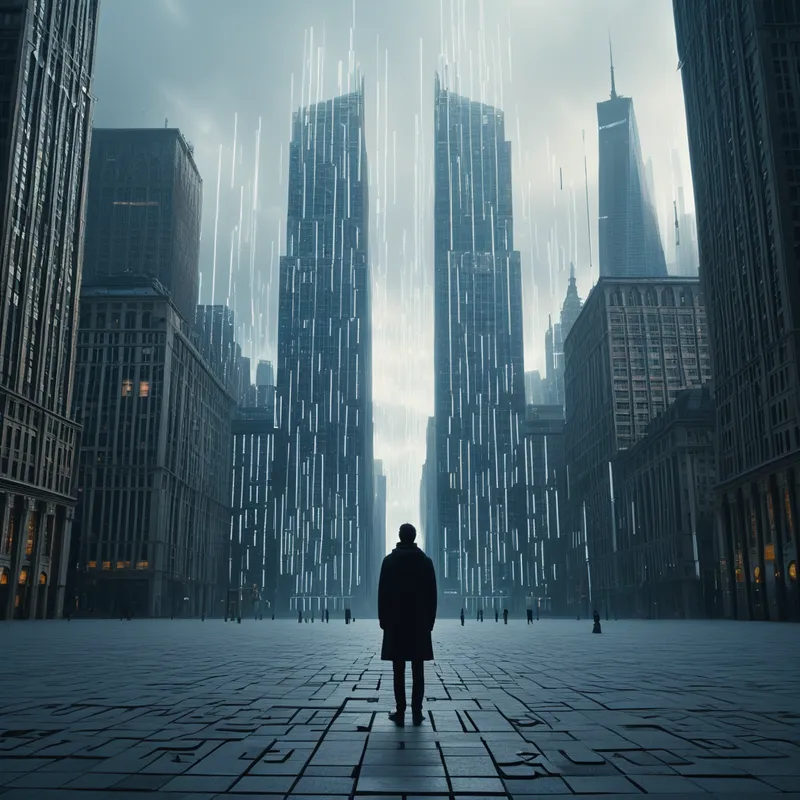
The goal is not to rebuild the Tower with a better blueprint, but to learn to live meaningfully in the scattered, polyglot city of the soul.
The “confusion of tongues” is the solve (dissolution) of the old, monolithic identity. The “scattering” is the beginning of the coagula (re-coagulation), but now on a higher level. The modern individual’s alchemical task is not to recover a lost, mythical single language, but to become a translator. One must learn to listen to the many voices within—the inner critic, the wounded child, the ambitious builder, the fearful wanderer—and mediate between them. One must build bridges of understanding between the disparate parts of the self, not a single tower to dominate them all. The triumph is not in reaching a heaven of pure unity, but in finding coherence and compassion amidst the beautiful, bewildering diversity of one’s own being and the world. The myth, in its ending, is not a tragedy of failure, but the first, painful page in the much longer story of becoming human.
Associated Symbols
Explore related symbols from the CaleaDream lexicon:
- Bigger
- Tower
- Concrete
- Structure
- Language
- Height
- Cement
- Separate
- Rooftop
- Congregation
- Product
- Urban Rooftop
- Dreamlike City
- Crumbling Sports Arena
- Galileo’s Telescope
- Civilization Model
- Abstract Sculpture
- Modernist Architecture
- Shattered Typo
- Dystopian Drone
- Castle Turret
- City Clock Tower
- Ruins of Power
- Lopsided House
- Tiled Mosaic
- Windbreak Structure
- Sun-Baked Brick
- Digital Divide
- Digital Surveillance
- Cache Overflow
- Surveillance Capitalism
- Tech Anxiety
- Maxwell’s Demon
- Citizenship
- The Asylum
- Political Allegiance
- Dictionary
- Hud
- Division
- Conformity