The Three Wise Men Myth Meaning & Symbolism
Three royal astrologers follow a celestial omen across deserts to honor a divine child, offering gifts that symbolize a cosmic realignment of power and wisdom.
The Tale of The Three Wise Men
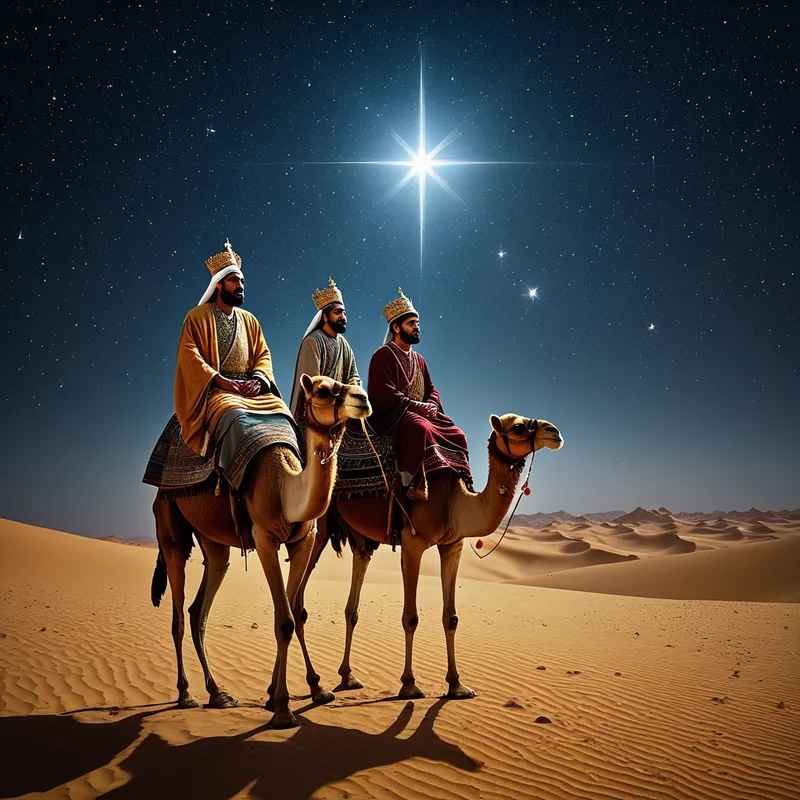
Listen. In the time when empires were old and the sky was a scripture written in fire, a sign was born in the east. Not a whisper, but a declaration. A star that was not a star, but a wound in the fabric of night, a brilliant and silent herald. It was seen by those who knew how to look—men who dwelled in the spaces between earth and heaven, who read the destinies of kings in the drift of planets. They were the Magi, lords of secret arts, advisors to thrones. And this light spoke a single, undeniable word: King.
It called them from their libraries of clay and vellum, from their towers of observation. They left the certainty of walls for the uncertainty of the desert, a pilgrimage of sand and thirst. Their journey was not measured in miles, but in the slow erosion of their old knowing. They followed a fixed point in a moving sky, a paradox that pulled them westward, through kingdoms and across the Euphrates, into the domain of a petty, frightened tyrant named Herod. In his marble halls, shadowed by paranoia, they asked their dangerous question: “Where is the child born king of the Jews? We have seen his star and have come to worship.”
The court scribes, fingers tracing brittle scrolls, gave them an answer from the prophet Micah: Bethlehem. A place of bread, a place of obscurity. Herod’s smile was a thin, cold line. “Go and search diligently,” he said, his voice honeyed with venom. “And when you find him, bring me word, that I too may come and worship him.” The lie hung in the air, a miasma they carried with them back into the night.
And then, the star returned. Not as a distant guide, but as a companion. It moved. It descended. It stopped, a lantern held over a specific, humble roof in the little town. The grandeur of their journey—the camels, the retinue, the treasures—collapsed into this single, silent moment. They entered not a palace, but a house; they found not a prince on a dais, but a child in his mother’s arms. All their complex calculations, their royal protocols, fell away. In the presence of this unadorned mystery, they did the only thing that remained: they fell to their knees and worshipped.
Then they opened their treasures. Not for Herod, not for show, but as an act of pure, symbolic surrender. Gold, for a king without a throne. Frankincense, for a god who breathed the air of a stable. Myrrh, for a mortal who would conquer by dying. These were not mere gifts; they were diagnoses, prophecies laid at small, bare feet. Their quest was complete, its meaning both fulfilled and deepened beyond all telling.
And in a dream, a warning came. A voice in the deep sleep that bypassed the logic of kings and roads. “Do not return to Herod.” So they departed, not by the road of power and report, but by another way—a secret path back into their own lands, forever changed, carrying not proof, but a mystery sealed within their spirits.
Cultural Origins & Context
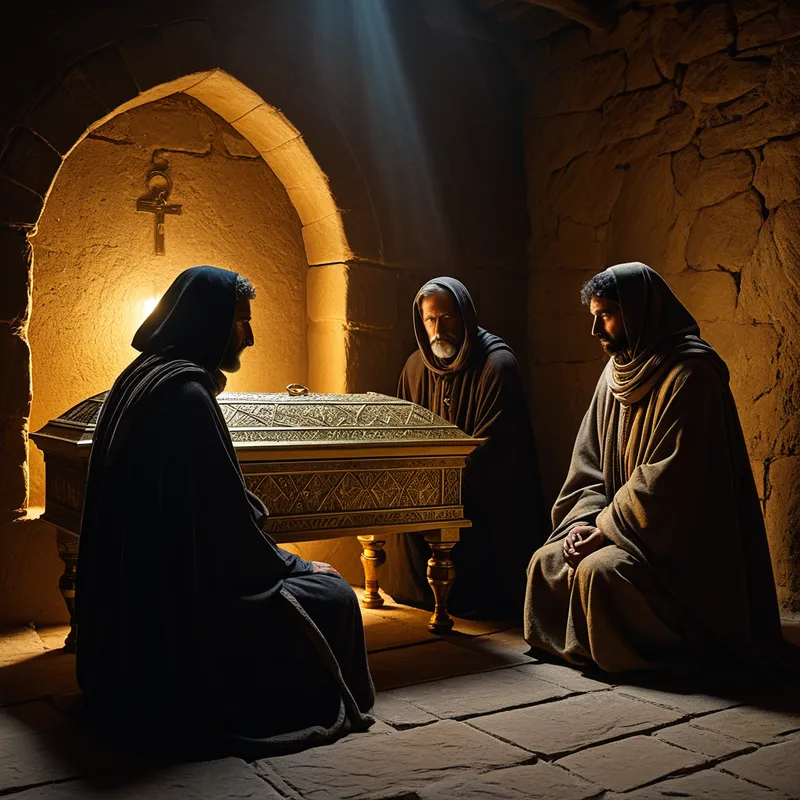
The story of the Magi appears only in the Gospel of Matthew, a text deeply concerned with portraying Jesus as the fulfillment of Jewish prophecy for a global audience. The Magi are not Jewish; they are gentile sages from “the east,” likely Persia or Babylon, regions famed for advanced astronomy and astrology. Their inclusion is a radical narrative stroke: the first to recognize and honor the Jewish Messiah are foreign priests of a different wisdom tradition.
Historically, the tale functions on multiple levels. For early Christian communities, it established Jesus’s cosmic kingship from birth, attested to by the heavens themselves and acknowledged by the Gentile world. It also served as a potent polemic, contrasting the true, worshipful wisdom of the foreigners with the murderous, politically cunning “wisdom” of Herod and the uninquisitive religious establishment in Jerusalem. The story was passed down orally and textually as a key part of the Nativity liturgy, evolving from simple magoi to the regal “Three Kings” of later tradition, with their names—Melchior, Caspar, Balthazar—and symbolic ages crystallizing in medieval thought to represent the known continents and ages of man.
Symbolic Architecture
At its heart, this is not a story about kings visiting a baby. It is an archetypal map of the journey of consciousness from one state of knowing to another.
The Magi represent the pinnacle of acquired, intellectual wisdom. They are masters of the external cosmos, readers of signs. Their initial “knowing” is stellar, abstract, and distant. The star is the call of the Self—the central, organizing principle of the psyche—which disrupts the comfortable, sophisticated ego-consciousness of the sage. It compels a descent from the head (the observatory) into the body (the arduous desert journey).
The true quest begins not with an answer, but with a disruption of all current answers.
Their confrontation with Herod is a critical encounter with the worldly ego and its shadow. Herod is the ruler who must control all narratives, for whom a rival king is not a mystery to behold but a threat to eliminate. He represents the psyche’s defensive structures that seek to co-opt or destroy emerging consciousness for the sake of self-preservation. The Magi’s audience with him is the necessary risk: the old, controlling consciousness must be acknowledged and navigated before it can be bypassed.
The gifts are the core symbolic language. Gold is the offering of one’s highest worldly value, one’s conscious achievement and authority, to a new, nascent center. Frankincense represents the spirit—prayer, aspiration, the connection to the transcendent. Myrrh is the most profound: it is the acknowledgment of mortality, suffering, and the necessity of death for transformation. Together, they signify the total surrender of the ego’s wealth (gold), the soul’s devotion (frankincense), and the body’s fate (myrrh) to the guiding Self.
Finally, the “other way” home is the ultimate symbol of transformation. The seeker cannot return to the old consciousness (Herod) by the old path. Integration of a profound experience necessitates a new psychic route, a reconfiguration of one’s inner landscape.
The Dreamer’s Resonance
When this myth stirs in the modern dreamer, it signals a profound reorientation. To dream of following a singular, compelling light—a beacon, a phone screen, a unique streetlamp—suggests the psyche has issued a call toward a new, centralizing value or truth. The dreamer is in the “desert” phase: a feeling of being between identities, where old knowledge feels barren and the destination is unclear.
Dreams of being a wise figure who is nonetheless lost, or of presenting crucial gifts to an unexpected or humble recipient, point to the alchemical stage of submission. The ego’s accumulated “treasures”—its hard-won skills, its spiritual beliefs, its coping mechanisms—are being called to be laid before something vulnerable, nascent, and deeply authentic within. This can feel like a defeat or a foolish risk.
A dream warning not to “return to Herod” is a powerful somatic signal. It may manifest as anxiety about reporting back to a critical inner voice, a job, a family system, or a social identity that would demand the old self and discredit the new revelation. The body may feel tense, trapped, or urgently seeking an exit. This is the psyche enforcing the new path, the individuation imperative that says, “You cannot go back the way you came.”
Alchemical Translation
The myth of the Magi is a perfect model for the individuation process. It outlines the stages of psychic transmutation for the modern individual.
First, the Call (The Star): A disruptive insight, a synchronicity, a depression, or a peak experience that irrevocably challenges the ego’s current worldview. It is an anomaly that cannot be ignored.
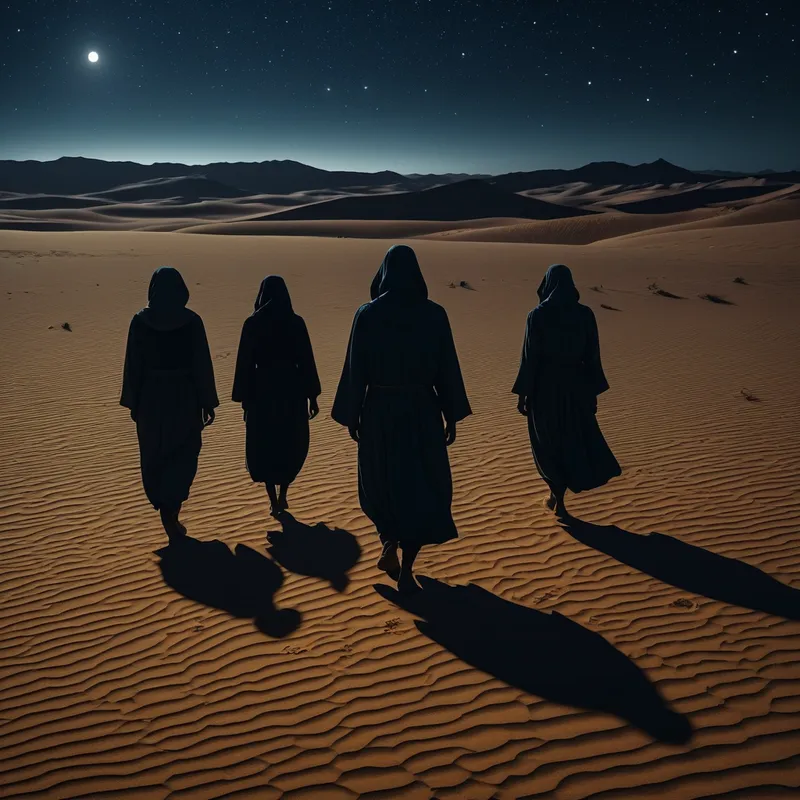
Second, the Journey (The Desert Trek): The conscious, often arduous commitment to follow this call. This is the work—therapy, artistic practice, spiritual discipline, deep study—where one leaves the familiar terrain of the known self.
Third, the Confrontation (Herod’s Court): The encounter with the personal and collective shadow. The old ego, threatened, will try to co-opt the journey (“tell me where it is so I can worship, too”). This stage requires discernment to hear the falsehood within the plausible request.
The treasure is not found until the map is abandoned.
Fourth, the Adoration (The Presentation): The moment of unio mentalis, the sacred marriage of consciousness and the unconscious. The ego, represented by the Magi, kneels before the nascent Self, the “divine child.” This is not self-abasement, but the recognition of a greater, guiding center within. The offering of gifts is the active, willed sacrifice of one’s old identifications to this new center.
Finally, the Return (By Another Way): Integration. The individual does not return to their old life with just a new piece of information. They return transformed, having internalized the mystery. They must now live from this new center, which requires novel, often solitary, paths through the wilderness of daily life. The wisdom is no longer in the stars they read, but in the footsteps they now take. The journey inward becomes the path forward.
Associated Symbols
Explore related symbols from the CaleaDream lexicon: