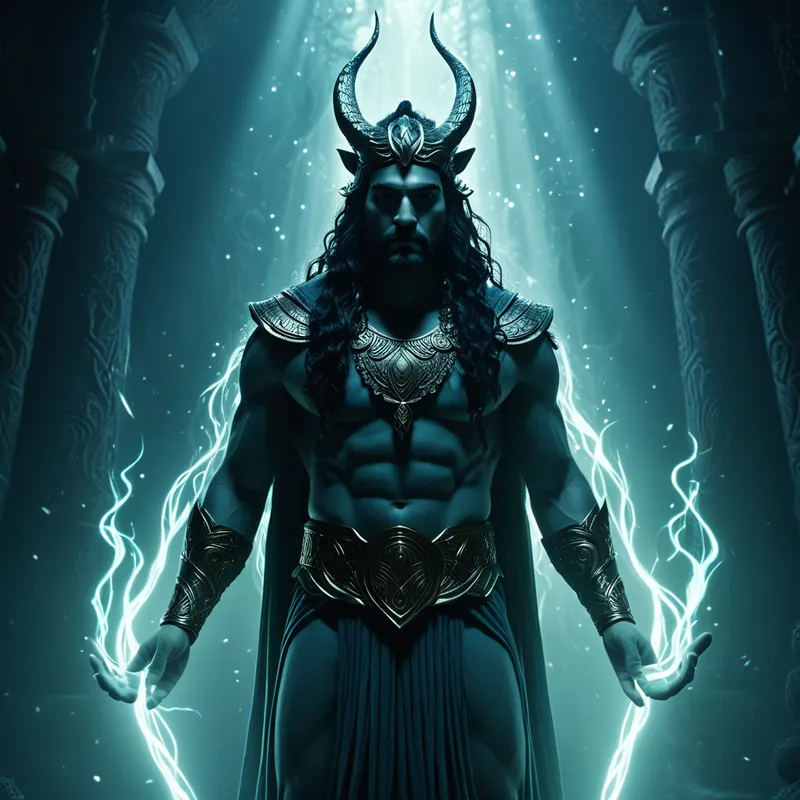
The Thirteen Heavens
The Aztec vision of thirteen celestial realms, each ruled by different deities, forming a complex cosmology that explained creation, divine order, and human destiny.
The Tale of The Thirteen Heavens
In the beginning, before the first sun had been kindled, there was only the silent, starless abyss of Ometeotl, the Dual God, [the self](/myths/the-self “Myth from Jungian culture.”/)-created. From this unity, the heavens were born not as a single expanse, but as a great, layered mountain of light and air, a celestial pyramid reaching thirteen levels high. Each heaven was a distinct realm, a stratum of divine influence, and the journey upward was a passage through increasing degrees of purity, power, and peril.
The lowest heavens were closest to the earthly realm of Tlalticpac. Here, in the first heaven, [the Moon](/myths/the-moon “Myth from Tarot culture.”/) and clouds drifted, watched over by the goddesses of [water](/myths/water “Myth from Chinese culture.”/) and fertility. The second was the domain of the stars, the Centzon Huitznahua, who glittered with chaotic potential. The third was a terrible place, a desert of ash where falling stars burned out, a celestial graveyard overseen by the lord of the dawn. To ascend was to leave the familiar.
The middle heavens were arenas of elemental struggle and sustenance. The fourth heaven was the sun’s own road, the blazing path of [Tonatiuh](/myths/tonatiuh “Myth from Aztec culture.”/). The fifth was home to the ferocious [shooting stars](/myths/shooting-stars “Myth from Various culture.”/) and comets, seen as portents of war and strife. The sixth was the realm of the true night, the deep blue vault where the great cosmic winds, the [Ehecatl](/myths/ehecatl “Myth from Mesoamerican culture.”/), were born from the breath of [the wind](/myths/the-wind “Myth from Various culture.”/) god. It was in these turbulent layers that [the fates](/myths/the-fates “Myth from Greek culture.”/) of weather and harvest were decided, where the gods battled for supremacy over the forces that gave life or brought ruin to [the world](/myths/the-world “Myth from Tarot culture.”/) below.
Higher still, the heavens grew more rarified and potent. The seventh was the place of the true blue color, the hue of divinity itself. The eighth held the storehouses of the great storms, where the rain gods, the Tlaloque, gathered their gifts. The ninth was Tlalocan, the verdant paradise of the rain god [Tlaloc](/myths/tlaloc “Myth from Aztec culture.”/), a land of eternal spring and abundance, a glimpse of cosmic generosity.
Then came [the summit](/myths/the-summit “Myth from Taoist culture.”/), the final four heavens, the dwelling places of the primordial forces. The tenth and eleventh were the sunlit and starlit realms of the great creator gods. The twelfth was an expanse of utter, windless white, a place of pure potential. And at the very apex, in the thirteenth and highest heaven, dwelt Ometeotl once more. This was Omeyocan, the ultimate source, the point of all origin and return. Here, in profound stillness, the divine pair generated the celestial energies that cascaded down through the layers, animating the battles, the winds, the rains, and finally, the fragile world of humans.
This celestial architecture was not static. It was a living system of descent and ascent. The gods moved between the layers, and the souls of the dead—warriors who died in battle, women who died in childbirth, those claimed by the rain—ascended to specific heavens. The cosmos was a dynamic, breathing entity, its order maintained through the perpetual motion of divine essence and the sacred duty of humanity to feed the gods through nextlahualtin, ensuring the sun would rise and the heavens would not collapse.
Cultural Origins & Context
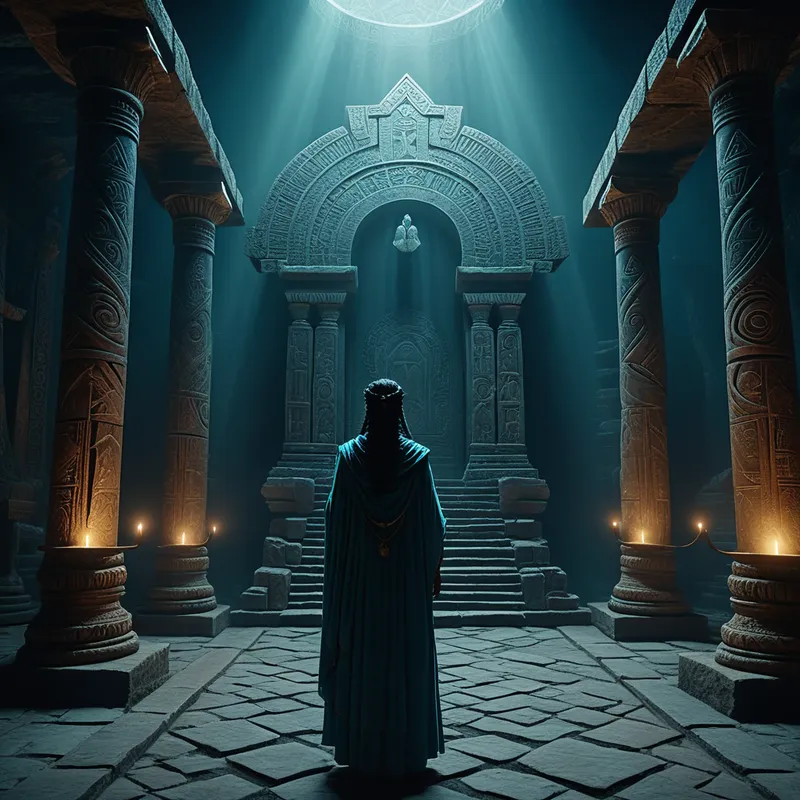
The concept of the Thirteen Heavens emerged from the sophisticated cosmological vision of the Nahua peoples, most famously articulated by the Mexica (Aztec) of Tenochtitlan. This model was not mere fantasy but a complex philosophical framework that organized reality. It was documented by Spanish friars like Bernardino de Sahagún in the 16th [century](/myths/century “Myth from Biblical culture.”/), who recorded the teachings of Nahua elders, providing our primary window into this worldview.
This cosmology served a profound social and psychological purpose. In an empire defined by militarism, agricultural dependency, and a palpable sense of existential precariousness, the layered heavens explained the nature of existence. The universe was hierarchical, mirroring the rigid social order of the altepetl (city-state). Just as the emperor and priesthood stood atop the human world, Ometeotl presided over the celestial one. The battles between gods in the middle heavens mirrored the constant state of earthly conflict necessary for capturing sacrificial victims to sustain the cosmic order.
Furthermore, it provided a detailed map of destiny. One’s manner of [death](/myths/death “Myth from Tarot culture.”/) determined one’s posthumous journey, assigning a specific celestial destination. This created a powerful narrative of fate and valor, motivating societal roles. The heavens were not a promise of universal salvation but a detailed ledger of cosmic consequence, reinforcing the culture’s core values of duty, bravery, and sacrifice within a grand, terrifying, and beautiful universal scheme.
Symbolic Architecture
The Thirteen Heavens represent the [psyche](/myths/psyche “Myth from Greek culture.”/)’s own innate [structure](/symbols/structure “Symbol: Structure in dreams often symbolizes stability, organization, and the framework of one’s life, reflecting how one perceives their environment and personal life.”/)—a vertical cosmology of the [soul](/symbols/soul “Symbol: The soul represents the essence of a person, encompassing their spirit, identity, and connection to the universe.”/). Each [layer](/symbols/layer “Symbol: Layers often symbolize complexity, depth, and protection in dreams, representing the various aspects of the self or situations.”/) is not a literal place but a [stratum](/symbols/stratum “Symbol: A distinct layer or level, often in rock or soil, representing depth, history, and hidden structures.”/) of [consciousness](/symbols/consciousness “Symbol: Consciousness represents the state of awareness and perception, encompassing thoughts, feelings, and experiences.”/), a qualitative state of being through which [awareness](/symbols/awareness “Symbol: Conscious perception of self, surroundings, or internal states. Often signifies awakening, insight, or heightened sensitivity.”/) ascends or descends.
The lower heavens correspond to [the personal unconscious](/myths/the-personal-unconscious “Myth from Jungian Psychology culture.”/) and the immediate psychic environment: the changing moods (clouds), the glittering but chaotic potentials of instinct (the stars), and the necessary [dissolution](/symbols/dissolution “Symbol: The process of breaking down, dispersing, or losing form, often representing transformation, release, or the end of a state of being.”/) of outworn forms ([the desert](/myths/the-desert “Myth from Biblical culture.”/) of ash). The middle heavens are the [realm](/symbols/realm “Symbol: The symbol of ‘Realm’ often signifies the boundaries of one’s consciousness, experiences, or emotional states, suggesting aspects of reality that are either explored or ignored.”/) of the cultural complex and archetypal dynamics—the blazing, conscious will of the Sun, the sudden, disruptive insights of the [Trickster](/symbols/trickster “Symbol: A boundary-crossing archetype representing chaos, transformation, and the subversion of norms through cunning and humor.”/) (shooting stars), and the powerful emotional currents (cosmic winds) that can sweep [the ego](/myths/the-ego “Myth from Jungian culture.”/) away.
The ascent through the heavens is the process of psychological differentiation, moving from identification with personal and collective storms toward the source of consciousness itself.
The upper heavens symbolize the transcendent functions and the core of the Self. Tlalocan is the [archetypal image](/symbols/archetypal-image “Symbol: A universal, primordial symbol from the collective unconscious that transcends individual experience and carries profound spiritual or mythic meaning.”/) of the nourishing, fecund unconscious, the inner [paradise](/symbols/paradise “Symbol: A perfect, blissful place or state of being, often representing ultimate fulfillment, harmony, and transcendence beyond ordinary reality.”/) that can only be reached by acknowledging one’s “watery” [depths](/symbols/depths “Symbol: Represents the subconscious, hidden emotions, or foundational aspects of the self, often linked to primal fears or profound truths.”/)—emotions, tears, the unconscious psyche. Omeyocan, the thirteenth [heaven](/symbols/heaven “Symbol: A symbolic journey toward ultimate fulfillment, spiritual transcendence, or connection with the divine, often representing life’s highest aspirations.”/), is the ultimate [symbol](/symbols/symbol “Symbol: A symbol can represent an idea, concept, or belief, serving as a powerful tool for communication and understanding.”/) of the coincidentia oppositorum, the union of all opposites within the psyche. It is the still point from which all inner conflict and diversity emanates and to which it seeks to return, representing the totality and ultimate ground of the individual.
The Dreamer’s Resonance
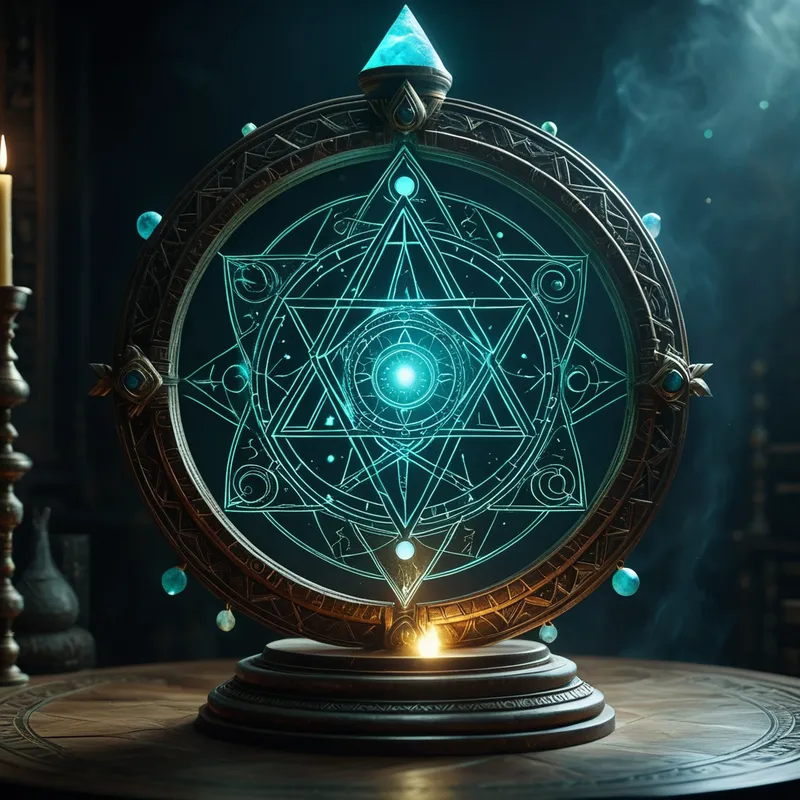
To dream of ascending through layered realms is to encounter the architecture of the Thirteen Heavens within. Such dreams speak of a psychic movement toward integration and wholeness. A dream of struggling through a stormy or star-strewn layer may reflect navigating turbulent emotions or competing life forces. A vision of reaching a serene, verdant paradise (Tlalocan) could signify a deep connection with the nurturing, creative unconscious, a reward for enduring necessary trials.
Conversely, dreams of falling through these layers may speak of a regression, a dissolution of hard-won consciousness back into more primal states. The heavens remind the dreamer that the psyche is not a flatland but a vertical reality. Our daily consciousness is merely the lowest heaven; above and within lie vast realms of ancestral memory, archetypal power, and the silent, generative source of our very being. To engage with this inner cosmology is to take one’s own spiritual and psychological development seriously, to recognize that growth is an ascent through defined stages of complexity, conflict, and clarity.
Alchemical Translation
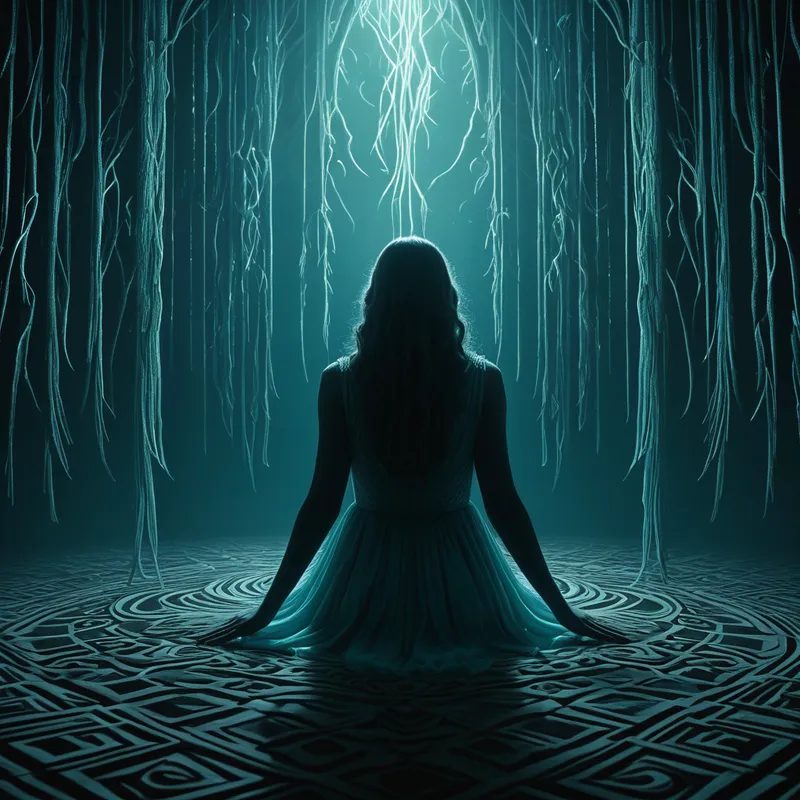
In the alchemical opus, the Thirteen Heavens map perfectly onto the stages of transformation. The [nigredo](/myths/nigredo “Myth from Alchemical culture.”/), the initial blackening and dissolution, occurs in the lower heavens of ash and falling stars. The fierce battles of the gods in the middle layers reflect the [separatio](/myths/separatio “Myth from Alchemical culture.”/) and [coniunctio](/myths/coniunctio “Myth from Alchemical culture.”/), the endless cycles of conflict and union between opposing psychic elements (sun and stars, wind and calm).
The upper heavens embody the later, rarer stages. Tlalocan is the viriditas, the greening, the lush philosophical garden that emerges after the fires of calcination. The white, windless heaven is the [albedo](/myths/albedo “Myth from Alchemical culture.”/), the whitening, where matter is purified and spiritualized.
Omeyocan, the thirteenth, is the rubedo and the lapis philosophorum combined—the reddening that signifies completion and the Philosopher’s Stone itself, the achieved state of radical, unified wholeness. It is the fixed point that makes the entire transformative process possible.
The entire celestial journey is an allegory for [the alchemist](/myths/the-alchemist “Myth from Various culture.”/)’s work: to begin with the base, chaotic matter of the soul (the earthly realm), subject it to the fires and trials of purification (the battling heavens), and finally return it to its primordial, golden state of unified perfection (Omeyocan), thereby achieving the “heaven” within.
Associated Symbols
Explore related symbols from the CaleaDream lexicon:
- Order — The fundamental principle of the layered cosmos, representing the hierarchical structure of reality, the psyche, and society that provides meaning amidst [chaos](/myths/chaos “Myth from Greek culture.”/).
- Sun — The conscious will and vital force that travels its own dedicated path through the celestial layers, illuminating and energizing the cosmos.
- Mountain — The celestial pyramid itself; the arduous vertical ascent towards enlightenment, purity, and the source of being.
- Sacrifice — The essential energy that maintains the cosmic order, the payment required for the sun’s journey and the stability of the heavens.
- Duality — Embodied in Ometeotl, the supreme source from which all layers and oppositions (light/dark, male/female, order/chaos) ultimately emanate.
- Journey — The essential movement of gods, souls, and celestial bodies through the stratified heavens, defining all existence as sacred passage.
- Temple — The cosmos as a vast, living temple, with each heaven a separate chapel dedicated to a specific aspect of the divine.
- Sky — Not a singular void but a structured, inhabited, and dynamic field of divine action and destiny.
- Stone — The foundational, enduring quality of the cosmic structure; the Aztec [Sun Stone](/myths/sun-stone “Myth from Aztec culture.”/) is a two-dimensional map of this layered universe.
- Heaven — Not a single destination but a complex, multi-layered reality of differentiated states of being, reward, and divine presence.