The Talking Drum Myth Meaning & Symbolism
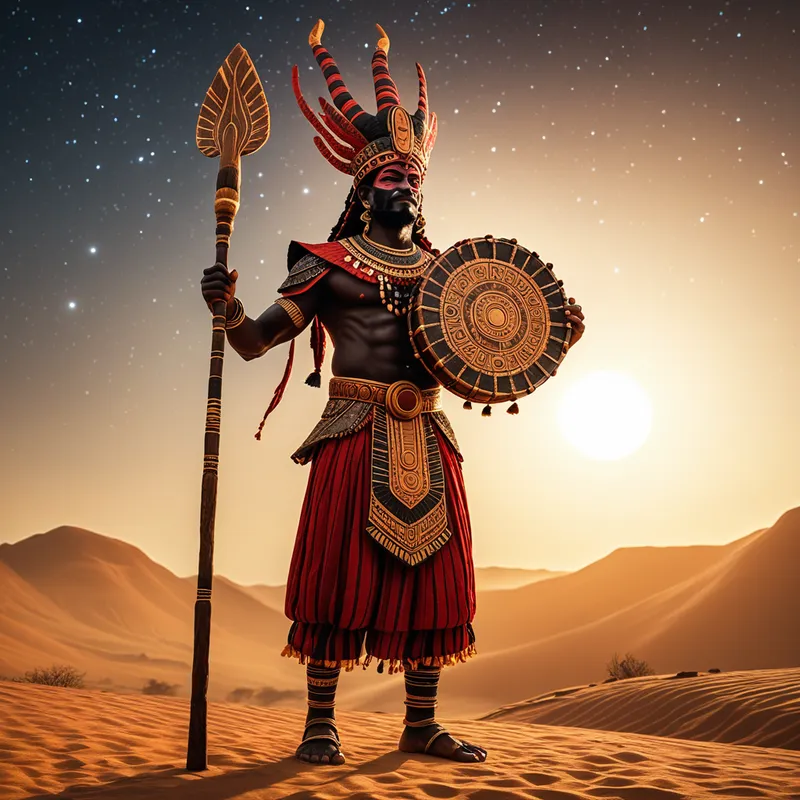
The god Eshu steals the secret of speech from the supreme god Olodumare, gifting it to humanity through the first drum.
The Tale of The Talking Drum
In the beginning, there was a silence. Not an empty silence, but a heavy, pregnant one, filled with the hum of creation from the realm of Olodumare. In [the world](/myths/the-world “Myth from Tarot culture.”/) below, humanity had hands to build, feet to dance, and hearts that felt the deep rhythms of [the earth](/myths/the-earth “Myth from Hindu culture.”/). But they had no true voice. Their sounds were grunts and cries, echoes of need and instinct. They could not weave stories into the night air, could not call the names of the ancestors across the years, could not send precise messages over the hill to the next village. The secret of structured speech, of language that could carry the soul’s intent, was kept by Olodumare in the highest heavens, a divine flame too potent for mortal minds.
This silence was a wall, and it troubled the great trickster, Eshu. Eshu, who wears hats of red and black, who stands at [the crossroads](/myths/the-crossroads “Myth from Celtic culture.”/) of all things, saw the people’s struggle. He heard the stories trapped in their chests, the histories dying unborn. His nature is not malice, but motion; he is the divine provocateur who oils the hinges of fate. He decided the wall must have a gate.
One day, when the pathways between realms grew thin at dusk, Eshu ascended. He did not go as a supplicant, but as a shadow, a thought slipping between the layers of reality. In the court of Olodumare, the secret of speech was not a [thing](/myths/thing “Myth from Norse culture.”/) to be seen, but a pattern to be heard—a complex, living rhythm that underpinned all order. It was the first rhythm. Eshu, whose ears are tuned to the whispers of chaos and order alike, listened. He absorbed not the words, but the cadence, the tonal rise and fall, the pauses that gave meaning. He stole the pattern of the divine breath itself.
But how to carry this celestial fire to earth? A spoken word would evaporate; a written symbol would be static. Then he saw it: a hollowed log, a stretched skin. An instrument of the earth, waiting to be possessed. In a hidden grove, Eshu took the hide of a goat and the wood of an iroko tree. Under his hands, [the drum](/myths/the-drum “Myth from West African / Diasporic culture.”/) was born. But this was no ordinary drum. Into its very sinews, he pressed the stolen rhythm, the tonal pattern of divine speech.
He brought it to a village where the silence was most profound. The people gathered, curious at the strange, hourglass-shaped object. Eshu said nothing. He simply placed his hands upon the skin and began to play. And the drum spoke. It did not mimic human sound; it transcended it. It formed proverbs, it recited lineages, it announced births and deaths with a clarity that shook the soul. It asked questions in one tone and gave warnings in another. The people wept, then they laughed. The wall of silence had crumbled. Speech, in its most essential, rhythmic form, was now a bridge made of wood and skin, stretched between the human heart and the mind of the divine. Eshu, having delivered his disruptive gift, melted back into the crossroads, leaving humanity forever changed, forever in dialogue with the unseen world through the voice of the drum.
Cultural Origins & Context
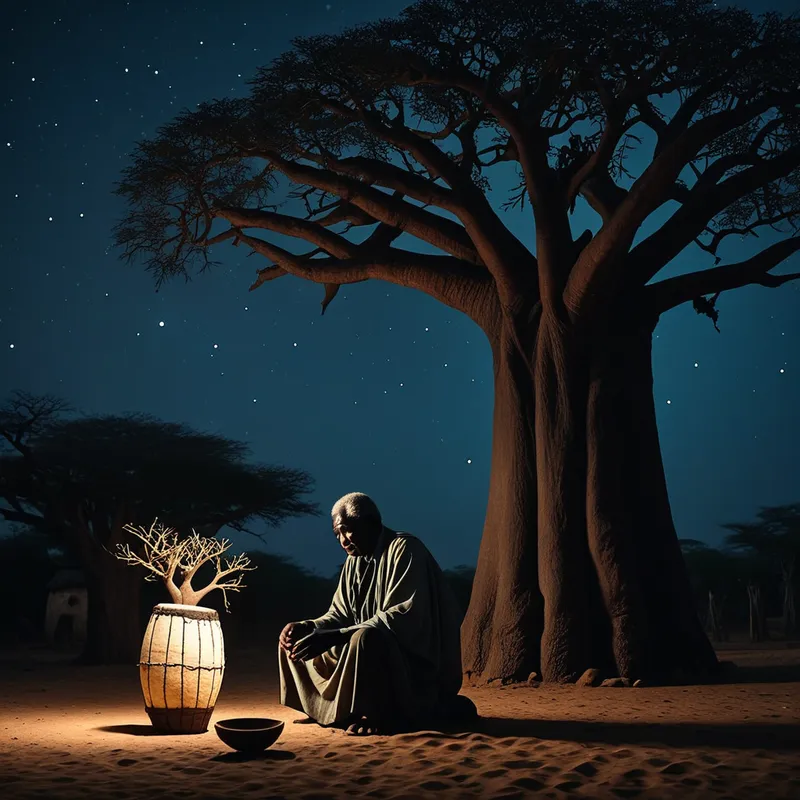
This myth originates from the Yoruba people, one of the largest ethnic groups in West Africa, with a rich cultural and spiritual history centered in what is now southwestern Nigeria, Benin, and Togo. The story is intrinsically linked to the dundun ensemble, the premier instrument of Yoruba royalty and ceremony. It was not a tale told merely for entertainment; it was a foundational narrative that explained the sacred origin of a core technology of civilization.
Griots, historians, and master drummers (Ayan) were the custodians of this myth. They passed it down orally, often during initiations or deep training, embedding the responsibility that comes with the drum’s power. The myth served a critical societal function: it sacralized communication. It established that language and music are not human inventions but divine gifts, placing the drummer in the role of a priest—a mediator between the community, the ancestors (Egungun), and the Orisha. It explained why the drum could be used to recite history, levy laws, and call upon the gods, granting it an authority that was both political and spiritual.
Symbolic Architecture
At its [heart](/symbols/heart “Symbol: The heart symbolizes love, emotion, and the core of one’s existence, representing deep connections with others and self.”/), this myth is about the [alchemy](/symbols/alchemy “Symbol: A transformative process of purification and creation, often symbolizing personal or spiritual evolution through difficult stages.”/) of limitation into [connection](/symbols/connection “Symbol: Connection symbolizes relationships, communication, and bonds among individuals.”/). The “speech” kept by Olodumare symbolizes pure, unmediated divine [knowledge](/symbols/knowledge “Symbol: Knowledge symbolizes learning, understanding, and wisdom, embodying the acquisition of information and enlightenment.”/)—potent, complete, but inaccessible. Humanity’s initial silence represents the pre-conscious state, full of potential feeling but lacking the symbolic [structure](/symbols/structure “Symbol: Structure in dreams often symbolizes stability, organization, and the framework of one’s life, reflecting how one perceives their environment and personal life.”/) to articulate it and thus truly relate.
The drum is the crucible where divine pattern meets earthly material, transforming ineffable truth into communal reality.
Eshu is the essential catalyst of [consciousness](/symbols/consciousness “Symbol: Consciousness represents the state of awareness and perception, encompassing thoughts, feelings, and experiences.”/). He represents the disruptive, ingenious spark of the [psyche](/myths/psyche “Myth from Greek culture.”/) that refuses to accept a fundamental limitation. His theft is not a [crime](/symbols/crime “Symbol: Crime in dreams often symbolizes guilt, inner conflict, or societal rules that are being challenged or broken.”/), but a necessary rebellion against a [static](/symbols/static “Symbol: Static represents interference, disruption, and the breakdown of clear communication or signal, often evoking feelings of frustration and disconnection.”/) order. He is the archetypal [trickster](/symbols/trickster “Symbol: A boundary-crossing archetype representing chaos, transformation, and the subversion of norms through cunning and humor.”/) who, through cunning, brings about cultural evolution. The drum itself is the ultimate [symbol](/symbols/symbol “Symbol: A symbol can represent an idea, concept, or belief, serving as a powerful tool for communication and understanding.”/) of mediated communication. It is not the voice itself, but the [vessel](/symbols/vessel “Symbol: A container or structure that holds, transports, or protects something essential, representing the self, emotions, or life journey.”/) for voice. It teaches that true communication requires a container—[ritual](/symbols/ritual “Symbol: Rituals signify structured, meaningful actions carried out regularly, reflecting cultural beliefs and emotional needs.”/), art, [language](/symbols/language “Symbol: Language symbolizes communication, understanding, and the complexities of expressing thoughts and emotions.”/), or technology—to translate inner [reality](/symbols/reality “Symbol: Reality signifies the state of existence and perception, often reflecting one’s understanding of truth and life experiences.”/) into shared experience. The [tension](/symbols/tension “Symbol: A state of mental or emotional strain, often manifesting physically as tightness, pressure, or unease, signaling unresolved conflict or anticipation.”/) of its strings mirrors the tension required to hold meaning.
The Dreamer’s Resonance
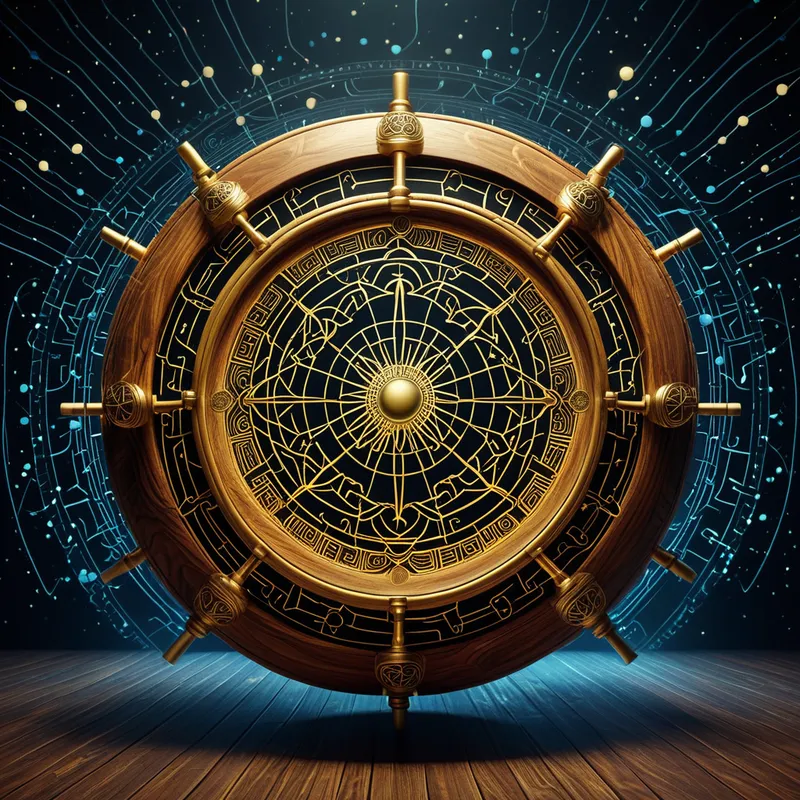
To dream of a [talking drum](/myths/talking-drum “Myth from West African culture.”/) is to dream of a breakthrough in communication, often at a profound, pre-verbal level. The drum in a dream may appear when the dreamer feels a “divine silence”—a sense of being cut off from their own inner truth, their community, or a sense of meaning. They may have feelings or insights they cannot articulate, stories trapped within.
Somatically, this dream process can feel like a pressure in the chest or throat (the unsaid), followed by a rhythmic pulsing or vibration (the emergent pattern). Psychologically, it marks the activation of the Eshu archetype within—the part of [the Self](/myths/the-self “Myth from Jungian culture.”/) that is willing to cross a forbidden boundary to retrieve a vital resource. The dream drum speaking may signal the unconscious beginning to “code” a complex emotional or intuitive truth into a form the conscious mind can eventually understand, not through linear logic, but through rhythm, tone, and symbol.
Alchemical Translation
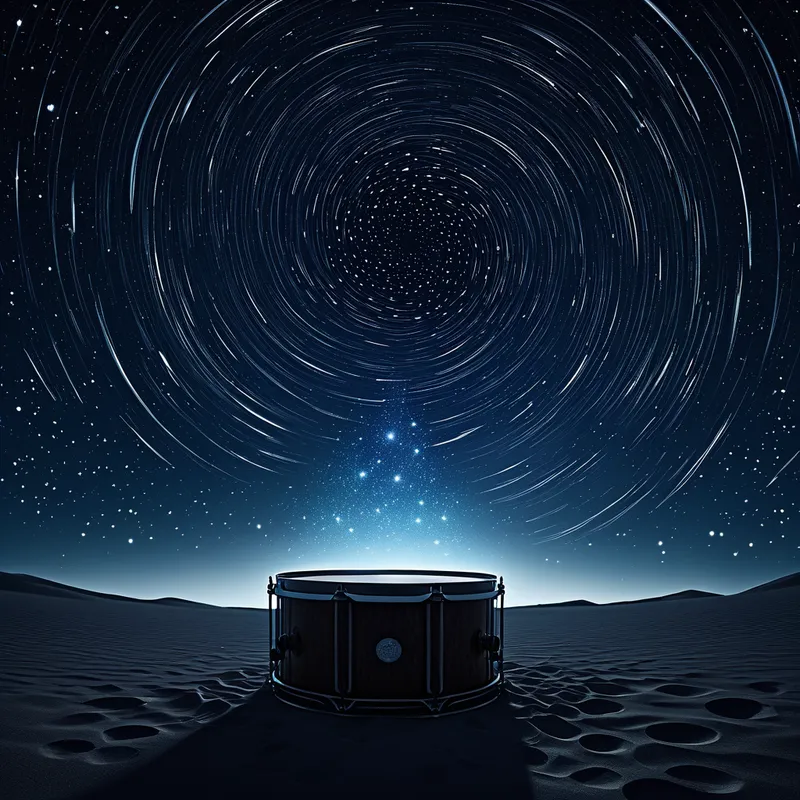
For the modern individual, the myth models the journey of giving authentic voice to the soul—the process of individuation. We all begin with an inner Olodumare: a vast, unconscious wholeness containing our potential, which feels remote and silent. Our conscious ego lives in the “village,” struggling with inarticulate emotions and unnamed desires.
Individuation requires the trickster’s theft: the courageous, perhaps rebellious, act of reaching into the unconscious to steal fire—to claim a piece of that wholeness for conscious life.
The “theft” is the brave, often non-conformist work of therapy, artistic creation, deep reflection, or spiritual practice. It is facing [the shadow](/myths/the-shadow “Myth from Jungian culture.”/) to retrieve a lost talent or truth. But the pure, raw insight from the unconscious (the divine rhythm) cannot be directly lived; it would overwhelm. It must be “crafted into a drum.” This is the alchemical translation: taking that insight and giving it a form—writing the poem, having the difficult conversation, changing a life pattern, creating a ritual. The drum is the adapted structure of the conscious personality that can now “speak” the soul’s language into the world. One becomes, like the master drummer, a mediator between the inner divine and outer reality, turning the silent music of the Self into a dialogue that connects, heals, and creates.
Associated Symbols
Explore related symbols from the CaleaDream lexicon: