The Sovereignty Goddess Myth Meaning & Symbolism
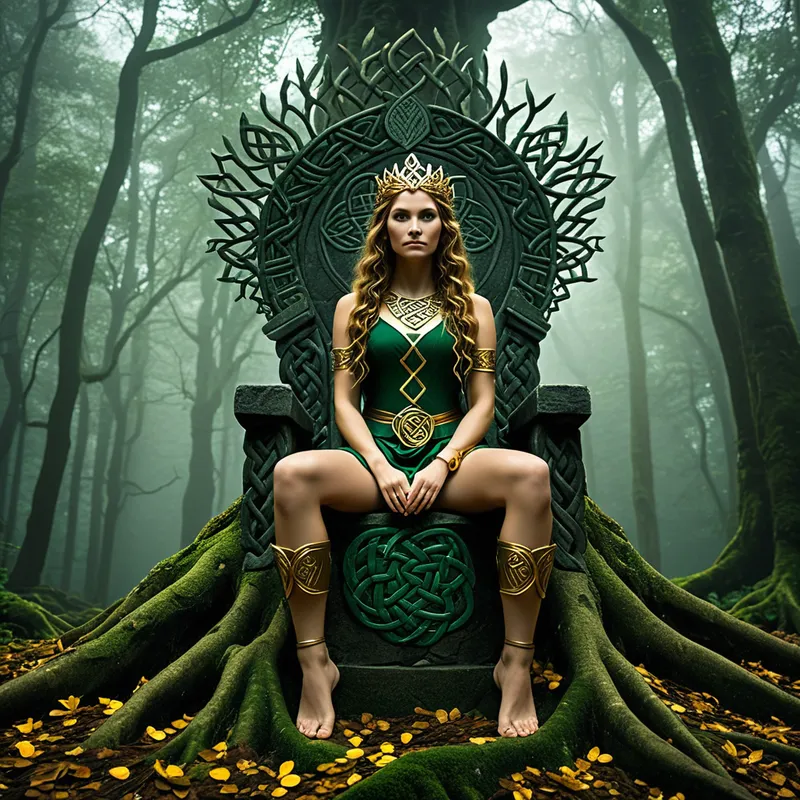
A hag transforms into a radiant goddess when a true king accepts her, embodying the sacred marriage between ruler and the spirit of the land itself.
The Tale of The Sovereignty Goddess
Listen. [The wind](/myths/the-wind “Myth from Various culture.”/) carries a tale from the time when [the world](/myths/the-world “Myth from Tarot culture.”/) was younger, and the boundary between the seen and the unseen was as thin as morning mist on a bog. In the heart of Ériu, a land where every hill had a name and every river a song, there was a king. But his reign was barren. The cattle were thin, the fields yielded only dust, and a cold silence lay over the people. The king was a man of hollow rituals, his heart closed to the whisper of the land.
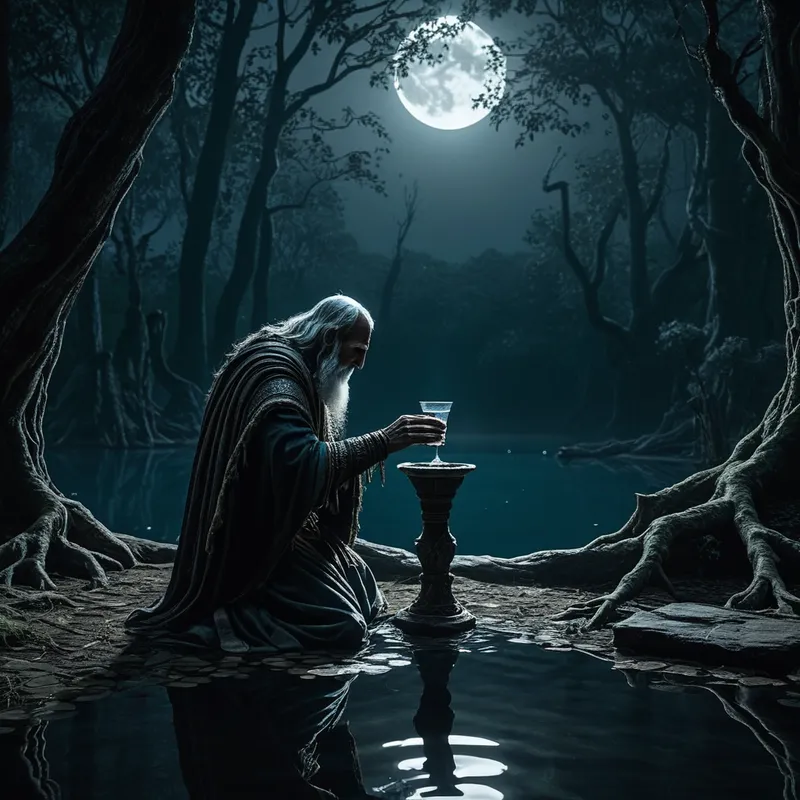
Into this blight came a stranger. He was not a king, but a king-to-be, a warrior of true heart and clear purpose. Some say his name was Niall of the Nine Hostages; others whisper of Conaire Mór. He journeyed, driven by a fate he could not name, until he came to a hidden well at the forest’s edge, a place where the [water](/myths/water “Myth from Chinese culture.”/) was black and still.
There, by the water, he found her. Not a goddess in glory, but a hag of terrifying aspect. Her hair was like matted reeds, her skin the grey of ancient bark, her nails long and caked with earth. Her single eye gleamed with a fierce, unearthly intelligence. She was [the Cailleach](/myths/the-cailleach “Myth from Celtic culture.”/), the ancient one, and she guarded the well. In a voice like stone grinding on stone, she spoke: “I thirst. He who would drink from this well must first give me to drink.”
His companions recoiled in horror and disgust. But the true hero looked. He did not see ugliness; he saw a profound weariness, a deep and unmet need. Without flinching, he knelt in the mud. He cupped his own hands, filled them with the cold, dark water, and brought them to her cracked lips.
The moment the water touched her, the world held its breath. The air shimmered. The withered crone began to change. Her bent spine straightened. The grey bark of her skin softened into alabaster, then warmed to the hue of summer rose. Her matted hair flowed like a river of molten gold, crowned with berries and oak leaves. Her rags fell away, replaced by robes of green and gold that seemed woven from sunlight and forest shadow. Where the hideous hag had stood now shone a woman of impossible beauty and terrifying power—Ériu herself, the Sovereignty Goddess.
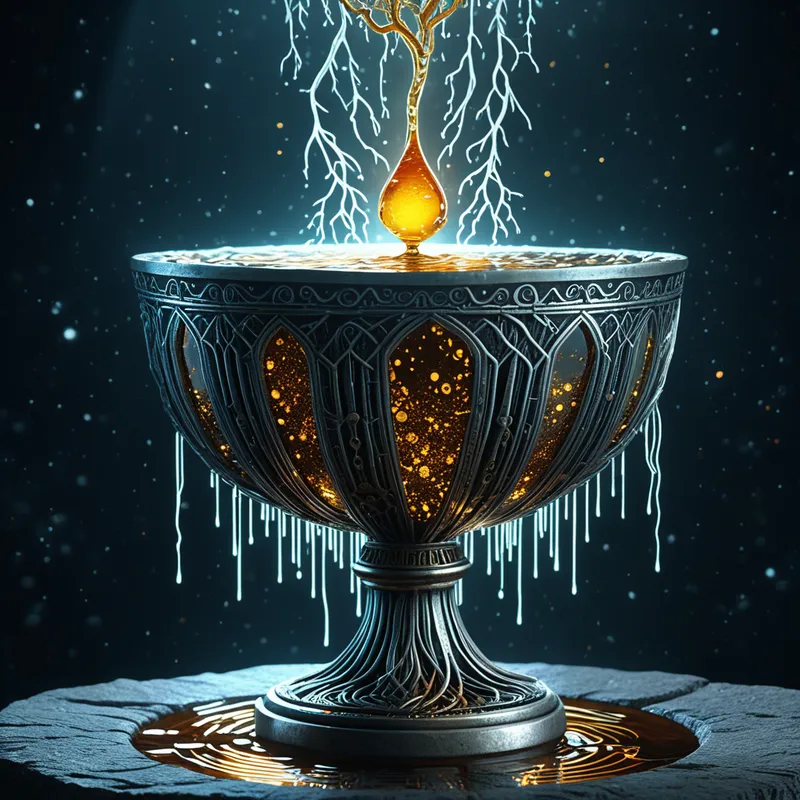
She smiled, and it was the promise of spring. From the folds of her cloak, she produced a silver cauldron. Into it, she poured water from the well, and it transformed into rich, red ale. She handed [the vessel](/myths/the-vessel “Myth from Alchemical culture.”/) to the hero. “Drink,” she said, her voice now the sound of a harp and a waterfall. “Drink, and know that you do not take the land. The land chooses you. I am the land. Our fates are now one.”
As he drank, a warmth spread through him, not of intoxication, but of profound knowing. He saw the rivers of his country as veins, the mountains as bones. He felt the weight of its protection and the duty of its care. When he lowered the cup, he was no longer just a warrior. He was the true king, and the goddess, his bride, stood beside him, her hand in his.
Cultural Origins & Context
This myth is not a single story but a deep, recurring pattern woven into the Insular Celtic tradition, most prominently preserved in early Irish literature like the Ulster Cycle and the Cycle of the Kings. It was the sacred charter for kingship. The tale was not mere entertainment; it was a cosmological and political doctrine performed and recited, likely during inauguration rituals at sacred sites like Tara.
The function was unequivocal: legitimate rule was not inherited by bloodline alone, nor seized by brute force. True sovereignty was conferred through a [sacred marriage](/myths/sacred-marriage “Myth from Alchemy culture.”/) (hieros gamos) between the mortal king and [the immortal](/myths/the-immortal “Myth from Taoist culture.”/) spirit of the territory, personified as the Sovereignty Goddess. She was known by many names—Ériu, Medb, the Sovereignty of Ireland—and her condition directly reflected the health of the kingdom. A king in right relationship with her brought fertility, peace, and prosperity. A king who failed her—through falsehood, injustice, or hubris—would find her transformed into the withered hag, and the land would become a wasteland.
Symbolic Architecture
At its core, this myth maps the [psychology](/symbols/psychology “Symbol: Psychology in dreams often represents the exploration of the self, the subconscious mind, and emotional conflicts.”/) of authentic power and holistic being. The [goddess](/symbols/goddess “Symbol: The goddess symbolizes feminine power, divinity, and the nurturing aspects of life, embodying creation and wisdom.”/) is not a passive prize but the active, choosing principle of [life](/symbols/life “Symbol: The symbol of ‘Life’ represents a journey of growth, interconnectedness, and existential meaning, encompassing both the joys and challenges that define human experience.”/) itself. She represents the [anima](/symbols/anima “Symbol: The feminine archetype within the male unconscious, representing soul, creativity, and connection to the inner world.”/) mundi—the world [soul](/symbols/soul “Symbol: The soul represents the essence of a person, encompassing their spirit, identity, and connection to the universe.”/)—and its localized manifestation as the genius loci. She is the totality of a [system](/symbols/system “Symbol: A system represents structure, organization, and interrelated components functioning together, often reflecting personal or social order.”/): its [fertility](/symbols/fertility “Symbol: Symbolizes creation, growth, and abundance, often representing new beginnings, potential, and life force.”/) and its decay, its [beauty](/symbols/beauty “Symbol: This symbol embodies aesthetics, harmony, and the appreciation of life’s finer qualities.”/) and its terrifying raw power.
The hag is not the opposite of the goddess; she is her latent state, the potential awaiting the correct key to unlock its fullness.
The [hero](/symbols/hero “Symbol: A hero embodies strength, courage, and the ability to overcome significant challenges.”/)’s [journey](/symbols/journey “Symbol: A journey in dreams typically signifies adventure, growth, or a significant life transition.”/) is an [inward](/symbols/inward “Symbol: A journey toward self-awareness, introspection, and the exploration of one’s inner world, thoughts, and unconscious mind.”/) one. The “well” is the unconscious. The “hag” is the rejected, neglected, or terrifying [aspect](/symbols/aspect “Symbol: A distinct feature, quality, or perspective of something, often representing a partial view of a larger whole.”/) of life and [the self](/myths/the-self “Myth from Jungian culture.”/)—often our own deep, instinctual [nature](/symbols/nature “Symbol: Nature symbolizes growth, connectivity, and the primal forces of existence.”/), our [connection](/symbols/connection “Symbol: Connection symbolizes relationships, communication, and bonds among individuals.”/) to the [body](/symbols/body “Symbol: The body in dreams often symbolizes the dreamer’s self-identity, personal health, and the relationship they have with their physical existence.”/) and the [earth](/symbols/earth “Symbol: The symbol of Earth often represents grounding, stability, and the physical realm, embodying a connection to nature and the innate support it provides.”/), which modern [consciousness](/symbols/consciousness “Symbol: Consciousness represents the state of awareness and perception, encompassing thoughts, feelings, and experiences.”/) deems ugly, primitive, or burdensome. The [hero](/symbols/hero “Symbol: A hero embodies strength, courage, and the ability to overcome significant challenges.”/)’s act of kneeling, of serving without disgust, is the essential [gesture](/symbols/gesture “Symbol: A non-verbal bodily movement conveying meaning, emotion, or intention, often symbolic in communication and artistic expression.”/) of humility and [acceptance](/symbols/acceptance “Symbol: The experience of being welcomed, approved, or integrated into a group or situation, often involving validation of one’s identity or actions.”/). It is [the ego](/myths/the-ego “Myth from Jungian culture.”/) setting aside its revulsion and superiority to engage with what it has cast out.
The transformative drink from the [cauldron](/symbols/cauldron “Symbol: A large metal pot for cooking or brewing, symbolizing transformation, nourishment, and hidden potential.”/) symbolizes the infusion of the individual with a transpersonal mandate. It is the [moment](/symbols/moment “Symbol: The symbol of a ‘moment’ embodies the significance of transient experiences that encapsulate emotional depth or pivotal transformations in life.”/) of vocation, where personal ambition is alchemized into a [responsibility](/symbols/responsibility “Symbol: Responsibility in dreams often signifies the weight of duties and the expectations placed upon the dreamer.”/) that serves a whole greater than oneself.
The Dreamer’s Resonance
When this myth stirs in the modern [psyche](/myths/psyche “Myth from Greek culture.”/), it often surfaces in dreams of profound encounter with a neglected or “monstrous” feminine figure. This may manifest as a dream of caring for a sick or repulsive old woman, discovering a wasted, polluted garden for which one is suddenly responsible, or facing a powerful, angry natural force (a storm, a wild animal) that demands respect rather than domination.
Somatically, this process can feel like a deep, unsettling pull toward what one has avoided: a call to engage with a chronic illness, to face ecological grief, or to acknowledge a long-buried creative or instinctual drive that feels “messy” and demanding. The psychological process is one of recognition and service. The dream-ego is being challenged to stop fleeing or fighting a fundamental aspect of its own reality—be it aging, dependency, the needs of the body, or a duty to one’s “place” (community, family, land)—and to tend to it. The transformation from hag to goddess in the dream signals the psychic energy and vitality released when this acceptance is achieved.
Alchemical Translation
The myth of the Sovereignty Goddess is a master blueprint for the alchemical process of individuation, specifically the integration of the anima (in men) or the grounding of the feminine principle (in all individuals). The “kingdom” is the totality of the Self. The barren reign is the life lived by a sterile, disconnected ego, cut off from the nourishing depths of the unconscious and the embodied world.
The alchemical work is not to conquer the darkness, but to court it, to offer it the cup of conscious attention.
The hero’s quest is the ego’s necessary journey into the shadowlands of the psyche. The kneeling and the offering of water is the capitis deminutio—the humbling of the head, the dissolution of egoic arrogance. This is the [nigredo](/myths/nigredo “Myth from Alchemical culture.”/), the blackening, where one faces the primal, chaotic, and “ugly” base matter of the soul.
The goddess’s transformation is the albedo, the whitening, the revelation of the hidden value and luminous essence within that base matter. The shared drink from the silver vessel is the coniunctio, [the sacred marriage](/myths/the-sacred-marriage “Myth from Various culture.”/). Here, the conscious mind (the king) and the soul of one’s entire being (the goddess/land) enter into a lifelong partnership. Sovereignty, in this psychological sense, is achieved. It is not the tyranny of the ego over the inner world, but the wise rulership of the integrated Self, where every part—the noble and the hag, the cultivated field and the wild forest—is acknowledged, honored, and given its due place in the ecology of the whole person. The land flourishes because the ruler is in right relationship with its spirit.
Associated Symbols
Explore related symbols from the CaleaDream lexicon: