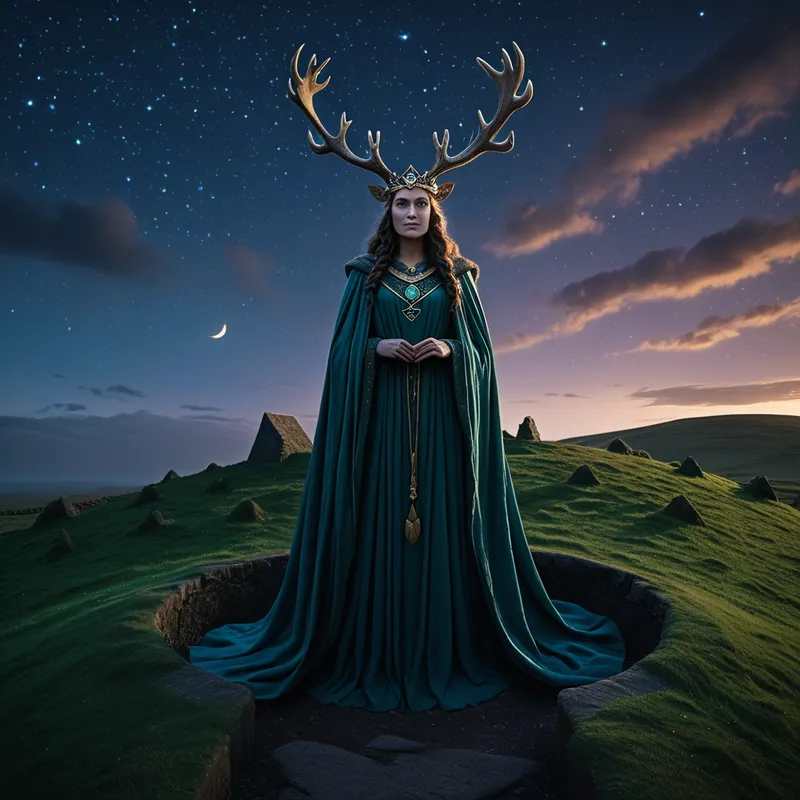
The Sidhe Myth Meaning & Symbolism
A tale of the Tuatha Dé Danann, their retreat into the hollow hills, and the perilous human encounters with the eternal, sovereign otherworld.
The Tale of The Sidhe
Listen, and let the fire’s shadow tell the tale. [The world](/myths/the-world “Myth from Tarot culture.”/) was younger, and the air thrummed with a power now only whispered in [the wind](/myths/the-wind “Myth from Various culture.”/) through [standing stones](/myths/standing-stones “Myth from Celtic culture.”/). The Tuatha Dé Danann walked the land, their voices the song of the rivers, their thoughts the shaping of the hills. They were the people of the Danu, masters of craft and magic, who brought with them the four great treasures from the cities of the north.
But a new wind blew—the coming of the Children of Mil, the mortal sons of men. The battles were fierce, shaking the soil and sky. In the end, a pact was forged, not in victory or defeat, but in a profound and terrible compromise. The Dagda himself, his heart heavy with the weight of ages, divided the land. The world of sun and plough, of birth and death, was given to humanity.
And the Tuatha Dé Danann? They did not die. They did not flee. They went in.
At the command of the Morrígan and the wisdom of the Dian Cécht, they withdrew into [the hollow hills](/myths/the-hollow-hills “Myth from Celtic culture.”/), the secret lakes, the ancient barrows that studded the green land like the bones of a giant. These became the [sídhe](/myths/sdhe “Myth from Celtic / Irish culture.”/), the gleaming palaces of a parallel world. One day of our time became a year in theirs; their music was the sound of eternity made audible.
Yet the veils between the worlds are thin, especially at the turning of the year—[Samhain](/myths/samhain “Myth from Celtic culture.”/)—or in [the mist](/myths/the-mist “Myth from Celtic culture.”/)-haunted twilight. And sometimes, a mortal would stumble through. A hunter, following a white stag of impossible beauty, would find himself in a hall of endless feasting, where the Aos Sí sat in silent majesty. A piper, lured by a melody sweeter than any earthly tune, would be taken for a hundred years he perceived as a single night.
But beware the gifts of the [Sidhe](/myths/sidhe “Myth from Celtic culture.”/). To eat their food is to be bound to their timeless realm forever. To accept their love is to risk a longing that can wither the human soul. To win a boon from them often requires a geis—a sacred, paradoxical prohibition—that will shape and test a mortal life unto its end. They are the keepers of sovereignty, the ancient owners of the land, watching from the twilight as we, the children of time, walk upon its surface.
Cultural Origins & Context
This is not a single myth, but a vast and living tapestry of belief woven across Ireland, Scotland, and the other Celtic lands. The stories of the Sidhe are the folk memory of the Tuatha Dé Danann, the divine inhabitants of the island who were later euhemerized into a race of magical, pre-human kings and then further distilled into [the fairy folk](/myths/the-fairy-folk “Myth from Celtic culture.”/). This evolution reflects a profound cultural process: the integration of older, pagan deities into a Christianized world where they could not be openly worshipped but refused to be forgotten.
The tales were kept alive by the seanchaí, the traditional storytellers, who would recite them by [the hearth](/myths/the-hearth “Myth from Norse culture.”/). Their function was multifaceted: they explained the numinous presence felt in certain landscapes (that mound is a sídhe); they encoded social taboos (do not disturb fairy forts); and they mapped the psychological and spiritual boundaries of the community. The Sidhe represented the “Other,” the wild, untamed, and eternal counterpart to human society, reminding people of the ancient pacts and respect required to live in a world still owned by older, deeper powers.
Symbolic Architecture
The Sidhe are the ultimate [symbol](/symbols/symbol “Symbol: A symbol can represent an idea, concept, or belief, serving as a powerful tool for communication and understanding.”/) of the autonomous, objective [psyche](/myths/psyche “Myth from Greek culture.”/)—what Carl Jung termed the [collective unconscious](/symbols/collective-unconscious “Symbol: The Collective Unconscious refers to the part of the unconscious mind shared among beings of the same species, embodying universal experiences and archetypes.”/). They are not personal; they are eternal patterns, the archetypal inhabitants of the inner world. Their [hollow hills](/myths/hollow-hills “Myth from Celtic culture.”/) are the psychic structures themselves—the complexes, the innate potentials, the timeless realms of [image](/symbols/image “Symbol: An image represents perception, memories, and the visual narratives we create in our minds.”/) and instinct that lie [beneath the surface](/symbols/beneath-the-surface “Symbol: A symbol of hidden depths and meanings, often exploring subconscious thoughts and feelings.”/) of ego-[consciousness](/symbols/consciousness “Symbol: Consciousness represents the state of awareness and perception, encompassing thoughts, feelings, and experiences.”/).
To encounter the Sidhe is to confront the fact that the deepest layers of the self are not yours to possess, but are sovereign territories with their own laws.
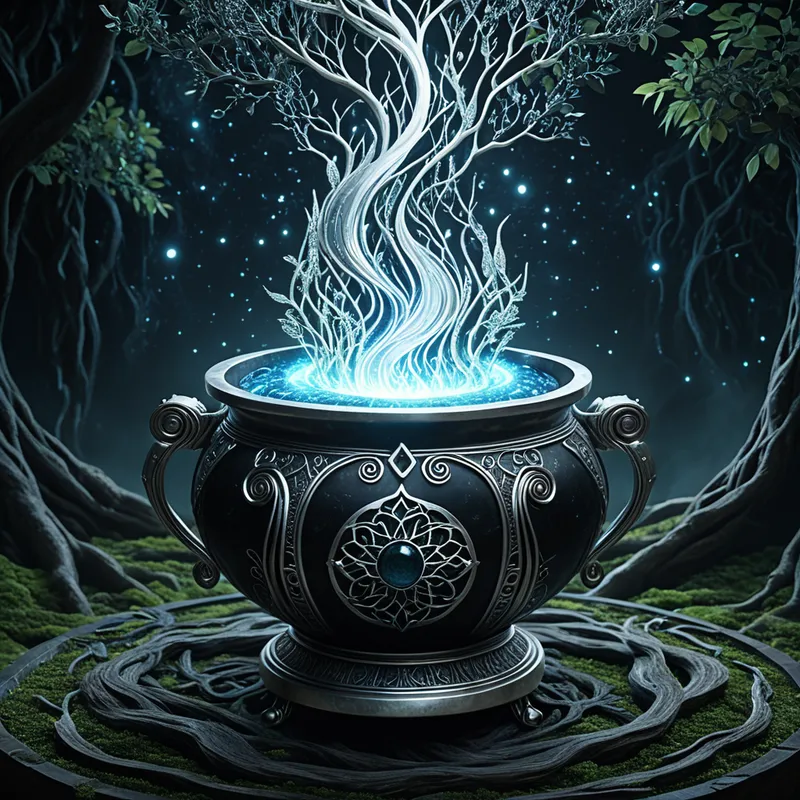
The Four Treasures they brought—the [Stone](/symbols/stone “Symbol: In dreams, a stone often symbolizes strength, stability, and permanence, but it may also represent emotional burdens or obstacles that need to be acknowledged and processed.”/) of Fál, the [Spear](/symbols/spear “Symbol: The spear often symbolizes power, aggression, and the drive to protect or conquer.”/) of Lugh, the Sword of [Nuada](/myths/nuada “Myth from Celtic culture.”/), the [Cauldron](/symbols/cauldron “Symbol: A large metal pot for cooking or brewing, symbolizing transformation, nourishment, and hidden potential.”/) of [the Dagda](/myths/the-dagda “Myth from Celtic culture.”/)—represent the innate, archetypal powers of the psyche: the [foundation](/symbols/foundation “Symbol: A foundation symbolizes the underlying support systems, values, and beliefs that shape one’s life, serving as the bedrock for growth and development.”/) of [identity](/symbols/identity “Symbol: Identity represents the sense of self, encompassing personal beliefs, cultural background, and social roles.”/), the focused will, the power of discernment, and the [vessel](/symbols/vessel “Symbol: A container or structure that holds, transports, or protects something essential, representing the self, emotions, or life journey.”/) of transformation. Their retreat into the mounds signifies the repression or withdrawal of these primal powers from conscious [life](/symbols/life “Symbol: The symbol of ‘Life’ represents a journey of growth, interconnectedness, and existential meaning, encompassing both the joys and challenges that define human experience.”/), making them accessible only through dreams, visions, or perilous journeys.
The perilous encounters—the stolen time, the binding [food](/symbols/food “Symbol: Food in dreams often symbolizes nourishment, both physical and emotional, representing the fulfillment of basic needs as well as deeper desires for connection or growth.”/), the geis—symbolize the price of engaging with these [depths](/symbols/depths “Symbol: Represents the subconscious, hidden emotions, or foundational aspects of the self, often linked to primal fears or profound truths.”/). One cannot dabble in the unconscious without being fundamentally altered. Its gifts come with conditions that reshape the conscious [personality](/symbols/personality “Symbol: Personality in dreams often symbolizes the traits and characteristics of the dreamer, reflecting how they perceive themselves and how they believe they are perceived by others.”/).
The Dreamer’s Resonance
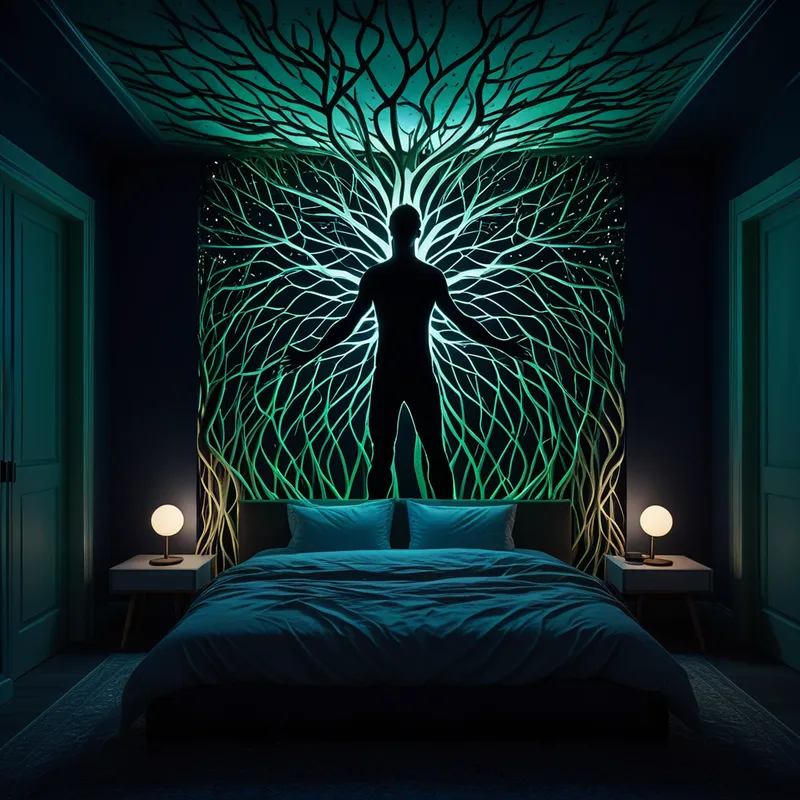
When the Sidhe appear in modern dreams, they rarely come as tiny winged sprites. They manifest as figures of immense, unsettling beauty or terrifying majesty at the edge of a forest, in a suddenly ancient landscape within a familiar house, or as the presiding spirits of a natural feature. The dreamer often feels watched, assessed, or called.
Somnatically, this can coincide with a feeling of profound disorientation in time (the “hundred years in a night” motif), a chilling awe, or a magnetic pull mixed with dread. Psychologically, this signals an initiation into a deeper layer of [the self](/myths/the-self “Myth from Jungian culture.”/). [The ego](/myths/the-ego “Myth from Jungian culture.”/) is being confronted by an aspect of the psyche that is older, wiser, and utterly indifferent to personal comfort. It is the process of the personal psyche being forced to acknowledge it is built upon and inhabited by transpersonal forces. The dreamer is at [the threshold](/myths/the-threshold “Myth from Folklore culture.”/), and the Sidhe are the threshold guardians.
Alchemical Translation
The myth of the Sidhe provides a precise model for the alchemical stage of [nigredo](/myths/nigredo “Myth from Alchemical culture.”/) and [solutio](/myths/solutio “Myth from Alchemical culture.”/)—the descent into the dark earth and dissolution in the primal waters. The conscious personality (the mortal) must willingly or unwillingly enter the mound (the unconscious) and be dissolved in its timeless, non-human reality. This is not a journey of conquest, but of humble encounter and negotiation with sovereignty.
Individuation is not about becoming king of the inner world, but about becoming a respectful and recognized ambassador to it.
The goal is not to defeat the Sidhe, but to earn a token from them—a piece of wisdom, a recovered skill, a healed wound—and return to the human world bearing its imprint. This is the cauda pavonis, [the peacock’s tail](/myths/the-peacocks-tail “Myth from Alchemical culture.”/), where the treasures of the deep add their luster to conscious life. The mortal who succeeds does so by observing the geis, the sacred rule imposed by the deep self. This rule, often seeming irrational, is the precise mechanism that forces the ego out of its habitual patterns, allowing for the transmutation of base personality into something more aligned with the whole Self. One learns to live in the mortal world while forever hearing the faint, haunting music from the hollow hills—no longer as a lure to madness, but as the grounding bass note of a soul that knows its origins.
Associated Symbols
Explore related symbols from the CaleaDream lexicon: