
The Ship of Fools Myth Meaning & Symbolism
A vessel of exiles, deemed mad by society, is cast adrift, embarking on a journey that questions who is truly sane and what wisdom lies in the outcast.
The Tale of The Ship of Fools
Listen. The story begins not with a hero’s call, but with a city’s sigh of relief.
The harbor [water](/myths/water “Myth from Chinese culture.”/) was the color of a dull coin, smelling of salt, fish, and the rot of wet rope. In the great port city of a nameless land, the festival of reason had ended. The squares were swept clean of petals and confetti, the speeches on order and propriety still echoing from the marble walls. But a residue remained—a collection of souls who did not fit the new, clean measurements of sanity. The poets who spoke to stones, the lovers who pined for [the moon](/myths/the-moon “Myth from Tarot culture.”/), the old women who knew the language of birds, the philosophers who questioned the very ground beneath their feet. To the sleek, efficient minds now in power, they were static in the signal, a cacophony disrupting the harmonious hymn of progress.
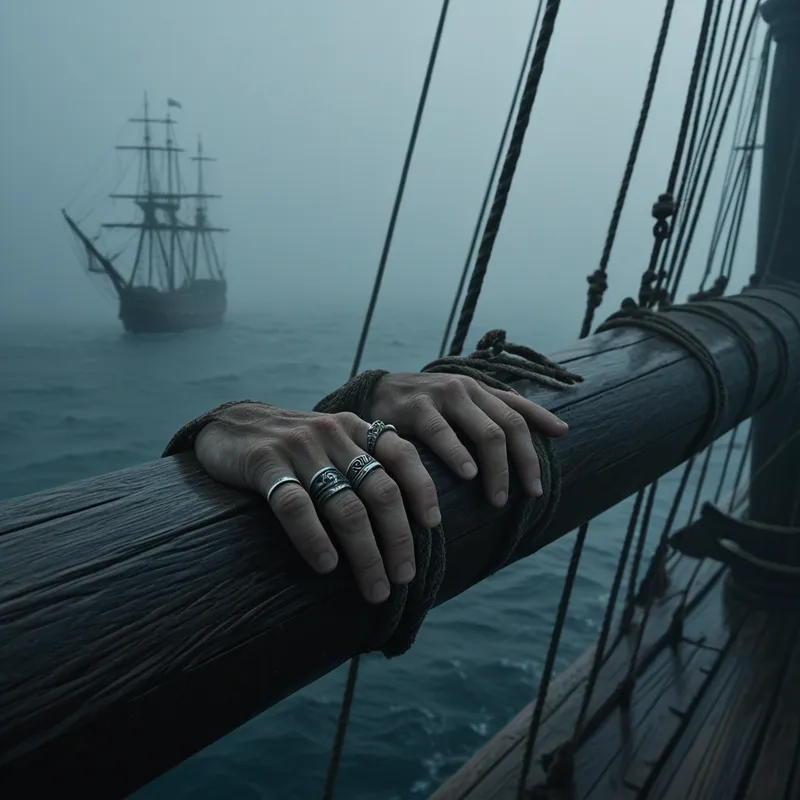
And so, the decree was issued, not with cruelty, but with bureaucratic finality: purification. Not by fire or sword, but by water. A great ship, a hulk from a forgotten war, was provisioned. Not with riches, but with simple fare. Its sails were patched, its hull whispered of older, wilder voyages. One by one, the “fools” were gathered—not dragged, but escorted with a firm, pitying hand. Some went laughing, scattering jokes like seeds. Some wept, clutching handfuls of homeland dirt. Some went in serene silence, their eyes fixed on horizons only they could see.
The ship was cut loose at the violet hour, when [the sky](/myths/the-sky “Myth from Persian culture.”/) bleeds into [the sea](/myths/the-sea “Myth from Greek culture.”/). No cheers marked its departure, only the creak of rope and the slow, deep groan of wood accepting the waves. The “sane” citizens watched from the quay, their faces a mixture of relief and a vague, unnamable unease, before turning back to their well-ordered lives.
But on the ship, a strange alchemy began. Adrift, with no captain but [the wind](/myths/the-wind “Myth from Various culture.”/) and no map but the stars they each read differently, the old rules dissolved. The man who argued with the wind found it shifted the sails in his favor. The woman who sang to the waves claimed she saw answering lights in the deep. Meals were shared not by rank, but by the rhythm of hunger and story. Their madness, no longer contrasted by the rigid grid of the city, began to weave itself into a new tapestry of understanding. They were not sailing away from something, but into a truth: that [the world](/myths/the-world “Myth from Tarot culture.”/) is wider, stranger, and more animate than any city’s walls could permit. The ship became its own world, a floating kingdom of cast-offs, sailing the borderless sea between the madness of men and the wisdom of the deep.
Cultural Origins & Context
The Ship of Fools is a mythic motif with no single author or culture of origin. It is a folkloric rhizome, appearing in various forms across Medieval European literature, most famously in Sebastian Brant’s 1494 satirical poem Das Narrenschiff, and later philosophically explored by Michel Foucault. Its roots, however, tap into a universal human practice: the ritual expulsion of the “other.”
In ancient societies, from Greek city-states to pre-modern European villages, the communal identity was paramount. Elements that threatened this cohesion—be it through spiritual ecstasy, intellectual dissent, or incurable melancholy—were often physically removed. The ship, as a liminal vessel, provided a perfect solution. It was a symbolic and literal purgation. [The fool](/myths/the-fool “Myth from Tarot culture.”/) was not executed (which would create a martyr) but exiled, sent back into the chaotic, unbounded element from which civilization itself was forged. The myth was told not as a heroic epic, but as a cautionary tale and a satire. It functioned as social critique, holding a mirror up to society to ask: who defines sanity? And what priceless things do we cast out with our refuse?
Symbolic Architecture
The ship is the central [symbol](/symbols/symbol “Symbol: A symbol can represent an idea, concept, or belief, serving as a powerful tool for communication and understanding.”/)—not a sleek [vessel](/symbols/vessel “Symbol: A container or structure that holds, transports, or protects something essential, representing the self, emotions, or life journey.”/) of [discovery](/symbols/discovery “Symbol: The act of finding something previously unknown, hidden, or lost, often representing personal growth, new opportunities, or hidden aspects of the self.”/), but a [prison](/symbols/prison “Symbol: Prison in dreams typically represents feelings of restriction, confinement, or a lack of freedom in one’s life or mind.”/)-become-sanctuary. It represents the psychic container for all that the conscious, ordered world rejects.
The true fool is not he who is cast adrift, but he who believes the shore contains all there is to know.
The sea is the boundless, unfathomable unconscious, the [realm](/symbols/realm “Symbol: The symbol of ‘Realm’ often signifies the boundaries of one’s consciousness, experiences, or emotional states, suggesting aspects of reality that are either explored or ignored.”/) of [chaos](/symbols/chaos “Symbol: In Arts & Music, chaos represents raw creative potential, uncontrolled expression, and the breakdown of order to forge new artistic forms.”/), potential, and all that is unknown and feared by [the ego](/myths/the-ego “Myth from Jungian culture.”/). The “fools” themselves symbolize the contents of the personal and collective [shadow](/symbols/shadow “Symbol: The ‘shadow’ embodies the unconscious, repressed aspects of the self and often represents fears or hidden emotions.”/)—the creative, irrational, intuitive, and “unacceptable” parts of the [psyche](/myths/psyche “Myth from Greek culture.”/) that society (and our own inner critic) deems useless or dangerous. The [journey](/symbols/journey “Symbol: A journey in dreams typically signifies adventure, growth, or a significant life transition.”/) without a [destination](/symbols/destination “Symbol: Signifies goals, aspirations, and the journey one is on in life.”/) models the psychic process of facing the unconscious without a predetermined goal; the transformation occurs in the drifting, not in the arriving.
The [city](/symbols/city “Symbol: A city often symbolizes community, social connection, and the complexities of modern life, reflecting the dreamer’s relationships and societal integration.”/) on the shore represents the conscious ego in its rigid, inflated state: ordered, defended, and tragically incomplete, believing it has exiled its chaos when it has only severed its [connection](/symbols/connection “Symbol: Connection symbolizes relationships, communication, and bonds among individuals.”/) to the [soul](/symbols/soul “Symbol: The soul represents the essence of a person, encompassing their spirit, identity, and connection to the universe.”/)’s [depth](/symbols/depth “Symbol: Represents profound layers of consciousness, hidden truths, or the unknown aspects of existence, often symbolizing introspection and existential exploration.”/).
The Dreamer’s Resonance
To dream of a ship of fools is to encounter a profound moment of psychic reconfiguration. You may dream of being on such a vessel, feeling both terror and eerie liberation. Alternatively, you may watch it sail away from you, experiencing a poignant mix of loss and anxiety.
Somatically, this dream often accompanies feelings of displacement, of being “at sea” in one’s own life, or a deep, restless sense that the identity you’ve built (your “city”) is a confining illusion. Psychologically, it signals that contents long exiled from your conscious awareness are demanding recognition. The laughing, weeping, chaotic crew are aspects of your own self—your abandoned creativity, your repressed grief, your “irrational” passions—now returning, not as invaders, but as salvaged crewmates. The dream presents the critical choice: to fear this internal exile, or to begin the work of listening to the mad crew, of letting the old, rigid captaincy of the ego dissolve into a more inclusive, if chaotic, form of governance.
Alchemical Translation
The myth of the Ship of Fools is a masterful allegory for the individuation process. [The first stage](/myths/the-first-stage “Myth from Alchemical culture.”/), [nigredo](/myths/nigredo “Myth from Alchemical culture.”/) or blackening, is the painful expulsion from the familiar shore—the breakdown of the old [persona](/myths/persona “Myth from Greek culture.”/), the “agreed-upon self.”
The voyage of the soul begins not when you set the course, but when you lose the map.
The drifting itself is the albedo, the whitening. In the empty, horizonless sea, the opposites forced apart by the city—reason and madness, order and chaos, self and other—begin to converse on [the deck](/myths/the-deck “Myth from Tarot culture.”/) of the psyche. The fool, the trickster archetype, is the essential agent here. He dissolves pretension, inverts hierarchy, and reveals the relativity of all “sane” positions. Through this chaotic interaction, a new consciousness is formed, not through domination by one principle, but through the acceptance of a motley inner community.
The final transmutation, [rubedo](/myths/rubedo “Myth from Alchemical culture.”/) or reddening, is not a return to the old shore, but the realization that the ship itself has become the true homeland. The integrated individual no longer seeks to anchor themselves solely in the rigid land of collective norms, nor are they lost in the formless sea. They become the navigator of their own vessel, capable of holding course while honoring the deep, strange waters within and without. They understand that wisdom often sails under the flag of folly, and that the most perilous exile is from the depths of one’s own soul.
Associated Symbols
Explore related symbols from the CaleaDream lexicon: