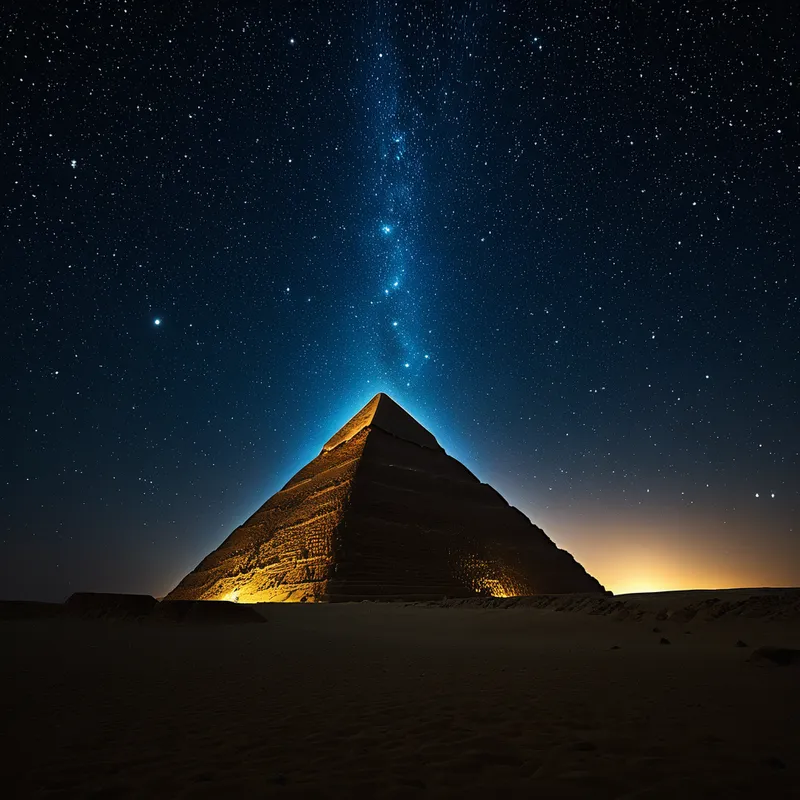
The Shafts of the Great Pyramid Myth Meaning & Symbolism
The myth of the pyramid's hidden shafts as celestial conduits, guiding the king's soul through the Duat to eternal union with the imperishable stars.
The Tale of The Shafts of the Great Pyramid
In the time when the earth was young and the gods walked close, a mountain of stone was raised against the sky. It was not a tomb of silence, but a machine of resurrection, a benben stone made vast. Within its heart of polished red granite, the Per-aa lay, his earthly form stilled, his ka restless, his ba yearning for the sky.
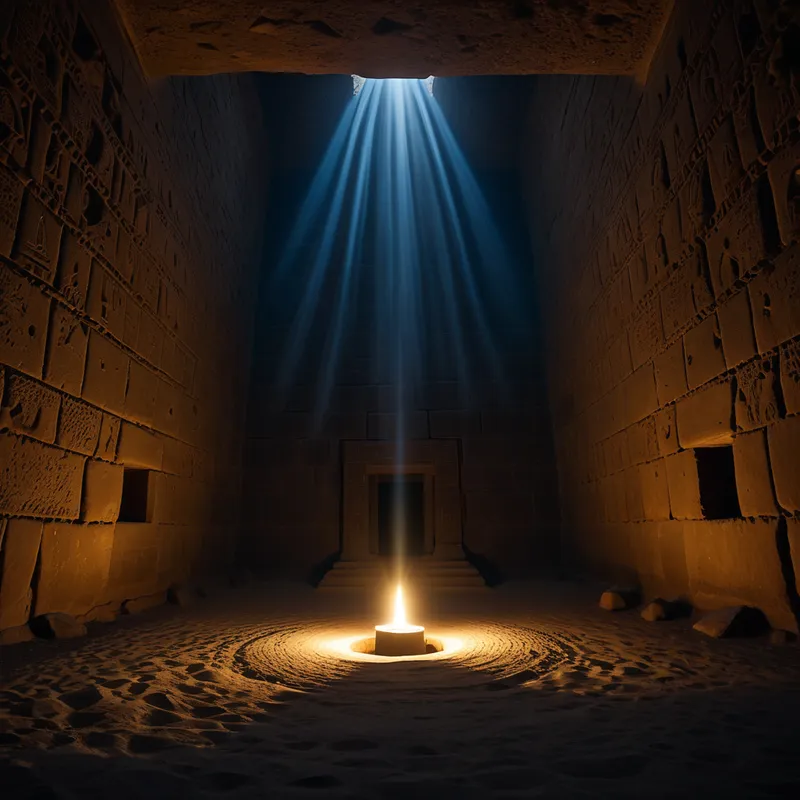
The chamber was absolute darkness, a womb of the earth. But high in the walls, two pairs of narrow channels, no wider than a man’s shoulders, were carved with impossible precision. They were not for air, nor for the hands of men. They were the wAt, the prepared roads. The northern shafts pointed unerringly to the circumpolar stars, the Ikhemu-sek. The southern shafts aimed for the heart of Sah and the eye of Sopdet.
The great trial began. The king’s ba, a bird of light, stirred from his chest. It faced the first, most terrible gate: the confines of the flesh and the weight of the mountain. With a cry that was thought and will, it entered the southern shaft. This was the Road of Duat. The passage was tighter than a birth canal, darker than the abyss of Nun. It was a tunnel of forgetting, where the memories of the body—the taste of wine, the warmth of the sun—were stripped away.
For nights uncounted, the ba-soul traveled this constricted heaven, drawn by the distant, magnetic pulse of Sah-Osiris. It passed through realms of trial, glimpsing the shadows of demonic gatekeepers, feeling the pull of oblivion. But the shaft was its guide and its tether, a geometric prayer made stone, ensuring it did not wander lost in the infinite fields of the Duat.
Then, a pinprick of fierce, blue-white light. The soul burst from the confines of the pyramid, not onto the desert sands, but into the deep field of the cosmos. There hung Sah, the mighty one, the resurrected king of the gods. In that moment of stellar conjunction, the earthly king’s ba was recognized, welcomed, and transformed. It became one of the Akh, the effective, shining spirit.
But the journey was twofold. From the same chamber, the king’s royal essence, his divine identity as Horus, entered the northern shaft. This was the Road of the Imperishable. This ascent was not through the chaotic Duat, but a direct, clean line to eternity. It sought the star Meskhetyu in the thigh of the great celestial bull. This was the destiny of the god-king: not just to join the cycle of death and rebirth with Osiris, but to take his place in the immutable, unchanging order of the cosmos. His ka would reside there forever, a fixed point in the turning mill of the stars, from which it could eternally receive sustenance.
Thus, from one chamber, through four stone veins, the divided self of the king undertook a dual voyage. One path, through struggle and alignment with the cyclical god, led to regenerative power. The other, through direct lineage to the eternal pole, led to unchanging being. The mountain was silent, but within its geometry, a silent, perfect ascension was accomplished every night, as the stars turned on their courses and the shafts found their targets in the velvet dark.
Cultural Origins & Context
This is not a myth found on papyrus or temple wall, but one inscribed in architecture and astronomy. The narrative of the shafts is a ritual text written in limestone and granite, a permanent, functional myth operationalized in the Horizon of Khufu. It originates from the apex of the Pyramid Age (c. 2580–2560 BCE), a time when the king’s divinity and his cosmic destiny were the central pillars of the state.
The “tellers” of this myth were the astronomer-priests and master architects of the 4th Dynasty. They encoded the Pyramid Texts—which would later be written in the pyramids of the 5th and 6th Dynasties—directly into the pyramid’s physical form. The shafts are a physical manifestation of spells like those that would later command the king’s ba to “fly up to the sky” or to “ascend to the Imperishable Stars.”
Societally, this architectural myth served a profound function: it was the engine of cosmic maintenance. The king’s successful ascension was not a personal salvation but a national, even cosmic, necessity. By joining the eternal mechanisms of the sky, the transfigured king became a divine intermediary, ensuring the cycles of the Nile, the order of ma’at, and the stability of the Two Lands. The pyramid, with its hidden shafts, was the launch site for this essential celestial mission.
Symbolic Architecture
The myth presents a profound model of psychic structure and destiny. The pyramid itself is the integrated self—a perfect geometric form containing hidden, dynamic interiors. The King’s Chamber is not the ego, but the sacred, central temenos (sanctuary) of the indwelling spirit, the point of departure.
The soul does not have one destination, but two necessary polarities: the cyclical and the eternal, the transformative and the absolute.
The southern shaft, aligning with Osiris-Orion, symbolizes the katabasis and anabasis—the descent into the underworld of the unconscious (the Duat) and the subsequent rebirth. It represents the process of confronting the shadow, undergoing dissolution, and re-emerging with renewed, effective power (as an Akh). This is the path of individuation through transformation.
The northern shaft, aligning with the circumpolar stars, symbolizes the pull toward the Self in its most transcendent, unchanging aspect. It is the connection to the central, organizing principle of the psyche that exists beyond the cycles of life, death, and personal drama. This is the path of alignment with the eternal archetype.
The duality is critical. One without the other leads to imbalance: only transformation leads to chaos without a center; only fixation on the eternal leads to sterility and disconnection from life. The myth insists that the fully realized spirit must navigate both the transformative journey and achieve alignment with the timeless core.
The Dreamer’s Resonance
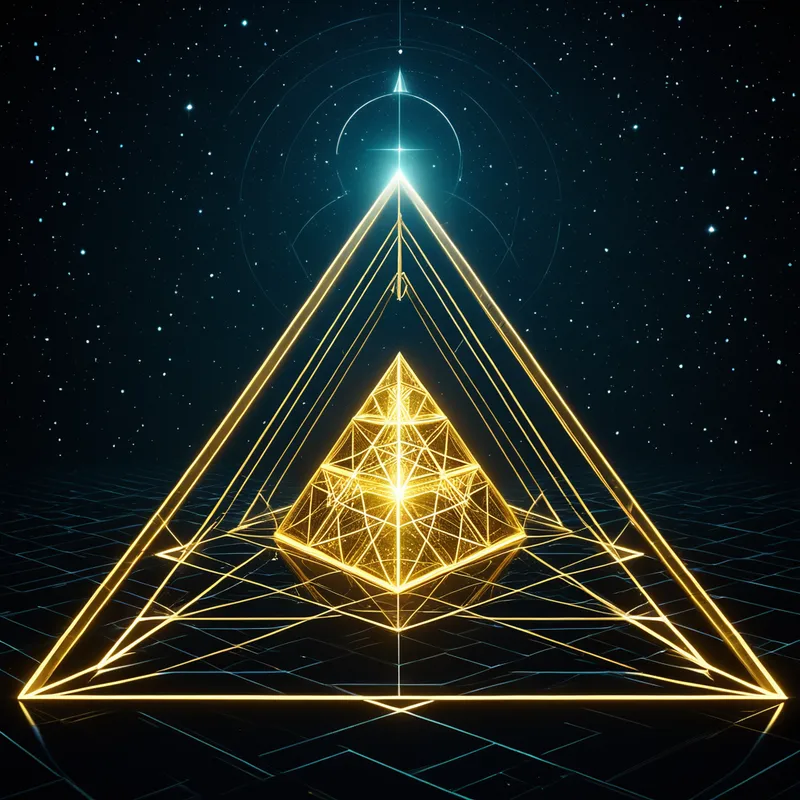
When this myth pattern activates in the modern dreamer, it often manifests as dreams of discovering hidden passages, air shafts, or narrow tunnels in one’s own home or in a vast, institutional building. The somatic experience is one of constriction paired with a compelling pull toward a distant light or sound.
Psychologically, this signals a critical phase of psychic navigation. The dreamer is at a point where a central, perhaps long-static, aspect of their identity (the “king/queen” in their inner chamber) must undertake a journey. The southern shaft dream points to a necessary, often uncomfortable, journey into the personal unconscious—confronting repressed material, grief, or old identities that must die for renewal. There is a feeling of being squeezed through a dark, predetermined path.
The northern shaft dream suggests a longing for, or an emerging connection to, a transpersonal guiding principle. It is the search for one’s “true north,” a core value, vocation, or spiritual axis that feels immutable and sustaining. The dream may evoke feelings of awe, cosmic loneliness, or sublime peace upon “reaching the star.”
The tension of the dream often lies in the choice or awareness of these two narrow exits from a familiar chamber, representing the dual callings of deep psychological work and transcendent orientation.
Alchemical Translation
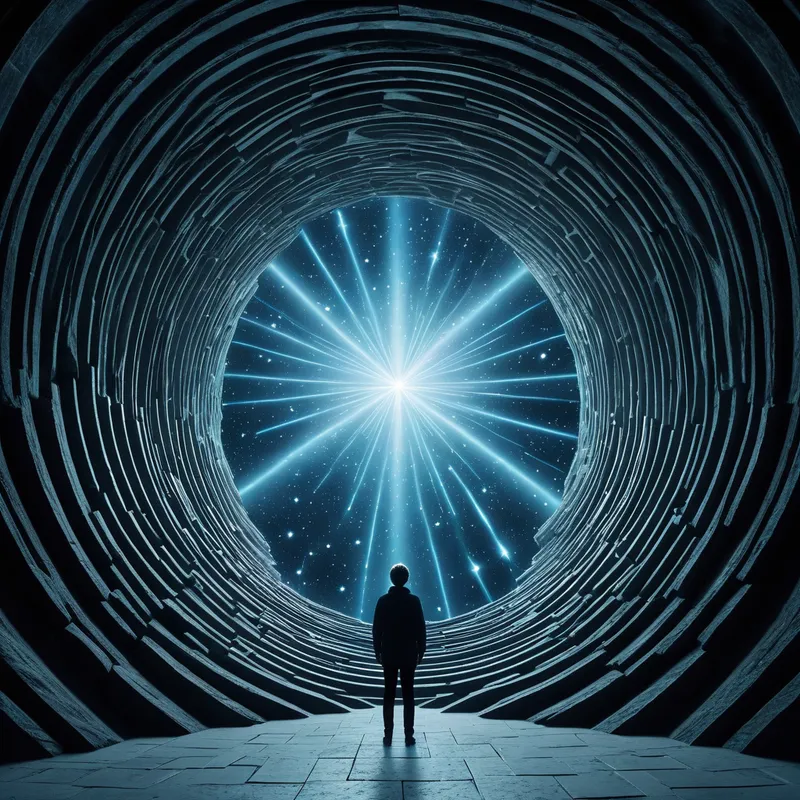
The alchemical process mirrored here is the separatio and coniunctio of the soul’s components, leading to the creation of the corpus glorificatum—the glorified or radiant body (the Akh).
The alchemical vessel is the pyramid; the fire is the starlight at the end of the shaft; the great work is the soul’s precise alignment with its own cosmic correspondences.
First, the separatio: the conscious self (in the chamber) must allow its components to differentiate. The “soul” (ba, the feeling, mobile, attached aspect) and the “spirit” (ka, the vital, enduring, essential image) must take their separate, destined paths. In individuation, this is the difficult recognition that healing one’s personal history (the southern path) and realizing one’s timeless potential (the northern path) are distinct processes requiring different disciplines.
Then, the solutio and coagulatio: the southern path is a solutio—a dissolution in the waters of the unconscious (Nun/Duat). The northern path is a coagulatio—a fixing, a solidification into an eternal form around the pole star.
Finally, the coniunctio: the ultimate goal is not for these paths to remain separate. The myth implies that the successfully transformed Akh-spirit and the eternally anchored Ka are aspects of a now-unified, transcendent entity. For the modern individual, this translates to a state where one’s hard-won, authentic personality (the transformed self) becomes a perfect vessel and expression of one’s deepest, transpersonal purpose (the eternal Self). One becomes fully human and fully aligned with the cosmic pattern simultaneously—earthly life perfectly oriented to its celestial counterpart. The mountain of the ego becomes a transparent instrument for the light of the stars.
Associated Symbols
Explore related symbols from the CaleaDream lexicon: