The Shades of the Asphodel Meadows Myth Meaning & Symbolism
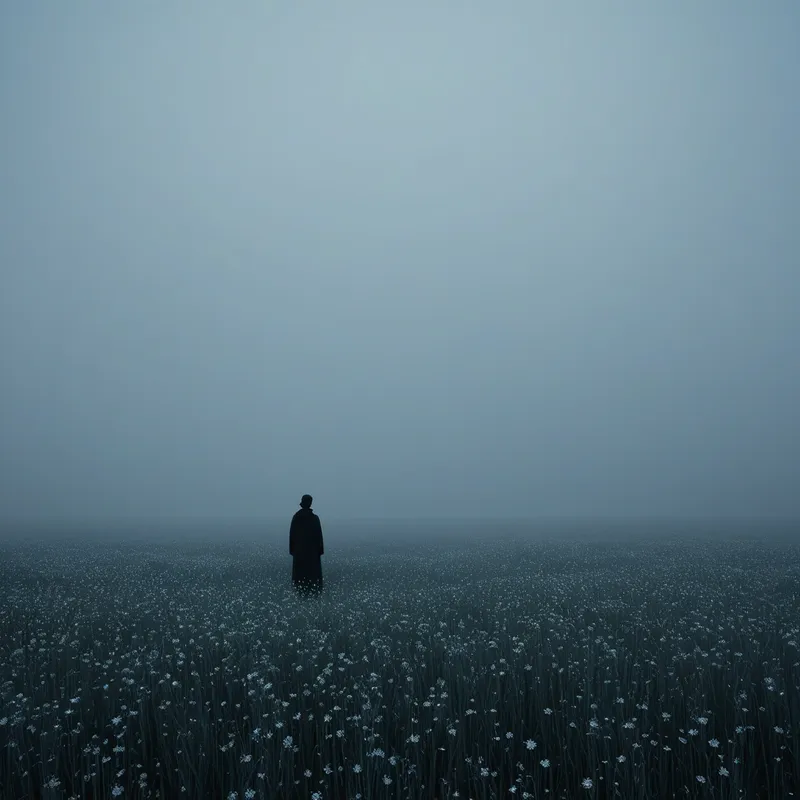
A vast, grey plain in the underworld where the souls of the ordinary reside, forever wandering among pale asphodel flowers, whispering of forgotten lives.
The Tale of The Shades of the Asphodel Meadows
Listen, and I will tell you of the place where most souls go. Not to the sun-drenched fields of Elysium, nor to the black pit of [Tartarus](/myths/tartarus “Myth from Greek culture.”/). No. I speak of the vast, grey country in between, the realm of the forgotten and the forgotten-about: the Asphodel Meadows.
After the final breath leaves the body, after the coin is placed upon the tongue for Charon, after the crossing of the black, whispering waters, the soul arrives at the throne of [Hades](/myths/hades “Myth from Greek culture.”/) and his queen, [Persephone](/myths/persephone “Myth from Greek culture.”/). Here, the silent judge, [Minos](/myths/minos “Myth from Greek culture.”/), may pass his sentence. But for most—the vast, teeming multitude—there is no grand judgment, no fiery punishment, no glorious reward. They are merely gestured onward, past the throne, into the gloom.
They step onto a plain that knows no sun, no moon, only a perpetual, soft twilight. The air is cool and still, carrying the faint, sweet, melancholic scent of the asphodel. For leagues in every direction, the land is flat and featureless, covered in endless fields of these pale, ghostly flowers. Their stalks are grey-green, their blossoms a wan silver-white, glowing softly with their own inner, mournful light.
And here the shades wander. Not in agony, not in ecstasy, but in a quiet, pervasive numbness. They are the souls of those who lived lives of neither great virtue nor great wickedness. The farmers who simply tilled their soil, the merchants who merely traded their wares, the mothers and fathers who lived and died without causing ripples in the great pond of fate. Their memories, the vivid paints of their lives, bleed away here like ink in [water](/myths/water “Myth from Chinese culture.”/), leaving only the grey parchment of a forgotten story. They drift in silence, or speak in whispers that are the echoes of echoes, their forms translucent and faint. They sip from the waters of [Lethe](/myths/lethe “Myth from Greek culture.”/) not as a punishment, but as the only sustenance this grey land offers—a draught of gentle oblivion. This is their eternity: a wan reflection of life, a half-existence in a half-world, forever among the pale blooms of the meadow. This is the destiny of the ordinary.

Cultural Origins & Context
The vision of the Asphodel Meadows finds its most detailed expression in [Homer](/myths/homer “Myth from Greek culture.”/)’s Odyssey, where the hero [Odysseus](/myths/odysseus “Myth from Greek culture.”/) performs a blood sacrifice to summon the shades and speaks with them in this very realm. It is a cornerstone of the archaic Greek worldview, a necessary geographic and spiritual component of [the underworld](/myths/the-underworld “Myth from Greek culture.”/) mapped by poets like Hesiod. This was not priestly dogma, but a poetic and cultural consensus passed down through epic verse and tragic drama.
Its societal function was profound. It served as a powerful, collective [memento mori](/myths/memento-mori “Myth from Christian culture.”/), but one with a specific moral calibration. While tales of heroes in Elysium inspired ambition and tales of sinners in Tartarus enforced dread, the Meadows presented a far more common, and thus more terrifying, fate for the average person. It was a mythic mirror held up to the community, asking a silent question: Is a life of quiet conformity, of avoiding major sin but also shunning great virtue, truly a life? Or is it merely a prelude to this grey, anonymous eternity? It validated the Greek pursuit of kleos (glory) and arete (excellence), not as vanity, but as the only proven method to escape the soul’s ultimate dissolution into [the mist](/myths/the-mist “Myth from Celtic culture.”/).
Symbolic Architecture
The Asphodel Meadows is arguably the most psychologically potent region of [Hades](/symbols/hades “Symbol: Greek god of the underworld, representing death, the unconscious, and hidden aspects of existence.”/). It is not a [symbol](/symbols/symbol “Symbol: A symbol can represent an idea, concept, or belief, serving as a powerful tool for communication and understanding.”/) of [punishment](/symbols/punishment “Symbol: A dream symbol representing consequences for actions, often tied to guilt, societal rules, or internal moral conflicts.”/), but of negation. It represents the [psyche](/myths/psyche “Myth from Greek culture.”/)’s [fate](/symbols/fate “Symbol: Fate represents the belief in predetermined outcomes, suggesting that some aspects of life are beyond human control.”/) when it refuses the call to individuation, when it chooses the [safety](/symbols/safety “Symbol: Safety represents security, protection, and the sense of being free from harm or danger, both physically and emotionally.”/) of the collective mask over the peril of authentic selfhood.
The greatest terror is not damnation, but erasure. The Asphodel Meadows is the archetypal landscape of the unlived life.
The grey, twilit plain symbolizes the liminal state—not alive, not fully dead, not in pain, not in joy. It is the psychological [condition](/symbols/condition “Symbol: Condition reflects the state of being, often focusing on physical, emotional, or situational aspects of life.”/) of depression, [dissociation](/symbols/dissociation “Symbol: A psychological separation from one’s thoughts, feelings, or identity, often experienced as a journey away from the self during trauma or stress.”/), or profound ennui, where one feels spectrally apart from the vivid current of existence. The asphodel flower itself, a bland, pale [bloom](/symbols/bloom “Symbol: Represents growth, vitality, and the flourishing of potential, often tied to emotional awakening or physical health.”/), is the perfect [emblem](/symbols/emblem “Symbol: A symbolic design representing identity, authority, or ideals, often used in heraldry, logos, or artistic expression.”/) of mediocrity. In [life](/symbols/life “Symbol: The symbol of ‘Life’ represents a journey of growth, interconnectedness, and existential meaning, encompassing both the joys and challenges that define human experience.”/), it was a common, hardy plant of little note, just as these souls were common and hardy, leaving no [mark](/symbols/mark “Symbol: A ‘mark’ often symbolizes identity, achievement, or a defining characteristic in dreams.”/). Its wan glow in the [underworld](/symbols/underworld “Symbol: A symbolic journey into the unconscious, representing exploration of hidden aspects of self, transformation, or confronting repressed material.”/) is the faint, ghostly echo of a vitality never fully claimed.
The shades drinking from Lethe is the core [action](/symbols/action “Symbol: Action in dreams represents the drive for agency, motivation, and the ability to take control of situations in waking life.”/) of this myth. It is not forced upon them; it is their sustenance. This symbolizes the [soul](/symbols/soul “Symbol: The soul represents the essence of a person, encompassing their spirit, identity, and connection to the universe.”/)’s complicity in its own forgetting. To avoid the pain of unmet potential, of roads not taken, [the ego](/myths/the-ego “Myth from Jungian culture.”/) willingly sips the waters of unconsciousness, choosing [numbness](/symbols/numbness “Symbol: A state of reduced or absent physical sensation, often symbolizing emotional disconnection, psychological defense, or spiritual stagnation.”/) over the poignant ache of remembrance. The Meadows are thus the ultimate symbol of the neutralized psyche, where all contrasts—good/bad, joy/sorrow, love/hate—have been smoothed into a featureless, grey sameness.

The Dreamer’s Resonance
When this mythic pattern stirs in the modern unconscious, it rarely appears as a classical [underworld](/myths/underworld “Myth from Greek culture.”/). Instead, it manifests as dreams of profound, existential blandness. The dreamer may find themselves in an endless, identical suburban sprawl; wandering the fluorescent-lit aisles of a warehouse that never ends; or riding a silent, empty train through a monotonous landscape. The somatic feeling is one of weightless dread, a sinking feeling of being trapped in a loop of meaningless routine.
Psychologically, this dreamscape signals that the dreamer’s psyche is processing a deep fear of psychic atrophy. It is [the Self](/myths/the-self “Myth from Jungian culture.”/)’s alarm bell against a life being lived on autopilot, where choices are made for security over passion, and where the unique contours of the individual soul are being sanded down to fit a generic mold. The dream is a confrontation with the orphan archetype—the part of us that feels disconnected, unseen, and adrift, fearing that our essence does not matter and will not be remembered. It is the soul’s rebellion against its own potential consignment to the interior Asphodel Meadows.

Alchemical Translation
The alchemical journey, or the path of individuation, is fundamentally a journey out of the Meadows. The grey plain represents the massa confusa, the primal, undifferentiated state of the psyche where all elements lie dormant and unmotivated. The goal is not to flee to a heavenly Elysium (a spiritual bypass), but to introduce differentiation into the grey.
The first and most radical act of soul-making is to refuse the cup of Lethe. To choose the pain of memory over the comfort of oblivion.
The process begins with recognition and remorse. One must consciously feel the dull ache of the unlived life—the talents unused, the loves unspoken, the risks untaken. This painful feeling is the [nigredo](/myths/nigredo “Myth from Alchemical culture.”/), the blackening, but it is a vital fire that burns away the grey haze. It provides the motivation to move.
Next comes cultivating the vivid flower. Against the grey field of the asphodel, one must consciously plant and nurture a bloom of distinct color and passion. This is any act of authentic creation, love, or courage that is done for its own sake, not for external validation. It is a declaration of individuality within the collective plain.
Finally, there is sacred remembrance. To defy the Lethe, one becomes the chronicler of one’s own soul. Through journaling, art, therapy, or deep conversation, one actively recovers and honors the memories, traumas, and joys that make the psyche unique. This builds a [mnemosyne](/myths/mnemosyne “Myth from Global/Universal culture.”/) (memory) strong enough to withstand the soul’s own temptations toward forgetfulness. The individual thus forges a spirit substantial enough to cast a shadow, too vivid to fade into the ghostly multitude, and thereby transcends the mythic fate of the shade. They do not necessarily escape the underworld of the unconscious, but they cease to be a passive wanderer within it, becoming instead an active shaper of its inner landscapes.
Associated Symbols
Explore related symbols from the CaleaDream lexicon: