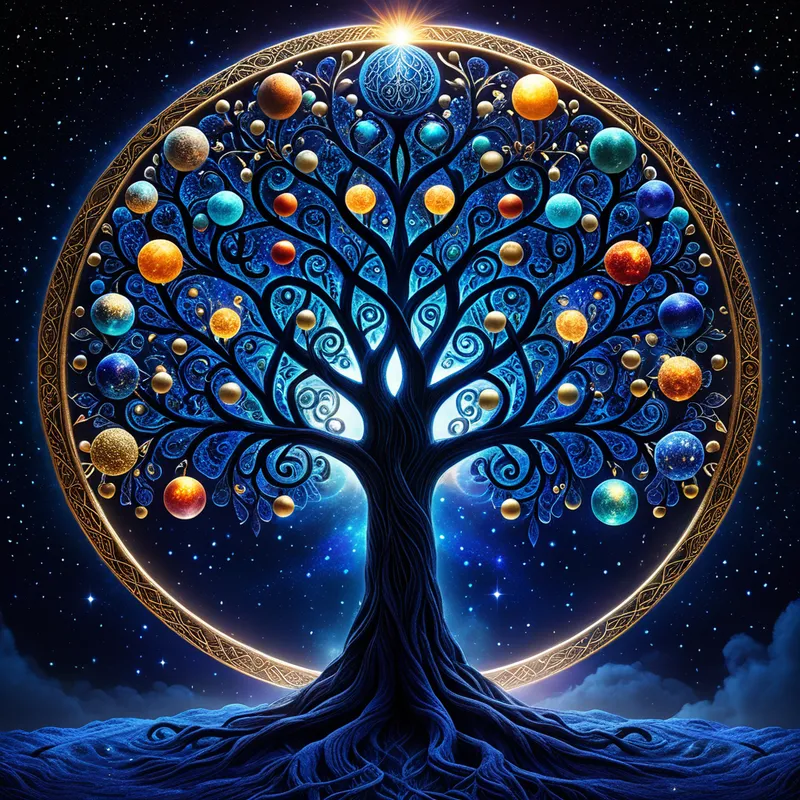
The Sefirot Myth Meaning & Symbolism
A sacred story of divine contraction, emanation, and the ten luminous vessels that structure reality, bridging the infinite and the finite.
The Tale of The Sefirot
Before the before, in the palace of no-thing, there was only Ein Sof. A silence so complete it was a song, a darkness so absolute it was pure light. No vessel could contain it, no word could describe it. It was the All, and the All was One.
Then, from the heart of this boundless stillness, a desire stirred—not a need, but a will to be known. And so, the Unnameable performed the first, most profound act: Tzimtzum. It withdrew its light, contracting into itself, leaving a hollow, a womb of potential within the infinite. Into this primordial void, a single ray, a line of light, descended. It was the Keter Elyon, the supreme crown, a spark of the unknowable now seeking form.
From this crown, a fountain of light erupted, cascading downward, crystallizing into vessels to receive the divine flow. First came Chokhmah, a point of pure, masculine potential, the father of thought. Then Binah, the great mother, who receives the point and expands it into the universe of possibility. From their union, the first triad was born, a realm of pure mind.
The stream flowed on, forging the pillars of the world. On the right, the pillar of Mercy, born from Chesed, a river of unbounded benevolence. On the left, the pillar of Judgment, born from Gevurah, the force that gives shape and boundary. And between them, the central pillar of Balance: Tiferet, the radiant sun, the heart of the tree, reconciling endless love with necessary law.
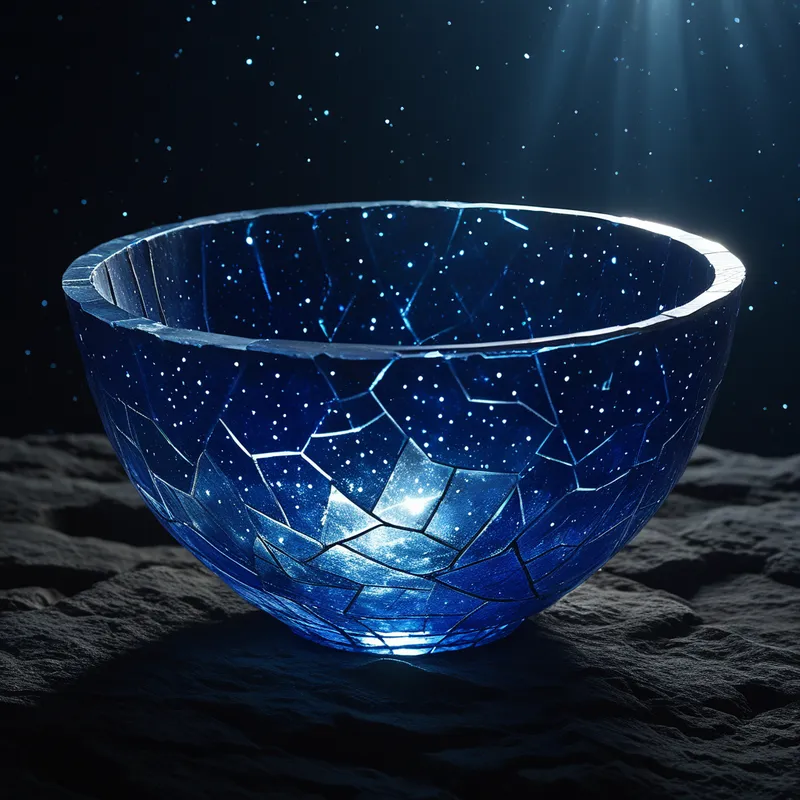
But the light was too pure, too potent. As it poured into the lower vessels—Netzach, Hod, and the receptive Yesod—a great catastrophe shook the cosmos. The vessels of Atzilut could not hold the searing glory. They shattered. A cataclysm of light and darkness, a rain of holy sparks falling into the abyss, trapped in shells of fragmentation. This was the Shevirat HaKelim.
Yet, the stream did not cease. From the heart of the brokenness, a final vessel formed: Malkhut, the divine princess, the earthly kingdom. She is the moon to Tiferet's sun, receiving the now-filtered, refracted light from above. She is our world, imbued with the hidden sparks, waiting. And the story does not end with the shattering, but with a whisper that becomes a calling: Tikkun Olam, the mending of the world. The tale is told, but the work has just begun.
Cultural Origins & Context
The myth of the Sefirot is the heart of the Jewish mystical tradition known as Kabbalah. It crystallized in medieval Spain and Southern France, most famously in the 13th-century text the Zohar. This was not a myth for the masses, but a secret, oral doctrine (Kabbalah means "receiving") passed from master to initiated disciple. Its societal function was dual: to provide a profound, symbolic map of the inner structure of the Divine and of the human soul, and to offer a theurgic path—a way for the mystic, through prayer, meditation, and righteous action, to influence the upper worlds and facilitate the repair (Tikkun) born from the primordial catastrophe. It was a myth for those who sought not just to believe, but to know and to participate in the divine drama.
Symbolic Architecture
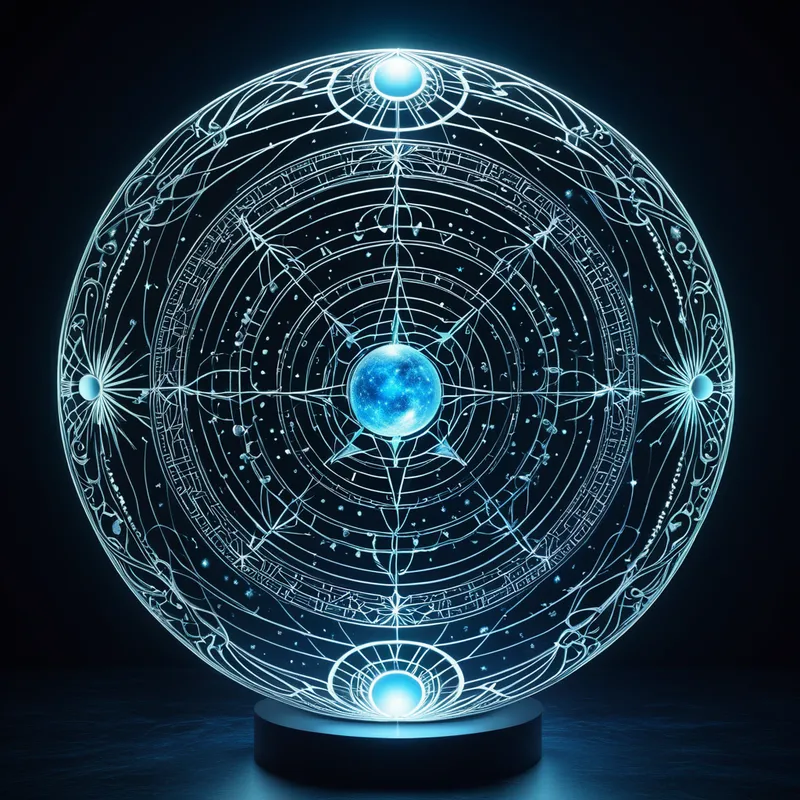
The Sefirot are not places or gods, but dynamic aspects of a single reality. They form a symbolic architecture of the psyche and the cosmos, a blueprint of emanation from unity to multiplicity.
The journey from Ein Sof to Malkhut is the story of consciousness itself—the descent of the infinite into the finite, and the implicit call for the finite to remember its infinite source.
The myth maps the process of creation as differentiation: from the unknowable unity (Keter) into the binary of potential and form (Chokhmah and Binah), then into the ethical and emotional forces that govern relational life (Chesed through Yesod). The Shevirah is the critical psychological moment. It represents the necessary fragmentation of the psyche—the trauma, the complexes, the "fall" into embodiment where wholeness is lost and the divine sparks of our potential become buried in the "shells" (Kelipot) of our wounds, habits, and illusions.
The Dreamer's Resonance
When this myth stirs in the modern dreamer, it often manifests as dreams of intricate architecture—labyrinths, temples, or complex machinery—that the dreamer is navigating, repairing, or trying to understand. One may dream of a shattered crystal or pottery that must be painstakingly glued back together, or of gathering scattered jewels in a dark landscape.
Somatically, this can correlate with a feeling of fragmentation—anxiety, a sense of being pulled in different directions, or a deep yearning for coherence. Psychologically, it signals a process of re-membering. The psyche is attempting to integrate disparate parts of the self, to gather those "scattered sparks" of talent, memory, trauma, and potential that have been lost to consciousness. The dream is an internal enactment of Tikkun), starting within the individual microcosm.
Alchemical Translation
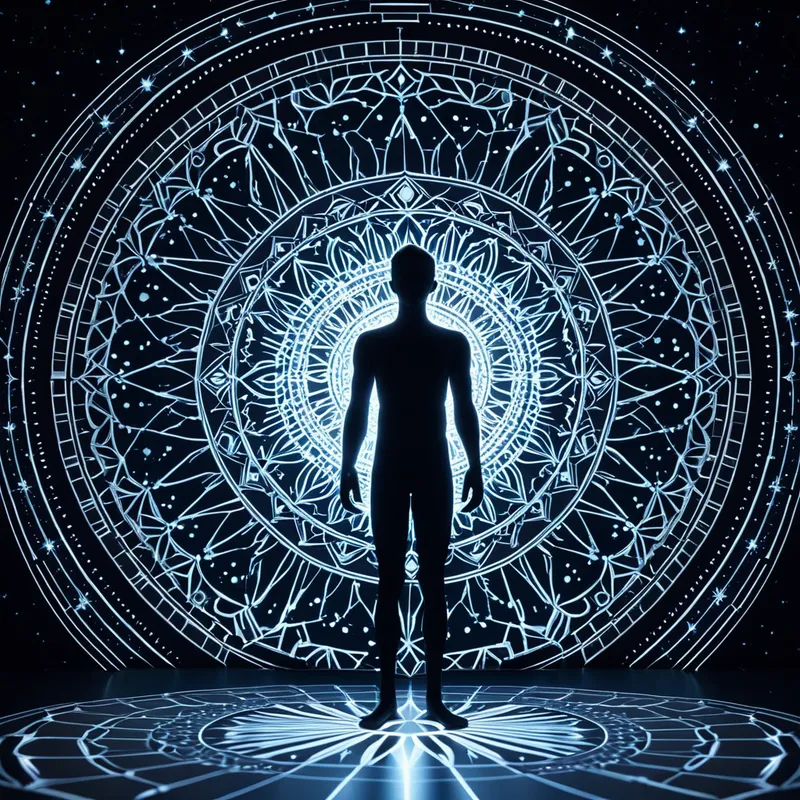
The alchemical journey modeled by the Sefirot is the ultimate process of individuation: the descent of spirit into matter and its glorious return. It begins with the Contraction (Tzimtzum), the necessary withdrawal of the ego to make space for the unconscious Self to emerge. The light then descends through the stages of knowing: inspiration (Chokhmah), analysis (Binah), through the heart's conflicts (Chesed vs. Gevurah) towards a central, solar consciousness (Tiferet).
The shattering is not the failure of the process, but its crucible. Our wholeness must break to be made stronger; the ego-structure must fracture to allow the Self to reconstitute it at a higher level.
The work of Tikkun is the daily, gritty alchemy of psychological integration. Every time we face a shadow, heal a wound, or reconcile an inner conflict, we raise a spark. We move a fragment from the left pillar of severity (judgment, repression) to the right pillar of mercy (acceptance, love), balancing it in the center of our being. The final vessel, Malkhut, represents the fully embodied Self—the divine realized not in escape from the world, but in the sacred act of being fully, consciously human within it. The tree is not just a map of God's mind, but a living diagram of the soul's ascent home.
Associated Symbols
Explore related symbols from the CaleaDream lexicon: