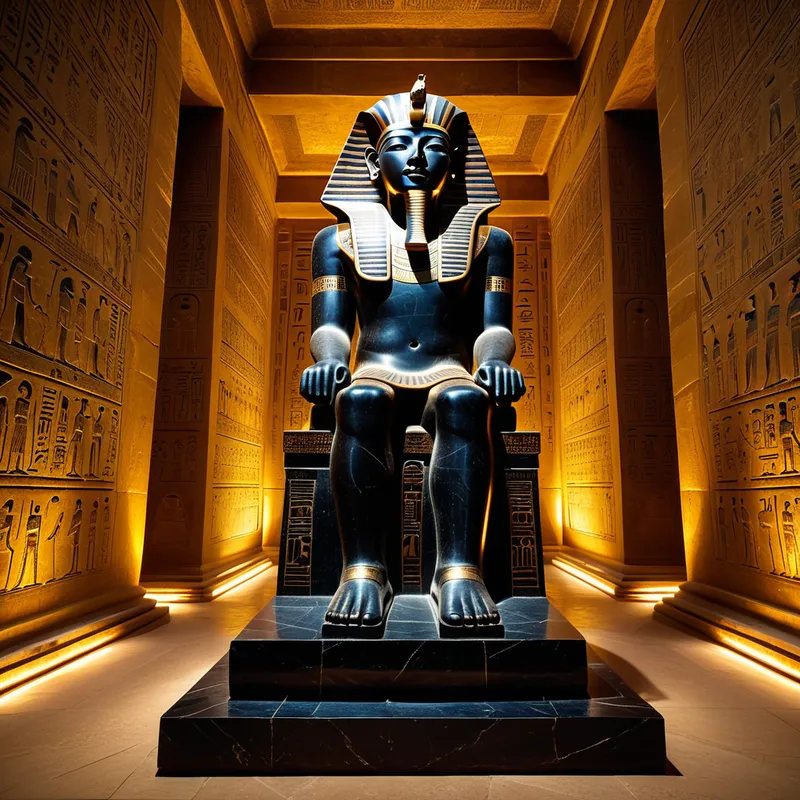
The Sarcophagus Myth Meaning & Symbolism
The sacred vessel of transformation, where the soul confronts its shadow in the silent dark to be reborn into eternal light.
The Tale of The Sarcophagus
Listen, and hear the tale not of stone, but of the great turning. Before the first pyramid cast its shadow, before the Nile knew its course, there was the silence of Nun. From that silence, the sun-god [Khepri](/myths/khepri “Myth from Egyptian culture.”/) pushed forth the first light, and with it, the first truth: all that is born must know the dark.
And so the gods fashioned the first vessel. Not a tomb, but a womb of stone. They called it the qeres, the sarcophagus, the flesh-eater. It was given to Anubis, the guide of souls, whose hands are black not with soil, but with the sacred resins of preservation. He placed within it the body of the first king, [Osiris](/myths/osiris “Myth from Global/Universal culture.”/), who had been betrayed, dismembered, and scattered.
The air in the royal chamber was thick with myrrh and the scent of drying [lotus](/myths/lotus “Myth from Hindu culture.”/). The sarcophagus, carved from a single block of alabaster, glowed with a milky [inner light](/myths/inner-light “Myth from Buddhist culture.”/). Isis wept, her tears becoming the Tyet amulet upon the king’s breast. [Horus](/myths/horus “Myth from Egyptian culture.”/), the falcon, watched with golden eyes as the priests chanted the words of power from the Book of Coming Forth by Day.
The lid was heavy, a mountain of stone sliding into place. The final thud echoed through [the underworld](/myths/the-underworld “Myth from Greek culture.”/), a sound that sealed not an end, but a beginning. In that absolute dark, Osiris did not rot. He waited. He remembered. He listened to the silent voice of his own Ba, fluttering against the stone. The [scarab](/myths/scarab “Myth from Egyptian culture.”/), Khepri, began its work from within, a slow, inevitable turning.
For seventy nights, [the vessel](/myths/the-vessel “Myth from Alchemical culture.”/) held the mystery. Then, at the dawn of the seventy-first, a crack appeared—not in the stone, but in the fabric of the night. The lid did not open; it dissolved into light. And from the sarcophagus, Osiris arose, not as a man of flesh, but as the Lord of the Perfect Black, the green-skinned king of the fertile [underworld](/myths/underworld “Myth from Greek culture.”/), ruler of Aaru. [The vessel](/myths/the-vessel “Myth from Alchemical culture.”/) had not contained him; it had transformed him. It had eaten the flesh to reveal the enduring spirit.
Cultural Origins & Context
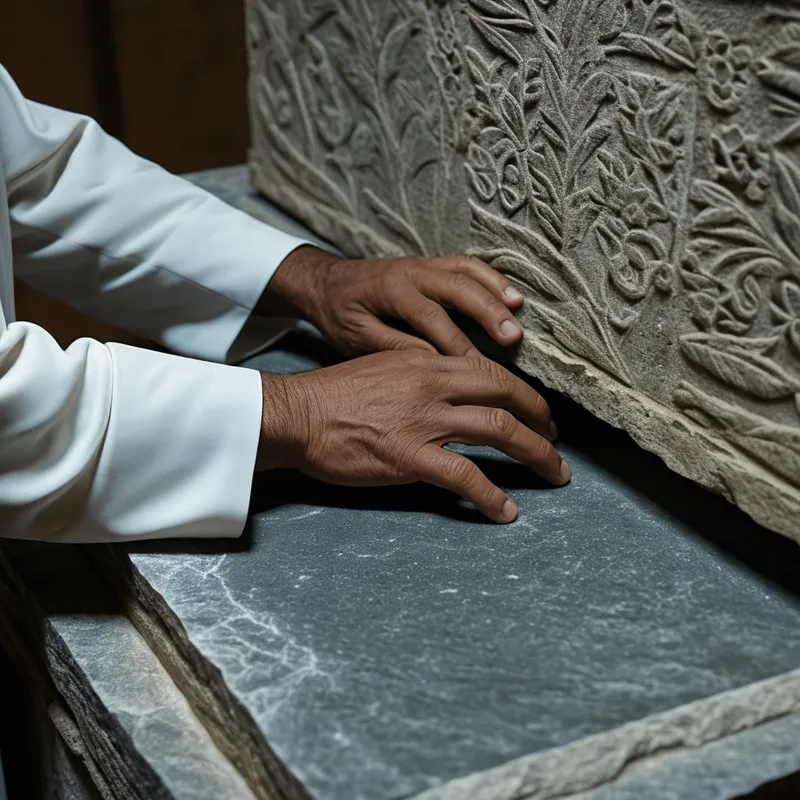
This mythic pattern is not a single story but the foundational template embedded in the entire Egyptian funerary tradition, from the simplest grave to the grandest pyramid. The sarcophagus was the central artifact in the elaborate ritual technology of death, a technology aimed not at extinction, but at translation. These narratives and their prescribed rituals were the domain of the scribes and hery-seshta, who served as the psychopomps for society.
The societal function was profound and dualistic. On a collective level, it ensured cosmic and political order (Maat) by ritually replicating [the resurrection](/myths/the-resurrection “Myth from Christian culture.”/) of Osiris, the prototype of the justified king. On a personal level, it provided a concrete, symbolic map for the terrifying journey of the soul. The sarcophagus was the pivotal station on that map—the place of the great pause, the alchemical crucible where the decomposition of the body was magically equated with the gestation of the spiritual body, the Sahu. It was passed down not merely as folklore, but as sacred, operative knowledge inscribed on the very [vessel of transformation](/myths/vessel-of-transformation “Myth from Alchemical culture.”/).
Symbolic Architecture
The sarcophagus is the ultimate [symbol](/symbols/symbol “Symbol: A symbol can represent an idea, concept, or belief, serving as a powerful tool for communication and understanding.”/) of sacred containment. It represents the necessary, voluntary [confinement](/symbols/confinement “Symbol: A dream symbol representing restriction, limitation, or being held back physically, emotionally, or psychologically.”/) of [the ego](/myths/the-ego “Myth from Jungian culture.”/) within the [depths](/symbols/depths “Symbol: Represents the subconscious, hidden emotions, or foundational aspects of the self, often linked to primal fears or profound truths.”/) of the unconscious for the [purpose](/symbols/purpose “Symbol: Purpose signifies direction, meaning, and intention in life, often reflecting personal ambitions and core values.”/) of renewal.
The psyche cannot grow without a period of encapsulation, where the noise of the world is silenced so the whispers of the soul can be heard.
It is the [stone](/symbols/stone “Symbol: In dreams, a stone often symbolizes strength, stability, and permanence, but it may also represent emotional burdens or obstacles that need to be acknowledged and processed.”/) [womb](/symbols/womb “Symbol: A symbol of origin, potential, and profound transformation, representing the beginning of life’s journey and the unconscious source of creation.”/). Its [heaviness](/symbols/heaviness “Symbol: A sensation of weight or pressure, often reflecting emotional burdens, responsibilities, or unresolved issues weighing on the psyche.”/) symbolizes the [weight](/symbols/weight “Symbol: Weight symbolizes burdens, responsibilities, and emotional loads one carries in life.”/) of one’s own [history](/symbols/history “Symbol: History in dreams often represents the dreamer’s past experiences, lessons learned, or unresolved issues that continue to influence their present.”/), [trauma](/symbols/trauma “Symbol: A deeply distressing or disturbing experience that overwhelms the psyche, often manifesting in dreams as unresolved emotional wounds or psychological injury.”/), and un-lived [life](/symbols/life “Symbol: The symbol of ‘Life’ represents a journey of growth, interconnectedness, and existential meaning, encompassing both the joys and challenges that define human experience.”/)—the “flesh” that must be consciously contained and transformed, not merely discarded. The intricate hieroglyphs covering its surface are not mere decoration; they are a literal “[skin](/symbols/skin “Symbol: Skin symbolizes the boundary between the self and the world, representing identity, protection, and vulnerability.”/)” of spells, a protective psychic [membrane](/symbols/membrane “Symbol: A thin, flexible barrier that separates, protects, or connects different spaces or states of being.”/) that guides and shields the contents during the perilous inner work.
Psychologically, the entity within—be it Osiris or the [dreamer](/symbols/dreamer “Symbol: The dreamer represents the self, the conscious mind engaging with subconscious thoughts and feelings during dreaming.”/)‘s own self—represents the core [identity](/symbols/identity “Symbol: Identity represents the sense of self, encompassing personal beliefs, cultural background, and social roles.”/) in a state of [crisis](/symbols/crisis “Symbol: A crisis symbolizes turmoil, urgent challenges, and the need for immediate resolution or change.”/), plunged into the [shadow](/symbols/shadow “Symbol: The ‘shadow’ embodies the unconscious, repressed aspects of the self and often represents fears or hidden emotions.”/). The sealed dark is not [punishment](/symbols/punishment “Symbol: A dream symbol representing consequences for actions, often tied to guilt, societal rules, or internal moral conflicts.”/), but the precondition for [incubation](/symbols/incubation “Symbol: A period of internal development, rest, or hidden growth before emergence, often associated with healing, creativity, or transformation.”/). The myth asserts that true [consciousness](/symbols/consciousness “Symbol: Consciousness represents the state of awareness and perception, encompassing thoughts, feelings, and experiences.”/) and immortality are born from a full confrontation with, and surrender to, this encapsulated state. The sarcophagus is the [vessel](/symbols/vessel “Symbol: A container or structure that holds, transports, or protects something essential, representing the self, emotions, or life journey.”/) that makes this terrifying process ritually safe and purposeful.
The Dreamer’s Resonance
When the sarcophagus appears in a modern dream, it rarely manifests as an Egyptian artifact. It may be a sealed room, a locked vault, a sensory deprivation tank, or even the dreamer’s own body feeling like a stone prison. This is the [psyche](/myths/psyche “Myth from Greek culture.”/) signaling a critical phase of psychic containment.
The somatic experience is often one of profound pressure, stillness, and claustrophobia mixed with a strange peace. The dreamer is undergoing a process where an old identity, a worn-out adaptation, or a complex is being “sealed away” for decomposition. There is no active doing here, only being. This is the dream-equivalent of the [nigredo](/myths/nigredo “Myth from Alchemical culture.”/) stage—the blackening. The psychological process is one of necessary introversion and depression in the alchemical sense: a pressing down, a gathering inward. The dreamer is in the vessel, being unmade so that a more authentic configuration of [the self](/myths/the-self “Myth from Jungian culture.”/) can coalesce from within the dark. The terror of the dream comes from the ego’s fear of this dissolution; the potential peace comes from the Self’s knowledge of the coming dawn.
Alchemical Translation
For the modern individual striving toward wholeness (individuation), the myth of the sarcophagus models the stage of the work that is most often avoided: the conscious embrace of containment and decay.
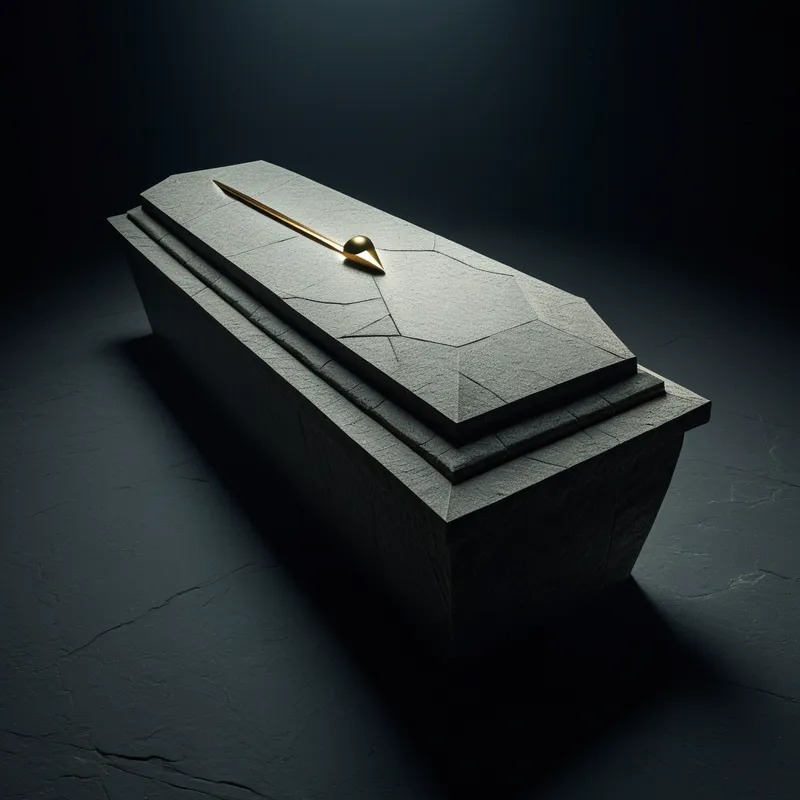
Individuation demands a sarcophagus phase—a willing descent into a self-created vessel where one’s cherished self-image is allowed to die.
The “heroic” journey here is not one of conquest, but of supreme patience and trust in a process orchestrated by a wisdom deeper than the conscious mind. We must build our own inner sarcophagus through ritual, therapy, meditation, or creative solitude—any practice that creates a sacred, bounded space where the [persona](/myths/persona “Myth from Greek culture.”/) can be shed. We inscribe its walls with our own “spells”: our values, our intentions, our prayers for guidance.
Within this vessel, the alchemical transmutation occurs. The lead of our neuroses and past wounds is not fought, but contained. In that dark stillness, the scarab of the unconscious begins its silent work, rolling the substance of our pain into a new core of meaning. The lid does not blow off in explosive catharsis; it becomes transparent when the work is done, revealing that the vessel was never a prison, but a chrysalis. One emerges not “fixed,” but fundamentally reconstituted—greenskinned like Osiris, fertile with the life that springs from having fully faced one’s own dark earth.
Associated Symbols
Explore related symbols from the CaleaDream lexicon: